Hywel Williams

The Huguenots, by Geoffrey Treasure – review

France’s early 21st-century Protestants are eco-friendly, gender-sensitised and respectful of the Fifth Republic’s laïcité. But their ancestors were a less accommodating lot. La réforme in the France of the 16th century was well-educated, predominantly urban and organised as part of a pan-European Protestant movement which set out to subvert the territorial sovereignty of Catholic princes. Its leaders included some of the French aristocracy’s boldest spirits, whose dynastic ambitions to exercise an earthly dominion blended easily with the dogmatic confidence of Protestantism at its most driven and alluring.

Ghosts of the Teutonic Knights

Do the trees of East Prussia still whisper in German when the wind blows in from the Baltic and across the featureless plain? The Russian poet Joseph Brodsky thought so when he visited in the 1960s. But keen ears, and a very long historical reach, are surely now needed in order to detect that particular susurration. A little over two million Germans lived here in 1940. Now there are just 10,000 ‘of German descent’. Eight centuries ago members of the Order of the Teutonic Knights, snobbish and aristocratic virgins almost to a man, arrived here from Acre to start that great Crusade of the North which was the counterpart to the adventure in Palestine. It took them some two generations to conquer the native Prusi, a Baltic and pagan people.

Pastures new

On 20 September 1949, five days after his election as Chancellor of the newly created German Federal Republic, Konrad Adenauer addressed the Bundestag: ‘Much unhappiness and much damage’, he told the deputies, ‘has been caused by denazification . On 20 September 1949, five days after his election as Chancellor of the newly created German Federal Republic, Konrad Adenauer addressed the Bundestag: ‘Much unhappiness and much damage’, he told the deputies, ‘has been caused by denazification . . . many have atoned for a guilt that was subjectively not heavy.

The oldest truth in political history

Poor Derek Conway. The allegations about how he used his allowances have been an opportunity for an avalanche of homophobic gossip about his son and a tidal wave of sneering about class. I hold no particular candle for the Conways - apart from having once spent a very enjoyable week stalking with them in the Scottish highlands. For the record -a nd since declaration of interest seems to be the order of the day - I recall her as being the better shot of the two, and I’m worse than either of them. The last time we had quite such a nasty attack on a family in the public eye was when William of Wales split up with Kate of Middleton.

Holding up a mirror to America: views on ‘No Country for Old Men’

‘No country for old men’?  Texas looks eerily magnificent though in Joel and Ethan Coen’s latest take on the western genre. Horses gallop, men drawl, and gals do the listening as the heat seeps out of the screen and into a cinema near you. It’s nice perhaps to be reminded of what the sun looks like in these winter days - but NCFOM is hardly this season’s latest feel-good movie. A spring in the step and a song in the heart are not the most likely reactions to this strangely irresolute - but relentlessly downbeat - narrative. The movie’s title-being a line from W B Yeats’s ‘Sailing to Byzantium’ has the kind of cultured ambiguity we’ve come to expect from Hollywood’s artiest film directors.

Leaders, deputies–and elections

£180,000.00 or so doesn't seem to buy you much of a political campaign these days. Peter Hain's attempt at being deputy leader of the Labour party certainly ended in a lot of cheques being signed rather than in ballot papers being crossed in his favour. All that rather desperate spend only reinforced the impression that he was regarded as an outsider within the Labour movement as a whole-despite his status as a cabinet minister and MP of sixteen years standing. It's all too easy though for a political campaign to run into such difficulties-because here the financial is an aspect of the personal. The moment a candidate puts his name forward is also the time when a large number of political friends and well-wishers decide they want to be a part of the action as well.

Beowulf: a digital hero from England’s lost culture

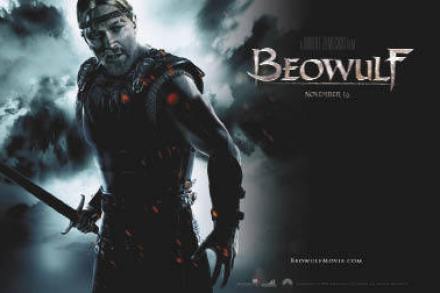
‘Beowulf! How’s your father?’ shouts Anthony Hopkins as Ray Winstone steps out of the boat which has brought the Geats’ tribal leader from Sweden to Denmark. As a way of grabbing attention it probably works better than ‘Hwaet!’ — the narrator’s initial injunction to sit up and listen in the original text. This may be English literature’s first epic, but even its admirers concede that the multiple plots recounted in 3,182 lines can confuse. These are shaggy dog stories of a somewhat bloody kind rather than Virgil or Homer, and in the absence of a unifying artistic vision we need to be kept engaged.

Democracy can’t compete with the history of kings

Archaeology in north-eastern Syria was once a poor relation to the great sites that lie to the south and over the Iraqi border. Southern Mesopotamia is long established as the area that shows the urban roots of advanced civilisation. Ur may or may not be Abraham’s birthplace but by the 3rd millennium bc it was certainly the centre of a sophisticated court society. Nineveh, lying adjacent to modern Mosul, rivals — and may surpass — Ur in antiquity and was an Assyrian centre by the end of the 2nd millennium bc. Widespread looting and military action now make archaeological investigation next to impossible at such centres.

The lazy party

I must have been watching some other conference. Judging by the general view taken of David Cameron’s speech to the Tory conference yesterday this was a masterly exercise in understated urbanity. What I heard instead was a rambling and diffuse statement of aims, conspicuous only in its failure to communicate energy and ambition. Of course it’s true that post-Blair we’ve become suspicious of false messiahs and glib oratory. Nowadays we shudder at those creepy millenarian visions the former prime minister used to dish out when addressing Labour conferences. But a political leader seeking to take his party into government after long years in opposition needs star qualities of drive rather than just resilience in the face of criticism.

Sons of the Manse

Governments recycle policies, pledges and promises. Gordon Brown has decided to recycle his rhetoric as well-with some fine-sounding phrases about what he owed his father, a minister of the Church of Scotland. Tony Blair in his time talked about the 'giving age' to the Labour conference. The Brown version recalled a lesson learnt at his father's knee-that it was more blessed to give than to receive: the object of the giving being-in this case-'society'.

The Tories will need more national fear to win

Only national insecurity will swing it for the Conservatives Ten years ago this autumn I started to write a history of Conservative government in the 1990s. Guilty Men was designedly satirical and cynical — qualities which seem Tory to many. Some readers liked the jokes. Others, burdened by conviction, thought it too laconic by half — especially since I had been a Cabinet adviser (to John Redwood). Nonetheless the book had a reasonably serious aim: it wished to demythologise much of the stuff Tories believed about themselves and Britain. Conservatives, I thought, had embraced a myth of their own invincibility. This was not just a question of their personal conceit.

Please can we have our Enlightenment back?

It must be odd being God these days. Revealed religion generally — and the Christian God in particular — are often in the dock, screamed at by literary types with a name to make or a reputation to uphold. Christopher Hitchens, in the latest of a series of pamphlets presented in book form, thunders in his title that God Is Not Great. For Richard Dawkins, rather famously, He is delusional. While A.C. Grayling ventures in What Is Good? that ‘religious morality is . . . anti-moral’ as well as being, apparently, ‘inimical to modern interpersonal relations’. The modern apostles of ‘reason’ constitute a thriving business, and it’s the war on terror that gave them a chance, with its talk of fanaticism that has to be extirpated.

Welsh Tory Revival

It wil be a while before Welsh Tories officially rename themselves  'Ceidwadwyr Cymru' . But their renaissance on the political map shows them coming home with last night's results representing the party's best result since the general election of 1983 when they got 13 seats. Preseli Pembrokeshire and Carmarthen west with Pembrokeshire south are both part of the old undivided seat of Pembroke-a famously maverick constituency which went independent Labour in the 60's and then Conservative in the 70's. Tories now have a good chance of winning these two Westminster seats at the next general election.

A Tory–Plaid Cymru pact?

Liam Byrne says the English must be less apathetic about  the United Kingdom, and about the threat of Scottish independence that looms in next week’s elections One party rule sums up the history of Welsh politics from 1945 onwards. Labour’s hegemony here has been both cultural and political with its tribal elders portraying any alternative as at best eccentric and at worst downright unnatural. This is the party of the Welsh establishment and its position has been bolstered by an accomplished grasp of the powers of patronage. Tory governments at Westminster have recognised that hegemony and governed through it. New Labour in the post-devolution era could by and large afford to forget Wales — a country in which it had rarely shown any interest.