Hugh Thomson

Hugh Thomson is a writer and filmmaker whose recent novel Viva Byron! imagines what might have happened if the poet had lived longer and gone to South America, as he always wanted to do

Another heroic freethinker is wiped from Russian history

From our UK edition

It sometimes seems that those people chosen to be subjects for biographies are drawn from a strictly limited cast. Every few years, another book about Tolstoy, Dickens or some other great literary figure comes along to make library shelves groan further. At a recent talk given for a new biography of George Orwell, I asked the author why he had felt a need to add to the pile, given the plethora of perfectly good existing ones. ‘Because OUP commissioned me,’ was the answer. I didn’t buy the book. So how refreshing that Miranda Seymour should choose an absolute unknown to write about, whose life was genuinely interesting and surprising.
Did the death of Shakespeare’s son really inspire Hamlet?

From our UK edition

Just as each age refashions Hamlet in its own image, so I suspect we have got our own Hamnet. The 2020 book by Maggie O'Farrell became a worldwide success at the height of the pandemic, then an acclaimed play by the Royal Shakespeare Company and, finally, a film last year, nominated for multiple awards. The actress Jessie Buckley has now won both a Bafta and an Oscar for her performance in it. But some elements of Hamnet's story have been so taken for granted that they have never been questioned. These include the assumption that an exploration of Shakespeare's family history might be more interesting than the playwright's own works.

An escape from investment banking to the open road

From our UK edition

A beguiling cinema advert back in the 1970s showed a young man with a series of doors closing around him with resounding clunks. First, he was hemmed in by the boredom of school, then work, and finally a mortgage – but as soon as he got the keys to his first motorbike, he could hit the open road and escape to freedom. Vroom, vroom. I seem to remember the initial scenes were in grim black and white, but when he got the bike everything switched to vibrant colour – although that may be false memory syndrome.

Luke Coppen, Mary Wakefield, Daniel McCarthy, Michael Simmons & Hugh Thomson

From our UK edition

35 min listen

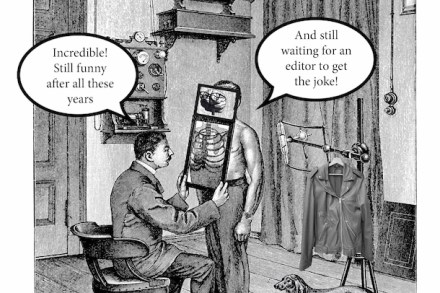
On this week’s Spectator Out Loud: Luke Coppen looks at a new musical subgenre of Roman Catholic black metal; Mary Wakefield celebrates cartoonist Michael Heath as he turns 90 – meaning he has drawn for the Spectator for 75 years; looking to Venezuela, Daniel McCarthy warns Trump about the perils of regime change; Michael Simmons bemoans how Britain is beholden to bad data; and, Hugh Thomson looks at celebrity terrorists as he reviews Jason Burke’s The Revolutionists. Produced and presented by Patrick Gibbons.

How the terrorists of the 1970s held the world to ransom

From our UK edition

At the end of the 1970s, the Illustrated London News printed a special edition to commemorate the decade. What did it focus on? Music, from David Bowie to Bob Marley? Some of the best films Hollywood has ever produced, from The Godfather on? Political crises, such as Watergate and the end of the war in Vietnam? No, there was only one headline: ‘The 1970s: The Years of Terrorism.’ We forget – and perhaps we want to – quite how brutal and random that time could be, with plane hijackings, the Munich Olympics atrocity and bombs going off from the Tower of London to Washington to Singapore, where the Japanese Red Army caused mayhem. In a superb and monumental book, Jason Burke details the principal movements that flourished and to a surprising extent nurtured each other.

Why won’t young people pick up the phone?

From our UK edition

‘So you mean rather than writing something out, you could just talk to somebody from a distance? But that would be so cool. And so much quicker. And so much more real.’ ‘Exactly!’ There was a distant time when phone calls were in themselves seen as the cowardly opt-out way of communicating rather than just doing it face to face Imagine if after decades of just being able to text, phone calls were only invented now. Everyone would be all over them. But instead the telephone is something used exclusively by  sad old people to talk to each other. No self respecting teen would talk when they could text. Or do that even more annoying thing of just leaving a text voice message.

Tim Davie isn’t fit to lead the BBC

From our UK edition

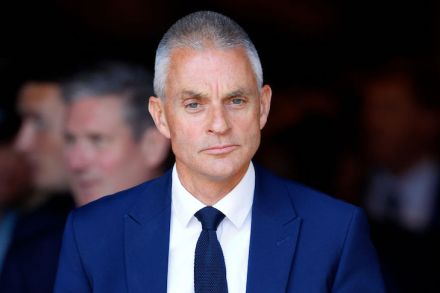
Those within the BBC might be afraid to say so, but an ex-producer like me has no such qualms: Tim Davie, the BBC's Director-General, isn't cut out for the job. For the good of the BBC, Davie must go. The last few weeks have been painfully bad for Davie. The Masterchef saga, which led to the departure of not one, but both main presenters, is the final nail in the coffin, after blunders over Glastonbury and Gaza. Never has the BBC needed to have a visionary in post more to survive.

We’ve missed an important clue about The Salt Path fiasco

From our UK edition

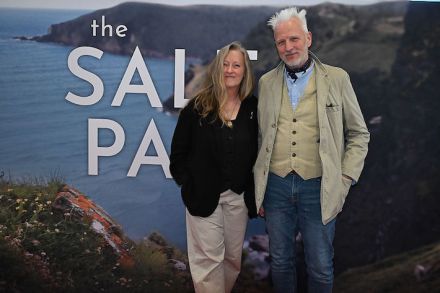
When the truth of Raynor Winn’s The Salt Path was called into question, many commentators jumped in with both feet; as Sam Leith astutely pointed out in The Spectator, there is nothing the English like so much as a good disappointment. ‘So, we twisted our story.’ It ties in with the phenomenon of confabulation Winn continues to contest the allegations which have cast doubt over the truth of the 2018 memoir. She also issued a statement talking of ‘the physical and spiritual journey Moth (her husband) and I shared, an experience that transformed us completely and altered the course of our lives. This is the true story of our journey’.

Could the giant panda be real?

From our UK edition

Nathalia Holt’s book begins irresistibly. The year is 1928. Two sons of Theodore Roosevelt called Ted and Kermit – yes I know we’re thinking it’s a Wes Anderson movie – have smoothed a map out on the table in front of them. Let’s imagine the setting is a bit like the Explorers’ Club in New York, with exotic anthropological curios on the walls – poisoned spears and wooden shields – and globes the size of beach balls lit up from within. The land they are examining is mainly coloured in greens, browns and greys. But running across the map, like the stripes of a tiger, are irregular white blotches. Each of these blank spaces represents terra incognita. This is China, or what was then known of it.

What a carve up! The British flair for disastrous partition

From our UK edition

We think of the Raj as controlling only India and Pakistan, and its infamous breakup happening in August 1947. It’s a story told and filmed so often, and whose echoes reverberate today with such nuclear sabre-rattling that surely there is little left to add. And please nobody mention Edwina Mountbatten’s possible affair with Jawaharlal Nehru ever again. How could the British be so capable of running an empire but so hopeless when it came to dividing it? But there is a wider, and fascinating, history which has itself been partitioned off and ignored.

Max Jeffery, David Shipley, Patrick Kidd, Cindy Yu, and Hugh Thomson

From our UK edition

33 min listen

On this week’s Spectator Out Loud: Max Jeffery interviews Afghan resistance leader Ahmad Massoud (1:13); former prisoner David Shipley ponders the power of restorative justice (8:23); Patrick Kidd argues that the Church should do more to encourage volunteers (14:15); Cindy Yu asks if the tiger mother is an endangered species (21:06); and, Hugh Thomson reviews Mick Conefrey’s book Fallen, examining George Mallory’s tragic Everest expedition (26:20). Produced and presented by Patrick Gibbons.

The recklessness of George Mallory

From our UK edition

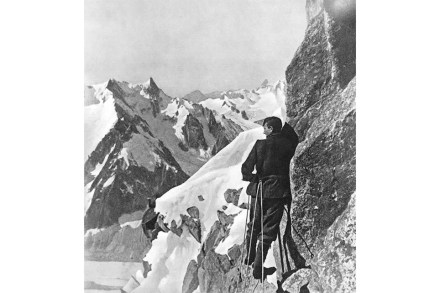
George Mallory bookended the 20th century history of Everest with his pioneering attempts in the 1920s to climb the mountain – and with the spectacular discovery, in 1999, of his body high up on the North Face, preserved by the ice for 75 years after he had failed to do so. His flip remark to a journalist that he was climbing Everest ‘because it was there’ became mountaineering’s most celebrated quote, while masking other less noble reasons. Mick Conefrey has become one of our finest gazetteers of the Himalaya, with successive books on K2, Kangchenjunga and later exploits on Everest. Now he turns his attention to a great conundrum of mountaineering history.

Roger Deakin – at ease in the countryside as a poacher with deep pockets

From our UK edition

Few authors have left such an immediate legacy as Roger Deakin. When he died of a sudden illness in 2007, aged 63, he had written just two books: Waterlog, which set off the wild swimming craze, and the even more influential Wildwood, which helped kickstart the publishing phenomenon of nature writing. Yet both books only really became well known after his death. During his lifetime he was, at best, a cult taste. When I approached the BBC 20 years ago with the idea that he should present a televisual version of Waterlog in which he swam ‘across’ England, through its ponds, lakes and rivers, I was told no one was interested in wild swimming – and who was Roger Deakin anyway? Patrick Barkham has set out to answer that question.

Living with the Xingu in deepest Amazonia

From our UK edition

The Amazon is a notoriously difficult part of the world to write about – and I’ve tried. Travelling the river’s slow length, it can be hard to make sense of any changes beneath the forest canopy or to link its disparate communities. The Brazilian writer Eliane Brum succeeds triumphantly. Acclaimed for her previous ‘despatches from Brazil’, appealingly titled The Collector of Leftover Souls, she moved from São Paulo, one of the largest cities of the Americas, to the isolated Xingu tributary to embed herself completely. Or, as she might put it, to lose herself. When asked their age, tribal people just make up a number to be helpful – and then repeatedly change it As a journalist, she is used to asking people their age.

Pico Iyer finds peace even in lost paradises

From our UK edition

We all have our vision of a paradise travel destination. Mine was Tahiti, based on exotic remoteness and those pictures of glorious atolls with their cerulean blue lagoons – until I went there and discovered a severe underlying drugs problem among the island’s youth, and whispering discontent. Herman Melville once talked of how ‘the soul of man was an insular Tahiti, full of peace and joy but encompassed by all the horrors of the half known life’. It’s a phrase that gives Pico Iyer his title for this intriguing collage of such places which might, and should, be considered paradise, but that human intervention has spoiled. Like Satan surveying the Garden of Eden, the reader can take a certain mordant pleasure in the process.

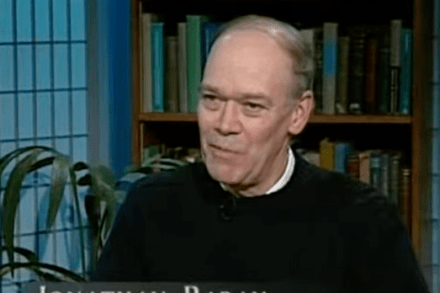
Jonathan Raban changed travel writing forever

From our UK edition

Jonathan Raban was largely responsible for changing the nature of travel writing. Back in the 1970s when he began, the genre still viewed the world from under the tilt of a Panama hat (‘I looked at the tops of the columns. Were they Doric or Ionic?’). It was considered ill bred for a writer to reveal anything about themselves; they were supposed to be a transparent pane of glass through which one could view the world. Raban tore this up, and with glee. He had worked closely with American confessional poets like Robert Lowell and John Berryman, producing one of the best essays on Lowell’s late poems about his messy divorce.  He had even been Lowell’s lodger for a while.

Bogs, midges and blinding rain: the joys of trekking in the Highlands

From our UK edition

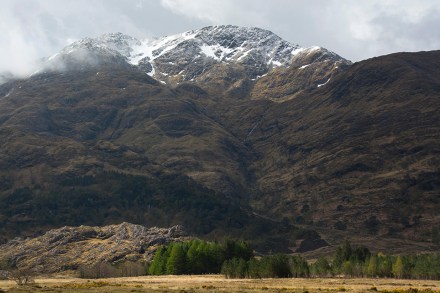
Raynor Winn’s first book, The Salt Path, was a genuine phenomenon. Having been evicted from their farm after 20 years, she and her husband Moth, who suffers from a degenerative disease, set off on a courageous walk around the south-west of England in the hope of restoring his health and finding a new life. It was a deserved international bestseller. Avoid this book if you want a cosy tartan-and-shortbread version of the Highlands Landlines picks up the story. Although walking proved a temporary respite for Moth, his corticobasal degeneration (CBD) – which the medics advised was without treatment or cure – takes a turn for the worse. Raynor decides to commit to another walk, to ‘let the oxygen back in and for the spark to regenerate’. And not just any walk.

Tales of the riverbank: the power of the Po

From our UK edition

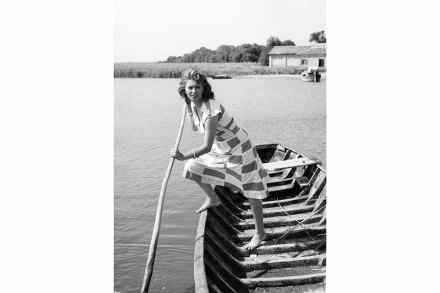
It may not be the grandest of the world’s waterways – the Nile and Amazon are ten times its length – but the Po has always exerted a fertile grip on the Italian imagination. Virgil called it ‘the king of rivers’; Dante died in its marsh estuary, having earlier described in Purgatorio how Jacopo del Cassero was chased there and fell fatally, ‘entangled in the mud and reeds of the Paduan swamp’, leaving a pool of blood on its waters. Yet the rest of the world has been less interested. Perhaps it has something to do with the modern name’s slightly comical sound: shortened from the original, more euphonic Padus – ‘the Paduan plain’ fits every metre – the word ‘Po’ somehow lacks the weight the river deserves.

The wonder of the wandering life

From our UK edition

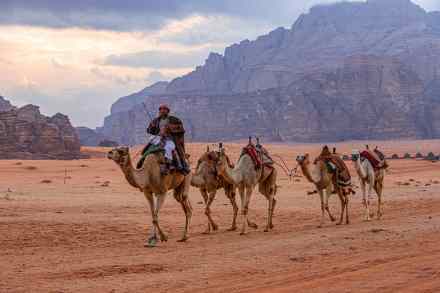
Anthony Sattin begins with a quotation from Bruce Chatwin, who famously tried all his life to produce a book about nomads but never quite succeeded (the nearest he got was Songlines). Hoping to persuade Tom Maschler at Cape of the virtues of the project, Chatwin described nomads as ‘a subject that appeals to irrational instincts’ – perhaps not the best way to sell something to publishers, who tend to pride themselves on their rational ones. But Chatwin’s thesis – that we were all originally nomads and need to recover some of that instinct – is now triumphantly brought to its conclusion in Sattin’s fascinating journey through 12,000 years, from the nomadic ways of prehistoric man to the Bedouin and Maasai of today.

New light on the building of Stonehenge

From our UK edition

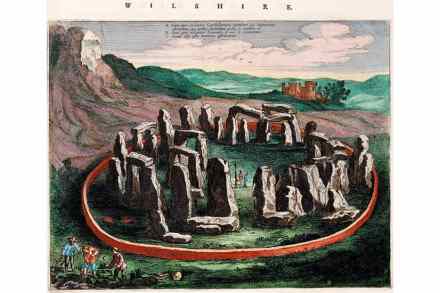
When it comes to Stonehenge, we are like children continually asking why and never getting a conclusive answer. There are plenty of theories as to its purpose, ranging from the ludicrous to the dull, but perhaps we would be better off concentrating, as in this excellent book, more on how our ancestors got the stones up in the first place. Attention has always centred on the original bluestones which made up the first circle at Stonehenge, because they were brought, remarkably, all the way from Wales. These are the smaller – but still two-ton – megaliths, carved from the Preseli quarries in Pembrokeshire. It used to be thought they must have been transported by water, around the considerable circuit of the south-west coast and then up the River Avon.