Hugh Thomson

Hugh Thomson is a writer and filmmaker whose recent novel Viva Byron! imagines what might have happened if the poet had lived longer and gone to South America, as he always wanted to do

How to explore Colombia’s majestic Pacific coast

From our UK edition

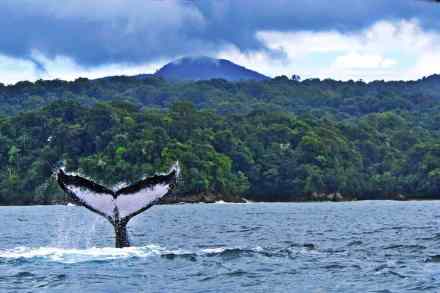
The poet Elizabeth Bishop wrote of South American waterfalls that spill over the sides of mountaintops ‘in soft slow motion’, and I was reminded of her lines on the Colombian Pacific coast where seemingly every bay has a wonderful waterfall tumbling down into it. As there are no roads to speak of, the only way to see something of the jungle is to advance up streams from the sea until you reach one of these waterfalls – with the great advantage that there is usually a rock pool to swim in when you get there.

Spend the weekend…on the Isle of Skye

From our UK edition

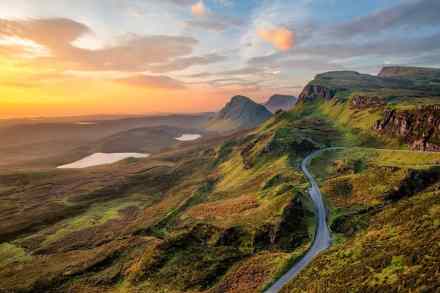
When Samuel Johnson and James Boswell passed through Skye on their celebrated tour of the Hebrides in 1773, they were disconcerted by the lack of Highlands customs. Where were the fierce clans, the costumes and the Jacobite sympathies they had expected? Instead, in the person of the clan chief, Alexander Macdonald, they found a cultivated old Etonian more interested in reciting Latin verses to his distinguished guests. The visit did not go well. Johnson asked why he didn’t have a magazine of arms hidden in his cellar and Macdonald replied that it was so damp they would only rust.

The least familiar stretches of Nile prove the most interesting

From our UK edition

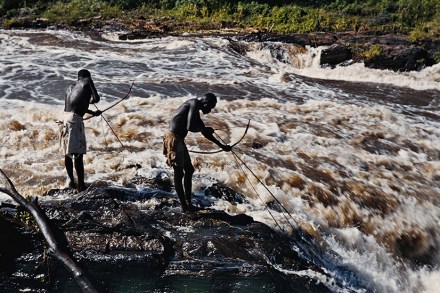
It’s one of the most tantalising travel images in the world — a felucca floating along the Nile at sunset, its lateen sail spread aslant to catch the wind. It takes us back to the beginnings of ancient Egypt, when the need to manage Nilotic flooding and the imperative to trade along the river’s course were the motors of civilisation. Even 2,500 years ago Herodotus was fascinated by the ease with which the Egyptians had learned to cultivate the soil with its waters rather than with laborious ploughs — which, some speculate, had given them the leisure to build pyramids in the down months.

When will Stonehenge’s lockdown end?

From our UK edition

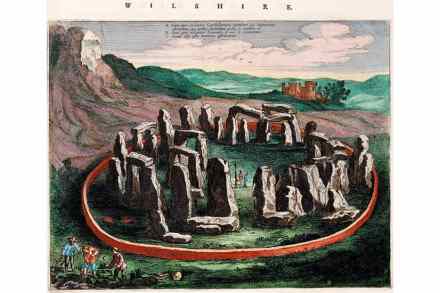
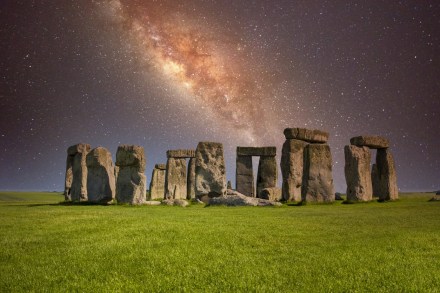
Another year, another row about Stonehenge. A rather sad piece on the BBC News website describes how its lacklustre custodians, English Heritage, had to cancel a live feed of the sunrise on the day of the solstice due to unspecified ‘safety concerns’ when a few people were seen climbing over a low fence to access the stones. More than 200,000 people around the world had tuned in to the live stream ‘but ended up watching pre-recorded footage of the stones until the feed returned at around 5am, showing largely cloudy skies’. Oh dear. But then disappointment has been hanging over our most famous prehistoric monument like a cloud for over a century.

The deadly allure of Mount Nanda Devi

From our UK edition

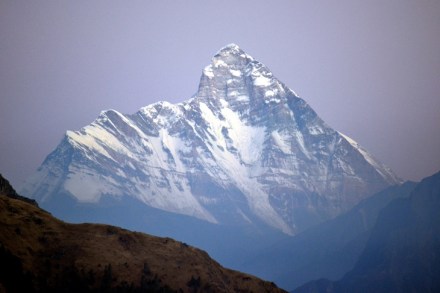
After one of the most difficult missions ever undertaken in the Himalayas, Indian mountaineers have now finally been able to reach a team of climbers on Mt Nanda Devi who went missing last month. As of writing, they have recovered the bodies of almost all of the eight climbers, four of them British, who were caught in an avalanche on its slopes, bringing to a close another tragic chapter in the mountain’s history. To most people, Nanda Devi is just another peak in the Himalayas and might as well be anonymous. But once it was a name to conjure with. At 25,640 feet, it was the highest mountain in the British Empire, and the Alpine Club, the first mountaineering society, were determined to make a first ascent. Yet no one could even get to its base.

The curious cancellation of the Rex Whistler restaurant

From our UK edition

We laugh at how the Victorians put plaster fig leaves on nude statues; but when the annals of the strange new puritanism that has been sweeping the British Isles come to be written, then the latest debacle over Rex Whistler's mural at the Tate must surely comprise a central chapter. As Macaulay once wrote, 'We know no spectacle so ridiculous as the British public in one of its periodic fits of morality.' In 1926, Rex Whistler was commissioned to paint a mural around the Tate’s basement restaurant. He was only 20 and still a student at the Slade, so a bold choice but one he amply justified. The resulting mural, In Pursuit of Rare Meats, shows a party of epicures travelling across a fantasy rococo landscape dotted with architectural capriccios.

The jab that saved countless lives 300 years ago

From our UK edition

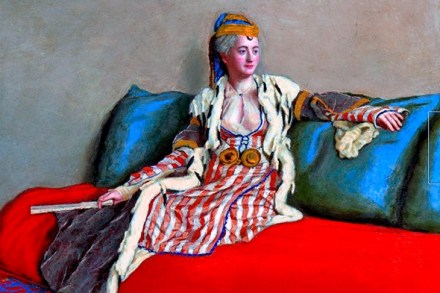
This timely book celebrates one of the most remarkable women of the 18th century. Lady Mary Wortley Montagu was so impressed by the Turkish technique of ‘engraftment’ to prevent smallpox that in 1721, exactly 300 years ago, she arranged for the first such inoculation in England — and, even more controversially, had it carried out on her own three-year-old daughter. Smallpox pus from a sufferer was carried in a walnut shell and applied to a cut made in her daughter’s arm. She discovered the technique too late to use it on herself. As a young woman and court beauty, she had contracted smallpox during one of the frequent epidemics that swept London, leaving her scarred and without any eyebrows.

How Neanderthal are you?

From our UK edition

My brother recently decided to get a DNA test. He discovered that our family were all descended from a mix of the usual British suspects — a bit of Viking, Anglo-Saxon and Celt — and were predisposed to standard diseases and health risks. But there was one surprise. My siblings and I had double the normal amount of Neanderthal in our genes. Reactions were mixed. My girlfriend declared she had suspected something of the sort for some time. My mother announced that it must come from my father’s side of the family. And it took us a while to digest.

BBC Four and the dumbing down of British television

From our UK edition

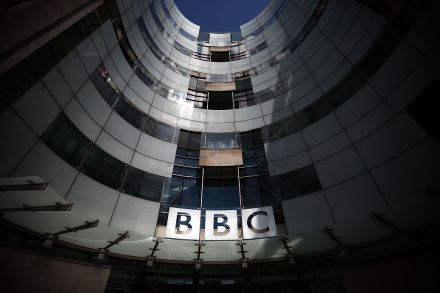
The announcement this week that BBC Four is to stop making new programmes and become a largely repeats-only channel – which they are cheekily calling ‘archive’ to make it sound better – is a depressing reminder to viewers of a very long-term trend. When BBC Four was launched amidst much fanfare in 2002, its slogan was 'Everybody Needs a Place to Think'. Has the BBC decided that they no longer do? Or perhaps the corporation – in focusing on ‘youth programming’ like BBC Three – thinks it isn't its job to provide one. Oh dear. Whatever happened to television? And in particular, the area that BBC Four was particularly supposed to promote: factual and arts television.

Has Britain learned from its failures in Afghanistan?

From our UK edition

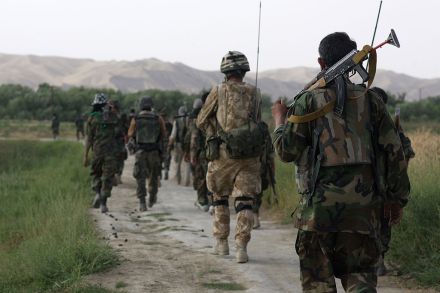
As the Americans prepare to leave Afghanistan, and in the UK we hold our own Defence Review, should we not be asking: have we really learned from the lessons of our failures there? I was in Afghanistan for a brief and intense time in 2007 when I was filming for Channel 4 Dispatches and CNN. We saw a country that had been brutalised for decades by the Russian occupation, the ensuing civil war and then American carpet bombing to ensure US troops met no resistance. A country which was becoming restive as the allies seemed increasingly unable to help them rebuild, or for that matter interested in doing so once they had been distracted by Iraq. It was a pivotable moment. In the first five years after the 2001 invasion, only a handful of British troops had died in Afghanistan.

Peru’s beauty has been a real curse

From our UK edition

As the planet gets more and more ravaged, the mind can begin to glaze over at the cumulative general statistics — so much rainforest lost, so many glaciers melted, so much less oil left. Joseph Zárate’s masterly new book reminds us that when it comes to fighting on the front line of the environmental wars, it’s all in the detail, and that nothing is quite as simple as might at first appear. Some years ago I went to a remote area on the border between Peru and Bolivia where a meteorite had landed on a small village and caused mass poisoning. The hospitals had filled up both with the locals and with the police who had been sent to investigate. Given that meteorites are not known to contain toxic materials, this seemed curious to say the least.

Exotic and endangered: Madagascar in peril

From our UK edition

Madagascar. There are so many delightful incongruities about the island. Despite being off the coast of Africa, because of the way the ocean currents work it was mainly settled by people from Borneo, 3,700 miles away — what Jared Diamond has described as ‘the single most astonishing fact of human geography’. For similar reasons, it is a biodiversity hotspot; more than 90 per cent of the wildlife is found nowhere else on Earth. And as one of the world’s largest islands, the sheer size can make it hard to assimilate. If ‘the Republic of Madagascar’, its formal title, were stretched out across Europe, the country would reach from London to Algiers.

Wish you were there

‘Well, that’s you shafted,’ said one friend kindly at the start of the worldwide lockdown. ‘Not a good time to be a travel writer.’ Yes and no. Obviously there’s not much actual travel possible at the moment. But the ratio in ‘travel writing’ between ‘travel’ and ‘writing’ has always been grossly disproportionate — too little time spent traveling and far too much time having to write about it when you get back. In my case, I only did just get back. I was writing a piece about the sunny beaches and boho resorts of northern Uruguay — one of those gigs which leads to envy and resentment, particularly in March — when they introduced the sudden guillotine on air travel.

travel

She just keeps rollin’ along: Colombia’s Magdalena River

From our UK edition

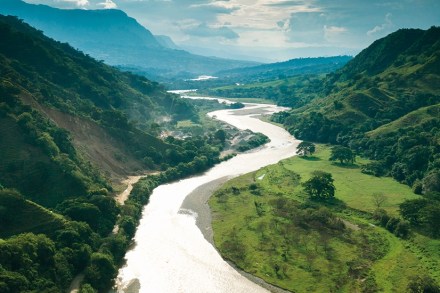
As Colombia comes out of 50 years of civil war and into a still precarious peace, with some 220,000 dead, this timely book explores one of the few dividends to emerge from such a terrible conflict. Large areas of the country were isolated by the war, and so spared the ravages of modern development. Unlike neighbouring Ecuador, where oil and gas exploration has done its worst, Colombia still has an essentially roadless expanse of pristine forest nearly the size of France. When I travelled in the mountains near Cali last year, I was struck by how depopulated the rural areas were. The peasant farmers, the campesinos, were only slowly returning from their exile in the comparatively safer cities.

The pleasures — and trials — of knowing Bruce Wannell

From our UK edition

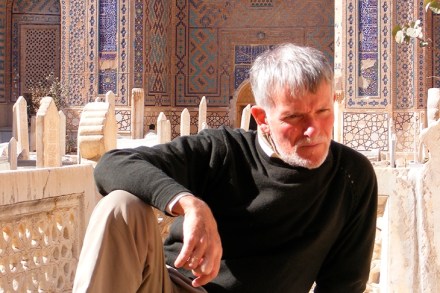
Bruce Wannell was by some way one of the most charismatic travellers I have ever met. Despite his almost complete penury, he would dress in perfectly tailored cashmere and, with a shawl swept over his shoulder, fix his attentive listeners with a glittering eye and a voice that could sweep dangerously low when he was about to cast aspersions on someone else’s cooking or scholarship. As this affectionate compilation of tributes by friends and admirers shows, Bruce himself ‘not only spoke Persian with a dazzling, poetic fluency, he could also talk in Arabic, Pushtu, Urdu, Swahili, be amiable in Amharic, Spanish and Greek and could lecture in French, Italian or German’.

Mountain heir

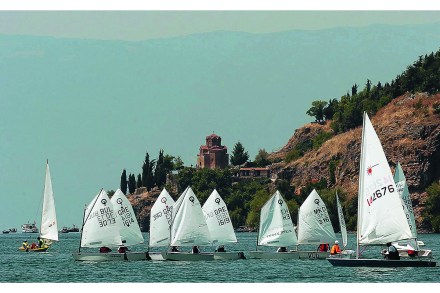
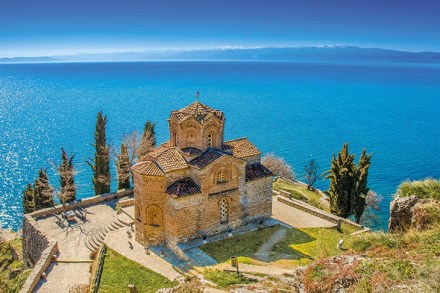
Kapka Kassabova’s previous travel book, Border, was rightly acclaimed and won several prizes. The author traveled to the edge of Europe, between Greece, Bulgaria and Turkey, and teased out ‘where something like Europe begins and something else ends, which isn’t quite Asia’. This is a sequel of sorts. She now travels to another border, that between Macedonia, Albania and Greece, where the vast and beautiful Lake Ohrid remains one of the Balkans’ surviving religious melting pots, despite considerable nationalist pressure. It is where her mother was originally from, so her journey is partly a rediscovery of her own roots.

kassabova

Lake Ohrid: an oasis of peace in the war-torn Balkans

From our UK edition

Kapka Kassabova’s previous travel book, Border, was rightly acclaimed and won several prizes. The author travelled to the edge of Europe, between Greece, Bulgaria and Turkey, and teased out ‘where something like Europe begins and something else ends, which isn’t quite Asia’. This is a sequel of sorts. She now travels to another border, that between Macedonia, Albania and Greece, where the vast and beautiful Lake Ohrid remains one of the Balkans’ surviving religious melting pots, despite considerable nationalist pressure. It is where her mother was originally from, so her journey is partly a rediscovery of her own roots.

Can’t anyone travel for fun any more?

From our UK edition

There was a time when travel writers would set off with a spring in their step: Coleridge knocking the bristles from a broom in his impatience to make it into a stick; Laurie Lee walking out one midsummer morning; Patrick Leigh Fermor singing as he headed down the lane. To travel was an expression of freedom and exploration; to step out of the front door the beginning of a grand  adventure. Not any more. Travel writers now come troubled and weary before they’ve even begun. A journey can no longer be a jeu d’esprit. It has to be undertaken to expiate some trauma. It is almost as if, in today’s new puritanism, it has to be painful. One thinks of the old nursery rhyme: ‘Wednesday’s child is full of woe, Thursday’s child has far to go.

Glorious mud

From our UK edition

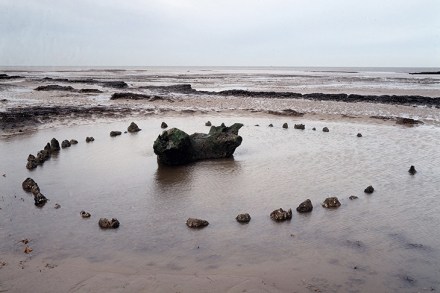
Francis Pryor claims he would be a rich man if every person who told him that the Fens were ‘flat and boring’ had given him five quid. Yet these million acres of water-logged land making their way from Lincolnshire through Norfolk and towards Cambridge have one quality that makes them irresistible to archaeologists like him. The peat preserves wood perfectly for thousands of years in a way that happens almost nowhere else in the country. As a result, and although few of us are aware of it, ‘some of the most imaginative and technically advanced excavations in the world are taking place in the Fens at the moment’.

Stormy sees

From our UK edition

There are more than 100 cathedrals in England, Scotland and Wales of many different denominations (although I for one had been previously unaware of the Belarus Autocephalous Orthodox Church). But, wisely, Christopher Somerville focuses on those great galleons with which we are most familiar: the cathedrals that first rose up above the plains of England after 1066. The metaphor which Somerville uses, of these cathedrals as ‘ships of heaven’, runs before the wind throughout this book. If the early cathedrals were blunt old battleships, built as foursquare as castles to show that the conquering Normans were here to stay, later Gothic ones were as elegant as grand and beautiful yachts.