Honor Clerk

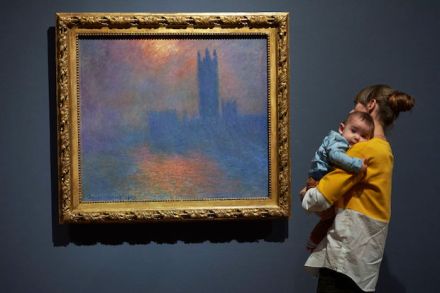
Monet’s great war effort

From our UK edition

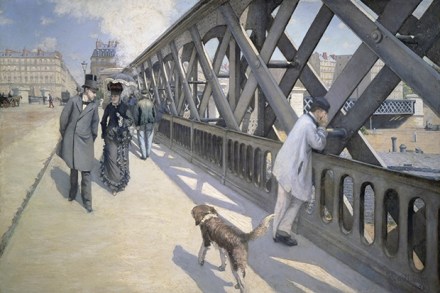
Claude Monet wanted to be buried in a buoy. ‘This idea seemed to please him,’ his friend Gustave Geffroy wrote. ‘He laughed under his breath at the thought of being locked forever in this kind of invulnerable cork, dancing among the waves, braving storms, resting gently in the harmonious movements of calm weather, in the light of the sun.’ Tethered below the water, but bobbing on the surface like a necropolitan bud, this bizarre image would have the great Impressionist finally metamorphosing into the thing that had so dominated his later years: the water lily. For an author who has taken on those titans of the Renaissance, Leonardo and Michelangelo, an ageing Claude Monet might seem an odd choice of subject.
The grit in the oyster

From our UK edition

Richard Dorment doesn’t do whimsy. Or Stanley Spencer. He’s a fan of Cy Twombly and Brice Marden, Gilbert and George and Mark Wallinger, Rachel Whiteread and Susan Hiller. He loves writing about contemporary art. And he worked as art critic of the Daily Telegraph for 25 years. Like the grit in the oyster he irritated the establishment, producing pearl after pearl that occasionally had even his own paper distancing itself from his opinions. ‘I looked edgy and transgressive,’ he says, ‘when in reality my taste in art was fairly cautious.’ Born in America, Dorment studied art history at Princeton and was assistant curator in European painting at the Philadelphia Museum of Art before moving to London and working as an exhibition organiser and writer on art.

Pure and endless light

From our UK edition

There has been extraordinarily little bright sunlight in the far northwest corner of Britain over the past year. Damp, drizzling summer, an endless sequence of howling autumnal gales and downpours, a muddy dismal winter. Then at the beginning of February, by some accounts traditionally a season for good weather in northern Scotland, a series of brilliant sparkling days arrived unannounced. While the rest of the country shivered and dripped, the sun in the north bounced off the sea, the hills were brilliant with deep snow, the night sky was clear and starry, northern lights pulsing on the horizon and the moon bright enough to read by. Enough to turn anyone’s fancy to Gerard Manley Hopkins. And this is what happens to Ann Wroe.

Sexy self-advertising

From our UK edition

At nearly eight foot high and five foot wide, Adélaïde Labille-Guiard’s portrait of herself with two of her students is by any reckoning a tour-de-force. Painted in 1785, it shows the artist seated at her easel, palette, brushes and mahlstick in hand, as though looking up briefly before adding to the large canvas before her. Seated on a gilt and green velvet chair, she is dressed in a pale blue satin décolleté dress and a straw hat decorated with ribbons and ostrich feathers. Her two female pupils stand behind her, one gazing in admiration at the work in progress, the other looking out of the painting, level-eyed and sober.

Lost, found and lost again

From our UK edition

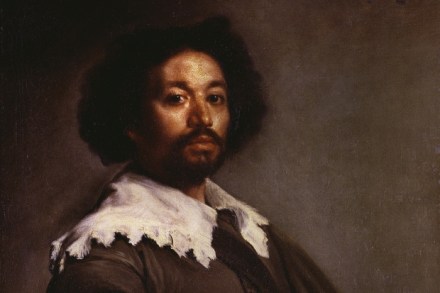
This is an extraordinary story. In 1845 John Snare, an unremarkable Reading bookseller, goes to an auction in a defunct boarding school where he buys, for £8, a painting catalogued as a half-length portrait of Charles I, ‘supposed’ to be by Van Dyck. In mid-19th century Britain a Van Dyck is a known and immensely desirable object, but from the outset Snare thinks that he has found a painting by Diego Velázquez, whose work is, by comparison, little known at the time here. He thinks he has, in fact, found the ‘lost Velázquez’, painted in Madrid in 1623 when the 22-year-old Prince Charles travelled incognito to Spain to seek a marriage alliance with Philip IV’s younger sister, Maria Anna.

An exquisite flowering of talent

From our UK edition

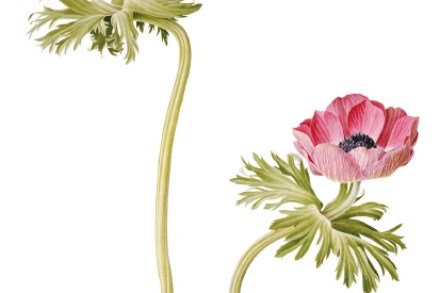
It seems odd that a singer, musician, television performer and sculptor who typified the 1960s as vividly as Rory McEwen should now be known principally for his botanical paintings. From the early 1950s until his tragically early death in 1982 he was everywhere and knew everyone, but as The Colours of Reality shows, McEwen was never more himself than when working within the discipline and timeless tradition of an art form that links him with the greatest flower painters of the past. Not every botanical painter can count Jim Dine, Joseph Beuys and Ravi Shankar as his friends, play the 12-string guitar, shoot at Balmoral, influence Van Morrison, bolster the fortunes of the Wakefield and North of England Tulip Society and drive a purple Ferrari with ‘Ecosse’ on the tail.

The self-taught maritime artist who transcends ‘naïve’ cliché

From our UK edition

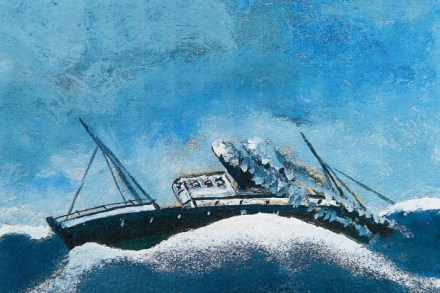
In the manner of Richard Holmes’s Footsteps, Julia Blackburn’s story of John Craske is as much autobiography as biography, as much about the hunt for information as the processed results of the search. The facts of John Craske’s life are briefly told: born in Norfolk in 1881 into a fishing family, he suffered some sort of mental and physical breakdown while training with the army in 1917 and for the remaining 25 or so years of his life dodged in and out of invalidism, sometimes bedridden for long periods, sometimes out fishing with his brothers, sometimes working as a fish merchant and perpetually supported and nursed by his devoted wife, Laura.

The hidden history of one of the greatest treasures of the early Renaissance: Florence’s Brancacci chapel

From our UK edition

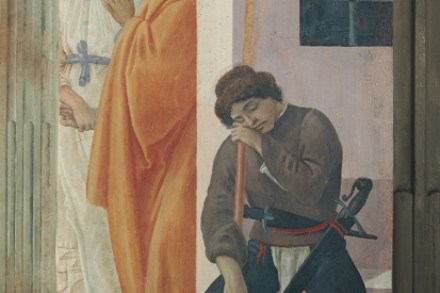
In 1439 Abraham of Souzdal, a Russian bishop visiting Florence, was in the audience in Santa Maria del Carmine for the famous Ascension play, arranged by the members of the lay confraternity, the Sant’Agnese. Sitting in the body of the church, Abraham looked up and saw, on top of one end of the huge stone choir screen, a castle with towers and ramparts, and at the other a Mount of Olives. From here the ascending Christ was drawn up through celestial curtains to be united with God the Father, suspended ‘in a miraculous fashion’ in the far distance above the altar.

Ali Smith’s How to be Both: warm, funny, subtle, intelligent – and baffling

From our UK edition

Pity the poor art historian writing a survey of painters from Giotto to, say, Poussin. In order to produce a history that is as gender-balanced as possible it is absolutely necessary to include every woman painter ever heard of, some perfectly worthy of their place, some less so. How the art historian might envy the novelist who at the stroke of a pen can change the sex of a little-known 15th-century painter — Francesco del Cossa, say — from male to female. Make the painter in question a woman disguised as a man, make her story the product of a teenager’s imagination and the trope is not only complete but irresistible. Such is half of the bare skeleton of Ali Smith’s brilliant novel, How to be Both. But which half?

Wonders written on the wall

From our UK edition

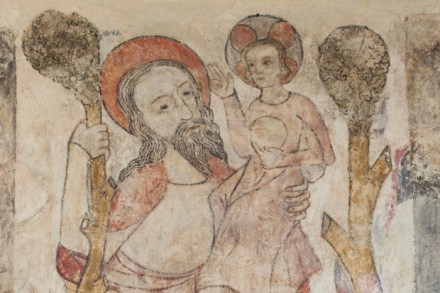
‘Take away, utterly extinct and destroy all shrines … pictures, paintings and all other monuments of feigned miracles, pilgrimages, idolatry and superstition so that there remain no memory of the same in walls, glass windows...’. These were the instructions handed down to churches in the reign of Edward VI, the death-knell for medieval church wall paintings following the wholesale destruction of the monasteries in his father’s time. That any church art survived this state-sponsored barbarism some five centuries ago seems extraordinary, and its rarity makes it all the more precious.

The selfie from Akhenaten to Tracey Emin

From our UK edition

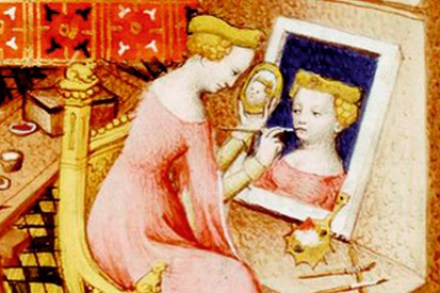
If ever there was a time to write a book about self-portraits, this must be it.  ‘Past interest in the genre,’ James Hall tells us in his introduction to this cultural history, ‘is overshadowed by the obsession with self-portraiture during the last 40 years.’ What he could not have foreseen was that self-portraiture would feature in the mainstream news as never before over the last six months or so. Firstly, the Oxford English Dictionary announced that ‘selfie’ was their word of the year for 2013, spawning a noisy debate about photographic self-portraiture. Next, David Cameron, Barack Obama and Helle Thorning-Schmidt were spotted taking a selfie at Nelson Mandela’s memorial service — an act that merited global news coverage.

Weaving Scotland’s history

From our UK edition

A couple of years ago, while tracking down paintings for the Public Catalogue Foundation in the far north of Scotland, I had the chance to see a rarely displayed sequence of banners, created in 1993, telling the story of Earl Rognvald’s epic voyage to Jerusalem in 1151. Suspended between the pillars of the shadowy nave of St Magnus Cathedral in Kirkwall, the 14 huge paintings, the work of four different artists with words by George Mackay Brown, had an extraordinarily powerful and moving effect. The scale of the enterprise, the narrative, and the fact that it was the product of collaboration seemed to be as much a part of the success as the quality of the work itself.

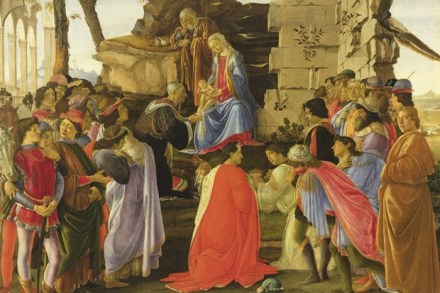
How to avoid bankers in your nativity scene

From our UK edition

In the vast Benedictine monastery of Monte Oliveto Maggiore between Siena and Rome, the cycle of frescoes depicting the life of St Benedict by Giovanni Anionio Bazzi includes a charming self-portrait of the artist standing with a couple of pets at his feet, for all the world a 16th-century Italian Dorothy with a brace of Totos. (A detail of the painting is reproduced overleaf.) Bazzi did not earn his popular soubriquet of ‘Sodoma’ for nothing — though Vasari is not always reliable — but if his life was the scandalously licentious and dishonourable thing that Vasari would have us believe, then this only places him in the mainstream of the world described in Alexander Lee’s fascinating new book.

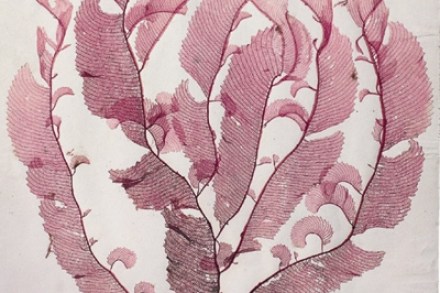
Seaweeds, by Ole G. Mouritsen – review

From our UK edition

On 14 April each year, nori fishermen gather on a hillside overlooking Ariake Bay on Kyushu in southern Japan to pay homage to ‘the Mother of the Sea’. There is a shrine and an altar for votive offerings but this is not a religious rite. The mother in question is Kathleen Mary Drew-Baker, a Lancashire- born algae researcher who, in 1949, discovered the life-cycle of porphyra umbilicalis.  Not, perhaps, front-page news in the occident, but this was the key to the cultivation of that dark green papery wrapping around the outside of sushi that is consumed in one form or another in every Japanese household: nori. Kathleen Drew-Baker died in 1956, unaware that her research had laid the foundations for the most valuable aqua-culture industry in the world.

The picture of health

From our UK edition

It must have been hard to settle on a title for this book; but then this is not the book that Richard Cork originally had in mind.  In his introduction to The Healing Presence of Art he describes how he was approached to write on the contemporary role of art in hospitals, but in beginning the research for this he became aware, as he puts it, ‘of the rich, complex and largely overlooked tradition’ to which modern art and medicine are the heirs.   It is this vast hinterland that forms the theme of Cork’s book. It is neither ‘art in hospitals’, nor ‘art and medicine’ nor ‘art as therapy’ but all these things and more.

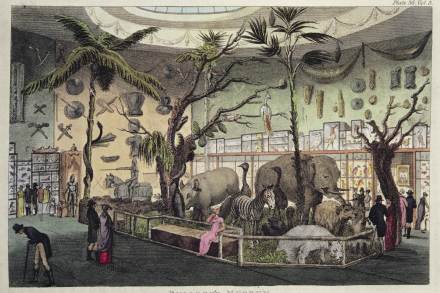
Ransacking the world

From our UK edition

Something in the air is arousing an interest in collectors and collections — both private and public — of which the success of The Hare with Amber Eyes and The Children’s Book are perhaps the most visible recent examples. Something in the air is arousing an interest in collectors and collections — both private and public — of which the success of The Hare with Amber Eyes and The Children’s Book are perhaps the most visible recent examples. Jacqueline Yallop’s book is firmly in this vein, deploying an astonishing breadth of research to reveal, in a blend of narrative, contextual history, museology and biography, some of the forgotten stories that lie behind the scenes (literally as well as metaphorically) of many of our greatest museum collections.

Walking wounded

From our UK edition

Paul Torday’s phenomenal success with Salmon Fishing in the Yemen was always going to be a hard act to follow. Paul Torday’s phenomenal success with Salmon Fishing in the Yemen was always going to be a hard act to follow. The idea of it was the thing — a wonderfully funny, mad idea, carried out economically in an epistolary style that rushed along from start to finish in a single fluid motion. ‘When once you have thought of big men and little men,’ a curmudgeonly Johnson said of Gulliver’s Travels, ‘it is very easy to do all the rest,’ but Salmon Fishing in the Yemen showed just how crucial that good idea is. Torday’s new novel, More Than You Can Say, at its outset, seems to offer the same kind of treat.

The devil’s in the detail

From our UK edition

The Angel’s Game, by Carlos Ruiz Zafón Standing behind the high altar in Prato Cathedral last week, binoculars trained on a fresco some 40 feet above, I found myself puzzling over a barely discernible detail in a scene of the nativity of St Stephen. At the foot of the new mother’s bed a winged figure, knees bent in a gesture of tender genuflection, cradles in his left arm a haloed baby. With his right he touches another baby, swaddled like the first, and lying on a crib. The angel — as he appears to be — has a sorrowful expression, and is an attractive dark green, like the patination of an ancient bronze. Slowly, other details emerge from the gloom to disturb the first engaging impression: he has no halo, his feet are clawed and he sports a tail.

Morality tale with a difference

From our UK edition

A Most Wanted Man, by John le Carré Location, location, location is as much the mantra of espionage fiction as it is of another profession’s literature celebrated for making things seem what they are not. And location, not just in the sense of topographical reality, but of mood, atmosphere and the specifics of time and culture, is at the core of John le Carré’s latest novel.

The circle of a lonely psychiatrist

From our UK edition

Honor Clerk on Siri Hustvedt’s latest novel Born into a second generation Norwegian immigrant family, Erik Davidsen is a divorced New York psychoanalyst with his fair share of sorrows and with a close circle of relations and acquaintances who in turn have their sorrows too. He is a compassionate and sensitive man and the troubles of his family and of his patients are central to his thoughts. He is also lonely, and finds himself involuntarily saying so, out loud. His father has just died, his sister is recently widowed and her famous husband’s life is the subject of intrusive press speculation. Her daughter’s double bereavement is compounded by having witnessed events at the Twin Towers.