Hermione Eyre

Magnificent: V&A’s Marie Antoinette Style reviewed

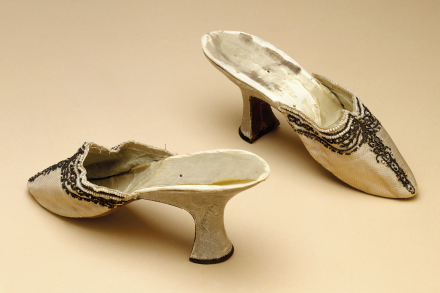
This exhibition will be busy. You’ll shuffle behind fellow pilgrims. But it’ll be worthwhile. It’s a tour de force that tells the story of Marie Antoinette’s 17 years on the throne with detail, focus and flair. There are 34 items here that she owned personally – opulent, carefree objects that resonate with impending disaster. These precious items need protecting from light, and in the first room curator Sarah Grant cleverly runs with this, evoking the candlelit ambience of a Versailles ball by hanging silver baubles from the ceiling and covering the walls with smoked mirrors. Here we have a taste of Marie Antoinette’s wardrobe – its annual budget peaking at £1.
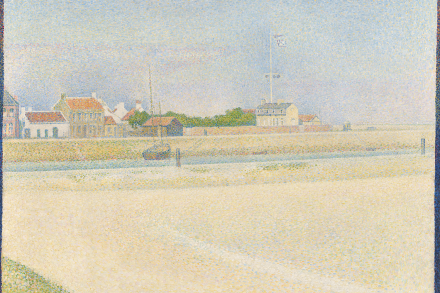
Sondheim understood Seurat better than the National Gallery

In Sunday in the Park with George, Stephen Sondheim catches something of what makes Georges Seurat so brilliant – not just his technical flair, but his engagement with ordinary life. Sondheim has Seurat sing, or rather woof, a little duet between two dogs meeting on the island of La Grande Jatte; later, Sondheim gives Seurat a pointillist melody as he works, crotchet-dabs of blue, blue, blue, red, red… Seurat’s muse, meanwhile, is called Dot. Seeing the National Gallery’s somewhat overloaded presentation made me long for the light touch of Sondheim.

Wittily wild visions: Abstract Erotic, at the Courtauld, reviewed

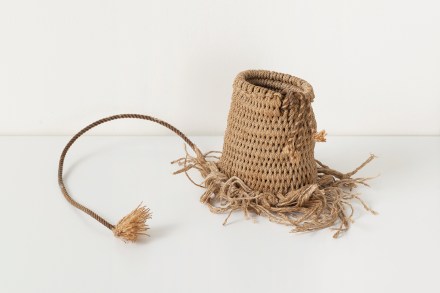
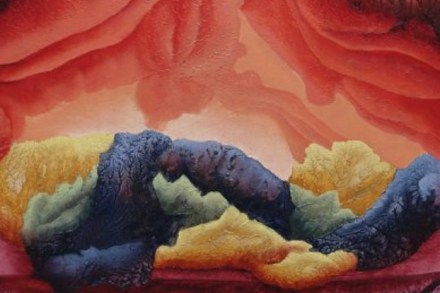
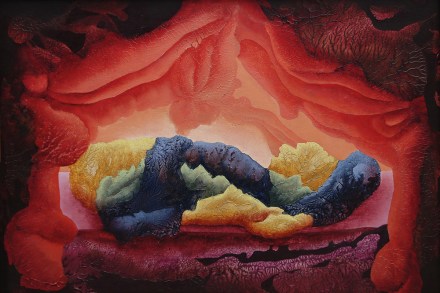
If you came to this show accidentally, or as a layperson, it could confirm any prejudices you might have about avant-garde sculpture. Pretentious, ugly and resorting to kink. Those pendulous string bags, that enormous turd – gimme a break. Except that would be a mistake. Because the work here is the real thing: the 1960s originals that spawned a million imitations and parodies. The exhibition is perhaps a little cool about selling itself, so allow me. This is a snapshot of the work of three artists around the time they all took part in a 1966 New York show called Eccentric Abstraction. Two of the artists, Louise Bourgeois and Eva Hesse, were nascent superstars.

Grayson Perry has pulled off another coup at the Wallace Collection

This show was largely panned in the papers when it opened in April, with critics calling it ‘awkward and snarky’, applying that sturdy English put-down ‘arch’, and generally carping at ‘rich insider’ Sir Grayson Perry for posing as an outsider artist. Word-of-mouth reviews were completely different, however, almost as if gallery-goers, free from the necessity of taking an art-historical position, had just really enjoyed the whole bonkers experience. To get to the exhibition, which is down in the former cellars of Hertford House, you first walk through the Wallace Collection, past its gleaming ormolu and onyx treasures.

Peter Frankopan, Tim Shipman, Francis Pike, Hermione Eyre and George Young

42 min listen

On this week’s Spectator Out Loud: Peter Frankopan argues that Israel’s attack on Iran has been planned for years (2:00); just how bad are things for Kemi Badenoch, asks Tim Shipman (13:34); Francis Pike says there are plenty of reasons to believe in ghosts (21:49); Hermione Eyre, wife of Alex Burghart MP, reviews Sarah Vine’s book How Not To Be a Political Wife: A Memoir, which deals with Vine’s marriage to ex-husband Michael Gove (28:46); and, George Young reports on the French sculptors building the new Statue of Liberty (34:45). Produced and presented by Patrick Gibbons.

War and peace, why restaurants are going halal & the great brown furniture transfer

45 min listen

This week: war and peace Despite initial concerns, the ‘Complete and Total CEASEFIRE’ – according to Donald Trump – appears to be holding. Tom Gross writes this week’s cover piece and argues that a weakened Iran offers hope for the whole Middle East. But how? He joined the podcast to discuss further, alongside Gregg Carlstrom, the Economist’s Middle East correspondent based in Dubai. (01:51) Next: why are so many restaurants offering halal meat? Angus Colwell writes about the growing popularity of halal meat in British restaurants. This isn’t confined to certain food groups or particular areas – halal is now being offered across restaurants serving all sorts of cuisine, from Chinese to Mexican. But why is it so popular?

Being stalked by a murderer was just one of life’s problems – Sarah Vine

Private Eye asked last week: Which of Michael Gove’s luckless staff at The Spectator will be assigned to review this grisly account of their editor’s marital woes? Reader, it’s me! I’m happy to do this, though, because I have an interest in how to be a political wife (I am married to Alex Burghart MP), and perhaps have something to learn here, though I’m struggling to understand, eek, ‘lesson seven’: Realise... that when you step over the salt circle into the five-pointed star coven of politics, you have ceased to become a person. You are now a c**t. There’s a feeling that the author still has a touch of PTSD. Readers with expectations of schadenfreude will not be disappointed.   Sarah Vine shoots thunderbolts.

Why you didn’t want to get on the wrong side of Cecil Beaton

‘Remember, Roy, white flowers are the only chic ones.’ So Cecil Beaton remarked to Roy Strong, possibly as a mild put-down to the young curator. But it was a curious put-down to make because Beaton broke his own rule happily, buying mountainous armfuls of speckled yellow, pink and scarlet carnations at Covent Garden and longing to fill his borders with Korean chrysanthemums and purple salvias. This small exhibition at the Garden Museum enjoys the sweet-pea surface of Beaton’s creations, while giving a flash of the glinting secateur that also made up such an important part of his personality. Beaton’s ability as an image-maker was astounding. Those famous photos of his Cambridge days with the Bright Young Things are still outrageous, a mad foray into camp pastoral.

Fascinating royal clutter: The Edwardians, at The King’s Gallery, reviewed

The Royal Collection Trust has had a rummage in the attic and produced a fascinating show. Displayed in the palatial gallery adjacent to Buckingham Palace, and described on headsets in the reassuring tones of Hugh Bonneville, are public tokens and personal treasures of two generations: Edward VII and Queen Alexandra, and George V and Queen Mary. Frocks, clocks and diplomatic gifts; purchases and mementoes that give the illusion that the royal family might be, after all, not so unlike us. There’s an unusual tea set, with odd, red photos: as princess, Alexandra took family snaps and had them printed on to these porcelain teacups in 1892, more than 100 years before Moonpig.

Poise and gentleness: Hiroshige, at the British Museum, reviewed

Why is Hiroshige’s work so delightful? While his close predecessor Hokusai has more drama in his draughtsmanship, Hiroshige’s pastoral visions conjure a sense of timeless continuity that appealed to his contemporaries as much as to present-day teens who love the merch. His is a world in which everything has happened before, and will happen again. People race for shelter from a sudden shower of rain; a finely dressed lady adjusts her slipping belt. Human life seems small and predictable against his vast mountains and limpid lakes.

Wonderfully intimate: The Drawings of Victor Hugo, at the RA, reviewed

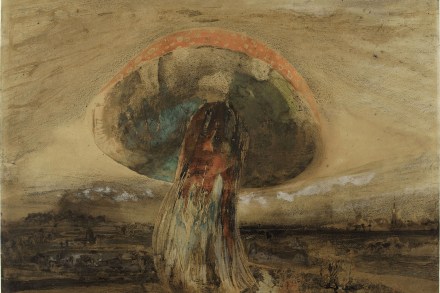
You feel so close to Victor Hugo in this exhibition. It’s as if you are at his elbow while he sighs at his standing desk at the top of his house on Guernsey, where he held France constantly in view as he worked. Here, frustrated by Les Misères (working title), he has thrown down his pen and moved to his art table, sloshing great washes of sepia ink across paper to form lowering clouds. And there, daydreaming, he has cut out a stencil of a castle, and placed it on a cloud of ink. (Hmm, ‘castle on a cloud’ – could make a nice lyric for a song one day…) Here is a person thinking with their pen – or rather, letting their pen think with them There is a wonderful intimacy to his travel sketchbooks, full of minutely well-observed brickwork and staircases.

Paul Wood, Matthew Parris, Ian Buruma, Hermione Eyre and Francis Young

34 min listen

On this week’s Spectator Out Loud: Paul Wood reads his letter from the Vatican (1:17); Matthew Parris warns Conservatives from embracing causes that could lose them as much support as they would gain (7:31); reviewing Richard Overy’s Rain of Ruin: Tokyo, Hiroshima and the Surrender of Japan, Ian Buruma argues that the atomic bombs were not only immoral, but ineffective (15:35); Hermione Eyre examines the life and work of the surrealist artist Ithell Colquhoun (23:03); and, Francis Young provides his notes on Shrove Tuesday (29:12). Produced and presented by Patrick Gibbons.

An exhilarating, uneven survey of an outstandingly eccentric British surrealist

Ithell Colquhoun was always a bit of a mystery surrealist. Her greatest hit is the unsettling, dream-like ‘Scylla’ (1938), a painting of two towering cliffs, which could equally be thighs in the bath. The prow of Odysseus’s Argo peeps through them. The pubic hair is seaweed, and there are shells, but, as far as discernible, no crabs. The point of view of the painting is that of the titular monster Scylla, lying in wait. It’s witty and disturbing; mythic and domestic. A British surrealist high point, frequently anthologised. This aside, her name was relegated to lists.

The rediscovery of the art of Simone de Beauvoir’s sister

An exhibition of the art of Hélène de Beauvoir (1910-2001), sister of the great Simone, opened in a private gallery near Goodge Street last week. It was the first time Hélène’s work had been shown or received any attention in London, and young people in alternative clothing gathered to sip orange wine and listen, rapt, to the 75-year-old biographer and friend of the de Beauvoir sisters, Claudine Monteil, as her recollections helped elucidate Hélène’s abstract paintings. The reclamation of a new ‘lost’ artist was under way. De Beauvoir’s cubist self-portrait is quite good – but ‘Simone in red jacket’ must never be seen It is possible, these days, for gallerists to do good work – self-defining as allies and activists – while making a good fortune.

Stories of the Sussex Downs

This amazing book is itself a little like a flint, a misshapen stone egg of the Sussex Downs. It resists the reader at first, coated in the calcite rind of the author’s slow, scholarly journey, missteps and all. But when you persist, breaking the book’s spine or, as it were, knapping the flinty nodule, you find treasure within. Alexandra Harris quotes the painter Paul Nash writing in 1937: ‘If I broke all the shells of all my wild stones, I should find that precious yolk which is like precious stones, the black core of the flint.’ From Nash, it’s a hop and a skip to Henry Vaughan, the metaphysical poet who ‘understood his heart as a cold flint that must be violently struck if it were to kindle into divine light’.

James Heale, Paul Wood and Hermione Eyre

21 min listen

This week: James Heale takes us through the runners and riders for the conservative nomination for mayor of London (1:00), Paul Wood discusses how Saudi Arabia is trying to buy the world (06:02), and Hermione Eyre reads her arts lead on the woman who pioneered colour photography (12:51).  Produced and presented by Oscar Edmondson.

The woman who pioneered colour photography

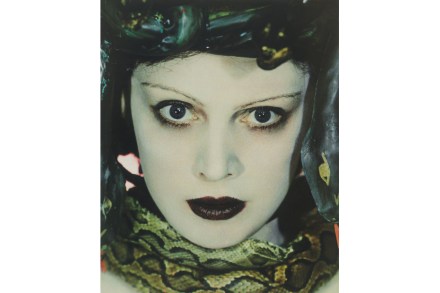
When colour photography first came in at the start of the last century, it met a surprising amount of resistance from distinguished photographers. But Madame Yevonde loved it, owned it, revelled in it. She invested in a new Vivex repeating back camera, exhorting her fellows at the Royal Photographic Society in 1932: ‘Hurrah, we are in for exciting times. Red hair, uniforms, exquisite complexions and coloured fingernails come into their own… If we are going to have colour photographs, for heaven’s sake let’s have a riot of colour.’ But what she went on to create was far better than that. In her classical series ‘Goddesses’ (1935) she controlled colour like a Renaissance master, painting with it, creating atmosphere and character.

Anne Glenconner: ‘I took my courage from Princess Margaret’  

Craig Brown is responsible for the astonishing late flowering of Anne Glenconner. It was his biography Ma’am Darling: 99 Glimpses of Princess Margaret that so enraged her that, in an effort to stick up for her friend, whom she served as a lady-in-waiting for 30 years, Lady Glenconner started writing in her mid-eighties. She hasn’t stopped since. First came an internationally best-selling memoir, Lady in Waiting, then two pacy novels. And now, coinciding with her 90th birthday, as well as (no flies on her) the new season of The Crown, Christmas etc, she publishes this volume of ‘life lessons’ – a catch-all, really, for any other top toff reflections from this most likeable of survivors.

Richard E. Grant’s tribute to his wife leaves us shattered for his loss

Richard E. Grant pulls off a feat here. The title is twee but the content isn’t. With unselfpitying dash the actor-writer recounts caring for his wife, the dialect coach Joan Washington, through lung cancer last year (‘Living grief. Raw. Savage.’). He thoughtfully interleaves the heartbreak with glitzy showbiz recollections which help keep our peckers up, so we ricochet through time, from the Golden Globes to the Royal Marsden, from sedative injections to Star Wars. It’s an unusual structure, but it works – so, to use one of the author’s expressions, ‘Why bloody notsky?’ Grant’s daily diary-keeping is what makes the book.

How to tell your Roman emperors apart

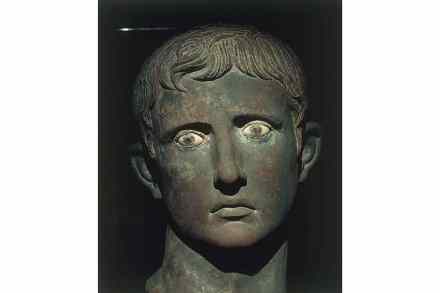
Rising professors do well to be controversial if they wish to be invited to contribute to mainstream media. But the elder professor, lauded, loved and telly-tastic, has the privilege of swerving controversy without losing the limelight. And so Mary Beard gives us this rich disquisition on the Caesars’ visual representation (and misrepresentation), from swapped plinths to forged heads. Handsomely illustrated and brightly ringing with Beard’s enjoyment and scholarship, the book doesn’t inflame debate but brings it down a few degrees. While her publicist might have preferred more engagement with today’s ‘sculpture wars’ (touted on the dust jacket but not mentioned within), Beard provides no ammo for either side, but takes a wry long view.