Helen R Brown

A matter of life or death: Should We Stay or Should We Go, by Lionel Shriver, reviewed

Leave or remain? That’s the question hanging like a cartoon sledgehammer over Lionel Shriver’s 17th novel. Although she makes merry with the parallels, her subject isn’t Brexit. It’s how long a person should choose to live. Should we allow ourselves to shamble, with gentle optimism, into decades when mental and physical decay are statistical probabilities? Or should we Take Back Control, and off ourselves before revolted strangers are required to wash our private parts at great cost to our struggling NHS? The characters Shriver charges with assessing the options are Cyril and Kay Wilkinson. We meet them in their early fifties as they return home after Kay’s father’s funeral.


Telling tall tales

‘I think you’re an adult when you can no longer tell your life story over the course of a first date,’ says Glen David Gold. I emerged from his weighty memoir feeling more like I’d been through a marriage: sadder, wiser, still sifting the decades of detail for the moments when a little self-awareness could have spared hearts. My crush on Gold’s writing dates back to his sensational 2001 debut novel: Carter Beats the Devil. Set in the author’s native California in the 1920s, the tale of rival magicians combined seductively complex characters, wisecracking dialogue and vintage Americana in a plot as ingeniously designed and expertly sprung as an escapologist’s stage.

Stripped to the bone

Early on in Amy Tan’s 1989 bestseller, The Joy Luck Club, a Chinese concubine slices a chunk of flesh from her arm and drops it into the soup she has made for her dying mother. She spills another bowl of soup over her young daughter, seriously scalding the child’s neck. When that scarred little girl grows up and emigrates to America, she tells herself that to find her true identity, ‘You must peel off your skin, and that of your mother, and her mother before her. Until there is nothing. No scar, no skin, no flesh.’ Almost 30 years later, the author has finally found the courage to take her character’s advice.

A cold coming to Cornwall

In 1939, Barbara Hepworth gathered her children and her chisels and fled Hampstead for Cornwall. She expected war to challenge her passion for abstract form. But her commitment deepened. The solid ovoids she sculpted carried the weight of grief and the hope of eggs. To Hepworth, they became ‘forms to lie down in, or forms to climb through’. They were a means of retaining freedom whilst carrying out what was demanded of me as a human being… a completely logical way of expressing the intrinsic ‘will to live’ as opposed to the extrinsic disaster of the world war.

Torn between envy and contempt

Arriving at boarding school with the wrong shoes and a teddy bear in his suitcase, the hero of Elizabeth Day’s fourth novel is the latest in a long literary line of suburban lost boys sucked into the intoxicating orbit of a wealthy friend. F. Scott Fitzgerald, Evelyn Waugh, Patricia Highsmith, Ian McEwan, Alan Hollinghurst and Gillian Flynn have all done it before and we know the story never ends well. Day drops references to them all into her book, like olives into an increasingly dirty martini. We know from the outset that a crime has been committed. We first meet Martin Gilmour in a police interview room, the day after his friend Ben Fitzmaurice’s 40th birthday party in the summer of 2012.

Hornet highballs anyone?

After school last Wednesday, I watched my five-year-old daughter pop a dead cricket on to her tongue and proclaim it: ‘Like fishy popcorn!’ ‘MMMm, delicious!’ squealed her friend, reaching for more as a third little girl spat hers, discreetly, back into her palm. ‘I’m getting pistachio,’ said the spitter’s mum, picking up the packet for closer scrutiny. I popped one into my own mouth and got stale, mealy, chewy: like a morsel of dusty, old crab-paste sandwich. I bought the edible Acheta domesticus at my local farm shop. They were stacked, like a drinking bet, above the local gins under a sign reading: ‘Sharing for the Daring.’ Mealworms with Sesame and Cumin; Grasshoppers with Paprika and Crickets with Sweet Mango.

The gangster life of Ryan

Lisa McInerney found a brilliant way to turn heads and hone her craft as the ‘Sweary Lady’ behind the ‘Arse End of Ireland’ blog. Taking a gonzo approach to the life she knew — first a council estate in Co. Galway, then a selection of much nicer houses in Cork — she let rip as an ‘amplified, wittier, crankier version of myself’. She took that mood of wild pace and confidence into her first novel, The Glorious Heresies, and it paid off. Her boisterous tale of Munster drug dealers, nailed as ‘Trainspotting with a heart’ by online magazine The Pool, won both the Baileys Prize for women’s fiction and the Desmond Elliott Prize for debut novels.

In praise of LSD

Ayelet Waldman is, surely, not the first writer to have scrolled through a list of ‘Books of the Year’ and become increasingly enraged to find her own book not on it. But where other authors manage to keep a dignified silence (sticking pins into critics’ byline photos in private), Waldman demonstrates a lively lack of self-control, and often reaches for her phone. In 2014 she fired off a volley of increasingly furious tweets when the New York Times omitted her novel Love and Treasure from its list of ‘Notable Books’. Her book was, she railed, ‘fucking great’. It felt ‘fucking demoralising’ to be excluded when her book had garnered ‘better reviews’ than many on the list.

Wild, wild women

Who is the least likely candidate for an animated princess movie? That’s the question former DreamWorks animator Jason Porath asked his colleagues over lunch a few years back. Over the hour they kept one-upping each other with increasingly inappropriate heroines. Nabokov’s Lolita came out on top. Throughout the conversation, Porath kept throwing out the names of obscure warrior women he’d read about on Wikipedia binges. He suggested the female samurai Tomoe Gozeno, Josefina Guerrero, the ‘Leper Spy of the Philippines’, and Mariya Oktyabrskaya, the Soviet widow who sank her life savings into a tank she drove into frontline battle against the Nazis. But none of his colleagues had heard of them and he felt that needed to change.

A bit player in the great drama

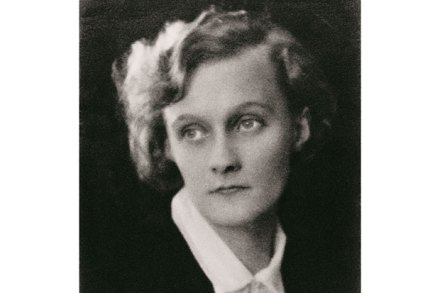
There’s a glorious scene in Astrid Lindgren’s first Pippi Longstocking book in which her fearless, freckled heroine strides to the centre of a circus ring and briskly lays out the World’s Strongest Man. Like most of the adults who expect to control her, he quickly learns that his inflated size, age and title are no match for the child’s bold pin-wielding attitude. As a little fan myself in the early 1980s I probably giggled as the strongman toppled. But reading it to my own children this summer I also felt a deep lurch of sadness. The strongman’s name was Adolf, and the book (published in 1945) was written as an equally ridiculous Adolf was sending train loads of bright little Pippis to their ‘final solution’.

‘I wish you were never born’

All parents worry about the extent to which their children will expose their private weirdness to the world. They tell their teachers that Daddy takes his tea into the toilet and Mummy ‘actually pulled the car over’ for a closer look at the dead badger they passed on the school run. But the traumatic new memoir by the journalist Ariel Leve lifts the lid on a whole new league of maternal craziness. Although Leve disguises her mother as ‘Suzanne’ in this book, a quick google reveals her to be the poet and feminist film-maker Sandra Hochman. When People magazine’s Patricia Burnstein visited Hochman’s ‘elegantly appointed’ Manhattan penthouse in 1976, it seemed that mother and daughter lived a loving bohemian idyll.

All at Sea: Decca Aitkenhead’s piercing account of her partner’s death

‘This happens to other people.’ The Guardian journalist Decca Aitkenhead says she had heard the phrase countless times, interviewing the survivors of random disasters, and the idea had always puzzled her: ‘Why would they think other people are any different from them?’ But when her partner of ten years drowned while rescuing their small son from the Jamaican sea on a family holiday in May 2014, she was startled to catch herself feeling exactly the same thing. She unpicks the emotion in her piercing account of his death and the strange series of events surrounding it: We read about freak disasters every day, knowing perfectly well that the news is not fiction. And yet, deep down, what we are reading must feel to us made up.

Out of the depths

‘This happens to other people.’ The Guardian journalist Decca Aitkenhead says she had heard the phrase countless times, interviewing the survivors of random disasters, and the idea had always puzzled her: ‘Why would they think other people are any different from them?’ But when her partner of ten years drowned while rescuing their small son from the Jamaican sea on a family holiday in May 2014, she was startled to catch herself feeling exactly the same thing. She unpicks the emotion in her piercing account of his death and the strange series of events surrounding it: We read about freak disasters every day, knowing perfectly well that the news is not fiction. And yet, deep down, what we are reading must feel to us made up.

Sick transit

Sitting at her desk at the BBC in March 2006, researching a documentary about the Olympic Games, Caroline Jones pressed her thumbs deep into her eyelids, allowed herself to visualise a chocolate brownie and started to salivate. After work she stopped at the supermarket and bought some brownies… along with a chocolate loaf cake and a large pot of cream to pour over it, a giant chocolate bar, an apple puff, two eclairs, a cream slice, a selection of reduced pastries, a loaf of bread, a packet of butter and three packets of biscuits: bourbons, custard creams and Maryland cookies. When she got home she ate it all in under four hours. In her thoughtful new memoir on her 14-year struggle with bulimia, Jones describes a moment of sharp self-awareness experienced two hours into that binge.

A legend in her own time

I usually dread the final 15 minutes of a celebrity interview: the awkward section during which the writer must steer the conversation away from the polite, mutually enjoyable discussion of whatever the star is currently promoting toward the juicy personal details that your readers really want to know and your subject really (and justifiably) wants to keep private. You sit in the consciously impersonal atmosphere of an upmarket hotel room with a total stranger, and broach topics you might spend decades dancing around with friends and family. I still have nightmares in which I blurt out lines worthy of Alan Partridge: Yes, the bass line on that track is terrifically deep isn’t it!

Patti Smith grows old too gracefully

‘Jesus died for somebody’s sins/ but not mine’: the opening lines of Patti Smith’s 1975 debut album, Horses, find a young woman marking her territory with fierce conviction. Raised as a Jehovah’s Witness, she was (or was treated as) an invalid for much of her New Jersey childhood. The restrictions were physical and spiritual. But in her twenties the androgenous daughter of blue-collar workers used her punk poetry to reclaim the freedoms North American culture had stolen from her. And while she relieved Jesus of responsibility for her sins, she certainly didn’t count her compulsion to write and lust and holler among them.

Punk in a funk

Look up Tracey Thorn’s live performances with Everything But The Girl or Massive Attack on You Tube and you’ll find the comments posted beneath it full of praise for the liquid melancholy in her lovely voice. The simple sound of air passing from her lungs, across her larynx and out of her lips in the 1990s is ‘sexy’, ‘soulful’, ‘classy’ and, most often, ‘perfect’. And don’t get her wrong; she’s chuffed that people like the noise she makes. But she frets about how much this ‘disembodied voice’ has to do with the rest of Tracey Thorn: the introvert with the ‘suburban’ speaking voice.

Wolves in the Lake District get everyone’s pheromones going

Locate. Stalk. Encounter. Rush. Chase. The pace of Sarah Hall’s fifth novel follows the five stages of a wolf hunt as she imagines a pack of apex predators restored to the British countryside: the thrill of lean, grey flanks streaking through the bracken sending vital adrenalin coursing through an ecosystem grown sluggish. Her fiction is clearly based on the plans of Paul Lister, the heir to the MFI fortune who’s been assembling an ancient wilderness on his 23,000-acre Alladale estate in north eastern Scotland. The deciduous trees, elk and wild boar have already been slotted into place and in 2013 he announced he was conducting feasibility studies for the reintroduction of bears and wolves.