Helen Nugent

Tax avoidance, care home fees, consumer spending and energy

Banks and accountancy firms that help people to avoid tax face huge fines under proposals set out by the Treasury. A fine of up to 100 per cent of the tax that was avoided - including via off-shore havens - has been suggested in the new rules, published for consultation. Currently those who advise on tax face little risk, while their clients face penalties only if they lose in court. The rules would 'root out' tax avoidance at source, the Treasury said. The rules in the consultation document also make it simpler to enforce penalties when avoidance schemes are defeated. 'These tough new sanctions will make would-be enablers think twice and in turn reduce the number of schemes on the market,' said the Financial Secretary to the Treasury, Jane Ellison.

Rail fares, inflation, pension deficits and savings cuts

Rail fares have increased at double the speed of wages since 2010, research by trade unions suggests. Fares have risen by 25 per cent in the past six years, while average weekly earnings have grown by 12 per cent, analysis by the TUC and the Action for Rail campaign shows. Meanwhile, official figures released this morning show that the UK's inflation rate, as measured by Consumer Prices Index, rose to 0.6 per cent in July. That compares with a rate of 0.5 per cent in June. Inflation as measured by the Retail Prices Index picked up to 1.9 per cent in July, from the previous month's rate of 1.6 per cent. July's RPI inflation rate sets the cap for how much regulated rail fares in England, Scotland and Wales can rise by next year.

Are pensioners squandering their retirement cash? New data suggests not

Statistics. Like so many things in life, it's easy to bend facts and figures to support an argument or make a point. Brexit exemplified that and then some. And so it is with pensions data. Following this morning's publication of the first full year of pension freedom information, the headlines varied from paper to paper and website to website. 'Some taking too much from pension pots' said the BBC. 'Retirees prove more prudent than expected after pension freedoms' reported The Guardian. 'Insurers warn that some people may be plundering pension pots too soon, raising concern money will run out'. That last one was from Thisismoney, part of the Daily Mail group. Then The Telegraph: 'One year of pension freedoms: Over 55s make a million bank-account style payments'.

Energy refunds, pensions, house prices and current accounts

Energy firms have been ordered to refund thousands of gas customers affected by a meter reading mistake. But those people who have been undercharged will not have to pay any extra. The error - caused by companies confusing measurements from older imperial meters with modern metric ones - is believed to have affected several thousand households. 'We have written to suppliers and asked them to refund affected customers,' an Ofgem spokesperson told the BBC. The problem emerged after energy firm E.On discovered that it had overcharged 350 of its customers as a result of the mistake. But other companies may also have been affected. They have been ordered to identify any customers who have been overcharged by the end of the week.

Holiday price hikes, car insurance and inheritance tax

The pound has been in the doldrums this week, and is trading near a one-month low today. Traders are betting on further monetary easing from the Bank of England. According to The Guardian, sterling has fallen nearly 3 per cent since the Bank unveiled a bigger-than-expected stimulus package last week and dropped to $1.2952 this morning, after hitting a one-month low of $1.2936 yesterday. Holiday costs Holidaymakers have been warned that the cost of their summer breaks will rise next year because of the recent fall in the pound, the Daily Mail reports. Travel giant Tui, which owns Thomson and First Choice, warned British holidaymakers that because a number of its reservations are made a year in advance and paid for in euros by the operator, this would have an impact on this year.

Housing market, insurance hikes, pension woes and debt problems

The UK housing market ran out of steam after the Brexit vote, but could take off again over the next 12 months, according to the Royal Institution of Chartered Surveyors. A Rics survey showed house price rises slowed significantly in the three months to the end of July. The surveyors said new buyer enquiries, home sales and new instructions all fell over the period. The number reporting price increases dropped to its lowest in three years. They outnumbered those seeing price falls by 5 per cent, compared to 15 per cent in June. And the survey found prices had fallen outright in London, East Anglia, the North of England and the West Midlands.

Tempted to turn on the heating? Think twice before reaching for the thermostat

A post from a friend pops up on my Facebook page. 'It's August 9th and the winter tights are on.' I feel her pain. Last weekend I bought logs and smokeless fuel, and I don't mean for the barbecue. Yesterday I went shopping wearing a cardigan, a coat and armed with an umbrella. For the love of god, where is our summer? I appreciate that living in the North of England means I'm less likely to spend June and July slathered in sun cream in the back garden but come on! This is getting beyond a joke. Thankfully, it seems that my pal and I are not the only ones reaching for the thermals. According to a new study, Britain is a nation of cold weather cowards who rush to put the heating on at the slightest sign of a chill (in the north, we call this proclivity being a bit 'nesh').

First-time buyers, Brexit, savers and motor insurance

First-time buyer lending was up 25 per cent in June compared to a year ago, the Council of Mortgage Lenders said this morning. According to the industry trade body, first-time buyers borrowed £5.5 billion, up 28 per cent on May. This equated to 34,300 loans. Overall, homeowners borrowed £12.3 billion for house purchases in June, up 29 per cent month-on-month and 12 per cent year-on-year. They took out 68,200 loans. Paul Smee, director general of the CML, said: 'These figures reveal growth in house purchase activity and in particular for first-time buyers.

Banking overhaul, housing fears and consumer spending

It's been two years in the making but the Competition and Markets Authority (CMA) has finally published its investigation into the retail banking sector. The watchdog announced this morning that Britain's High Street banks must launch a technological 'revolution' in an effort to promote better competition. The CMA concluded that new phone-based apps should be brought in by early 2018. This will enable customers to share their data with banks and websites. The CMA also ordered further measures to encourage people to switch accounts. And banks will have to cap their monthly charges for unarranged overdrafts.

Cost of living pressures continue to squeeze the over-60s

When I was a cub reporter, writing for the paper of record at a time when the economy was booming and weekly personal finance pages numbered more than two dozen, the phrase 'hardy perennial' was bandied about on a regular basis. Like the plants which reappear year after year, in this context 'hardy perennial' referred to the type of money article sure to appeal to readers, focusing on a topic which never went out of fashion. So, pieces on the challenges facing first-time buyers, guides to buying an annuity, that sort of thing. It's more than 15 years since I last heard that expression. Nevertheless, it's as relevant today as it was when interest rates hovered around the 5 per cent mark (imagine that!) and negative growth was a laughable concept.

Pensions, credit cards, spending and air fares

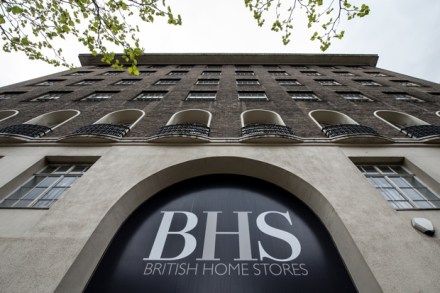
Following the BHS scandal which put the retirement savings of 20,000 people at risk, the Pensions Regulator is facing the prospect of an overhaul as MPs investigate its role, The Times reports. The work and pensions committee will examine whether the regulator should be given new powers to block takeovers if pension schemes are not adequately funded. The committee will also look at whether the regulator is fit for purpose as part of a wider investigation into Britain’s pensions framework. Frank Field, chairman of the committee, said that he favoured recommending a cooling-off period for acquisitions where the security of pension schemes could be examined if the regulator 'doesn’t already have a similar power by a different name now'. Death of the plastic credit card?

How the interest rate cut affects you

Borrowers rejoice, savers despair. The decision by the Bank of England to cut interest rates to a record low of 0.25 per cent dominated the financial news yesterday. The last time rates were cut, back in March 2009, the world was in the grip of the financial crisis. Ah, life was different then. Leicester City were languishing in League One, Labour's John McDonnell had been suspended from Parliament after picking up the House of Commons mace, and the Bank was pumping tens of billions of pounds into the economy as well as buying government bonds and corporate debt. Today McDonnell is Shadow Chancellor and Leicester City are about to start the new football season as Premier League champions. That third point, though.

Interest rate cut, RBS, house prices and jobs

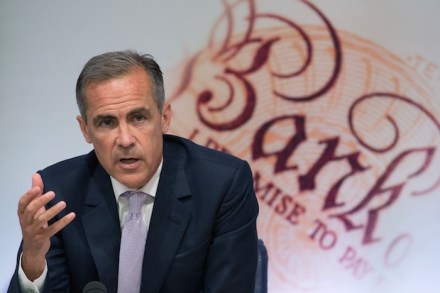
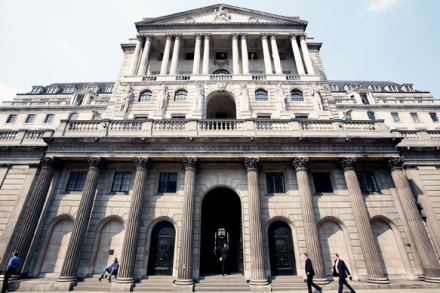
As was widely predicted, the Bank of England yesterday cut interest rates from 0.5 per cent to 0.25 per cent, a record low and the first cut in seven years. The Bank of England has also signalled that rates could go lower if the economy worsens, meaning that savers and pensioners will be even worse off than they are now. The Bank also announced additional measures to stimulate the UK economy, including a £100 billion scheme to force banks to pass on the low interest rate to households and businesses. It will also buy £60 billion of UK government bonds and £10 billion of corporate bonds.

Interest rates, retirement, digital detox and luxury homes

One story dominates the financial news today: the prospect of the Bank of England cutting the base rate for the first time in seven years. It is widely expected that interest rates will drop to 0.25 per cent at lunchtime. The base rate has stayed at 0.5 per cent since March 2009. Last month the Bank's Monetary Policy Committee voted to hold interest rates, despite economists predicting a cut. While a reduction is by no means a sure thing, there is increasing pressure on the Bank to act after recent poor economic data. 'Economic data since the referendum have weakened sharply. There is a real need for more stimulus now,' said Samuel Tombs, chief UK economist at Pantheon Macroeconomics. The Bank of England also releases the quarterly Inflation Report at 12pm.

Don’t expect the authorities to protect your home from flooding

Some years back, when I announced my decision to return to Manchester, I became the butt of a few jokes from my London pals. They mostly consisted of the usual clichés concerning whippets, flat caps and black puddings. There was also mention of 'it's grim up North' and the weather. I'll give them that last one. There's no getting around it: it rains here. Where I live, on the border of Greater Manchester and Lancashire in the shadow of the Pennines, rainfall is such that I am constantly battling slugs and leaky gutters. Last year the floodwaters enveloped my small town. The cricket ground and the football club were completely inundated, the main road was only suitable for ducks and dolphins, and, in the next village up, an ancient pub was entirely washed away.

Energy price cap, PPI, pensions and Brexit

Millions of pre-pay energy customers will be protected by an interim price cap from next April, Ofgem announced this morning. The cap will save 'vulnerable' households using pre-pay energy meters about £75 a year, the regulator said. Ofgem said it would also work with suppliers to help 'disengaged' customers on 'expensive standard variable tariffs' to shop around more. But one energy company boss said the proposals did not go far enough. The managing director of First Utility, Ed Kamm, said: 'Ofgem itself admits that consumers who are already engaged in the market will see the first benefits.

Mortgages, house prices, internet banking and holiday costs

Mortgage lending rose last month to its highest level in eight years as homebuyers appeared to shake off uncertainty prior to the EU referendum. The Council of Mortgage Lenders said that gross mortgage lending reached £20.7 billion, 16 per cent higher than the previous month and the highest figure since 2008. In June last year mortgage lending was £20.1 billion. The Times reports that property transactions rose by 4.9 per cent in June, according to figures from Revenue & Customs, suggesting that homebuyers were not put off by the referendum. There were 94,550 residential property transactions of £40,000 or more last month, showing a steady rise back to normal levels.

Insurance claims, comparison sites, employment and energy bills

Lying on an insurance claim should not necessarily invalidate it, the Supreme Court has said, in a judgement likely to affect all household policies. It said collateral lies - which are untrue, but do not affect the validity of the claim - can be acceptable. The BBC reports that the judges voted by four to one to change one of the important principles behind current insurance law. The insurance industry called it a 'blow for honest customers', and warned that the price of policies could rise. The case involved a Dutch cargo ship, which ran into difficulty after its engine room was flooded. The owners deliberately lied, by saying the crew couldn't investigate an alarm, because the ship was rolling in heavy seas.

Savings rates are in the doldrums – but help is at hand

Pity the savers. With interest rates at historic lows and banks loath to offer anything remotely resembling a decent return, it's tempting to stash bundles of cash under the mattress and wait for better times. Hardly a day goes by at Spectator Money without a press release lamenting the paltry rates on savings plans. Yesterday, for instance, came data from Moneyfacts.co.uk revealing that rate reductions in the savings market have now outweighed rate rises for nine consecutive months. And what has happened to the base rate during that time? Absolutely nothing. In June, Moneyfacts recorded just 14 savings rate rises. But rate reductions over the same period completely outshone this figure, with the number of rate decreases standing at a staggering 117.

Loans, house prices, pensions and current accounts

The Government's energy efficiency loan scheme had an 'abysmal' take-up rate because it had not been tested with consumers, according to MPs. In a highly critical report, the Public Accounts Committee said projections for the scheme were 'wildly optimistic'. The so-called Green Deal ended last year after providing just £50 million in 14,000 loans to households to boost energy efficiency. That was substantially less than the £1.1 billion predicted by the Government. Each loan cost taxpayers £17,000. Housing House prices increased by 1.1 per cent in May, with the typical home jumping in value by £2,400 over the month.