Harry Wallop

Nostalgia for the bustling high street is misplaced

Every Christmas the proportion of money we spend online escalates. This year probably more than a third of all our festive gifts and food will be sourced via the internet. With this will go the usual hand-wringing about consumerism causing neighbourhoods to become clogged up with delivery vans and the death of our high street. If you think calls to boycott Amazon and entreaties to shop local are a new phenomenon, think again. In 1888, a Tunbridge Wells vicar implored his flock to support the town’s shopkeepers, for ‘the weight of goods arriving at our local stations for private people far exceeds that for the tradesmen’. He was bemoaning the boom in mail order, which flourished in late Victorian Britain thanks to the emergence of the railways and clever retailers.

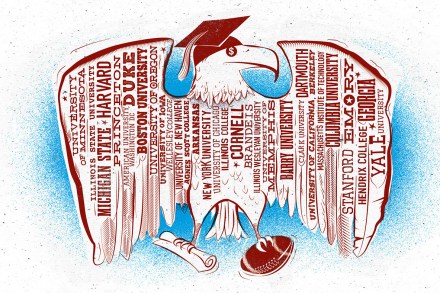
How to get in to an American university

Angela McAuslan-Kelly is a normal sixth-former at Robert Gordon’s College in Aberdeen. Her dad is a bus driver and her mum works in a coffee shop. ‘They are not very wealthy,’ explains Holly Cram, a former captain of the Scottish national women’s hockey team. Angela, though, is off to Princeton in September. ‘I completely get why students want to do it. They are sold on the dream of getting a scholarship’ The reason is American universities’ extraordinarily generous scholarships, especially for sports. ‘She is very bright and she is very good at chucking a heavy thing on a wire,’ laughs Cram. Angela’s love of hammer throwing means she will soon find herself rubbing shoulders with the scions of American business.

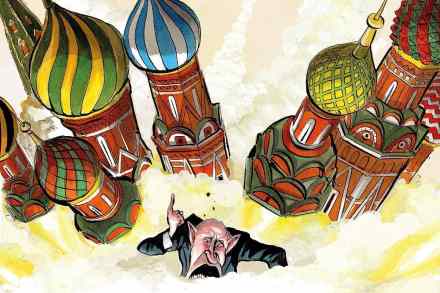
Putin’s rage

38 min listen

In this week’s episode: What’s the mood on the ground in Ukraine and Russia?For this week’s cover piece, Owen Matthews asks whether the invasion of Ukraine will mean the end of Putin’s regime. And in this week’s Spectator diary, Freddy Gray reports on pride and paranoia on the streets of Lviv. They join the podcast, to talk about Russia’s future and Ukraine’s present. (00:49)Also this week: Is Germany ready to tackle its dependence on Russian gas?In response to Russia’s invasion, Germany has abandoned its Nord Stream 2 pipeline, sent lethal weapons to Ukraine and, most strikingly of all, has committed to the Nato target of spending 2 per cent of GDP on defence - a €100 billion fund.

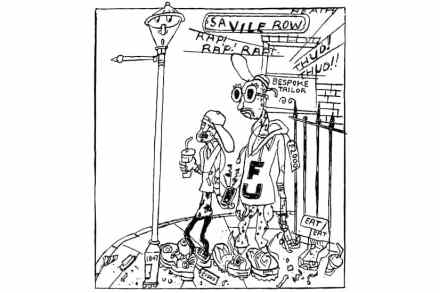
Why are so many classic British brands going downmarket?

Huntsman, at No. 11 Savile Row, was once an understated beacon of good taste. But if you visit today, you are likely to be met by a gaggle of tourists posing for selfies in front of the window across which is splashed in very large letters: ‘The King’s Man, only in cinemas now.’ The tailor, which dressed the Duke of Windsor in his bachelor days, provides both the inspiration and location for this fun, if silly, spy movie franchise, the latest of which stars Ralph Fiennes. Unfortunately, cinematic fame has led to the brand losing its bearings.

Can we trust supermarket brands?

When you pick up a packet of meat from the supermarket and it says 'Willow Farms', what is the image you conjure up in your mind? Do you imagine the chickens reared on this farm happily pecking around a thatched cottage, searching for grubs in a field that rolls gently down to a river flanked by weeping willows? Of course you don’t. You’re shopping in Tesco and you’re not that stupid. The country’s biggest retailer (and the UK’s biggest private sector employer) is not buying any of its fresh produce from small-scale farmers, especially not its chickens. Some of you, however, might reasonably expect that Willow Farm exists. That it has a geographical presence -- even if it is on an industrial scale. Even that is a little optimistic.

Waterstones deserves to be judged by its bookshop cover-up

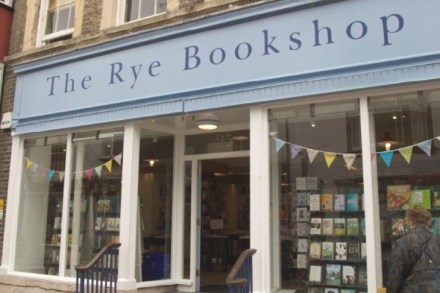
Let’s get one thing clear: bookshops are a good thing. Waterstones -- even putting aside the abandonment of its apostrophe -- is a good thing. James Daunt, the man who has turned Waterstone’s from a basket case into a profitable enterprise, is a good thing. But what the company has done in Southwold, Rye and Harpenden is naughty. And it’s more than just a storm in an overpriced Emma Bridgewater teacup. Waterstones has opened up shops that purport to be both local and independent, when they are neither. In Southwold, the branch is called Southwold Books, in Rye it’s The Rye Bookshop and in Harpenden, Harpenden Books. The colour-scheme, layout, and signs all look as if they belong to independent shops and no reference to Waterstones can be found in the shop.

Could Brexit mean cheaper food? Don’t open the prosecco yet

'Brexit to chop food bills', said the headline in the Sun on Sunday this weekend. The paper ran some research from the campaign group Leave Means Leave, which claimed food prices could fall by hundreds of pounds a year if tariffs are axed after Brexit. Though nobody knows what deal we will strike with trading partners once we leave the EU, it’s worth exploring the basis of Leave Means Leave’s research. It hopes we will enter into a completely tariff-free world. No more eye-watering taxes slapped on the likes of Tate & Lyle’s imported sugar cane, which caused the company to lose £20 million last year.

Higher prices are the only way of dealing with Britain’s food waste problem

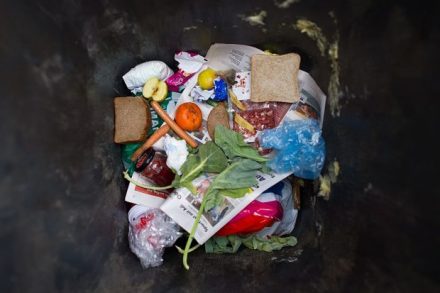
Food waste is on the increase. British households are throwing the equivalent of 500 meals into the bin every year. Understandably, there has been a lot of hand-wringing. Baroness Parminter, the Liberal Democrat's environment spokeswoman (the party has so few MPs its environment spokeswoman sits in the Lords), declared: 'We need legislation to make real progress in changing behaviours and cutting waste.' No we don’t. We just need another recession. An increase in food waste is possibly the clearest sign that food poverty is declining and most people have never had it so good when it comes to filling their stomachs. First, the figures. Household food waste in the UK has increased from seven million tonnes in 2012 to 7.

Banning shops from opening on Boxing Day is a terrible idea

Britain was once a nation of shopkeepers. But one wonders for how much longer. As if the combination of Amazon, councils’ parking charges and above-inflation business rate rises wasn’t bad enough, we now have a petition. Of course, we do. The petitions wants all large shops to be shut on Boxing Day, as they are on Christmas Day. It argues that the people who work in shops toil very hard in the run up to Christmas. This is true. It then argues, 'retail workers [should] be given some decent family time to relax and enjoy the festivities like everyone else'. Why? Why should the government legislate to ensure we can all relax?

The change to Toblerone bars is an act of desecration

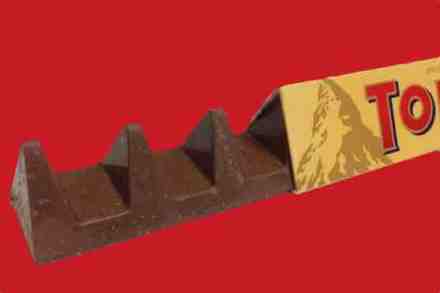
When the history of capitalism is written, November 8 2016 will deserve a footnote. No, not the date the 45th president of the United States was elected, but the day Mondelez, the giant US confectionery company, changed the shape of the Toblerone bar. This may sound hyperbolic. But the altering of Toblerone’s distinctive silhouette is the latest act of vandalism perpetrated by Mondelez on its stable of chocolate bars, and symptomatic of a wider malaise within some of the great consumer companies operating within Britain, many of which seem hell-bent on destroying the very foundations of what made them such enviable profit-making machines in the first place. First, Toblerone. It is a slightly over-sweet, milk chocolate bar with bits of nougat bits. So far, so tasty.

Which? is turning into Britain’s overbearing nanny

Which? was once upon a time known as the Consumers Association, and it used to do a sterling job of explaining which washing machine to buy and how to avoid being ripped off at a bureau de change. But the charity now seems to have become less interested in fighting consumers’ corner and more interested in being Britain’s nanny-in-chief. This morning it has rounded on supermarkets -- once again -- for promoting obesity. Its research has found that special offers and promotions in supermarkets tend to be used to push sugary drinks, chocolate and breakfast cereals rather than carrots and cucumbers.