Harry Ritchie

Colin Freeman, Harry Ritchie, Max Jeffery, Michael Gove and Catriona Olding

35 min listen

On this week’s Spectator Out Loud: Colin Freeman explains how Islamic State tightened its grip on the Congo (1:23); Harry Ritchie draws attention to the thousands of languages facing extinction this century, as he reviews Rare Tongues: The Secret Stories of Hidden Languages by Lorna Gibb (8:00); Max Jeffery highlights the boxing academy changing young lives (13:20); Michael Gove reflects on lessons learned during his time as education secretary (20:30); and, Catriona Olding introduces the characters from her new Provence-based memoir club (29:27).  Produced and presented by Patrick Gibbons.
Massacre of the innocents, saving endangered languages & Gen Z’s ‘Boom Boom’ aesthetic

37 min listen

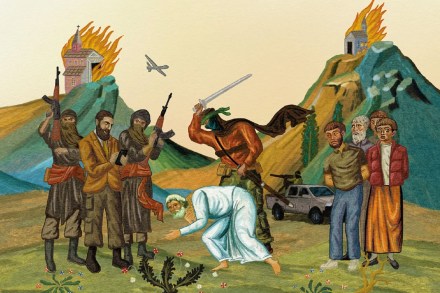
This week: sectarian persecution returnsPaul Wood, Colin Freeman and Father Benedict Kiely write in the magazine this week about the religious persecution that minorities are facing across the world from Syria to the Congo. In Syria, there have been reports of massacres with hundreds of civilians from the Alawite Muslim minority targeted, in part because of their association with the fallen Assad regime. Reports suggest that the groups responsible are linked to the new Syrian president Ahmed al-Sharaa (formerly known as Abu Mohammed al-Jolani). For some, the true face of the country’s new masters has been revealed. Whether the guilty men are punished will tell us what kind of country Syria has become since the fall of Assad’s dictatorship.

The world’s most exotic languages are vanishing in a puff of smoke

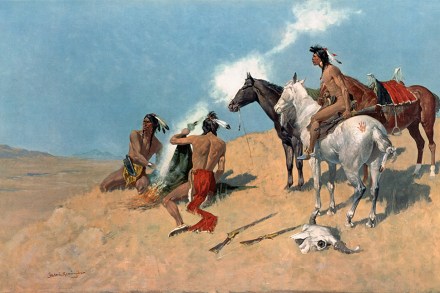
It is one of academia’s horrible ironies that linguistics, the subject devoted to human communication, has managed to communicate nothing about its many startling and fundamental discoveries to the world outside its university departments. So any book such as this linguistic tour of some of the world’s exotic, hidden and endangered languages is to be welcomed with sobbing gratitude. Almost all the languages Lorna Gibb describes are staples of linguistics course books, but I’m assuming each will come as startling news to a general readership. One which was new to me was the sign language used by native north Americans throughout the Great Plains, and thanks to Gibb, I also now know how to interpret their smoke signals: two puffs = all is well; three puffs = help!

Celebrating Sequoyah and his Cherokee alphabet

There are about 7,000 languages currently spoken on this planet. By the end of this century, all but 600 will have disappeared – the inevitable result of an unstoppable process as the last speakers of the world’s little languages die out, usually leaving no trace, for the vast majority are spoken only, with no written record. But even languages which have had the good fortune to be written down face their own extinction as their individual writing systems struggle to survive. Hundreds and hundreds of unique alphabets, as much as 90 per cent, face oblivion.

Grandma’s perfect pub

As an emigrant from Scotland, I was taken aback by the weird foreignness of the south of England. Some of the south’s strangeness took a while to register — for example, just how crowded it was down here, and how very much warmer: it was my third summer in the south before it dawned on me that this wasn’t another freak heatwave. Then there were all the very obvious, immediate differences — the banknotes all being issued by the same bank, the way everyone talked and nobody could understand a word I said and, above all, the pubs.

Our cloth-eared nation

Jacob Rees-Mogg and Rab C. Nesbitt excepted, it has become quite difficult to infer much from people’s appearance. In these democratically dressed and coiffed times, we usually have to wait until people start to speak before we get a bead on them. Voice has become the best, and often only, signifier we can rely on. A flat vowel here, a glottal stop there, a hint of sibilance about an ‘s’ — ahah: northern, possibly Yorkshire, probably lower-middle-class-ish background and, going by the ‘s’, gay. We make such judgments with great confidence. And, it transpires, little justification — it’s the great insight of this study of human conversation that our voice-interpreting skills, on which we often set much store, are actually pretty poor.

Learning to talk

One of the great achievements of science is that so many of its branches, from astronomy to zoology, have been blessed by such great popularisers — your Attenboroughs, your Sagans, your Dawkinses. Alas, there is one inglorious exception to this marvellous rule — linguistics. A discipline that has produced enormous and enormously important advances over the last century — but not one linguist who has managed to tell the rest of the world about them. Steven Pinker did have a bestseller with The Language Instinct, but he was moonlighting from his day job in neuropsychology.

Crying Wolfe

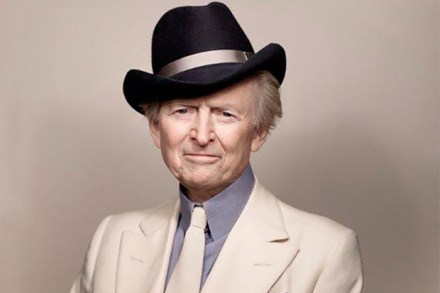
He might be 85 but Tom Wolfe is going strong with a new book and a dustjacket photo that still sees him working the suit and hat look. And although the new book may be small, it’s got big ambitions: first, to take down an establishment icon, and, second, to reveal the secret behind humanity’s progress. The establishment icon first. He is that infamous scoundrel, Charles Darwin — ‘Charlie’, as Wolfe often calls him, and not in a friendly way.