Hardeep Singh

Hardeep Singh is deputy-director at the Network of Sikh Organisations

Andy Street won’t be the last to confuse Sikhs with Muslims

From our UK edition

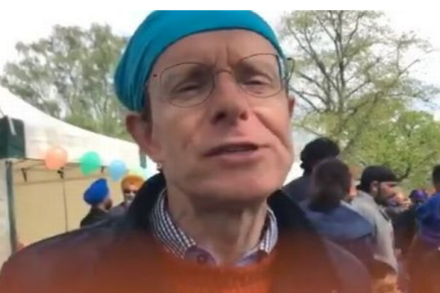
Social media isn’t forgiving of politicians who suffer a slip of the tongue, especially when it comes to confusing a Sikh place of worship, a gurdwara, with a mosque. Only this week former John Lewis honcho turned Mayor of the West Midlands, Andy Street, has faced the ire of angry Sikhs and wider public criticism for confusing the two. While campaigning in Birmingham over the weekend, he inadvertently referred to a Sikh temple as ‘Guru Nanak Mosque’ on live television. I’ve not met Street, but see him as a friendly fellow who genuinely jumbled up his words in a lapsed moment – something that can happen to the best of us. Perhaps I’m just a big Sikh softy after all. One less forgiving tweeter wrote, ‘ignorance is bliss Andy Street.

The problem with apologising for the Amritsar Massacre

From our UK edition

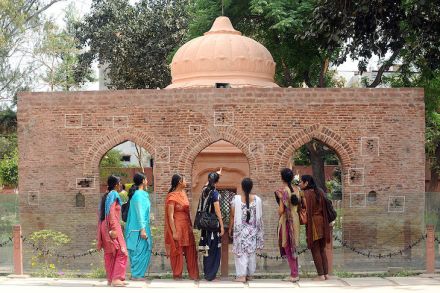
Growing up I remember my late grandfather, a former commissioned officer in the British Indian Army, being fixated by re-runs of Richard Attenborough’s award-winning film Gandhi. One scene stood out. In the film Attenborough immortalised an event that Churchill referred to as ‘monstrous’, and David Cameron ‘a deeply shameful event in British history’ – the Jallianwala Bagh. On 13 April 1919 15-20,000 civilians (including some peaceful protestors) in a walled garden (or bagh) in Amritsar marking the festival of Vaisakhi, were mercilessly gunned down without warning by British troops. According to official figures, 379 men, women and children were killed and over a thousand injured, with 1,650 rounds of ammunition continuously fired for ten minutes.

Has Britain become an unsafe place for Christian preachers?

From our UK edition

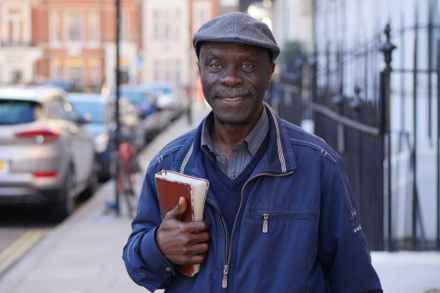
In the Middle East, Pakistan, India, North Korea and parts of China – hatred and persecution of Christians is well documented. But who would have thought preaching the gospel would become a risky business on the streets of Britain? Last month saw the wheelchair bound preacher Claudio Boggi being threatened and spat at by a man called Ali Al-Hindawi, who shouted ‘Allah is God’. Al-Hindawi went on to attack another Christian volunteer in Westminster, biting his fingers and assaulting him with a metal bar - he’s thankfully now in jail. Next came the news that an innocent street preacher, Oluwole Ilesanmi, had been arrested for ‘breach of the peace’ outside Southgate tube station, after being reported for ‘Islamophobia’.

Why those campaigning to categorise ‘Sikh’ as an ethnicity are wrong

From our UK edition

When does a religion become an ethnic group? You may consider the premise of this question absurd – after all ethnicity is immutable, faith a choice. Bizarrely however, this has become the subject of a major dispute amongst British Sikhs. It hinges on whether or not a Sikh ‘ethnic’ tick-box should be included by the ONS in the 2021 Census. A voluntary question – ‘what is your religion?’ already exists, with ‘Sikh’ an option which 423,000 readily chose back in 2011. Back then a campaign resulted in 83,000 Sikhs refusing to select the available ethnicity tick boxes (eschewing Indian because of the Indian government’s betrayal of Sikhs in the 1980s), opting instead to write in ‘Sikh’ in the space for ‘other ethnic group.

Is Britain becoming a Christianophobic country?

From our UK edition

Kicked ‘like a football’ were the words used by a Pakistani Christian to describe a brutal assault that left him unconscious outside a restaurant in Derby last month. The victim, Tajamal Amar, claims Muslim men singled him out for offence he’d caused by displaying a cross and two large red poppies on his car, and for being a Kaffir – a derogatory term for non-Muslims. As it happens, the attack occurred towards the end of National Hate Crime Awareness Week, and has been recorded as a hate crime. The British Pakistani Christian Association, a group who’ve been supporting Amar, inform me his wife and daughter have been moved to a new location; he remains in hospital. But is his case symptomatic of a broader anti-Christian sentiment brewing in Britain?

70 years on: the traumatic legacy of India’s partition

From our UK edition

On August 14-15 1947, after a few hundred years in India the British left behind the jewel in the crown of Empire. The Raj abruptly ended, but the struggle for India’s freedom came at a price. The creation of the Islamic state of Pakistan, carved from undivided India or partition, as it became known, resulted in one of the greatest convulsions in human history. Millions of Muslims from Hindu-majority India proceeded towards Muslim-majority Pakistan, while Sikhs and Hindus made the opposing journey. Viceroy Mountbatten’s hasty transfer of power - a 72-day plan brought forward by 10 months unleashed an unbridled orgy of bloodletting between Muslims on one side, Hindus and Sikhs on the other.

A Sikh festival with a universal message at its heart

From our UK edition

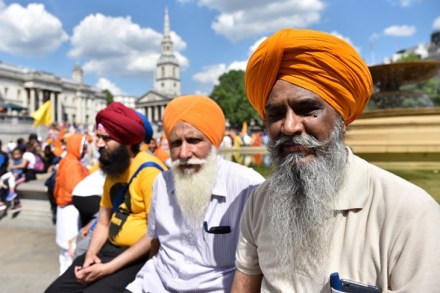
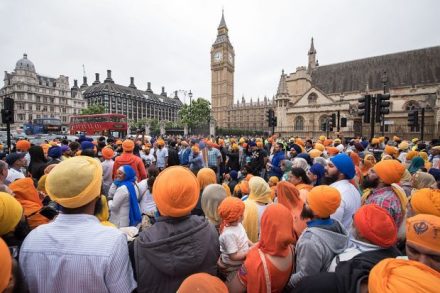
In April each year Sikhs around the world celebrate Vaisakhi. While it marks the Indian spring harvest, the festival has a much deeper significance for adherents of Sikhism - it commemorates the birth of a nation of warrior-saints. Over the weekend some of Britain’s 423,000 plus Sikhs began these festivities with impressive street processions called Nagar Kirtans in both London and Glasgow. The latter included a beturbanned bagpipe player to boot. It’s a family friendly affair, with an abundance of free food (langar), martial arts displays (gatka) and speeches from ‘community leaders’ and politicians.

It’s time the Government ended its silence on Sikh hate crime victims

From our UK edition

On 15 September 2001, Balbir Singh Sodhi, a gas station owner, was arranging flowers outside his family business in Arizona. He had just returned from Costco, where he purchased some American flags and donated money to a fund for victims of 9/11. Moments later, he was shot dead. Sodhi, a turbaned Sikh, goes down in history as the first person killed in retribution for the Al Qaeda terror attacks. On his arrest, his murderer Frank Roque told police, 'I’m a patriot and American.' Fifteen years on, Sikhs, both in the US and Britain, are acutely aware that hate does not discriminate. And Sikhs, like Muslims, continue to face the backlash to the Islamist war on the West.

The Islamist war against Sikhs is arriving in Europe

From our UK edition

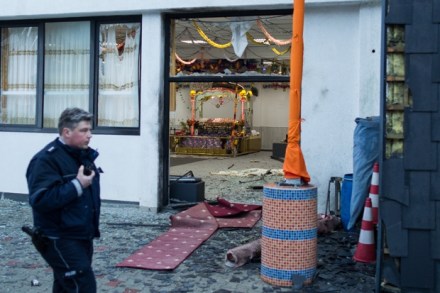
Terror attacks in Germany are becoming remarkably unremarkable. So when a bomb went off in the German city of Essen, near Düsseldorf – and killed nobody - it barely registered. The three teenagers who detonated the device were all members of a Whatsapp group called ‘Supporters of the Islamic Caliphate’, so their intentions seemed pretty clear: they wanted to wage war against the infidels of the West. But their target – a Sikh temple – was striking. While initial reports suggested there was ‘no indication’ of a terrorist incident, any Sikh reading the news would have understood the motive, just as any Jew or Christian would have understood precisely why Islamic extremists target synagogues or churches.