Gavin Mortimer

Gavin Mortimer

Gavin Mortimer is a British author who lives in Burgundy after many years in Paris. He writes about French politics, terrorism and sport.

What progressives can learn from France’s straight-talking communists

From our UK edition

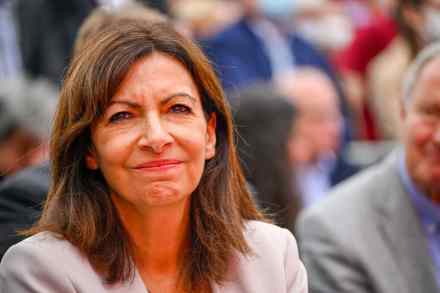
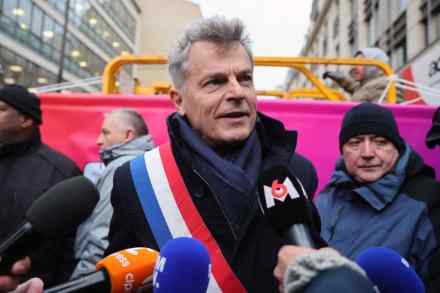
The latest poll has France’s socialist candidate Anne Hidalgo on 1.5 per cent. This is the party that won the presidential election a decade ago. Britain’s Labour party should look at the French socialists and be very afraid. This is what happens when a political party turns its back on its core electorate and instead panders to pet progressive policies, such as whether a woman can have a penis. Things have become so bad for Hidalgo that she now trails Fabien Roussel of the French Communist party. Named in honour of Colonel Fabien, a communist hero of the resistance in the second world war, Roussel caused a kerfuffle in January when he declared in an interview that ‘good wine, good meat, good cheese, for me this is French gastronomy’.
Could Le Pen snatch victory from Macron?

From our UK edition

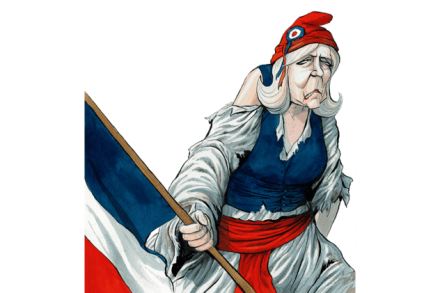
When the attacks commence it’s clear that Marine Le Pen’s enemies are unnerved. For months – actually make that five years – few have viewed the leader of the National Rally as a serious contender for the 2022 presidential election. I include myself among that number, having declared on Coffee House in September 2017 that Le Pen ‘has no future’. More fool me. Along with many others, I underestimated her tenacity, her resilience and her sheer bloody-mindedness in refusing to throw in the towel. Will her stubbornness be rewarded with a win against all expectation? There is gathering optimism in Le Pen’s camp that a political earthquake will be felt in France next month. Recent polls have detected a momentum shift.

Will Macron surrender to the mob?

From our UK edition

It has been a torrid few days in France. In the early hours of Saturday morning, a former Argentine rugby international, Federico Aramburú, was shot dead on a chic Paris street after an altercation in a bar. The suspect is a notorious far-right activist who allegedly told Aramburú that he didn’t belong in France. On Monday Corsican nationalist Yvan Colonna died, three weeks after he was beaten into a coma by fellow prisoner and infamous extremist, Franck Elong Abé, an Islamist who was captured fighting for the Taliban a decade ago. It is alleged that Abé justified his attack on the grounds that Colonna ‘had bad-mouthed the Prophet’.

France is strong where Britain and America are weak

From our UK edition

Emmanuel Macron unveiled his campaign manifesto in a carefully orchestrated press conference on Thursday and his pledges to cut taxes and reform the welfare system dominated the headlines on Friday morning. But the president also touched on defence, promising that spending – €32.3 billion when he came to power in 2017 – will rise to €50 billion by 2025. Some of that money will be invested in cyber warfare technology, as well, presumably, on ammunition; if reports are to be believed the French army would run out of ordnance after four days of a major war. It’s a favourite pastime of Anglophones to mock the French military, though only those who don’t know their history indulge in such juvenile antics.

Could France’s ‘forgotten’ voters hand Le Pen victory?

From our UK edition

A short war in Ukraine would not suit Emmanuel Macron. The longer it lasts the longer the president of France can project to his people the image of the implacable wartime leader. So far so good. If the polls are to be believed, next month’s presidential election is a foregone conclusion; the latest poll has Macron on 31 per cent, way in front of his closest rival, Marine Le Pen, on 18 per cent. Despite such a dominant lead over the rest of the field, Macron’s campaign team insist that they are on their guard against complacency. The president will unveil his programme in its entirety on Thursday, just over three weeks before voters go to the polls in the first round of voting, and in the meantime his minions are out in the field distributing pamphlets on his behalf.

Why are British soldiers deserting to fight in Ukraine?

From our UK edition

When my brother was an infantry officer in the early 1990s the soldiers under his command were hard men. Most hailed from the north-east of England; in an earlier era they might have mined coal for a living. They smoked and drank and swore, and they were superb soldiers, as they proved in South Armagh and in Bosnia. It’s safe to assume these men would have struggled as infantrymen in today’s British army.  Even the word ‘infantrymen’ would cause problems today. Last year, the Ministry of Defence recruited for a director of diversity and inclusion (salary £110,000 per annum, compared to the £20,000 an infantryman is paid). Meanwhile, in November, it was disclosed that the RAF had dropped 'airmen' and 'airwomen' in favour of 'aviator'.

British fighters in Ukraine are brave but misguided

From our UK edition

The first British volunteers have arrived in Ukraine to ‘do their bit’ in thwarting the Russian invasion. According to reports in this morning’s newspapers, four serving soldiers are among them. Liz Truss must be heartened. The Foreign Secretary recently declared her support for any idealistic Briton wishing to head east to fight ‘for democracy’. Others were less enthusiastic at the prospect of Britons joining the war, notably Ben Wallace, the Defence Secretary, himself a former soldier. Also unenthused was Admiral Sir Tony Radakin, the chief of the defence staff, who cautioned: ‘This isn't really something that you want to rush to in terms of the sound of gunfire. This is about sensible support based in the UK.

Putin’s invasion has collapsed the French right

From our UK edition

At the time it probably felt like a good idea for Marine Le Pen’s campaign team. A photo of her shaking hands with Vladimir Putin, taken when she met the Russian president in Moscow in 2017, would emphasise to the electorate that she was a serious player on the world stage. The photo was included in Le Pen’s campaign manifesto, over one million of which have been distributed the length and breadth of France. Now they are being hastily withdrawn by party members as Le Pen does her best to distance herself from the most despised man in the West. Le Pen is not the only presidential candidate to have been embarrassed by events in Ukraine.

What’s behind the wave of French police suicides?

From our UK edition

Since Russia invaded Ukraine last week the western media has focused on little else. In Britain this concentration is understandable: the country has finally come out of Covid and there is a large gap to be filled on the airwaves and in the newspapers. Not so in France, still encumbered by Covid restrictions, where in just over five weeks voters go to the polls in the first round of the presidential election. As much as the French are troubled by events in Ukraine – a recent poll reported that 88 per cent of those canvassed were ‘shocked’ by the Russian invasion – they will vote on issues closer to home: the rising cost of living, immigration, the health service, and crime and violence.

Is the New York Times right to say Muslims are fleeing France?

From our UK edition

Has the New York Times found a new bête noire? It was for a number of years Britain, damned for having had the temerity to leave the European Union. As Steerpike noted, the Sceptered Isle became a ‘plague-riddled, rain-drenched fascistic hell-hole’. But now it is the turn of France to receive a finger-wagging from the Gray Lady. Last week the NYT ran a lengthy article entitled ‘The Quiet Flight of Muslims from France’, in which it claimed that a growing number of French Muslims are emigrating because of the hostility they have experienced since the wave of Islamist terror attacks in 2015 and 2016 that left more than 200 French people dead.

Why the French right prefer Putin to progressives

From our UK edition

Emmanuel Macron's visit to Moscow last week was reminiscent of a trip made by Charles de Gaulle to the Russian capital in November 1944. Neither man left much of an impression on their host. Macron, after six hours of talks with Vladimir Putin, failed to persuade the Russian president to de-escalate the situation on the Ukrainian border whatever he might have claimed to the contrary. De Gaulle, the leader of the recently-liberated France in 1944, made little headway with Stalin, who subsequently told the American ambassador Averell Harriman that he found the Frenchman ‘an awkward and stubborn man’. That description must have struck a chord with Winston Churchill and Franklin Roosevelt.

Might Macron’s future rest with the England rugby team?

From our UK edition

After two rounds of the Six Nations, France is the only unbeaten team. Their victory against Ireland in a ferocious encounter in Paris on Saturday evening keeps them on course for the championship title. The last time France won the Six Nations crown was in 2010. The decade that followed was not kind to the national team. One might say their decline mirrored that of the country in general. They became a laughing stock, finishing bottom of the Six Nations in 2013 and suffering embarrassing defeats to the likes of Tonga and Fiji. Everything about the French team was amateur — their preparation, their fitness, their technique — compared to the clinical professionalism of their Six Nations rivals such as England, Ireland and Wales. But Les Bleus are back.

Shadows of Macron: could Valérie Pécresse become France’s first female president?

From our UK edition

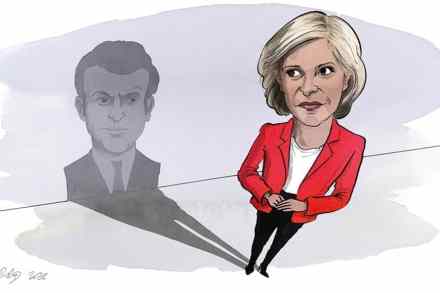
Paris Perhaps the best thing that can be said about Valérie Pécresse’s presidential election campaign is that it’s better than the Socialist party’s. Which is to damn with faint praise. The French left are in such a dire state that if the opinion polls prove correct, their candidate, Anne Hidalgo, the mayor of Paris, won’t pass the 5 per cent mark in the first round required for candidates to recoup half their campaign costs. Pécresse has no worry on that score but she has failed to inspire the electorate since she was selected as the nominee for the centre-right Les Republicans (LR) in December. An opinion poll this week had her trailing Emmanuel Macron and Marine Le Pen, with Éric Zemmour only one point behind her on 14.

Can Macron really lecture Putin about democracy?

From our UK edition

A penny for the thoughts of Vladimir Putin on Monday as he stared at Emmanuel Macron from the end of a very long table. If the Russian leader has a sense of irony he might have been struggling to suppress a smirk as he welcomed the President of France to Moscow to discuss the situation in Ukraine. Macron was in his element as he played the international statesman representing the EU, but the President will be dismayed to learn that his grandstanding has not impressed the folks back home. Of the 140,000 who have so far responded to an online poll in Le Figaro, 60 per cent considered his visit to Moscow a failure. It doesn't appear to have yet dawned on Macron and many other western leaders that the days of dispensing lessons in democracy to despots are over.

Covid has shattered France’s commitment to liberty

From our UK edition

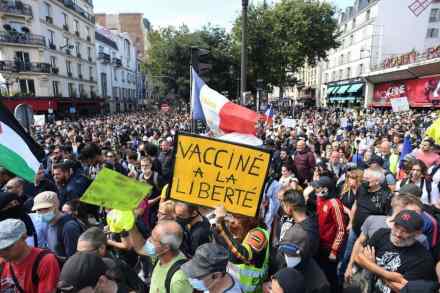
It is a peculiarity of how France has responded to the Covid pandemic that the unvaccinated, or those who have had only two jabs, are regarded as a greater threat to national security than Islamic extremists. The Covid passport, which came into effect last week, won overwhelming backing in parliament and in the senate, despite the reservations expressed by the Council of State in December. They said the passport would restrict the unvaccinated’s ‘liberty to come and go’. Six years ago the Council articulated similar concerns when the then-president, François Hollande, proposed a law that would strip dual nationals of their French citizenship for those convicted of terrorist offences.

Eric Zemmour isn’t to blame for France’s anti-Semitism crisis

From our UK edition

Emmanuel Macron sees anti-Semitism everywhere except where it really lurks. Earlier this month his government accused protesters opposed to the Covid Passport of giving the Nazi salute, a charge that was disproved by video footage and this week dismissed by the public prosecutor’s office in Paris. Yesterday, in a speech to mark International Holocaust Day, Macron warned of the return of ‘an ill wind’ blowing through the continent in some ‘political discourse’. He vowed that France would never cease to honour the memory of the six million Jews murdered in the Holocaust ‘particularly when some try to falsify it.

Macron’s vaccine culture war

From our UK edition

When French prime minister Jean Castex and health minister Olivier Véran held a press conference last week, they outlined the timetable for a gradual easing of the country's many Covid-19 restrictions. Véran talked of an 'encouraging evolution' in the fight against the virus, despite the fact that France had in the previous week recorded an average of over 300,000 daily cases.  As of 2 February, the wearing of masks outdoors will no longer be mandatory; a fortnight later, the French will be able to experience once more the pleasure of standing at a bar with a glass of whatever takes their fancy. Since the start of this month, this practice has been outlawed.

Cheer up Boris, the French still like you

From our UK edition

If, as many are predicting, the wheels are about to come off Boris Johnson's premiership, few world leaders will be as indifferent as Emmanuel Macron. He and the PM have rarely seen eye to eye.  It may very well have been more than just a coincidence that Johnson yesterday declared Britain was 'open for business' just as France's full vaccine pass came into force. The contrast is clear, as the Prime Minister surely intended. While Britain — or at least, England — is emerging from the Covid crisis, France, has in place some of the most stringent restrictions in the West. Masks remain mandatory outdoors and adults without three jabs to their arms can do little other than shop for groceries or go for a walk in the park.

The fate of the French Socialists is a warning for Boris Johnson

From our UK edition

The defection of Christian Wakeford to Labour has put a spring in the step of the left-wing party. Apparently it marks the start of their revival. Give it two years and Keir Starmer will be waving from the steps of Number 10. That’s one scenario. A more likely one is that the good people of Bury South will unseat Wakeford at the next general election as Labour suffer another humiliating defeat. What so many in the Westminster bubble don’t get is that for the average voter in Bury, Basildon or Blyth Valley, ‘partygate’ is not top of their grievances with Boris Johnson. It’s often immigration, tax rises and the nonsense of net zero.

My life as an outcast under Macron’s vaccine passport scheme

From our UK edition

When the vaccine pass comes into effect later this week, I will not be able to enter a bar or a restaurant. I will not be able to visit a museum or go to the movies. I will not be able to watch a live sports event or attend a music concert. I will not be able to take a regional train or walk through a shopping centre. And I will no longer be able to swim in my local pool or jog around the municipal running track. I could, of course, become a functioning member of French society in an instant if I went to my nearest vaccination centre, rolled up my sleeve and received a third jab, what the French call a 'rappel'. But I've weighed up the pros and cons, read articles such as the one in The Spectator by Dr Steve James, and decided that two vaccines will suffice for me.