Gareth Roberts

Gareth Roberts

Gareth Roberts is a TV scriptwriter and novelist who has worked on Doctor Who and Coronation Street. He is the author of The Age of Stupid substack.

Does Elon Musk have the stomach for this fight?

From our UK edition

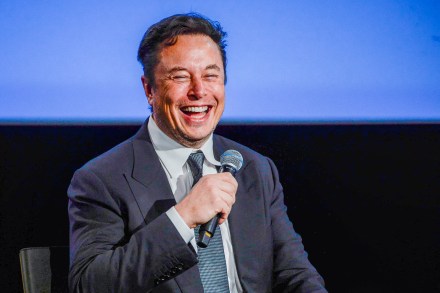
Appropriately for Twitter, the arrival of Elon Musk has been regarded by some as the coming of the antichrist and by others as the apotheosis of the messiah. I think both sides may be getting a little overexcited. This is not a person whose movements can be anticipated with any accuracy. Musk’s defining characteristic is that he is erratic, as his hokey cokey-style acquisition of the social media platform itself displayed. This added to previous oddities such as insinuating that a cave rescuer in Thailand was a paedophile. There’s ample evidence that ‘Chief Twit’ Musk has the social skills, interests and humour of a 14-year-old boy. His sink gag as he entered the Twitter building was a Beano-level pun worthy of The Fast Show’s ker-raaazy Colin Hunt.

What we’ll miss about Liz Truss

From our UK edition

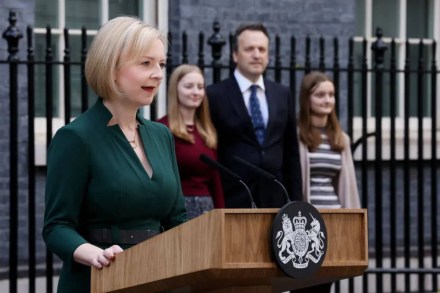
As Liz Truss prepares to leave Downing Street after 47 days in power, the PM’s reputation is in tatters. Seeing out the reigning monarch after seventy years, spooking the financial markets like a distant hyena terrifies a family of meerkats, and, incredibly, tanking the Tories’ poll rating to its lowest ever level at the same time as paying everybody’s gas bill. But listen, Liz. I wouldn’t worry. Because it doesn’t take very long before people start pining for and eulogising former prime ministers that drove them potty when they actually were in office. Just this weekend gone, singer Tanita Tikaram sent a much-liked tweet saying she would like Gordon Brown back.

Why does anyone bother making political predictions?

From our UK edition

The Christian Roman Emperor Theodosius had the Delphic Oracle smashed up in 390 AD, but the gifts of the old gods were already well on the way out. The Sibylline Books were burned shortly after. Scrying glasses across the ancient world had misted over. The prophets fell silent. Well, they hadn’t seen that coming. It was now impossible to foresee what was going to happen next, let alone any further down the line. You can see where I’m going with this. Who will be prime minister at the end of the week? What brave new policies, set in stone days ago, will be forgotten like waking dreams?

Liz Truss has a language problem

From our UK edition

‘Grow the pie’. Somebody thought ‘grow the pie’ was The Thing, that ‘grow the pie’ was it. That this knockout phrase would silence the army of doubters and bring millions of voters back on side. They were proud of ‘grow the pie’. They thought ‘grow the pie’ was a great idea that people can really relate to and get behind. The same kind of person who thought reviving The Generation Game with Mel and Sue, or that Crown paint advert with the dead-eyed cult singing about ‘Hannah and Dave’ were notions of genius. Grow the pie – biff bang pow, now what’s your comeback to that, eh? Did they test it out on anyone else before Liz Truss’s speech at Tory party conference?

Why can’t MPs let Truss be Truss?

From our UK edition

Our common culture – the huge audiences that tv, film and pop music used to attract – has evaporated. Politics is about the only thing remaining where we are all on the same page. It’s perhaps inevitable then that public reaction has become ever more febrile and volatile. Poll percentages now go crashing and soaring with a regularity that’s disturbing to those of us who can remember the prelapsarian age when we were the only people who gave a stuff about politics and that we were considered odd because of it. The marked outlandishness of British party politics has been evident since that day in September 2015 when Jeremy Corbyn became leader of the Labour party.

The British Social Attitudes survey misunderstands social attitudes

From our UK edition

‘I'm not sure I even know what woke means,’ tweeted barrister Chris Daw at the weekend, ‘but if it's just treating all people fairly, and with kindness and dignity, it doesn't seem so bad.’ This is the perfect example of the faux-naïf, head shaking sadly, cosy boast – well, when you get right down to it, isn’t my political ideology just being nice? No, Chris. Let me clear this up for you right now. No. You are thinking of the mixture of residual Christianity and social liberalism that, for better or worse depending on taste (and I was quite fond of it generally) dominated Western discourse for much of the previous century. Woke is very much not that.

Why ordinary people cannot enter the arts world

From our UK edition

Recent sad events have seen everybody behaving exactly as you would expect. There’s nothing wrong about that. A certain continuity of conduct is reassuring, a truism that the late Queen herself exemplified better than anyone. Her job was to be regal. Similarly, it’s the job of chippy academics to spill their thoughts, of the New York Times to froth at length, and, of course, of mad actors to be mad. It might be argued that the job of an actor is to act, but such an objection belongs to a vanished world and certainly does not apply to the actors who have moved beyond simply saying other people’s words for a living. We were blessed by two fine examples this week.

David Bowie was not authentic

From our UK edition

The death of the Queen has led to a host of peculiar postponements. Perhaps the strangest was the announcement that the launch of ‘Bowie On The Blockchain’, a sale of NFT artworks inspired by the deceased pop star, has been delayed ‘out of respect for the people of the UK and Queen Elizabeth II’. It’s hard to picture anybody particularly noticing or caring about this strange event at the best of times, harder still to imagine British people shaking their heads and tutting if it had gone ahead on schedule: ‘Dashed bad show, Bowie estate selling non-fungible tokens, and Her Majesty not even in her grave’.

Why don’t we put warnings on smartphones?

From our UK edition

On a recent trip to Sainsbury’s, I was perplexed to find nothing where it should be. I’m used to things being switched about to a small extent. It can even be quite fun to track down rice pudding where the clingfilm used to be and the clingfilm where the baked beans once were. But this was a dizzying change of topography, like returning home after a tsunami to find your bathroom in the basement and your sofa sailing off into the sea. All was made clear by a helpful sign: ‘LOOKING FOR YOUR FAVOURITES? The government is introducing new rules in October for products containing high fat, sugar or salt. To prepare for this we're moving a few things around.’ Thank heavens we are being so looked after.

The Tory party myth isn’t real

From our UK edition

The Conservative party leadership contest (sometimes referred to as a ‘race’, which is pushing it) is nearing its end. It’ll be hard getting used to the world without it. We’re all such different people now, 900 years on. At least we’ll always have the misty water-coloured memories. One thing that both candidates agree on is that things have come to a pretty pass, and something, possibly even lots of somethings, must be done, and done urgently. This has been very strange to behold, as if the Tories have just woken up in a parallel universe where some other mysterious and nefarious political party has been in power for the last 12 years.

The desperate demonisation of Liz Truss

From our UK edition

We’re being asked to credit Liz Truss with a lot of unlikely things now that’s she almost certainly on course for No. 10 – that she’s a snazzy, relaxed media performer; that she can solve the eruption of problems caused by decades of cross-party can-kicking in a few weeks; that she has Churchillian resolve and Thatcherite implacability. But just recently a new claim is surfacing, very much not coming from her ‘people’, which is the hardest to swallow of all – that she is a fascist.

Why is JK Rowling missing from this influential artists list?

From our UK edition

Rarified cable TV channel Sky Arts has recently revealed its list of the top 50 most influential British artists of the last 50 years. Even in the crowded field of clickbaity lists, which usually contain at least one or two names calculated to raise eyebrows and hackles – ‘Octopussy is the best Bond film’ – this makes rum reading. As a list of some of the good and sometimes great British artists of the period, it’s fine, just about, if eccentric. As a list of people who are being lauded as influencing others on a grand scale it is downright peculiar. We are told the list has been compiled by ‘expert judges’ – so it’s interesting as a snapshot of what our cultural betters in 2022 think we ought to think.

Did my generation break Britain?

From our UK edition

When I was 11, I was a pompous little git, but was I also a playground prophet? It first dawned on me that I was one lunchtime in the late 1970s as I looked around at my peers. There they were shouting, swearing and hitting each other. Were we, I wondered, the clueless inheritors of a system we wouldn’t be able to take the reins of successfully? A system that we hadn’t been raised with the discipline to appreciate, or even to understand? Were we doomed to decline? The years since – and the current state of Britain – suggest I was right.

Who is Sandi Toksvig to lecture Justin Welby about sin?

From our UK edition

Has Justin Welby met his match in Sandi Toksvig? The entertainer has sent an open letter to the Archbishop of Canterbury, complaining about his attempts to compromise with African bishops and avoid a showdown at the Lambeth Conference on the issue of same-sex marriage. The gist of it is: ‘Even though I don’t believe in God, I’m rarely going to attend my local church again’. This letter, and the swift reply to it from Justin Welby, tell us quite a lot about the relative standing of the CofE and what we are now supposed to call, as Sandi does, ‘LGBTQ+ people’. St Sandi’s letter to the Cantabrians is a masterpiece of faux-chummy passive-aggression, gratingly twee and self-satisfied.

Does Stonewall have no shame?

From our UK edition

Watching people brazening it out can be tremendous fun. The higher the stakes, the more extreme the disparity between reality and what we now call ‘cope’, the greater the cheer. We remember the brass neck of Muhammad Saeed al-Sahhaf, the Iraqi information minister dubbed ‘Comical Ali’, still denying the fall of Saddam Hussein’s regime as American tanks rolled into Baghdad. Or the final balcony address given by Nicolae Ceaușescu on his pet TV station as his regime was toppling. We associate this kind of thing with despotic regimes, but in the democratic world we get the occasional glimpse of it: a public figure refusing to acknowledge openly the import of a reverse or a loss.

Liz Truss is wooden. And it works

From our UK edition

Barring a disaster — given her record, that’s not impossible — Liz Truss will soon be the prime minister. She didn’t slip up in last night’s debate. She even surprised observers by showing mental dexterity when being needled by Rishi Sunak. Nevertheless, the adjective most often used to describe her – I’ve seen it in nearly everything I’ve read about her in the last few weeks – is wooden. But is Liz making woodenness her selling point? The loud clap last night after she admitted she lacked presentation skills suggests that she is. We’re all given a demeanour, and for all the spin doctors and image makers we might employ to buff us up, they can only work with what they’re given.

Trump’s Return

From our UK edition

42 min listen

In this week’s episode:Will Donald Trump have a second shot at the US presidency?Freddy Gray and Sarah Baxter debate the return of Donald Trump. (1.10)Also this week:A look at the history of Scotland’s paradoxical relationship between Scottish identity and the Union.The Spectator’s Scotland editor, Alex Massie talks with Murray Pittock about his book Scotland: The Global History, 1603 to Present. (21.49)And finally: What happened to bad taste humour?Screenwriter Gareth Roberts wrote about this in the magazine. He’s joined by comedian and podcast host of NonCensored, Rosie Holt (32.30)Hosted by William MooreProduced by Natasha FerozeSubscribe to The Spectator today and get a £20 Amazon gift voucher: spectator.

The death of bad-taste humour

From our UK edition

The recent heatwave inspired many people to bring out their stories of the summer of 1976. I have a memory of it which has nothing to do with the temperature, but which I think could be even more relevant to our times. It happened in the baking, crammed, nicotine-steeped ballroom of a holiday camp. I was eight. The campers were gathered for the night’s fun, provided by the camp’s resident comic. On the dot of 8 p.m. he told the audience it was time for the kiddies to head to bed. We were handed over to the care of a redcoat (about 20, unvetted, just some bloke – there is an entire vanished world in that) and led back en masse to our chalets. It felt so unfair. I could stay up for hours yet! I wasn’t a baby any more! Why was this happening?

It’s impossible to know which crisis to take seriously

From our UK edition

As I write this, the first day of the heatwave has just dawned. FEAR COMES THE SUN is the Daily Mail headline, while the Mirror has plumped for BLOWTORCH BRITAIN. The Telegraph maybe laments that its house style eschews the use of capital letters for ‘Heatwave meltdown brings Britain to a halt’. At the same time, there is a counterwave of people scoffing sceptically at all this heated alarm. The meme of a cheerful-looking sun with ‘I survived the summer of 1976’ is doing the rounds across social media, and there are a few contrary souls in public life saying that a spot of sun never did them any harm, with occasional accusations of the Met Office politically pandering to the climate change lobby.

The desperate drive to be the next Tory leader

From our UK edition

There’s a scent in the air around the Tory leadership contest. It is the whiff of desperation. The aroma of provincial ballrooms when the lights go up at midnight; or of the last few seconds before a firing on The Apprentice when a contestant butts in with ‘Can I just say...’ and Lord Sugar snaps: ‘I’ve heard enough from you.’ First to set the tone was Rishi Sunak, coached not to blink or move his eyes, which some PR adviser obviously still thinks makes a person look agreeable and approachable, and not like a double glazing salesman who must get this commission from a confused elderly lady or starve.