Freddy Gray

Freddy Gray

Freddy Gray is deputy editor of The Spectator and the editor of the US edition. He hosts Americano on YouTube.

So much was missing from today’s abortion debate

The anti-abortion lobby is unfortunate to have been lumped this week with Nadine Dorries as its unofficial spokesperson. Nadine is actually PRO-abortion, for starters, as she never seems to tire of pointing out. She does, however, possess many of the unpleasant characteristics associated with pro-lifers: she's preachy, brimming with self-righteous zeal, and incapable of seeing her opponents' point of view. She didn't deserve to be barracked in the House of Commons today, perhaps, but the obnoxious way in which she argued for her amendment sealed its fate.

The riots, one month on

A month has passed since the riots, and it still feels as if nobody has grasped what really happened. The media debate has been limited, to say the least: lots of self-appointed community leaders and youth experts talking about giving kids a "voice" or "stake" in society, or calling the likes of David Starkey racist. The BBC "riots debate" last night, featuring Dame Claire Tickell, Liam Nolan, Shaun Bailey and former gang member Sheldon Thomas was particularly frustrating. Every time somebody came close to making a good point – Bailey, for instance, issued strong remarks about the commercialisation and sexualisation of children – someone else would drown it in bien-pensant blather.

Gripped by ‘Dominion’

What on earth is ‘Dominionism’? Lots of Americans who first heard the word just a few weeks ago are suddenly feeling very angry about it. Liberals say that the US constitution is facing a ‘Dominionist threat’ in the form of Michele Bachman and Rick Perry, two Republicans running for president in 2012. Christian conservatives, meanwhile, cry prejudice: they accuse a secularist elite of conducting a witch-hunt against Christians in politics.   What's the fuss? Dominionism is, we are told, a school of evangelical thought that aims to impose Biblical law over secular government. It is to nutty Evangelicals what Shariah Law is to Islamists,­ a way of achieving theocracy on earth.

Totally Tom: class act

If you are feeling chippy — and I hope you are not — you might find Totally Tom annoying. If you are feeling chippy — and I hope you are not — you might find Totally Tom annoying. Here are two Old Etonians, Tom Palmer and Tom Stourton, who want to be comedians. They have been catapulted towards success at an early age thanks to the internet, and their act is all the rage at this month’s Edinburgh Fringe. Girls like them, obviously. ‘Oh, my God, Tom!’ shouts a nubile blonde as they walk into the room. ‘I was just about to text you!’ Chippiness, however, would be quite the wrong reaction. Totally Tom are totally brilliant. They are talented, funny, and admirably self-effacing.

Thank God it’s Thursday

Whitehall’s four-day week ‘What you doing here?’ says a cheerful security guard as I walk through the Houses of Parliament at four o’clock on a Friday afternoon. ‘It’s early closing day.’ He’s right. The corridors are silent; the chambers are bare. There are a few tourists with their guides, some more guards, the odd cleaner … and that’s it. Where is everyone? Well, Friday is constituency day, as people in politics are quick to tell you. Our elected representatives and ministers are off running ‘surgeries’ with real people. What the insiders tend not to divulge, however, is that when the bosses aren’t around, their underlings sneak off early for the weekend.

The rise of the Mormons

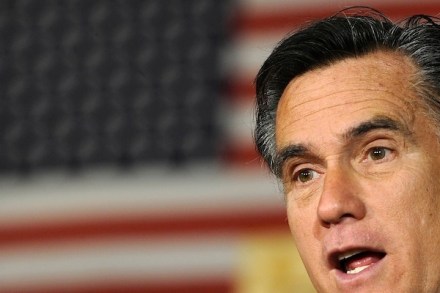
Are Mormons going to inherit the earth? Or at least America? It is starting to look as though they might. The Mormon church is only 181 years old, and its followers make up just 2 per cent of the U.S. population. Yet they have an amazing number of the top jobs. It is well-known that two leading republicans, Mitt Romney and Jon Huntsman, strong contenders for their party's presidential nomination in 2012, are Latter-day Saints. It is less known that Mormons increasingly run corporate America. A new Bloomberg report offers an impressive list of Mormon business leaders here. Bloomberg’s Caroline Winter attributes the success of Mormons to the Missionary Training Centre, a sort of indoctrination camp for the Mormon work ethic. And I'm sure that's right.

The takeover of English summer time 

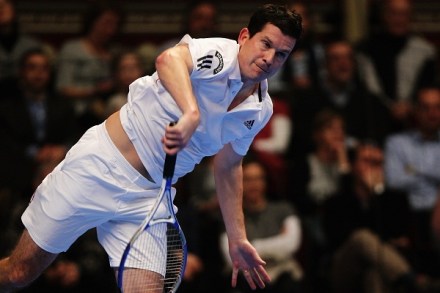
Wimbledon starts next week: as usual, England will provide the setting while the world's most talented foreigners come to play each other and — Andy Murray notwithstanding — walk off with the trophies. It’s a bit like the British economy, as Harry Mount suggests in his brilliant cover essay for this week's magazine. We know that London has become the Rome of the globalised world, but what we're now seeing is the foreign takeover of English summer cultural events. The newcomers are enthusiastically adopting it all: Wimbledon, Ascot, even test matches at Lord’s. Last week, at the ARK fundraiser, Wills and Kate made appeared at an event where global zillionaires bid millions for charity (as Rachel Johnson also reports in her diary this week).

What has Ken done wrong?

What has Ken Clarke done wrong — other than commit the political sin of making a media gaffe? Nothing. In yesterday’s now infamous BBC interview, he was simply attempting to explain his position on rape sentencing, which may or may not be the right one. It’s a difficult question — and, under some antagonistic interrogation, he stumbled and got flustered. “Rape is rape,” said the radio interviewer. "Not it’s not," the Justice Secretary replied. He later talked about “serious, proper rape.”   Bad phrasing? Certainly. Injudicious? Sure. But Clarke’s essential argument — that not all rapes are the same, that some rapes are worse than others — is quite obviously true.

The chattering classes

Louise Stern on what the deaf really think of ‘hearing people’ I’m at my desk in London chatting to a deaf woman in Mexico. We are communing through the internet. At 17.57 GMT, an instant messenger bubble pops on to my computer screen: ‘Louise Stern: Hi Freddy, it’s Louise’ and the interview has begun. It’s miraculous, when you think about it. Louise Stern is the author of Chattering Stories, a recently published collection of short stories about adventurous deaf girls in the big noisy world. Louise has a very original writing voice, and critics say that she enables them to understand for the first time what it must be like to be deaf. She isn’t comfortable writing in instant messenger, however. ‘I tend to avoid it,’ she says.

Another cause for celebration

The British like nothing more than the idea that the world is obsessed with our Royal wedding. It is not entirely a delusion: Americans and Europeans, especially in the media, do seem quite captivated by William and Kate. It is what 24-hour news people call a 'global talking point'. In reality, though, most foreigners couldn't care less about the big day tomorrow. Some of them have their own things to celebrate. The Poles, for instance, are getting very excited about the beatification of John Paul II this weekend. On Sunday, in Rome, Pope Benedict XVI will elevate Karol Wojtyla, the most famous Pole ever to have lived, to the altars of the Church. Across the world, millions will watch; millions will rejoice; millions will wave flags.

A word for Mitch

In the magazine’s cover piece this week (read it here or subscribe from just £1/issue), Richard Littlejohn described the rather feeble assortment of Republican contenders for next year’s presidential elections. But he left out Mitch Daniels, the Governor of Indiana, who seems to be emerging as a favourite among American conservatives.   Daniels hasn’t yet declared his candidacy, and at first glance he comes across as a dweeb. But it would be foolish to underrate him. In 2008, against a tide of Obama-mania, Daniels won the Indiana governorship with ease. He got more votes, in fact, than any candidate in the state’s history. The secret of Daniels’s success is his winningly awkward Pennsylvanian manner.

How about reintroducing conscription?

The American academic and foreign policy realist Stephen Walt has put an interesting idea on his blog: would re-introducing the draft make America less interventionist? Perhaps it would, and perhaps there’s a good case to be made for doing the same in Britain. Calling for a return to conscription might sound like a silly right-wing trope, but it makes sense from an anti-war perspective: we might be less eager to send our soldiers to fight and die in distant conflicts if there were the slightest possibility that we might have to go, too. I’m not sure I agree, though. It’s not as if national service prevented war in the past. We happily shipped off young men to Korea in the 1950s, for instance. Maybe compulsory military training only encourages bellicosity.

Fab fives

It may not be widely played, but this is a great sport for everyone, says Freddy Gray   Fives is not a popular sport. In fact, if the internet is to be believed, no more than 4,000 people play it in Britain, with a scattering of die-hard enthusiasts abroad. But then very few people have ever had the opportunity to play. Fives, which is similar to squash — save that it is played with a hard ball, which is hit with gloved hands instead of a racquet — is played almost entirely in British public schools. Some state schools do have courts, but not many. If it is thought of at all, the game is regarded as a privileged eccentricity, a distraction for boys more inclined to use their hands for hitting balls than anything approaching hard labour.

Hillary the hawk

Intervention it is then. Cue lots of politicians walking around with rousing West Wing music in their minds' ears. This is the part where they get to play the good guys. Until something goes wrong, and they are bungling idiots again. Of course, it's good for everyone to feel that a bombing campaign in Libya is a multi-lateral, UN decision – not an Iraq. But if this turns into a long campaign, American airpower will be expected to do the vast majority of the work. And while Obama may be reluctant to engage on a third front, there are plenty of enthusiasts in Washington – none more so than Hillary Rodham Clinton. It is becoming increasingly obvious that Clinton has been using Obama's indecision over Libya to promote herself.

Is Sudan next?

The momentum behind the Arab Spring revolutions appears to have been checked – for now. The Libyan domino hasn't fallen. But there's more unrest to come in North Africa. On March 21, a group called Youth for Change will hold mass protests throughout Sudan. Youth for Change (sinister name) are inspired, obviously, by what has happened in Egypt and Tunisia. Their aim, they say, is to ‘to rewrite the constitution with the voice of the people in order to hold national general elections: '[We march] to reclaim our dignity as human beings first and second as Sudanese ...that has been violated by the regime when it killed thousands of our brothers in Darfur, the north, the east, and all the documented incidents to dishonour the Sudanese nation.

The absurdity of rewards for the dead

It is strange that, in an age when so few people read books, literary prizes have taken on such significance. This week, with considerable pomp, the Man Booker Foundation announced a new award in honour of the late Beryl Bainbridge, the novelist and Spectator contributor. At last, Beryl the ‘Booker Bridesmaid’ – so-called because she was shortlisted for the award more than any other writer without ever winning it – could become Beryl ‘the Booker bride.' This new 'Best of Beryl' prize, to be chosen by the public, means she can rest in peace. Isn't it silly? Bainbridge deserves a posthumous prize, of course: she was a brilliant writer, arguably the best of her generation, and, I'm told, a wonderful woman.

Interview: Rachael Stirling – happy with her lot

It’s noisy here in the bar at the Old Vic; the air is teeming with thespy gossip and laughter and clinking glasses. It’s noisy here in the bar at the Old Vic; the air is teeming with thespy gossip and laughter and clinking glasses. I’m sitting in a corner with the actress Rachael Stirling, who is drinking white wine and talking about her new play, An Ideal Husband. Luckily, Rachael has that actress’s knack for projecting her voice without shouting. I can hear her clearly above the din. She has a very fine voice, in fact, smooth and husky at the same time. She sounds like a public schoolgirl who has smoked too many cigarettes. Rachael is excited after a long day of rehearsals. Taking a script from her handbag, she thumbs through it impatiently.

Cameron the ‘Tea Party Tory’

David Cameron’s cuts agenda is winning him some unusual praise from the American hard Right — from the sort of people the British political class considers beyond the pale. For instance, Pat Buchanan, the former presidential candidate and hardliner extraordinaire, is so impressed by Britain’s austerity measures that he has affectionately labelled Cameron the ‘Tea Party Tory’. He writes, 'Casting aside the guidance of Lord Keynes — government-induced deficits are the right remedy for recessions — Cameron has bet his own and his party’s future on the new austerity. He is making Maggie Thatcher look like Tip O’Neill.' I wonder how Steve Hilton would feel about this particular bit of branding.

When Stone gets stick

‘I saw this goddam politician on your British television last night,’ says the film director Oliver Stone. ‘He was yapping about how he can’t cut the defence budget because of blah, blah, blah.’ Was it, by any chance, Liam Fox at the Tory party conference? ‘Something like that… I thought, this is so disgusting.’ His voice is dry and cool, but the words are angry. ‘This love of national security is insane,’ he continues. ‘If you build the foundation of your society on security, you’re going to be disappointed. People talk about terrorism: but if your entire national debate becomes about fighting terrorists, you lose. They win.

The Pope: moderation is Britain’s national instinct

Another good speech from Pope Benedict XVI, grand in historical sweep and intellectual clarity. His softly spoken, yet heavily-accented, English demands some mental concentration. And it was funny watching some of the tired looking politicians squinting as they tried to figure out what on earth the Pontiff was saying.   But if his voice was tricky to hear, his message was reasonably clear. He was effusive in his praise for this country’s parliamentary history, for common law, and for British democracy. At the same time, he did not shrink from suggesting that modern Britain is at risk of detaching itself from the Christian philosophical tradition that underpins everything that he believes is good about our free society.