Fraser Nelson

Fraser Nelson

Fraser Nelson is a Times columnist and a former editor of The Spectator.

The bias towards migrant workers

From our UK edition

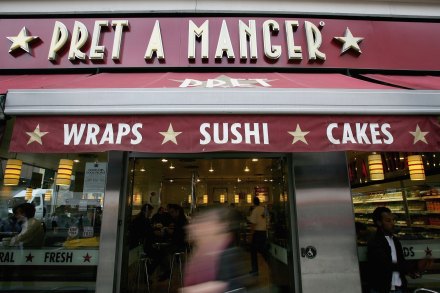
Why are you never served by a Londoner in a London branch of Pret A Manger? I asked this in the Telegraph recently, and yesterday’s Evening Standard had a great piece tracking down four who applied, and were rejected without an interview. Some suspect there is a bias in favour of immigrants: if your name doesn’t sound exotic, game over. I doubt that a company like Pret, whose most valued ingredient is the famous enthusiasm of its staff, can afford to discriminate in any way. But the wider point is a very serious one: that British employers have come to prefer immigrants, believing that they work harder. And that a bias for foreign workers is adding to the problems facing Britain’s young unemployed.   In general, I do think this is an issue.

Sorry, Tristram — but capitalism is just what the British public does

From our UK edition

Tristram Hunt, the historian and Labour MP, has written a brilliant rebuttal to my piece in the Telegraph last week, in which I said that capitalism is hardwired in Britain’s DNA. Socialism, he says, is also hardwired into our country’s mindset. Writing for Comment Is Free, he says: ‘There is another story of Britishness a long way from the template of Cameron and the Spectator.

Introducing Coffee House: the App

From our UK edition

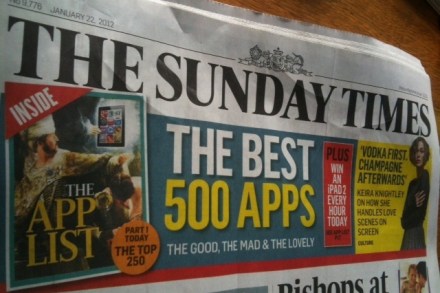
The Sunday Times lists the ‘Top 500 Apps in the world’ (£) today, and I’m pleased to say that The Spectator’s brand new app ranks no.4 in its ‘news apps’ category. The newspaper describes the list as ‘the good, the mad and lovely’ and ours emerges as little of all three. What we have sought to do with the new app is combine our blogs and the magazine, and we are (I think) the first magazine to do so. The Sunday Times gives it the thumbs-up. It ranks us behind its own app, and those of the BBC and Sky News. Here’s its verdict: ‘The contents page may be slightly eccentric, but it’s worth persevering with them.

Cameron’s capitalism

From our UK edition

Ever since Ed Miliband’s ‘predatory capitalism’ speech at the Labour Party conference, the future of capitalism has been a subject that has much occupied our MPs. Clegg made his speech on Monday, and Cameron delivered his yesterday. I have had plenty to say about the coalition government’s inadequate economic policy, and its inability to stoke growth. But Cameron’s speech was impressive, and it’s worth going into in some detail. I look at it in my Telegraph column today. Much rot is spoken about capitalism. It is not an ideology, there is no rule book you can tweak: it is simply the name given to the system where people trade with each other the world over.

Inflation at 4.2 per cent is nothing to cheer

From our UK edition

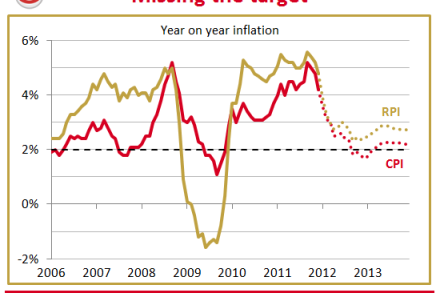
Are today’s inflation figures cause for celebration? The Consumer Price Index rose a mere 4.2 per cent in the year to December, down from 4.8 per cent in November. So, yes, a sharp drop — but only a statistical boffin could describe this as good news. Sure, a similar drop can be expected when the VAT rise drops out of the comparison figures next month. But the prices confronting British shoppers are still rising at twice the supposed inflation target, and will keep rising above this target for months to come. The following graph shows the trajectory we can expect for CPI and RPI over the next few years: The misery that inflation inflicts on the public is, of course, mitigated by pay rises.

IDS must stay the course on welfare reform

From our UK edition

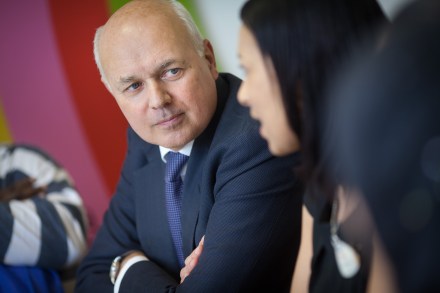
Welfare wars are erupting again, with Iain Duncan Smith’s bill amended in the Lords and more showdowns ahead. Number 10 has been completely robust, threatening to use rarely-invoked powers to overrule the Lords. In my Telegraph column today, I say why it’s so important that David Cameron does not go wobbly – as his predecessors did.   Tony Blair understood the need for radical welfare reform, especially when his idol Bill Clinton introduced it in America. Listening to his speeches in the mid-90s is heartbreaking: he had precisely the right idea, but lacked the determination to implement it.

Salmond’s dangerous corporatism exposed

From our UK edition

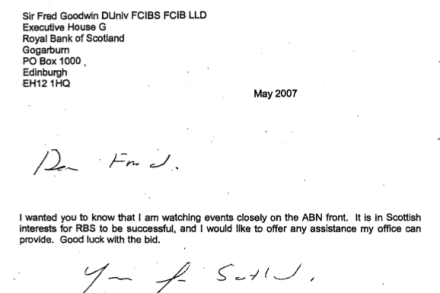
How would an independent Scotland have fared during the crash? Given that the liabilities for RBS alone represent 2,500 per cent of Scotland's economic output, it's a difficult question for Alex Salmond. He replies that the banks in Scotland would have been better-regulated by wise, old him, so the problems would not have arisen. But Faisal Islam at Channel Four has unearthed a letter that rather explodes this theory, written from the First Minister to Fred the Shred egging him on with the calamitous acquisition of ABN Amro. This, as CoffeeHousers will know, is the acquisition which was so hubristic that it went on to sink the whole banking group.

The battle for Britain | 10 January 2012

From our UK edition

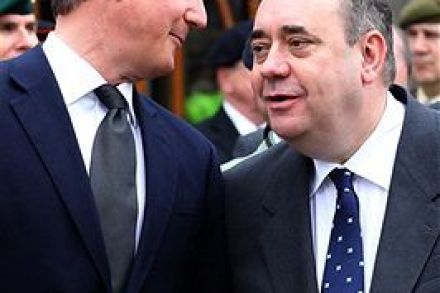
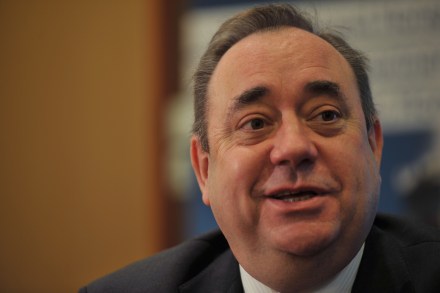
So, Alex Salmond has named his date for the independence referendum: August 2014, a few weeks after the 700th anniversary of the Battle of Bannockburn. David Cameron wanted it earlier, and may yet refuse to grant Salmond this date — No10 hasn't yet responded. Cameron was forcing the issue on the grounds that he wanted to end uncertainty — Salmond is now offering certainty, at least in terms of timing. But he hasn't said whether he wants a two- or three-question referendum. This is crucial, because Salmond is likely to lose an independence referendum and he knows it. So his game plan will be to have a third option, a consolation prize, so he doesn't walk away from this empty handed.

The Miliband puzzle

From our UK edition

So why did Ed Miliband stop his brother being leader of the Labour Party? As each month of his uninspiring leadership passes, it becomes more of a puzzle. In today's Guardian interview, we learn that he can solve a Rubik's Cube in 90 seconds. Perhaps David Miliband took two minutes, leaving Ed to regard him as being intellectually inferior. The rest of the interview shows Ed trying to row back towards positions that David Miliband would have adopted from the offset: trying to claim fiscal responsibility, and credibility. The 'In the black Labour' movement is also an attempt to repair the repetitional damage being wreaked by Balls, whose calls for even more debt still strike the public as implausible.

It’s poverty, not race, that ought to concern us more

From our UK edition

My Daily Telegraph column today is about how poverty is a greater problem in Britain than racism, which I describe as an ‘almost-vanquished evil’. This has drawn some criticism, not least from those asking (understandably) what a white guy like me can know about racism. Not much, but plenty of academics have done a hell of a lot of work into racism in Britain (including two brilliant, young academics, Matt Goodwin and Robert Ford). And their studies present a far brighter picture than we're used to. The abject failure of the BNP is not just down to Nick Griffin being a plumb — it’s because he tried to hawk a racist message to the most tolerant country on earth. CoffeeHousers may be interested on why I think this is so. Here are five points: 1.

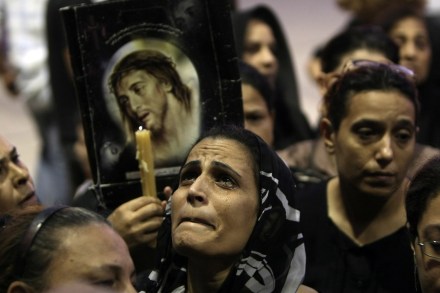
The evil being perpetrated against Christians in Nigeria

From our UK edition

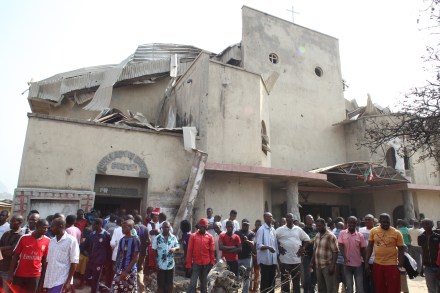
The religious cleansing against Christians is intensifying in Nigeria, where Christians have been told they have until Friday to leave the country or face attacks by Islamic extremists. As I wrote recently in the Daily Telegraph, this is a trend sweeping the Middle East. Thousands are fleeing Iraq and Egypt, but Nigeria is the scene of the most ferocious attacks. Its government condemns the attacks, but seems unable to respond to the Boko Haram menace. This from the National Review: ‘Catholic archbishop John Onaiyekan, of Abuja, Nigeria’s capital city, appealed for help. “It’s a national tragedy. We are all unsecured. It’s not only Catholic. Today it’s us. Tomorrow we don’t know who it will be,” he said.

Romney by eight votes

From our UK edition

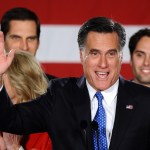
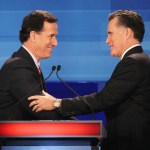
Instead of white smoke, Iowa is belching thick fog. Mitt Romney has won by, erm, eight votes. At least so we think, the Republicans say that it has to wait until 'Certified Form E' will be returned by all the Iowa counties, which will take two weeks, so this gossamer majority may well vanish. Already some votes have been lost, others miscounted, so I doubt Romney will be doing much of a victory dance today. Iowa's indecision is final. He has won by a majority of 0.0065 percentage points. It's pretty good for the man who almost beat him, Rick Santorum, who won 30,007 votes to Romney's 30,015. And Santorum didn't spend a fraction of the budget Romney did.

Iowa’s dead heat

From our UK edition

If you’ve just woken up, hoping to find out who won the Iowa caucus, then tough luck: they have lost the votes from two of the main counties, and Mitt Romney and Rick Santorum are neck-in-neck on 25 per cent of the votes. Ron Paul has 21 per cent. As of 6am, there are reports that precincts have miscounted votes in a way that penalised Romney – but you don’t do recounts in a caucus. Some 122,106 votes have been counted and Romney and Santorum are just four votes apart. Even if Romney wins when the lost votes have been discovered, the closeness and farce of the lost/miscounted votes will be the main story of the day.

Would you bet against Alex Salmond?

From our UK edition

Alex Salmond has a soft spot for horse racing, and I've just seen some odds that could make the First Minister a very rich man: William Hill is offering 9/1 on Scotland being independent by the end of the decade. The SNP is traditionally bold in its predictions: ‘Free by '93’ being one of the more memorable. Salmond himself predicted that the Union of 1707 would not live to see its 300th birthday. But if he holds a referendum by 2015 then Hill's say a 'no' result is the 2/5 favourite. And 'yes' is 7/4. Money would be refunded if Salmond bottled out of holding a referendum within the next four years. So how seriously should we take the bookies? David Cameron may take the fight to Salmond, framing the argument in a different way: do you want to stay in the union?

European integration that we can get behind

From our UK edition

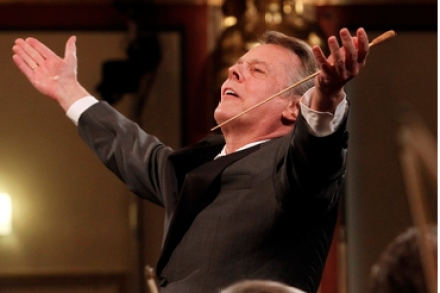
Part of the magic of the New Year's Day concert from the Vienna Philharmonic is knowing that millions are watching the same event live, right throughout Europe. It's perhaps the only cultural event that unites the continent in this way (other than Eurovision). Politically and economically, not very much binds us together, as the tensions within the European Union demonstrate. The continent is a model of diversity, which is why homogenisation attempts fail. But when it comes to culture, it's a different story altogether — with classical music being, perhaps, one of the strongest unifying factors. Turn up to a concert hall in Edinburgh, Leeds or Athens to listen to classical music, and the odds are it'll be from a relatively small number of central European composers.

We can’t ignore the persecution of Christians in the Middle East

From our UK edition

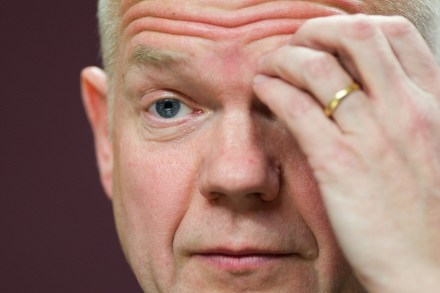
William Hague has transformed the Foreign Office in his 18 months in charge. He inherited a system hardwired with the dynsfunctionality of the Labour years, and it’s almost fixed. But not quite. It has not yet woken up to the wave of what can only be called ‘religious cleansing’ in the Middle East, which I look at in my Telegraph column today. Here’s a rundown of my main points. 1) The killing has begun, and could get worse. In Iraq, about two thirds of its 1.4 million Christians have now fled — being firebombed by the jihadis. Last year, gunmen entered a Baghdad church and killed 58 parishioners. To go to church in Iraq, which Christians have been doing for two millennia, now means risking your life.

The growth script still needs writing

From our UK edition

The Times is being a bit harsh on Cameron in its leader this morning. 'On the economy', it says, 'Cameron has contracted out policy to George Osborne and then followed the usual (although not invariable) practice of postwar prime ministers of supporting his Chancellor's decisions. But he has not added to this a convincing contribution of his own.' Yes, Cameron has not done very well articulating his government's growth policy. I've also noticed that he is not much good at describing the Loch Ness Monster and for the same reason. Unconfirmed rumours of its existence whirl around now and again. Grainy photos of something supposed to be a UK growth agenda surface. But when expeditions are sent out to prove its existence, they invariably fail.

Where we are now

From our UK edition

Reading through the paper's this morning, it's even clearer that we didn't learn much from that marathon Europe debate yesterday. But here are my thoughts, anyway, on where it leaves us: 1) Ed Miliband lacked credibility from the outset. As Malcolm Rifkind put it, he’s had three days to work out whether he’d have signed that Treaty or not — and he still can’t make his mind up. God knows Cameron is vulnerable on this, but he won’t be hurt being attacked for indecision by a man who still cant make any decisions. 2) Clegg’s misjudgment, cont? First, Clegg backed Cameron after the veto. Now, he says he disagrees with Cameron.

Britain and isolation

From our UK edition

The word ‘isolation’ is used a lot in today's newspapers, as if Cameron walking away from the ongoing EU implosion were a self-evident disaster. Pick up the Guardian and you see Britain cast as a leper, a status conferred on her thanks to a tragic miscalculation by a Prime Minister whose sole aim was to assuage his swivel-eyed Tory MPs and get back on Bill Cash's Christmas card list. Orwell would have great fun with the language that accompanies the Euro project: trying to suck up to its tiny elite is seen as a country being outward looking. A PM more focused on the people who sent him to office is seen as a parochialist. Spend too much time in SW1 and you may come to believe this yourself.