Fraser Nelson

Fraser Nelson

Fraser Nelson is a Times columnist and a former editor of The Spectator.

A dozen questions for after the Brussels summit

From our UK edition

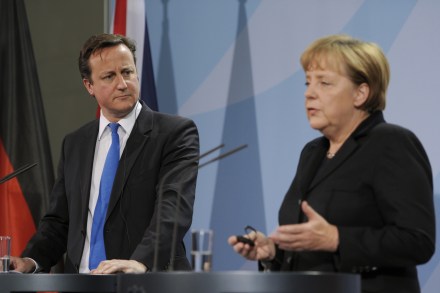
Cameron will be depicted in tomorrow's press as either a Tory Boudicca or an Essex Bulldog (© Tristram Hunt), depending on your point of view. I suspect the truth is somewhere in between. Cameron did not go in swinging a handbag, although it will suit No10 to make out that he did. But Labour's caricature of him storming off and wasting the veto certainly doesn't ring true to me. An EU27 deal was never likely, and EU17 deal always was. Cameron, on their account, just seems to be being blamed for what was going to happen all along. In any case, we are still trying to assemble the pieces of last night's drama, work out the demands and counter-demands, and see what sort of picture they produce. I'm still not sure.

Cameron says ‘No’

From our UK edition

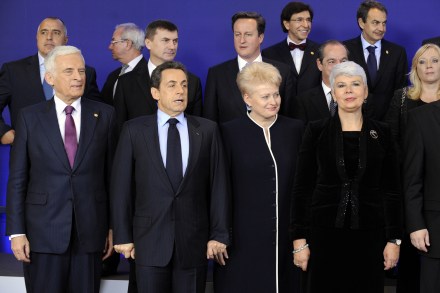
It looks like Britain could be heading for renegotiation with the EU sooner rather than later. The UK, Hungary, Czechs and Swedes last night stayed out of a 27-member EU Treaty. ‘I don’t want to put it in front of my parliament,’ said Cameron. But in an historic move, the deal is going ahead anyway, with 23 members: the Eurozone, plus the six states who want to join. ‘We will achieve the new fiscal union,’ said Angela Merkel. Nicholas Sarkozy is upbeat saying it has been an ‘historic summit’ which will change the EU ‘radically’.  If so, then Owen Paterson is right in his interview with James Forsyth in the new Spectator: Britain will have to reassess its relationship with this ‘radically’ different EU.

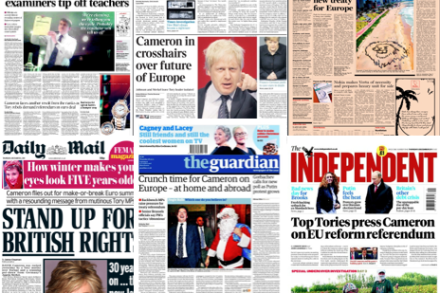
Paterson pasted across the front pages

From our UK edition

James Forsyth's interview with Owen Paterson is on virtually every front page this morning, and deservedly. Boris, bless him, can make calculated explosions at times when it suits him. But Paterson is not one for pyrotechnics or mischief. His thoughtful interview with James shows how believes that the eurozone is about to become ‘another country’ — he used the phrase several times — and one that can dictate regulations on the rest of Europe due to Qualified Majority Voting. James is posting a longer version of this interview later today, and I'd urge CoffeeHousers to read it. His Euroscepticism is rooted in his business background and the urgency he feels for economic reform.

The New York Times’ austerity myth

From our UK edition

Yet again, the New York Times fact-checkers seem to have taken the day off. The newspaper yesterday printed an editorial about British economic policy which contained basic errors – identical to those made in a blog which Paul Krugman bashed out last week. It's worth fisking a little, because Krugman appears to be using the newspaper to create an austerity myth. 'A year and a half ago, Prime Minister David Cameron of Britain came to office promising to slash deficits and energize economic growth through radical fiscal austerity. It failed dismally.' This is right, insofar as there was no austerity. The below shows current spending, for every month since the government took power. They overspendt.

Cain quits, Newt benefits?

From our UK edition

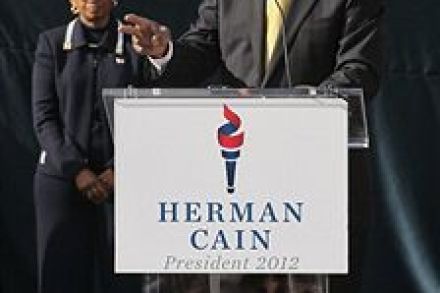
Herman Cain has just 'suspended' his campaign for the Republican nomination; the allegations about his private life have become too great. Early reports suggest that his supporters are rallying behind Newt Gingrich, who has become the latest 'stop Romney' candidate: all of the Republican wannabes pretty much get a turn at this title. Cain has never held elected office, so never really had the press pack scrutinising his background. I suspect even he's amazed at what came out of the wash. It has emerged that the National Restaurant Association settled with two women who claimed he harassed them while he was its president. Another woman has told AP that he made inappropriate sexual advances, but that she didn’t file a complaint.

Austerity is not enough

From our UK edition

The Euro crisis is terrifying, as Peter Oborne rightly says in today’s Telegraph. But what scares me even more is the paucity of the debate. Right now, the summitry is aimed at saving the euro as if this were an end in itself. Merkel’s logic (‘if the euro fails than Europe fails’) is dangerously simplistic: there are millions out of work, including half of young people in Spain, and they won’t be helped if their dole money is paid in euros. Recovery is needed. Jobs are needed. The euro has always been a project that puts politics first and economics second, with disastrous consequences. It cannot now be solved by political willpower or political cliches. The bailouts are mounting, and failing.

The trick Osborne missed

From our UK edition

The politically mobile American entrepreneur is a species which has no real equivalent in British politics. We tend to separate the moneymakers from the policy­makers at an early age. And that is what Steve Forbes, the publishing billionaire and former presidential candidate, thinks has gone wrong in Britain: our political class has lost its sense of enterprise, and has no ideas for economic recovery. We meet in Claridge’s hotel: he’s in London for a visit cut short by his attempt to avoid the worst strikes since the 1970s. To him, this is just the most visible sign that Britain is regaining the status it had when he was young: ‘the sick man of Europe’. ‘The journey has begun,’ he says.

Balls’ blindness

From our UK edition

This week has marked something of a watershed in the British economic debate. The story of the strike on Wednesday was not one of paralysis, but of resilience. There was an 85 per cent turnout in NHS staff; Cumbria council kept every office open as so few staff went on strike; Aussies landing at Heathrow cleared passport control in record time, due to the large number of volunteers who were qualified with two days' notice. As I say in my Daily Telegraph column today, the union leaders went rather quiet afterwards: they misjudged the mood of the country. As has Ed Balls.

Osborne has made the right choice — but it’s not without its costs

From our UK edition

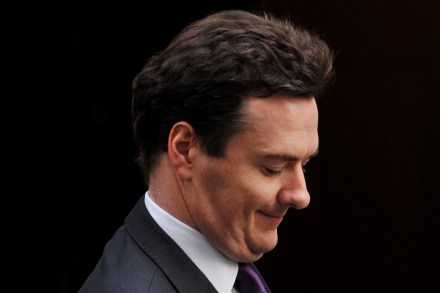
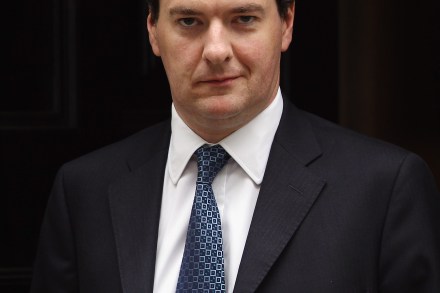
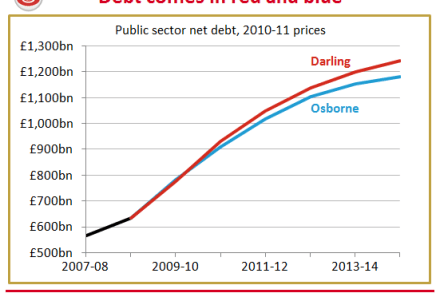
Today, George Osborne had a choice. Growth prospects have evaporated, and tax revenues along with it. Should he reopen the 2010 Spending Review and cut the spending totals? Or stick with those totals, and finance this with extra debt? He chose the latter. And I think, on balance, he was right to do so. Credibility is the most valuable currency in this eurozone crisis, and Osborne said it was a fixed five-year plan. He chose more debt over less certainty, and it looks today like the markets believe he chose correctly.  But all this comes at a cost. The government will now run deficits higher than those which Labour proposed. Certainly, had Labour been confronted by evaporating growth it may have had to choose even lower spending or even higher borrowing.

Your Autumn Statement check-list

From our UK edition

I very much doubt today’s Pre-Budget Report will be memorable; a shame, given the circumstances. The supplementary Office for Budget Responsibility document will be more interesting — and relevant to people’s lives — than the Budget itself. Sure, everyone focuses their attention on the Red Book (or Green Book, as it is for the PBR) and GDP projections. But even GDP isn’t really useful. You can manipulate GDP by printing money, or by borrowing money. Gets you nowhere. GDP is only useful insofar as it’s a proxy for national prosperity. And thanks to the OBR we’ll have other, more useful metrics today. Here's my guide to them:   1. Net debt: up or down? How much will national debt rise by? It’s due to hit £1.

Sifting through the rubble from the riots

From our UK edition

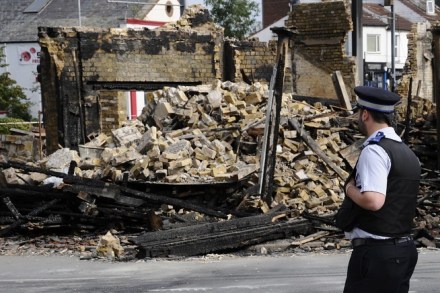
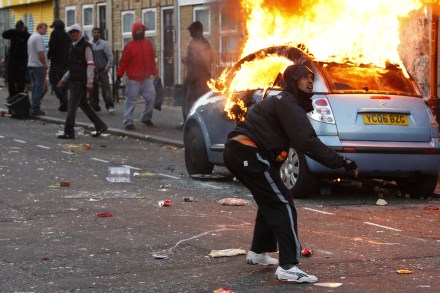
Not many folk are aware of it, but there is an official riots inquiry and it has delivered its interim report today. Its conclusions are pretty clichéd and not really worth studying; David Lammy’s book is infinitely more instructive and readable. But it does produce a few figures about the rioters — or, I should say, those arrested mainly because they didn’t think to cover their face. I looked at this for my Telegraph column last week. Here’s my summary of today's report:   1. Broken Britain. Some 46 per cent of those arrested live in the lowest ‘decile’. These guys are not working class, but welfare class.

Spotify Sunday: Cover stars

From our UK edition

I lack the discipline to choose ten favourite songs, but here are ten favourite cover versions. We know songs by their title and singer, but they are so often made by their arrangement and production. Anyone could have sung anything to Giorgio Moroder’s mould-breaking ‘I Feel Love’, but Donna Summer takes the credit. By changing the production and arrangement, covers transform songs. And all the better on Spotify because you can compare versions — instantly. Anyway, to business:   Nobody Does It Better — Aimee Mann From a brilliant covers album: David Arnold’s James Bond Project.

Wrestling over cuts

From our UK edition

Britain's economic debate has been reduced to WWE-style wrestling, where two figures adopt semi-comic personas and have at each other for the entertainment of the crowd — while not doing any real fighting at all. So it is with Osborne and Balls. Rhetorically, they are poles apart; one championing cuts, the other spending. But you'll notice that neither quantifies the cuts. That's because Osborne is simply enacting an only-slightly-souped-up version of Darling's plan and the real difference between the two parties is tiny. This was the point of last night's Newsnight, where David Grossman filed a report (in which yours truly was interviewed) about the great pretend fight between two parties whose plans only differ by less than 1 per cent a year.

We cannot forget the riots, nor ignore their causes

From our UK edition

If I’d said that an MP had accused the Church of England of being too obsessed with gay marriage and women priests — and not worried enough about how God can keep young boys out of harm’s way — you’d probably imagine that a Tory had gone nuts. But this is the David Lammy, Labour MP for Tottenham, who has gave an interview to our Books Blog. In it, he elaborates on the theme of his new book: that his colleagues are so keen to help single mothers that they’ve lost sight of what really helps working class boys. Amongst the contributing factors, he mentions two things that may cast him out as a heretic in Labour’s secular religion: fathers, and God.   Lammy’s book, Out of the Ashes, was released yesterday. On Monday.

Osborne chooses more debt over more cuts

From our UK edition

Reading today's newspapers, it seems that the biggest decision of Osborne's mini-Budget has already been made. Evaporating growth means lower tax revenues, so the choice is between protecting his deficit reduction plan or keeping total spending cuts at less than 1 per cent a year. Increasing savings to, say, 1.3 per cent a year would mean he could easily meet his deficit targets. But it seems the decision has been taken to borrow even more. In his March budget, Osborne laid out plans to increase government debt by 51 per cent over the course of a parliament – lower than the 60 per cent that Labour had planned. It now looks as if Osborne will increase debt by even more than that 51 per cent.

How ambitious is Cameron on Europe?

From our UK edition

Someone forgot to pack his handbag. We heard yesterday that David Cameron has agreed to let Merkel pursue full fiscal union – and in return she will... drum roll please... let him repatriate parts of the Working Time Directive. There's nothing official from Number 10, but the well-informed Ben Brogan suggests this morning that this could well be Britain's price for agreeing to Merkel's deal. If so, this would be an opportunity squandered on a massive – perhaps historic – scale. Let's recap. Cameron is in an incredibly powerful position: leading a government which is, in defiance of public opinion, giving £9 billion of overseas aid to EU member states each year.

Now will we learn the truth about Saif’s British ties?

From our UK edition

Now that Saif Gaddafi has been captured, the race will be on to interview him from a prison cell and ask what his business was with the various figures of the British establishment with whom he was so close. CoffeeHousers will remember the 2009 party at the Rothschilds' manor in Corfu: Saif, Mandy and Nat Rothschild. A little later, Charles Moore revealed in The Spectator that the trio were later reunited in a shooting party at Lord Rothschild's Waddesdon Manor in Buckinghamshire. I spoke to Lord Mandelson a few weeks after the piece appeared, and thought CoffeeHousers may be interested in the transcript. The noble lord was outraged at Charles' piece – because it suggested he was also hanging out with Cherie Blair that night.

Nigel Lawson versus Mervyn King

From our UK edition

In this week’s Spectator we have a piece from one of our former editors, Nigel Lawson, where he confronts this idea that the West’s woes can be blamed on a new bogeyman called ‘global imbalances’. This is fast becoming the received wisdom, something that even the bankers can point to and blame. It gets everyone off the hook, and takes attention away from the basic failure to regulate the supply of money and quality of investments. CoffeeHousers may be familiar with the argument by now. Time and time again, we hear central bankers shrug their shoulders and say something like: ‘Don’t blame us central bankers and financial policymakers for the debt crisis.

Berlusconi: latest victim of Europe’s reverse Arab Spring

From our UK edition

Berlusconi has finally resigned – and so continues what seems to be the Arab Spring in reverse (a Gnirps Bara). In the Arab world, people rose up against undemocratic juntas and democracy ruled. In Europe, undemocratic juntas are springing up in Frankfurt opera houses and toppling democracy. All Sarkozy had to do was help the rebels who wanted to remove the targeted leader. The cover story of this week’s magazine has a piece by yours truly about the Frankfurt Group of eight people who are calling the shots. Only two members are directly elected: Sarko and Merkel (well, three if you count the Prime Minister of Luxembourg, which we shouldn't as it a population smaller than Leeds). The rest are the heads of the ECB, IMF etc.

Europe’s hit squad

From our UK edition

If you thought the EU couldn’t get any less democratic, meet the Frankfurt Group The Old Opera House in Frankfurt — once Germany’s most beautiful postwar ruin and now its most stunning recreation — has become a symbol of European rebirth. And it was here, last month, that Angela Merkel and Nicolas Sarkozy met the EU’s bureaucratic elite in what would, in another era, be described as a putsch. They had grown tired of eurozone summits, with leaders flying here and there but getting nowhere. A smaller group needed to be formed, who would wield power firmly but informally. That evening, as they gathered to hear Claudio Abbado conduct the Mozart Orchestra of Bologna, a new EU hit squad was born.