Fraser Nelson

Fraser Nelson

Fraser Nelson is a Times columnist and a former editor of The Spectator.

Remember the living | 11 November 2011

From our UK edition

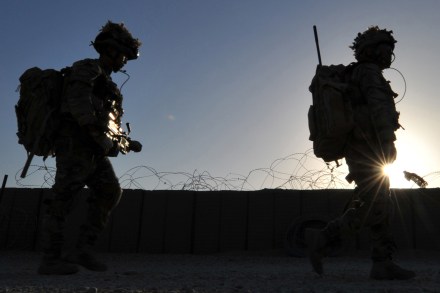
Every time a politician suggests a introducing a flag-waving British national day, the idea falls flat. We already have one: 11 November, Remembrance Day, where we remember our war dead and resolve to help the living. In my Daily Telegraph column today, I talk about how the government can better serve the tens of thousands who have come back from active service in Afghanistan and Iraq.   Britain is, for the first time since the post-war years, a nation with a large veteran community. And we’re still not quite sure how to handle it. The Americans are: they had Vietnam, and learnt the hard way about post-traumatic stress disorder (PTSD) and related conditions.

Britain: a safe haven?

From our UK edition

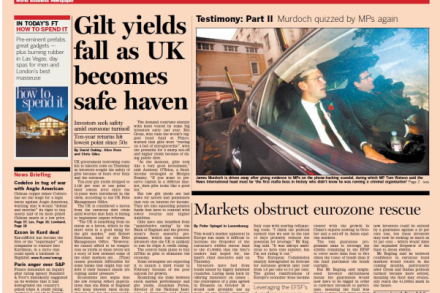
The Bond Bubble is growing even larger over Britain, pushing 10-year yields down to 2.1 per cent. The FT splashes on it this morning, and uses the “safe haven” line, which is also being advocated by the Conservatives. Understandably. If I were George Osborne, I’d spin this as a standing ovation from the markets for my deficit reduction plan. In fact, it’s just a grim reflection of the fact that Britain’s low-growth, high-debt economy is less unattractive than Italy’s. But it does have another side effect, that people won’t quite admit to. Osborne’s cost of borrowing is going down (partly due to expectations of more QE) and since the Budget, ten-year yields are off about 130bp.

Reviving the Scottish Tories

From our UK edition

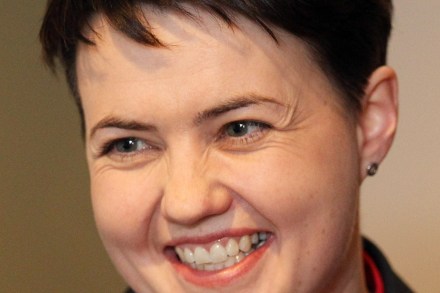
The Irn Lady pulled through – and the Scottish Conservatives survived. Had Murdo Fraser won, he would have renamed the party and left David Cameron running an England-only Conservative party. Yes, I can also imagine how much that would have upset them. But the day has been saved. The kickboxing Ruth Davidson, committed to reviving rather than abandoning the brand, has triumphed. She already been hailed as the first openly Glaswegian leader of the party, and her supporters argued that Murdo lacked her charisma which is why his proposition was more radical. I haven't met either, and can't comment. Except to say that Scotland remains a very large buffer zone between Cameron and proper control of No10.

International aid in the dock

From our UK edition

The pledge to almost double Britain's international aid budget was made in the boom years, when the government actually had money. In the bust, there is something deeply strange — almost perverse — about borrowing money from China and giving it to India. It's time to reassess Britain's aid commitment, and The Spectator is having a debate about it tomorrow night. I hope CoffeeHousers will be able to come because it is, I think, a crucial issue. Alan Duncan is the man to thanks — or blame, depending on your point of view — for the Tories committing to spend 0.7 per cent of economic output on foreign aid.

7 billion and onwards

From our UK edition

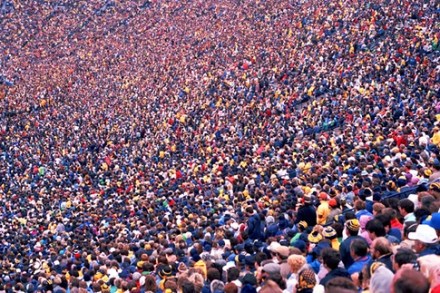
Today, if the United Nations is to be believed, the world population will reach seven billion. Almost as many words have already been written about the perils of a booming population, about how humans are bad for the environment and how — if current trends are extrapolated — the entire Western world will end up with the population density of Hamleys on Christmas Eve. In fact, mankind does not quite behave like this. As we grow richer, we tend to breed less. Look closely at the UN data and it shows that fertility is already below the replacement rate of 2.1 babies per woman in several countries. Extrapolate the UN’s medium-case estimates and you can find that the world population will peak (at ten billion) at the end of this century.

Clegg’s tall tales won’t boost growth

From our UK edition

“The Deputy Prime Minister, Nick Clegg, will today announce proceeds from the government growth fund which will protect or safeguard 200,000 jobs.” This sentence contains everything that’s wrong about this government’s schizophrenic approach to economic recovery. Rather than cut taxes and let the economy grow, they increase tax — and then give people back a portion of the cash, expecting to be thanked as they do so. And, for good measure, dropping in a spurious jobs number. Nick Clegg was on the Today programme this morning, showcasing the phenomenon that retards so many economies: politicians seeking credit for giving one man’s money to another.

The wisdom of Eurosceptic crowds

From our UK edition

How much does public opinion on Europe matter? A poll for today's Sunday Times found that 41 per cent want out of the EU and on the BBC1 Politics Show today, Jon Sopel confronted Douglas Alexander with this statistic. Wee Dougie replied that, on Monday's vote, he was in the "no" lobby with the leaders of all British political parties – so of course he was in the mainstream. This raises a crucial issue: the vast disconnect over Europe between the political elite and the masses. To declare my hand: I'm in favour of our EU membership and regard the free movement of people, goods and services as a noble endeavour (albeit one which the EU has yet to live up to). But I'm in the minority.

The welfare trap

From our UK edition

John Humphrys last night presented a documentary on welfare, the single most important topic in Britain. It was excellent, and I’d recommend CoffeeHousers watch the whole thing (on iPlayer here). Humphrys is a great presenter, himself the product of the now-forgotten days of social mobility when a kid from a working-class district (Splott in Cardiff) could end up presenting the 9 O’Clock News in his 30s. “In those days, everybody was expected to work,” he said of his childhood. “We knew only one family where the father did not work, and he was a pariah…. Today, one in three of working-age people is on out-of-work benefits.” This is what the welfare state has done to communities like his.

Europe’s new battlefield

From our UK edition

The long flight from Australia should give David Cameron plenty time to think about Europe, and how it just won't go away. He didn't want this battle — not now, not ever. But in the Daily Telegraph today, the first in what will be a weekly column, I lay out the battlefield that awaits him on his return. First, this bailout is not the end. A trillion Euros needs to come from somewhere, and today the Chinese are being tapped up — God knows what we'll agree to in return. But that doesn't address what is, as Mervyn King has said, a solvency issue rather than a liquidity issue. And the tighter these Eurozone countries squeeze together, the more tension we can expect.

The Euro masquerade

From our UK edition

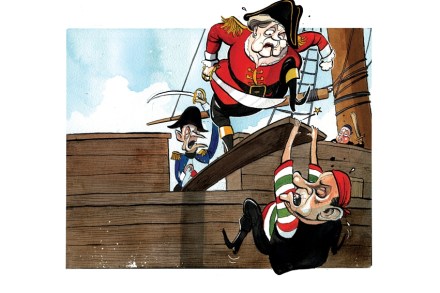
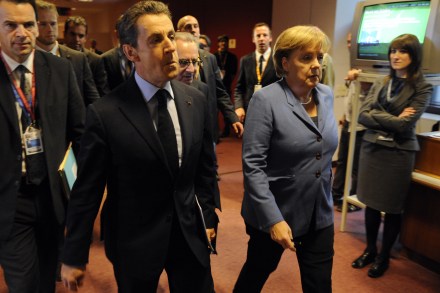
So much rot has been said about the Eurozone crisis that you do wonder whether Merkel, Sarkozy et al have come to believe their own spiel. This is an economic problem and it can’t be solved by political will. Greece is bust and several French, German and Dutch banks were stupid enough to lend €130 billion to the Greek government that they're not going to get back. All the summits in the world cannot change this simple fact. These crisis talks are about bailouts for banks, not bail outs for Greeks. BNP Paribas is in for €37bn. Commerzbank of Germany is owed €15bn. And if Greece defaults, then insurance claims are triggered.

When will MPs wake up to Shale?

From our UK edition

It's just baffling. The House of Commons committee on energy has today published a report entitled “UK Energy Supply: Security or Independence?” with hardly a mention of the 200 trillion cubic feet of Shale gas recently found outside Blackpool. As Matt Ridley wrote recently in his definitive Spectator piece, these reserves – if exploited – are "enough to keep the entire British economy going for many decades. And it's just the first field to have been drilled." It may well be that just a fifth of this are exploitable, but there is no mention of this potentially game-changing discovery in the committee's report today.

Are Brits more likely to riot?

From our UK edition

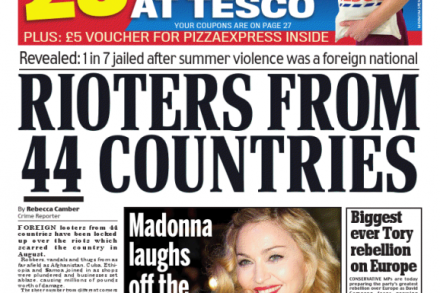
One of the reasons I wanted an inquiry into the riots was to try to avoid headlines like today's. Information will out — what matters is how it's presented. The Daily Mail's front page today (followed up by its rivals) says that those imprisoned for the riots hail from 44 different countries. The most striking line comes from the story: "Prison statistics revealed that 14 per cent — about one in seven — of those jailed for burglary, robbery, theft, criminal damage and disorder during the riots were born abroad." So, 14 per cent of the imprisoned rioters were foreign-born. But given that 34 per cent of Londoners were born abroad, you could argue that — statistically — Brits were three times as likely to riot than immigrants.

Dave’s EU opportunity

From our UK edition

Lucky David Cameron. His chance to repatriate powers from the EU will come sooner than he thought. Now the latest EU summit is over, it looks as if there will indeed be change to the Lisbon Treaty — the very document that the Prime Minister and William Hague promised Britain a referendum on. Last night, Herman Van Rompuy said that EU leaders had promised to "explore the possibility of limited change" in the weekend talks. Germany since confirmed that provisions for "limited treaty change" were included in the conclusions. We all know what that means. Indeed, here are the Prime Minister’s words: "Treaty change can only happen if it is agreed by all the 27 member states of the European Union.

Tory Wars, redux

From our UK edition

Even after reading Jonathan's post, I struggle to see the strategy in David Cameron's position with his party over Europe. The motion is non-binding, and Miliband has three-line-whipped his party to vote against so there was zero chance of the motion passing. It is the result of a petition to parliament, so you can't write this off as the idea of a few Tory MPs in the tearooms. Cameron should have said: "Sure, guys, have your vote. It's a backbench motion, so the government won't take part and as you know I've booked a trip abroad next Thursday anyway so I won't be here. But I was serious when I said those petitions are a way to "rebuild trust in politics".

Reigning for dummies

From our UK edition

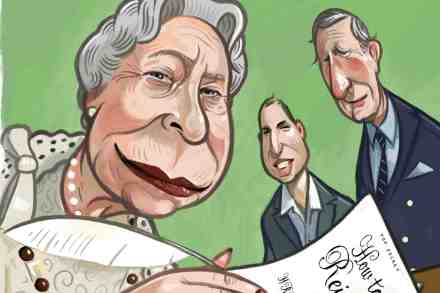
  What is the Queen’s secret? She seems to defy political gravity. Right now, an English monarch is in Australia being feted by her subjects, who seem delighted by this very un-modern constitutional arrangement. Paul Keating, the former Prime Minister of Australia, recounts in The Times today the time he advised the monarch to let go. “I told the Queen as politely and gently as I could that I believed that majority of Australians felt the monarchy was now an anachronism; that it had gently drifted into obsolescence.” This was 18 years ago. There is no such sign of this now, with just 34 per cent of Australians being in favour of dumping Her Majesty – the lowest figure for 20 years. Why?

The austerity myth

From our UK edition

CoffeeHousers may remember an odd New York Times editorial recently where they tried to blame the evaporation of British economic growth on austerity. Perhaps the newspapers’s famed fact-checkers had taken the day off, because the slightest piece of research would have exposed the premises of the piece as bunkum. This morning, the ONS has produced monthly public finance figures, showing current spending is still rising in Britain.

Al Jazeera scores another victory in the information war

From our UK edition

Now that Gaddafi has been killed, which television station will the world turn to? I suspect that, right now, Al Jazeera will be on in No.10 and the White House, and indeed television sets across Asia and India. At a time when the BBC is retreating from global news, its Doha-based rival is expanding — and this has harsh implications. The Arab Spring demonstrated the importance of media to world affairs, and the Americans are mindful that they’re losing this battle. The America-style television news formula — celebrity newscasters and short packages rather thin on analysis — go down badly outside America. ‘We are in an information war and we are losing,’ Hillary Clinton warned the Senate foreign relations committee in March.

Competition: Help Osborne to explain his growth strategy

From our UK edition

Yesterday, Lord Wolfson — the new Tory peer and CEO of Next — made an extraordinary offer: £250,000 of his own money to whoever comes up with the best plan to break up the Euro. It's the second biggest prize in economics, after the Nobel, and a great and patriotic idea from Wolfson, an original and forceful thinker with plenty real world experience from whom I hope we'll hear more. Inspired by this, we at Coffee House would like to make our own offer: a bottle of Pol Roger, our house champagne, to whoever can explain George Osborne's growth strategy. The chancellor needs some help on this front, with some unkind souls suggesting he has no strategy. This is not about suggesting a policy to Osborne — we may have a second competition for that one.

The poverty of Britain’s energy debate

From our UK edition

How big does Shale have to get before our policymakers wake up to its implications? There is an Energy Summit in No.10 today where Chris Huhne wants to focus on the need “to help consumers save money on their gas and electricity bills”. A preview interview on the Today programme underlined the dire situation. First, Huhne was not asked about how his own green regulations have massively contributed to the problem. Then, the managing director of British Gas was invited on to say that “unless someone discovers huge amounts of gas and imports it into the UK…”. And, yet, one of BG’s rivals recently discovered 200 trillion cubic feet of gas near Blackpool.

Salmond’s bonnie boat

From our UK edition

Meanwhile, Alex Salmond's journey is going depressingly well. The SNP conference starts in Inverness on Thursday and a ComRes poll today suggests 39 per cent are in favour of independence, against 38 per cent against the idea. Not a freak: a poll last month by TNS-BMRB produced the same results. Hardly an overwhelming endorsement, but a reminder that the unionists are in trouble in Scotland. The Scottish Tories are in so much trouble that one leadership candidate is suggesting the party renames itself because its official title strikes so many as oxymoronic. For all his Scottish lineage, David Cameron leaves Scots cold – as the general election demonstrated.