Fraser Nelson

Fraser Nelson

Fraser Nelson is a Times columnist and a former editor of The Spectator.

The trade mission delusion

David Cameron has returned from what was a bit of a war-and-peace tour of East Asia. Taking arms dealers to Indonesia one day, posing with Aung San Suu Kyi the next. In today's Sunday Telegraph he writes an almost-defensive piece about it all: ‘With the eurozone producing sluggish growth, we simply can’t rely on trade with Europe to generate the jobs and growth we need. We need to look south and east and do a much better job of winning business in places such as China, India, the Gulf, Africa and South America. That’s why I have been leading trade missions to some of the fastest growing parts of the world, including last week’s visit to Japan and south-east Asia.

Downfall

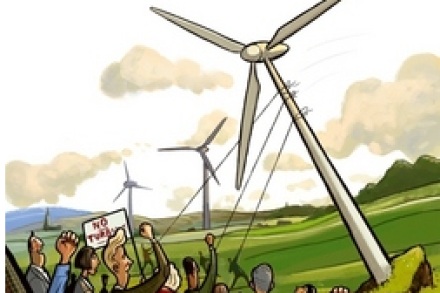
It did not take long. Last month, Matt Ridley argued in a Spectator cover story that the wind farm agenda is in effect dead, having collapsed under the weight of its own contradictions. The only question is when our ministers would realise. In an interview with the Sunday Times (£), climate change minister Greg Barker admits that his department has adopted an ‘unbalanced’ approach to wind farms and will now look at other options. ‘Far from wanting thousands more, actually for most of the wind we need… they are either being built, being developed or in planning. The notion that there’s some new wave of wind [farms] is somewhat exaggerated.

An independent Scotland could pay its own way<a id="fck_paste_padding"></a>

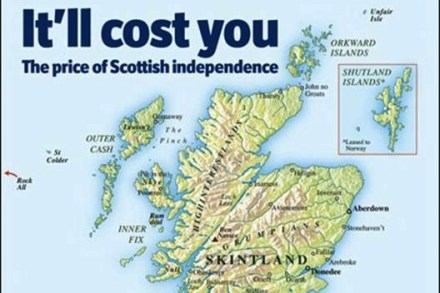
The Economist has some fun with Scotland this week, running a cover suggesting my motherland would go bust if it was independent. The map has lots of gags: the Outer Hebrides is renamed ‘Outer Cash’, ‘Edinborrow’ twinned with Athens etc. But it suffers from one central defect: the thesis is nonsense. Saying that Scotland would go bust without English subsidy is the clichéd unionist attack line, which has lost force over the decades because it is demonstrably untrue.

Sweden’s secret recipe

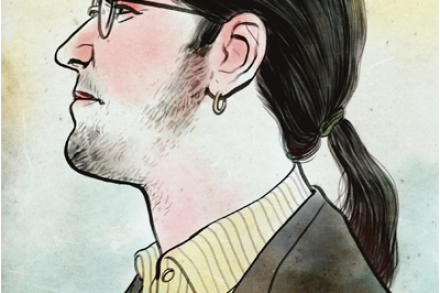
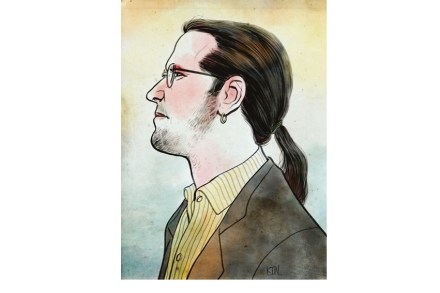
When Europe’s finance ministers meet for a group photo, it’s easy to spot the rebel — Anders Borg has a ponytail and earring. What actually marks him out, though, is how he responded to the crash. While most countries in Europe borrowed massively, Borg did not. Since becoming Sweden’s finance minister, his mission has been to pare back government. His ‘stimulus’ was a permanent tax cut. To critics, this was fiscal lunacy — the so-called ‘punk tax cutting’ agenda. Borg, on the other hand, thought lunacy meant repeating the economics of the 1970s and expecting a different result. Three years on, it’s pretty clear who was right.

How Mitt Romney inspired the British charity tax debacle

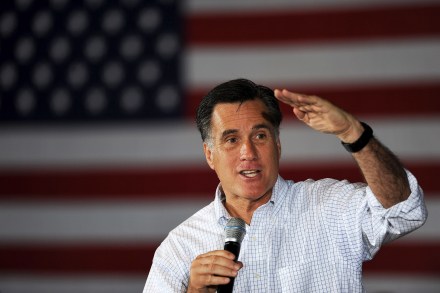
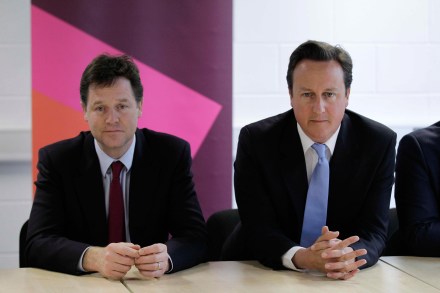
How is Mitt Romney linked to the charity tax debacle? I thought I'd pass on to CoffeeHousers an explanation which passed on to me about the origins of this latest mess. It dates back to the point in the Budget negotiations where Nick Clegg had finally persuaded Osborne to introduce a Mansion Tax. A major coup for his party — but Cameron vetoed, thinking it'd hurt Boris in London. Clegg is annoyed, tells Osborne he can't have his 40p tax, but he still has a problem. A Lib Dem spring conference is coming up — so what will he announce? He hunts for a new idea. The Thursday before the Lib Dem conference, he’s having a late-night brainstorming session in the Cabinet Office with his aides — fuelled by a drop of whisky.

Another case of Big Government trumping the Big Society

Exactly two years ago today, David Cameron launched the Conservative Manifesto — one of those rare moments in the Tory campaign where it all seemed to make sense. Cameron begged for a hearing: he was serious, he said, about changing government. It was about realizing that ‘Big Government isn’t the answer to the problems’ and that people outside government — like charities — were. This is why the charities debacle today is not just another Budget blunder. As I say in my Telegraph column, if Cameron tolerates the taxman’s proposed assault on philanthropy, he’ll be admitting defeat on what he described that day as his ‘fundamental tenet’.

Sadly, the 47p tax rate is here to stay

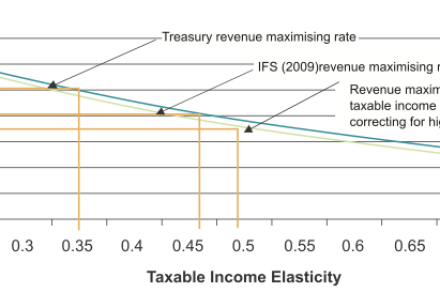
Nothing is more permanent than a ‘temporary’ government tax, as George Osborne is reminding us. When Alistair Darling proposed a 45p rate in 2008, even the Institute of Fiscal Studies said it would lose money – but Darling said it would be 'temporary'. Brown upped it to 50p, Osborne took it back down to 45p but the 'temporary' status has been revoked. The Sunday Times has today splashed on Osborne’s interview with Robert Winnett of The Daily Telegraph, where the Chancellor said 'I’m very happy with the 45p rate of tax. We’ve got it to a good place where it’s competitive.' Britain had the highest top rate of tax in the G20, now it has the third-highest.

Tinker, Tailor, Soldier, Tax Evader

Rather than respond to CoffeeHousers in the comment thread of my blog earlier, I thought I'd do it in a post (and also take in some of the comments from Twitter and my Telegraph piece). I’ve been accused of "starting to sound like a leftie" - and for what it’s worth, I don’t sign up to the David Davis civil liberties agenda. Not all of it, anyway. I’m all for snooping if it helps catch murderers or jihadis. But what I don’t like is this age-old politicians trick of pushing a whole load of powers through in the name of ‘national security’ then, next thing you know, the council is trawling your email data.

What is being done in the name of ‘national security’?

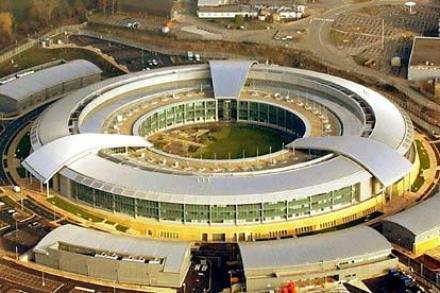
The liberty versus security debate has returned to Westminster, and it's just like old times. David Davis is having great fun beating up the government, except this time it's a Tory-led one. And as so often, Davis has a point. Much rot is spoken in the name of 'national security,' which can be used by the right as 'health and safety' is used by the left: a verbal trump card, to win any debate and justify any policy. So it has proved with this bun fight over the snooping powers about to go through parliament. It has split the coalition, and even the Tory party. In my Telegraph column today, I try to work out what's going on. First, what isn't going on: the idea that MI5 or MI6 want secret trials, or to read all our emails, is bonkers.

This is what politics has become

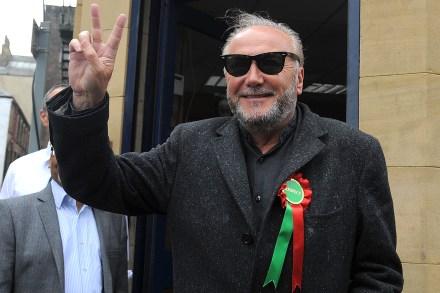
George Galloway’s victory last night is a reminder of a wider problem in British politics: the low regard in which all main political parties are held. By-elections can throw up quirky victories, usually ironed out in the general election. There won’t be an army of Galloway’s marching on parliament at the next election. It’s like Glasgow East: a classic Labour safe seat-cum-‘rotten borough’ taken for granted (and ignored) for so long that the ruling party’s apparatus had atrophied. Like John Mason in Glasgow East, Galloway won’t last long.    But the same phenomenon which took Galloway to victory last night, and humbled the main parties, is also at work in Scotland.

Revealed: the grey recovery

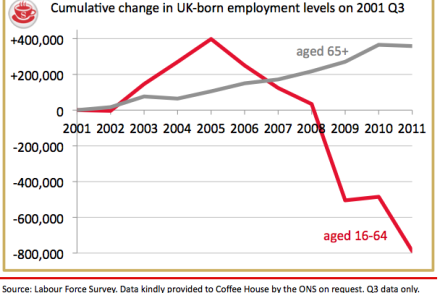
Are pensioners doing their bit for the recovery? The agenda of ‘intergenerational fairness’ has arisen in response to the idea that they are not, and ought to be taxed more. Daniel Knowles has made the case, in our cover story this week. Carol Sarler responds to him. In the leader, we reveal some data hitherto undisclosed: the way the oldies are responding to the recession. They're working as never before — the below graph shows (stripping out foreign-born workers) the change over the past decade: Between 2001 and 2011, all the employment increase for UK-born people was from pension-aged workers, while working-age employment dropped. This challenges the idea of the over-65s as a burden on the rest of society.

The borrowing behind Osborne’s Budget

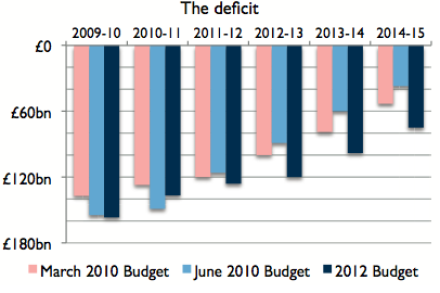
Will George Osborne’s refusal to look again at high levels of state spending become the greatest risk to Britain’s economic stability? There have been plenty of rude comments about the Chancellor’s supposed tactical ineptitude in the weekend press, but he has still managed to keep on borrowing and have almost no one notice. Osborne’s iron commitment is to spending, and a programme of cuts which total just under 1 per cent a year. His commitment to deficit reduction is flexible, as his three Budgets have demonstrated: Osborne spent the election campaign berating Labour for its lack of ambition in halving the deficit in four years. He’s now doing it in five, but no one points this out. Quite a result.

Why access Cameron? The Lib Dems would be an easier target…

Why would anyone pay £250,000 to change Tory policy when the Liberal Democrats would do it for £2.50 and a hug? The brilliant Sunday Times investigation today makes you wonder whether businessmen don't actually realise that out that, in this coalition, it doesn't matter what you persuade David Cameron of. Policy is decided by horsetrading with the Lib Dems, who wield disproportionate power (for good or for ill). For example, Osborne was personally inclined to bring the top rate of tax down to 40p, but the Lib Dems told him they'd only allow this in exchange for their mansion tax. Cameron refused to do the deal, so 45p it was. The rise in capital gains tax was a Lib Dem demand, and would only be changed by Lib Dem agreement.

Previewing my Week in Westminster

I’m presenting Week in Westminster at 11am on Radio Four today, and get to choose four topics for discussion. My political nodes were, of course, amputated for the purposes of this production. Here are the topics I chose: 1. Young vs Old. Osborne stepped on a landmine on Thursday: he didn’t expect his pension tax (minor, as Charles Moore argues in the Telegraph) to cause such a reaction. But I suspect he hadn’t realised the depth of feeling in this emerging clash of the generations. Osborne’s idea for freezing pensioners’ tax threshold was lauded on Twitter but lambasted in (most of) the press.

Osborne needs to speed up

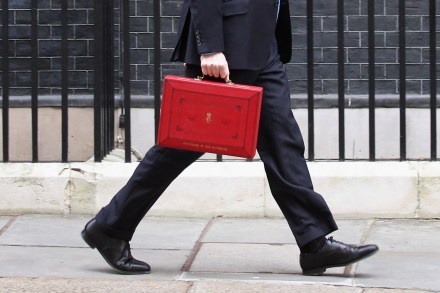
Will the Budget make a difference? Nowadays, we have a quick and easy guide: Box 3.1 from the Office for Budget Responsibility — otherwise known as the ‘blind bit of difference’ test. Sure, Budgets can make your hot takeaway lunch 20 per cent more expensive and your cigarettes cost £7.50 a packet, but the question, in a recession, is whether any stardust can be found between its pages. Whether it will be do anything for jobs, the deficit or economic growth. The Budget nowadays is handed to the OBR in advance of publication and assessed for its impact on the economy. The verdict: speeding up the corporation tax cut (another welcome move, and brave of Osbrone to do it during a deficit period) may add 0.

Twelve points about the Budget

There’s much to applaud in this budget, but as ever we in Coffee House are focusing on things jumping out from the small print. Here are a few things I’ve noticed so far. 1. Don’t mention QE. In his Pre-Budget Report, Osborne was candid about his economic policy: ‘fiscal conservatism, but monetary activism’. That is to say, fiddling about on the margins with taxes, while the Bank of England — 100 per cent owned by the Treasury — is midway through the largest QE experiment ever attempted in the developed world. It is impossible to understand Osborne’s economic policy, his Budget and those it affects without also considering the effects of QE — the inflation, the low interest rates and the game-changing implications.

Yes to new roads, no to a pensions raid

New roads in Britain are badly-needed, but who should bear the costs? Motorists, says David Cameron — and his speech today is a move in the right direction. No tolls would be slapped on existing roads, so motorists are free to drive as freely as they do now. But if they want a shortcut, they'll have to pay for it. What I'm uneasy about is Cameron trying to raid our pension funds to help subsidise this. There are many ways to raid pension funds — QE is one. The National Association of Pension Funds estimates that a scandalous £130 billion has been wiped from the value of our collective pensions because Sir Mervyn's Magic Money Machine is artificially lowering interest rates.

Taleb in 30 minutes

Nassim Taleb, the Lebanese-American academic whom we interviewed in The Spectator last month, is the subject of a Radio Four profile by The Economist's Janan Ganesh that was first aired last Monday but will also be on Radio 4 at 21:30 this evening. David Willetts is interviewed, saying that Taleb's work underlines the folly of long-term forecasts because ‘the big events that shape the world today are those which no one predicted four or five years ago’. The discovery of Shale gas, for example, could utterly change Britain’s energy requirements. Taleb’s heroes are Burke and Popper: his emphasis is on the need for humility, on how hard it is for any government to know what’s going on in society.

Is Andrew Lansley’s time finally running out?

A few months ago, I was invited to speak at the Health Service Journal conference, and hugely enjoyed meeting various reformers from within the NHS (and, of course, their enemies). One representative from the NHS Confederation pointed out that in most countries which were run by coalitions, the junior party was always given control of health — because nothing good can ever come from it. When things are going well, you hear nothing. When flu epidemics strike, then health is a horrible brief. A good point, which David Cameron may be taking to heart. Patrick Hennessy reveals in tomorrow’s Sunday Telegraph that Cameron is mulling a pre-Olympics reshuffle which would replace the hapless Lansley with a Lib Dem.

The man behind the Budget

In today’s Telegraph, I profile Rupert Harrison, chief economic adviser to George Osborne and the man who’ll do more than anything else (including his boss) to shape next week’s Budget. In the British political system, special advisers are given very little attention — even though the best of them are more influential than the average Cabinet member. The Treasury’s vast power, assembled by Brown, is still there. That can’t be said for Osborne: he spends half his time in Downing St, and is sufficiently detached from the Budget process that he felt able to take a couple of days’ holiday in America last week to jump in the motorcade and press some presidential flesh.