Fraser Nelson

Fraser Nelson

Fraser Nelson is a Times columnist and a former editor of The Spectator.

Cameron, Fruit Ninja shinobi

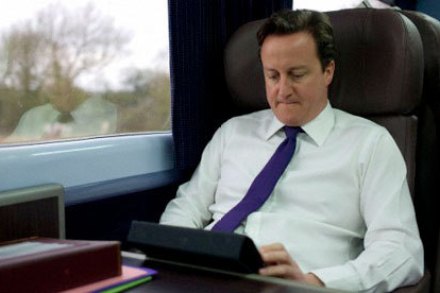
In my Telegraph column yesterday, I quoted a senior adviser to the Prime Minister saying that he ‘spends a crazy, scary amount of time playing Fruit Ninja’ on his iPad. It seems No.10 has been denying it — telling The Times (£) that ‘the real culprit’ is ‘his six-year-old son’. Now, all fathers will immediately recognise this transparent defence. I used to blame my kids for my being into Glee, but it doesn't wash (they're four and two and male). I won't name the official whom I quoted, suffice to say that this was not a half-remembered conversation but a verbatim quote. And the other problem No.10 has is that Cameron has apparently admitted to his Fruit Ninja habit in the past.

No time to tinker

Next week, the Institute of Directors and the Taxpayers' Alliance will release what I humbly suggest will be the most powerful summary of the case for radical supply-side reform in a generation. The report of the 2020 Tax Commission runs to 417 pages, choc full of academic literature showing how big government chokes growth, and looking at what the optimal size of the state is. Broadly speaking, government spending is about half the size of economic output now and the optimal size is about a third. The recommendations are not being released until Monday, but it opens a very timely debate, which I preview in my Telegraph column. Here are my main points. 1. There is no recovery in sight.

Choice matters more than tuck shops

Does it matter that academy schools are defying Jamie Oliver's fatwa against sweets? An organisation called the School Food Trust has found 89 of 100 academies guilty of harbouring tuck shops. Selling crisps, chocolate and even cereal bars. The Guardian is shocked and has made the story its page two lead. Schools with tuck shops, says the Trust's director, ‘should be named and shamed for profiteering at the expense of pupils’ health… Mr Gove is putting ideology above children’s wellbeing’.   I plead guilty to having once been behind the counter at the tuck shop of Rosebank Primary in Nairn, blissfully unaware that I was poisoning Highland children with this filth.

The folly of Cameron’s gay marriage culture war

For some time now, a growing number of Tory MPs have been quietly informing the whips that they will not be voting to support gay marriage. They’ve been getting letters from their constituents, and even those in favour of the idea know that they can’t afford to support it. When a cabinet member spoke to the whips office recently, he was given a startling reply: don’t worry, it will never come to a vote. The consultation is ongoing, but the agenda is being dropped. The effect it’s having on the morale of the Tory grassroots is calamitous. I look at this fiasco in my Daily Telegraph column today, and here are the main points. 1. The kulturkampf over gay marriage defines American politics, not Britain’s.

Lies, damned lies, debt and Nick Clegg

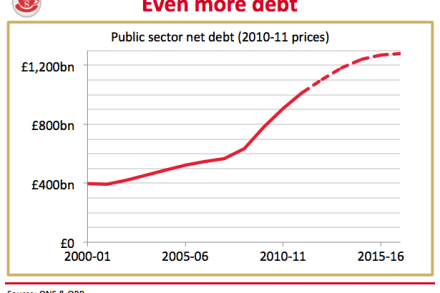
Does it matter if the Prime Minister and his deputy mislead the country about what they are doing to the national debt? Neither of them seem to think so, if today’s Essex Relaunch today is anything to go by. First, Cameron: ‘The problems of over-spending and too much debt can’t be solved by even more spending and even more debt.’ He chose his words for consumption by the ordinary voter, the factory workers who formed his backdrop. Who, listening to that, would guess what Cameron and Clegg are doing with the national debt? Clegg, I’m afraid, went far further and suggested that the debt was being eliminated.

Hollande, Cameron and the 21st arrondissement

While David Cameron has good cause to be glad of Sarkozy’s defeat, he has even better cause to be nervous about this trend of lefty nerds being elected. Much of the Cameroon’s re-election hopes are pinned on the idea that their boss will trounce the geeky Ed Miliband. Nowadays, the argument goes, these ex-special advisers who have no charisma and alarming leftist policies just don’t win modern elections. But, as Ben Brogan argued in the Telegraph last week, the French may well be about to prove that even dullards can get elected — if the incumbent fails to deliver the change he promised. At least Hollande says he’ll balance the books by 2015, which is more than Osborne is planning to do.

It’s time to lurch towards the public

Much of the post-Boris analysis in today’s press features on whether a rightwards shift is appropriate. The Daily Mail calls for a return to Tory values, while Matthew Parris in The Times says such calls are predictable and meaningless. But, to me, talk about moving to the right or the left is pretty pointless. As the Telegraph says in its leader today, what’s needed isn’t a lurch to the right, but a lurch towards the public. This comes back to the great, eternally-relevant distinction that Keith Joseph made between the ‘middle ground’ between political parties, and the ‘common ground’ between a party and the public.

What Cameron can learn from Boris

It looks like Conservatism will tonight be affirmed in the greatest city in the world — but thanks to Boris Johnson, who has been able to sell it to Londoners far better than David Cameron managed in the general election campaign. The number to watch out for tonight is the Boris factor, the gulf between those voting for him as Mayor and those voting Conservative for the Greater London Authority.  As I say in my Telegraph column today, the clown prince is getting something badly right.   Until recently, we had been told that there are two choices for Conservatism: the ‘modernising’ faction of it, or the old voter-repelling model which lost the last three elections.

GOD isn’t good enough for Threadneedle Street

When Gus O’Donnell was running the civil service, he was known by his initials — GOD. It seems to have gone to his head. He says in this week’s House magazine that he’s considering applying to be Governor of the Bank of England, and in the same interview exposes his failure to grasp modern economics by saying it would be dangerous to put income tax back to 40p (which was the plan even under Gordon Brown). It is striking that the technocrats like O’Donnell now want to run the show explicitly (as his endorsement of a civil service candidate for Mayor, Siobhan Benita, demonstrates).

Tricolour Britain

With unionists getting grubbed in Scotland and Labour being driven to near-extinction in vast swathes of the south, a new map of political Britain is emerging. In my latest Telegraph column, I called it ‘Tricolour Britain’ — the SNP at the top, Tories at the bottom and Labour stuck in the middle (with Wales). Policy Exchange has today released research which throws more light on this slow-mo political segregation. I thought CoffeeHousers may be interested in what strike me as the top points.   1. Scottish Tory Syndrome is when a once-dominant party loses and doesn’t recover. The party has failed to capture the imagination of voters, so when its apparatus is knocked down there’s no political force to bring it back.

It has to be Boris

The government’s failings have hampered his campaign but he must prevail A few weeks ago, Mich­ael Gove addressed a crowd of Tory activists in the basement of a London hotel. He wanted to disabuse them of what he regarded as a dangerous notion. The London mayoral election, he said, was not about Boris Johnson vs Ken Livingstone; the stakes were far higher than one man for one city. They had nationwide implications. This is a critical moment in the lifetime of parliament, he said, which will set the trajectory for the next few years — for good or for ill. The London election was one of these very rare ‘watershed binary moments’ for British politics as a whole. The Education Secretary spelled out the two alternatives.

Did Balls cause the recession?

We take a close interest in Ed Balls and his use of figures here at Coffee House, and it seems that this interest is reciprocated. The Shadow Chancellor has just been on Daily Politics where he revealed himself as a regular reader. He was confronted with some of the facts about spending and the deficit — and whether there have been ‘deep, harsh cuts,’ as he has falsely claimed. When Andrew Neil presented him with the numbers from our earlier blog, he replied that this was cash terms. He’s right, but adjust for inflation and core government spending (that is, stripping out debt and dole) is down just 0.8 per cent. Is that really what caused the crash, asked Neil. Really? Balls then changed tack.

Any Questions for Boris?

The Mayor of London, Boris Johnson, has kindly agreed to take some questions from CoffeeHousers tomorrow. Sebastian Payne, presenter of our new podcast The View from 22, will pick the best questions, put them to the Mayor and post the audio of his responses on the website later. So, what would you like to put to Boris?

Balls’s argument is detached from reality

So who killed the recovery? Ed Balls points to a ‘recession made in Downing St,’ and has gone on a victory tour today. ‘I have consistently warned David Cameron and George Osborne for over a year that going too far and too fast on spending cuts would backfire,’ he says. ‘Arrogantly and complacently they ignored those warnings, and the country is paying a heavy price.’ Facts are always the remedy to an outbreak of Balls. The government releases monthly spending figures, which show an increase overall. That’s due to the rising cost of debt and dole, you might say, but strip those two out and you have what the ONS calls ‘core government spending’.

Cameron needs results that match his words

Further to James’s post on the Cameron interview, here’s what jumped out at me: 1. ‘Governments have difficult months. This government came together to dig this country out of the huge economic mess that it's in…’ This is the official No.10 explanation about the last few months; that it’s the problems of the austerity agenda. As James Forsyth says in his political column in the current magazine, there are strongly-held alternative explanations. 2. ‘We’re not just a bunch of accountants dealing with the deficit…’ Cameron kicks off with this, an interesting phrase as it has been used by those criticising his Chancellor’s economic message.

The case for ignoring Strasbourg

If Theresa May loses her job over this kerfuffle over Abu Qatada’s appeals deadline, would anyone in the Cabinet be safe? If you were to rank the blunders this government has made, it wouldn’t even make the top 20. The Home Office is notoriously dysfunctional, and the real surprise is that May has made it thus far with only two or three major skirmishes. It’s fun for her enemies to claim she made a basic mistake, but it’s not clear-cut. In the weird world of European law, the number of days in a three month period can vary depending on things like the estimated postal time between London and Luxembourg. Far simpler if British justice was decided in Britain – precisely what the founders of the European Convention on Human Rights envisaged.

Ash Green’s academy success story

I was a panellist on Radio Four's Any Questions last night, in Bedworth outside Coventry. At the reception afterwards, I got talking to the pupils, teachers and even the local vicar of the school where the show was recorded. With so much gloom (and shambles) in Westminster, it was a heartening reminder of what is going right in Britain, aided by David Cameron’s government. I thought I’d share it with CoffeeHousers. Not so long ago, Ash Green School was seeing a pathetic 3 per cent of its pupils achieve what is now called 'Five Good GCSEs' (5 GCSEs at A-Cs, including English & Maths). Now it’s 65 per cent.

Lewis Hamilton vs Ed Miliband

Every so often, British sportsmen are prevailed upon not to go to certain countries, in protest at some usually-hideous policy. Now it’s the turn of our racing drivers. Yvette Cooper said on Question Time last night that, at the very least, Jenson Button and Lewis Hamilton should pull out of the Formula One race this weekend. Ed Miliband wants the race to be cancelled. What baffles me is that the racing drivers should be seen as so controversial, whereas (so far as I can tell) neither Cooper nor Miliband has had anything to say about the British government approving the sale of arms to Bahrain long after its uprising started in Feb 2011.

The coming schools crisis

Michael Gove’s school reform is being overwhelmed by the surging demand for school places, I argue in my Telegraph column today. When the Education Secretary first draw up his ‘free school’ programme, he said in a Spectator interview that his aim — while radical — was simple.  ‘In your neighbourhood, there will be a new school going out of its way to persuade you to send your children there. It will market itself on being able to generate better results, and it won’t cost you an extra penny’ Choice is only possible when supply outstrips demand. But the latter is growing faster than anyone envisaged a few years ago.

Anders Borg: Europe’s best finance minister

In the current issue of The Spectator I interview Sweden’s Anders Borg, perhaps the most successful conservative finance minister in the world — both in his economic track record, and the accompanying electoral success. His response to the crash was a permanent tax cut to speed the recovery. At the time, everyone told him it was madness. But Borg is unusual amongst finance ministers, in that he is a trained economist. To him, madness lay in repeating the formula of the 1970s and expecting different results. Last year, Sweden celebrated the elimination of its deficit. It’s perhaps worth mentioning a few other points which I didn’t fit into the interview. 1. Revenge of the nerds.