Fraser Nelson

Fraser Nelson

Fraser Nelson is a Times columnist and a former editor of The Spectator.

Libor: the truth is out there

Is parliament good for anything? This is, in effect, the question behind the coming Libor investigation. Ed Miliband’s assumption that to get any questions answered you need a judge-led inquiry fits a trend, and one that Rod Liddle examines in this week’s magazine. For my part, I’m uneasy about the deification of the judiciary and quite liked Rod’s idea of having an inquiry into the judges, led by a butcher. If parliament doesn’t work, I think the answer is to fix it rather than give up on it. So a lot is now resting on Andrew Tyrie, who is about to chair the parliamentary investigation into Libor, who must next week start to select the Libor committee’s members and define its remit.

How to solve a problem like the LibDems

I’d like to offer my own solution to the coalition problem that James referred to earlier. First, my theory of what went wrong. At first, the coalition worked well and was radical. Nick Clegg felt that he’d build up his party’s support over time, by proving it could work well in government. This didn’t work, and the (avoidable) tuition fee u-turn sunk Clegg’s credibility. His party started to kick off, especially after AV. So they position themselves not as do-ers, but as restrainers. Their pitch is: ‘we’re the good guys in the coalition, priding ourselves on what we stop these wicked Tories doing’.

Anarchy on Question Time

So what did George Osborne tell The Spectator? The words he used to James Forsyth became the centre of a Question Time bust up last night and one that had to be broken up by a Sex Pistol.   Let’s start with Ed Balls’ version. He told the Commons that Osborne impugned his integrity by accusing him of being personally involved in the Libor scandal. Untrue: Osborne had said that those around Brown were involved in Libor. Balls, he said, had questions to answer.  He drew a clear a distinction, and James made this clear in the piece. On Question Time, Alan Johnson tried to play the same trick. His bust-up with Spectator contributor Louise Mensch went as follows…   AJ: George Osborne told The Spectator, Louise, that Ed Balls was involved.

Why the crazy Diamond signed on

Bob Diamond had thought it safe to take a bonus this year. His record, he thought, spoke for itself: Barclays had steered its way through the financial crisis without taking a penny of government subsidy. In 2012, it was making profit, paying tax, providing mortgages and being a model corporate citizen. His zombie rivals, RBS and the other state-owned banks, he thought, now had to dance to the politicians’ tune — but not Barclays. The whole point of taking a £7 billion bailout from Qatar and Abu Dhabi was to stay politician-free, believing that even a smidgeon of government direction would harm the bank.

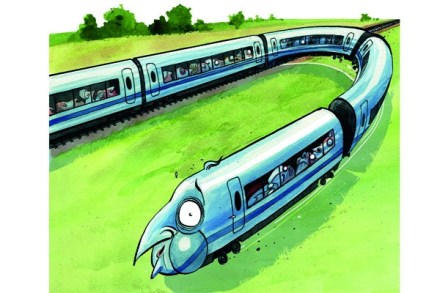
Journey from Hell reinforces the case for HS2 U-turn

The Glasgow-based writer Gerry Hassan took part in our Scottish independence debate on Tuesday, and then made the mistake of getting the train back to Glasgow. It took 15 hours. No one could help a landslip in Cumbria, but then one of the engines caught fire. His story, below (recorded by the BBC), is perhaps a reminder of the need for investment in our existing rail network rather than spending billions on HS2. (For more on this, do read Ross Clark's recent HS2 magazine cover story.)  "It was both a bizarre and strangely OK experience – in that the weather wasn't massively hot or cold. Otherwise it had the potential to be like a road to hell movie. When we passed Oxenholme, at about 14:00, there was a flash flood beginning and lots and lots of water on the platform.

The EU referendum, you read it here first

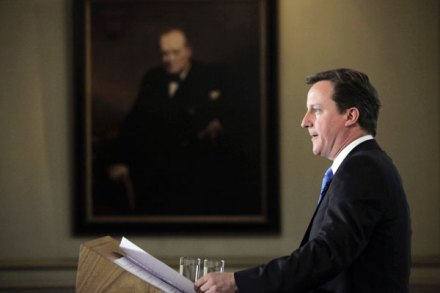
Many Spectator subscribers, picking up today’s newspapers, will be a bit puzzled. Is it news that David Cameron has come round to the idea of an EU referendum? Haven't they read that somewhere before? This sensation is called Déjà Lu, and it I’m afraid afflicts all Spectator subscribers. Cameron’s decision to change his position on the EU was revealed by James Forsyth back in May. As so often, his weekly political column gave real-time updates of the No10’s decision-making process as it happened. He wrote then:  'A referendum on Europe is the obvious answer. It is one the leadership seems set to embrace.

Of bankers and bartenders

It suits a great many people to blame the banks. The ministers (like Ed Balls) who oversaw the debt-fuelled credit bubble; the Tories (like George Osborne) who signed up to Labour’s debt-fuelled spending binge; the regulators who failed so appallingly (a global crisis but how many collapsed banks in Australia and Canada?); and Mervyn King, who oversaw this hideous asset bubble and didn’t sound the alarm. When George Osborne told the Commons that banks ‘brought our economy to its knees’ he suggested that, even now, he has not worked out what caused the crisis. The theory that wicked, greedy bonus-seeking bankers caused the crisis has been repeatedly debunked, but it’s easy to blame bankers anyway.

Lawson: I would not have U-turned

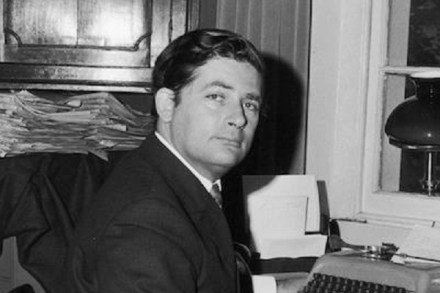
I’m presenting Radio Four’s Week in Westminster tomorrow at 11am and discuss George Osborne’s U-turn with former chancellors Alistair Darling and Nigel Lawson (the latter pictured above when editor of The Spectator). I put to them that it is unwise for a chancellor to perform a U-turn because it undermines his credibility – a very precious commodity in such turbulent times. Darling said that the great risk is that Osborne doesn’t look like he’s in control. Lawson replied:   ‘That is my concern; that it might be thought that the main thrust of policy is no longer secure. And once the financial markets – let alone anyone else – think the government is on the run, then the task of maintaining the policy is very much harder.

The Union is safe

The Union is safe — at least if last night’s Spectator debate was anything to go by. The motion ‘It’s time to let Scotland go’ was defeated by 254 votes to 43. The SNP weren’t present (they demanded two representatives on the panel, and we refused), but independent nationalist Margo MacDonald opened the debate. I thought CoffeeHousers may be interested in a summary of proceedings.   1) Margo MacDonald (for the motion) focused on foreign misadventures: Scottish soldiers should not fight American wars with British guns that were a greater threat to their own side than to the enemy. Money saved would go to essential social security.

What’s the SNP scared of?

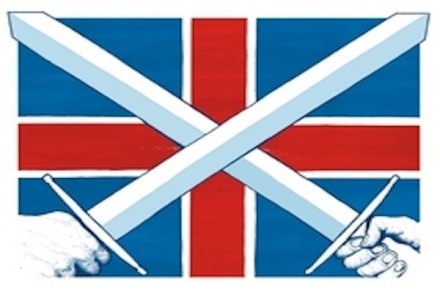
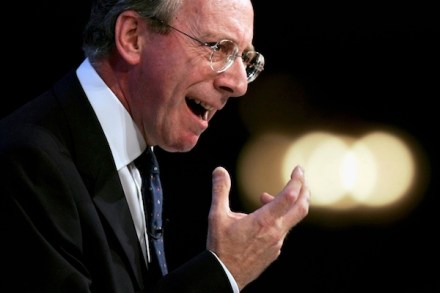
The Battle for Britain is heating up this week, with the pro-union campaign launched in Edinburgh this morning and a Spectator debate on the union on Wednesday. We have, as ever, a strong lineup – but the Scottish National Party is noticeable by its absence. I thought CoffeeHousers may like to know why not.  We planned the debate ages ago, and from the offset wanted SNP to be on board. As Scottish separation would have implications for the whole of the UK we asked someone to make the case for English separation: Kelvin MacKenzie. And someone to speak up for the union: Sir Malcolm Rifkind. The Nats didn’t like this one bit.

Will No.10 raid the welfare budget for tax cuts?

David Cameron’s 10 Downing Street has an unusual setup — it has a pollster, Andrew Cooper, as its chief strategist. This helps explain why the government is (to put it politely) more able than its predecessors to modify its policy positions to align with the nation’s priorities. Cooper’s polls are showing that pretty much the most popular thing this government has done so far is impose a £26,000 cap on benefits. Indeed, if there were more welfare cuts, his polls show, they would also be popular. So the government can save money and win votes! Quite some trick.  Today the PM is proposing to cut housing benefit from the under-25s, saving an estimated £2bn.

Danny, David and tax

What are we to make the split between Danny Alexander and his predecessor as deputy Chancellor, David Laws, over the size of the state? Laws says today it should be 35 per cent of economic output, which is an excellent ambition. In an interview with BBC1’s Sunday Politics today, Danny says 40 per cent. A split? When asked, Alexander said: 'I think around 40 per cent is the right sort of range to be looking at. It's only in the last four or five years that we've seen the share of the state taken up by spending rising to nearly 50 per cent, as it did in Gordon Brown's years."  Well, in this case Danny is sticking to the Treasury’s forecast. By its (understated) figures, state spending is 46% of GDP now and will be 40.

Schools: the cash illusion

13 years of Labour rule taught us two vital lessons about school reform. The first is that there is no direct link between money and results. Funding per pupil more than doubled under the last government: But for all that extra cash, Britain's schools have slipped down the international league tables over the past decade. Every three years, the OECD rates countries according to student performance. Of the 31 with scores for both 2000 and 2009, here is the top twenty in mathematics for 2009, along with changes since 2000: So if money doesn't work, what does? The Blair/Adonis City Academy reforms — which themselves stem from the Major/Baker reforms — show that stunning results are achievable if the tuition changes.

Introducing Spectator Life

Your Spectator will be a bit heavier this week. Free with every issue is a free copy of Spectator Life, our new quarterly magazine, full to overflowing with the kind of features you might not find in the main Spectator. Peter Hoskin, late of this parish, writes the cover story: an interview with the film star (and Shakespearean actress) Rebecca Hall. Ed Smith, a former England cricketer, profiles Roger Federer, and the photographer Mario Testino tells us what he owes to Peru. We explain why Cartier dropped its sponsorship of International Polo because the event was being taken over by a clientele more interested in the after-hours party.

In praise of Real Life

"I have some thanks and apologies for my parents," said Melissa Kite at her book launch last night. "Apologies?" said her dad, from the corner. "Yes, I'm afraid so. For years, you have been telling people that your daughter is a successful journalist in London. Now, the world knows that I'm a complete car crash." The book in question was Real Life, drawn from Melissa's column for The Spectator over the years, charting her various disasters and occasional triumphs. As her loyal army of readers will attest, it's utterly compelling, a column carried by the quality of her writing. It's a journal of modern Britain: struggles with the council in London and the dramas of her life (and horses) in the country.

The schools revolution

This time next week, we’ll hold the third Spectator School Revolution conference, and it’s our best-ever lineup. If any CoffeeHousers are in the world of education, or know anyone who is, then I’d strongly recommend coming (more for details can be found by visiting spectator.co.uk/schools). The keynote speaker is Michael Gove, the education secretary, who needs no introduction here. But I’d like to say a little more about the others.   Michelle Rhee is best-known for her three years time as head of schools in Washington DC, where school reform is a battleground. She fired a thousand teachers in her time there, which made her No.1 on the unions’ target list. (In Britain, only 17 teachers have been struck-off for incompetence in the last ten years).

Osborne, class and competence

The Sunday Mirror and the Independent have jointly commissioned an opinion poll which finds that George Osborne is ‘too posh’ to be chancellor. This just happens to fit the prejudices of both newspapers, and I for one do not believe it. Poshness certainly obsesses Tory strategists, and Gordon Brown sometimes played the class card because he saw how much agony it caused them. But Brown’s card was not the winning trump he hoped for because the British public is not as obsessed about class as the British elite. That’s why it backfired when Labour tried a class strategy in the Crewe by-election campaign. That by-election suggested that the average British person cares more about competence than class. This is Osborne’s present problem.

Alexander Chancellor, CBE

Warm congratulations to Alexander Chancellor, who has received an CBE today for services to journalism. (Congratulations, too, to regular Spectator contributor Susan Hill, who has received a CBE for her services to literature.) Chief among those services was creating the modern Spectator. As he put it, ‘The Spectator is more of a cocktail party than a political party.’ It would recruit brilliant writers, and give them freedom to write whatever they wanted without having an editorial line imposed on them. The Economist is a brilliant magazine, but it uses a homogenized writing style throughout. The Spectator, Chancellor argued, should be the home for all manner of writers, with all manner of writing styles and interests.

Language, politics and debt

The myth that George Osborne has held firm on his deficit reduction plan persists. When I was on Question Time last month, Alan Duncan said that Osborne may have changed some policies but he had not budged an inch from the deficit reduction programme. This was not a porkie; he genuinely believes this to be true. And even in today’s FT, economics editor Chris Giles describes the government’s strategy as ‘maxing out on stimulus measures, short of relaxing deficit reduction.’  In fact, Osborne tore up his deficit reduction plan ages ago, but to minimum press comment.

Osborne’s debt spiral

‘If we lose sight of the central role of debt in this crisis, we will come to the wrong conclusions about how to respond,’ said George Osborne last night — before announcing another massive tranche of debt. The Mail and The Telegraph put it at £140 billion, the Times and the FT at £100 billion and Bloomberg at £5 billion a month. ‘The government, with the help of the Bank of England, will not stand on the sidelines and do nothing as the storm gathers.’ CoffeeHousers may hear an echo of Gordon Brown’s language here, contrasting advocates of a Keynesian spending plan with the ‘do nothing Conservatives.