Fraser Nelson

Fraser Nelson

Fraser Nelson is a Times columnist and a former editor of The Spectator.

Patrick Vallance and the politicisation of Covid science

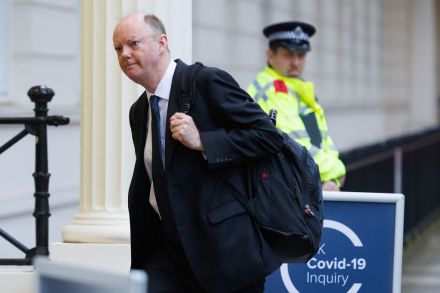
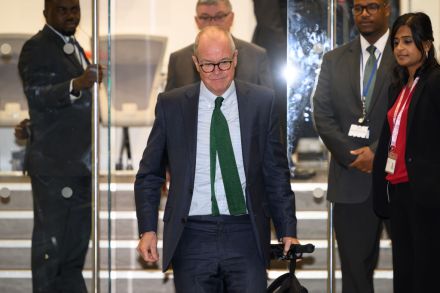
Throughout the various Covid meetings, Sir Patrick Vallance was scribbling in his notebook almost as much as Michael Gove, leading Boris Johnson to assume that he was keeping a diary to be published afterwards. This made sense to Johnson who started to tell friends that Vallance knew ‘more about arse-covering than face-covering’ (Vallance had refused throughout the crisis to say whether the policy of police-enforced mask mandates had any basis in science). Now, we see some scribbles in Vallace’s diary via the Covid inquiry: not very illuminating and some expected insults about those who questioned lockdown. But there is one point that I’d like to take issue with. Vallance says that science was given too much weigh over economics. ‘The science was there for everyone to see.

Why has Rishi Sunak made five more pledges?

11 min listen

James Heale, Katy Balls and Fraser Nelson look ahead to the Autumn Statement this week. Will Rishi Sunak commit to cutting taxes? And with barely a year to go before the election, would implementing any policies now be felt in time?

Sunak’s reshuffle: refresh or rewind?

15 min listen

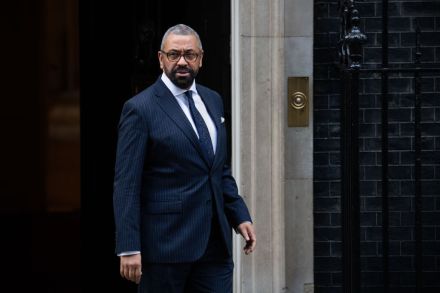
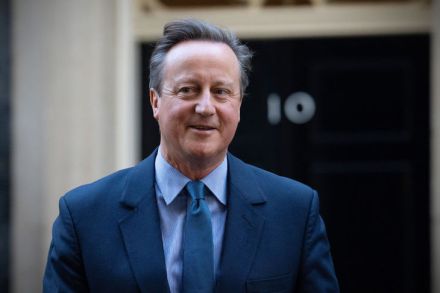
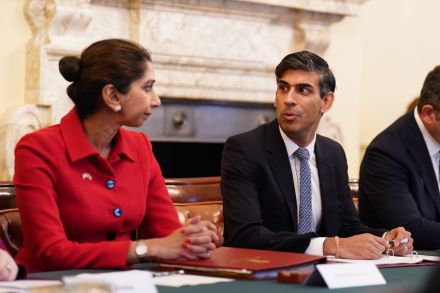
It's reshuffle day in Westminster. Suella Braverman is out as Home Secretary, replaced by James Cleverly, with former prime minister David Cameron making a shock return to parliament in the vacant Foreign Secretary slot. It's the first time since 1974 that a former PM has been appointed to the cabinet. Can Rishi Sunak really still claim to be the candidate to end the 'thirty year status quo'? Will he regret bringing Cameron back? James Heale speaks to Katy Balls and Fraser Nelson.  Produced by Oscar Edmondson.

Has Nadine Dorries lost the plot?

14 min listen

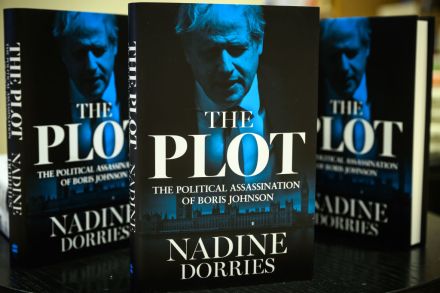
This week Nadine Dorries’s new book The Plot: The Political Assassination of Boris Johnson has been published, and it has ruffled some feathers in Westminster. In it, she claims there was a plot orchestrated by a secret cabal of back room advisors, politicians and individuals in the media to overthrow Boris Johnson. Just what is ‘the movement’? James Heale speaks to Fraser Nelson and Christopher Howse, assistant editor at the Telegraph.  Produced by Oscar Edmondson.

In praise of Humza Yousaf’s Israel response

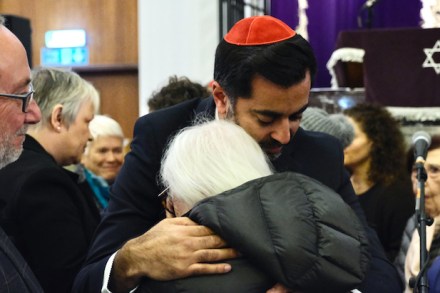
Humza Yousaf is one of the most prominent Muslims in public life. This is tangential to his being elected SNP leader and First Minister of Scotland, but has handed him an unexpected role during the recent Israel-Gaza crisis. It's one that he is taking seriously and, in my view, discharging well. Yousaf doesn’t discuss his faith often – few leaders do – but he takes it seriously and released a picture of himself praying with his family in Bute House on his first day in the job. At a time when politicians tend to cover up their faith, it was quite a move – he was saying (as his rival Kate Forbes has said) that faith does have a role in public discourse and politicians are allowed to 'do God'.

Is Suella Braverman in trouble over rough sleepers?

14 min listen

The Home Secretary sparked fury over the weekend for her comments on homelessness, suggesting that rough sleepers using tents is a 'lifestyle choice'. Senior cabinet members including the Rishi Sunak didn't jump to her defence from the comments. What was behind her decision to take such a firm line? Also on the podcast, Katy Balls speaks to Fraser Nelson and Isabel Hardman about the serial rapist cover-up allegations levelled at the Tory party.

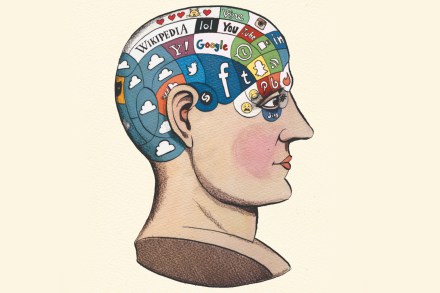
‘Childhood has been rewired’: Professor Jonathan Haidt on how smartphones are damaging a generation

Something strange is happening with teenagers’ mental health. In Britain, the US, Australia and beyond, the same trend can be seen: around the middle of the last decade, the number of young people with anxiety, depression and even suicidal tendancies started to rise sharply. Jonathan Haidt, a psychology professor at New York University’s Stern School of Business, noticed a change when students who were brought up with smartphones started to arrive on campus. They were angrier. More fragile. More likely to take offence. Social media, he concluded, was shaping their view that society is in permanent conflict, which in turn led to ideas about microaggressions and competitive victimhood. All this, he found, was damaging young people’s mental health.

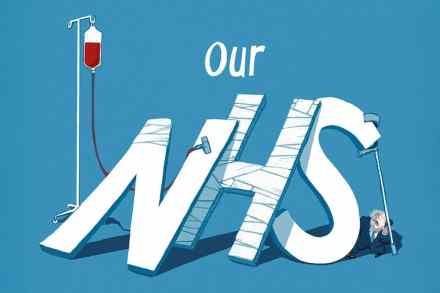
Boris Johnson was right to say the NHS was not overwhelmed

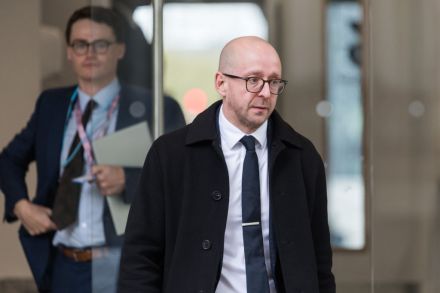
The triviality-obsessed Covid Inquiry has today been having fun with Dominic Cummings’s emails and finding rude words he used about colleagues. Trying to draw anything substantial from this is hard but one line did jump out at me: Boris Johnson saying ‘I no longer buy all this NHS overwhelmed stuff’. The inquiry should be asking: was he right?  It was October 2020. The Prime Minister messaged Lee Cain, his press chief, to talk about Covid deaths: I must say I have been slightly rocked by some of the data on Covid fatalities. The median age is 82-81 for men and 85 for women. That is above life expectancy. So get COVID and live longer. Hardly anyone under 60 goes into hospital (4 per cent) and of those virtually all survive.

Can Conservatism fix its pathway of decline?

20 min listen

As the government faces a general election defeat, is there a home for traditionally conservative thinkers? An international branch of new right Conservatives will join together on Monday for the Alliance of Responsible Citizenships (ARC) designed to share ideas and debate policy. But why won't many call themselves 'Conservatives'? And can ARC bring anything to the future of the party?

Will Starmer cave in to calls for a Gaza ceasefire?

12 min listen

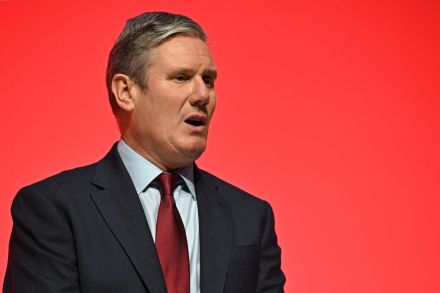
Keir Starmer is under mounting pressure from his party to back a call for a ceasefire in the Israel-Palestine conflict. The week began with the Labour leader correcting comments he made on LBC that Israel had a right to defend itself. But now, politicians to the left of his party are campaigning for a ceasefire. Is this something Starmer can support? Also on the podcast, James Heale speaks to Katy Balls and Fraser Nelson about more 'pestminster' scandals and Liz Truss on AI and China.

Why Angela McLean’s ‘Dr Death’ jibe matters

Does it matter if the chief scientific adviser referred to Rishi Sunak as ‘Dr Death’ In a private message to a Sage adviser during lockdown? This embarrassing fact came out last week in the Covid inquiry, an apparent reference to his Eat Out to Help Out scheme. Some have argued that publishing this comment, made in a private WhatsApp message, serves to embarrass Professor Dame Angela McLean and not much else. I’d argue that it exposes one of the most important facets of the pandemic: the psychological effect on those at the top at a time of great pressure. And how this led to tribalism and an environment where facts, data and science took second place to the desire to trounce lockdown sceptics. The Dr Death comment shows that this set in not just among the politicians.

In defence of Steve Bell

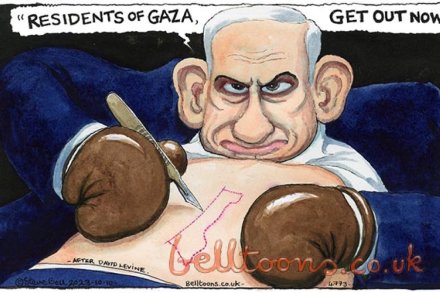
One of Britain’s best-known cartoonists, Steve Bell, says he has been ‘effectively sacked’ by the Guardian after drawing Benjamin Netanyahu. It wasn’t published, but he released it on Twitter (above). It depicts Netanyahu operating on his own stomach, showing a cut in the outline of the Gaza Strip. Bell then used Twitter to say what happened next: Losing him over this cartoon was a mistake and sets a dangerously low bar for what counts as unacceptable satire I filed this cartoon around 11 a.m., possibly my earliest ever. Four hours later, on a train to Liverpool I received an ominous phone call from the desk with the strangely cryptic message ‘pound of flesh...

Why did Australia vote No in the Voice referendum?

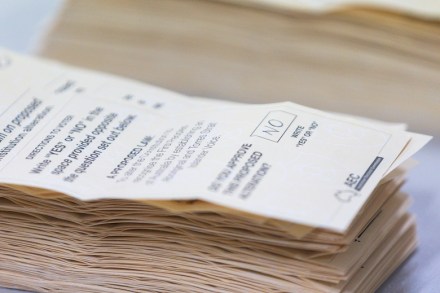
I’m in Sydney for the Voice referendum result – and it’s already over. No has won, by what looks to be a 60/40 margin. So an ‘Aboriginal and Torres Strait Islander Voice’ will not be added to Australia’s democratic apparatus after an Aboriginal-led campaign asking Australians to reject identity politics. The results had heavy overtones of Brexit: affluent cities voting Yes and the left-behind areas voting No. The Northern Territory, which has the highest concentration of aboriginal Australians, looks to have rejected the proposal by 65/35. Aussies have voted to protect the principle of everyone being equal before the law and in parliament. It’s hard to describe what the campaign has been like here.

Scottish Labour moves right – and wins

19 min listen

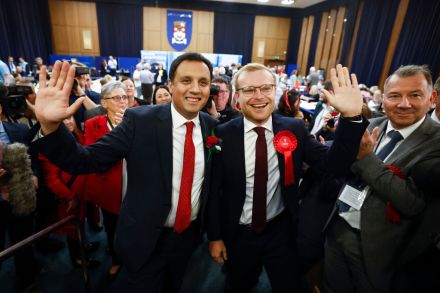
Labour has secured a resounding win against the SNP in the Rutherglen and Hamilton West by-election with a swing of 20.4%. Fraser Nelson speaks to Katy Balls and Iain Macwhirter about whether this the end of the Scotland hegemony of the SNP, and if Labour have drifted closer to the right.

What’s behind the PM’s plan to axe A-levels?

16 min listen

One of the announcements made in Rishi Sunak's conference speech was to scrap A-levels in favour of a new qualification which includes compulsory English and Maths. With several problems in the education system, and years of disruption for students, what was behind the PM's decision to radically overhaul the system? James Heale speaks to Fraser Nelson and David Laws, former education minister who now chairs the Education Policy Institute.

Rishi Sunak’s conference speech gamble

17 min listen

After spending most of his conference refusing to say much at all, Rishi Sunak used his speech to make three big policy announcements on HS2, smoking and A-levels. Will these gambles pay off?  Fraser Nelson speaks to Katy Balls, Isabel Hardman, Kate Andrews and John Connolly.

Can Sunak really cast himself as the enemy of the status quo?

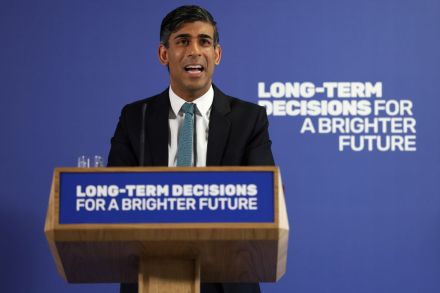
Rishi Sunak today revealed a new enemy that he’s defining himself against: ‘the 30-year status quo’. Why this period? Because it includes Blair, Brown, Cameron, May and Boris. Sunak wants to lump them together as a melange that includes Starmer. This was the crux of his speech today: to cast himself as the candidate of change and Keir Starmer as the custodian of the ‘old consensus’. This is plausible and has lots more potential: after his net zero and HS2 announcements, today was the chance to follow-up. All told, it was a decent speech but one in which the ghost of Jacinda Ardern loomed larger than that of Thatcher In his speech, Sunak fleshed out his original thesis: that it’s time to think about trade-offs.