Fraser Nelson

Fraser Nelson

Fraser Nelson is a Times columnist and a former editor of The Spectator.

Ed Miliband is a wonk. Why doesn’t he check his facts?

From our UK edition

A few weeks ago, I was reading the newly-published Modernisers’ Manifesto (pdf) published by Bright Blue and a fact jumped out: ‘London is a tearaway success, responsible for 79 per cent of all private sector jobs growth since 2010’. Startling fact, I though – I’d missed that. But about ten minutes of Googling showed that it wasn’t quite true. The fact was from a report by an IPPR offshoot, the Centre for Cities. It used survey data that went up to 2012, before the jobs boom started. You can find the real figures on the ONS website, and here’s what they show. [datawrapper chart="http://static.spectator.co.uk/oRem6/index.html"] But here’s the thing.

Video: The week ahead — Westminster abuse allegations and Miliband’s localism

From our UK edition

In our latest View from 22 video, James Forsyth and Isabel Hardman discuss the two top stories from this weekend — the allegations about a paedophile ring in Westminster and Ed Miliband's localist agenda — and how they will play out over the coming week. We're still playing with the format of this: two-subject discussions, or one? 5 mins, 10 mins or longer? Any thoughts welcome.

The Spectator Readers’ Tea Party, in pictures

From our UK edition

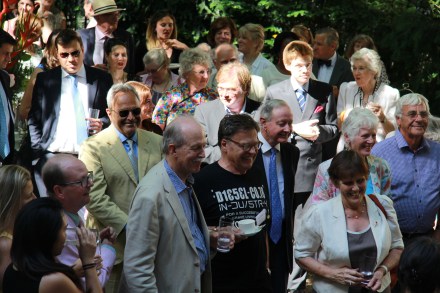
Last night's summer party was only the warm-up. Today, we invited some of our subscribers over for a cup of tea in the garden here at 22 Old Queen St. It's a chance for us to meet the people we work for - the best-read, best-humoured cohort of people in Britain (and beyond). Andrew Neil, Taki, Jeremy Clarke, Hugo Rifkind, 'Dear' Mary Killen, Peter 'Ancient & Modern' Jones and Rory 'Wiki Man' Sutherland were all there - with about 120 of our closest (yet un-met) friends. Spectator subscribers aren't buyers of a product, they're members of a club. To join them (and us) for just £1 a week, click here. Anyway, the pictures (all by Lara Prendergast):- The Savoy Hotel kindly brought the tea and nibbles.

Video: The week ahead — Juncker and Cruddas

From our UK edition

In our latest View from 22 video, James Forsyth and Isabel Hardman discuss the two top stories from this weekend — the ascension of Jean-Claude Juncker and Jon Cruddas's intervention on Labour's 'dead' hand — and how they will play out over the week.

Jon Cruddas is right – Miliband’s dole policy is punitive. And pointless

From our UK edition

I’ve always admired Jon Cruddas, and worried a little at his being placed at the centre of Ed Miliband’s policy unit. What happens if he talks sense? Well, my fears were well-founded: a good dollop of common sense has emerged from Cruddas, through the medium of today’s Sunday Times splash. On 21 June, we learn, Cruddas was speaking to Compass, a left-wing policy group, and was kind (too kind) about the IPPR’s ‘Condition of Britain’ report – which I’d recommend to conservatives with a taste for schadenfreude as it’s almost comically vacuous and exposes a Labour movement entirely bereft of new ideas. Cruddas was speaking about the report, saying that it took the IPPR nearly two years to come up with it.

What to savour in this week’s Spectator

From our UK edition

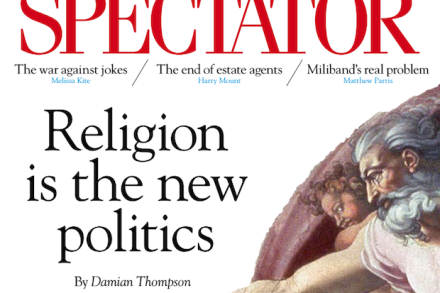
The new issue of The Spectator is now out, chock-full of the best writing in the English language. Here are a few of my highlights. Damian Thompson argues that religion is the new politics – the forces tearing up the Middle East, Africa and even Asia are to do with God rather than country. But, he asks, can Britain’s secular leaders now recognise—far less shape—the world around them? This is, insha’Allah, the first of many features you’ll read from Damian who is, I’m delighted to say, joining The Spectator’s family. So if you like his piece, there will be plenty more. Melissa Kite asks if British humour is dying. We used to like rude jokes, but now the PC squad is suffocating even most basic gags.

David Cameron is acting in a principled way over Juncker – so let’s back him

From our UK edition

It’s pretty rich hearing the Labour Party criticize Cameron for taking a principled stance on Europe. How vulgar, they say, how amateur. Doesn’t he know that the job is to (as Douglas Alexander put it yesterday) ‘balance’ domestic interests and European ambitions? When I thought that Cameron was following Labour’s ‘sophisticated’ approach – ie, being sellouts – I lambasted him. I had egg on my face pretty quickly: my Telegraph column was published on the day that he said ‘no’ to the Eurozone deal. In my defence, he had set out to sellout – he’d wanted to take a figleaf of protection from the French.

Who’ll tell the anti-austerity marchers that government spending is at a record high?

From our UK edition

‘No cuts!’ said banners held at the march on Whitehall today. Well, the Treasury is listening. It has pushed state spending to £732 billion this year, up from £673 billion under the last year of the Labour government. So why the fuss? My guess: lefties like to march and call for the downfall of governments. It's their way of enjoying the weather. It’s a nice day today, some of us have been out celebrating midsummer and those of an angry, leftie disposition have been doing some placard waving. Each to his own. But as the below graph shows, it’s rather hard to accuse this government of savage cuts:- [datawrapper chart="http://static.spectator.co.uk/8k37c/index.

The wit and wisdom of David Blunkett

From our UK edition

David Blunkett has announced that he'll be standing down at the next election. 'It is clear that the leadership of the party wish to see new faces in ministerial office and a clear break with the past,' he said — I'm not sure if that's a coded reference to Miliband's unfinished purge of those who ran Labour at a time when it won elections. But it did make me think of two things Blunkett's career has been absolutely extraordinary, a blind man who was still able to read so much that he'd shoot me a caustic email, sometimes even threatening to sue me, if I wrote anything about him that he considered unfair. He was never under-briefed, and never showed any sign of his disability. He managed politics - the rousing speeches, even the sex scandals -  as well as anyone.

Danny Alexander on Scottish independence, income tax, Nick Clegg and George Osborne

From our UK edition

Danny Alexander doesn’t suntan well, but he looks more freckly than normal when we meet in HM Treasury.  He’s just back from the seaside town of Nairn in the Highlands, where, as the most senior Scot in the Cabinet, he’s been sent to fight in the front line of the Battle for Britain. People were queuing to sign up to the Better Together campaign, he says, and he has high hopes of defeating Alex Salmond on 18 September. It all added up to something rather rare for a Liberal Democrat: the feeling of being on the winning side in an election. As Chief Secretary to the Treasury, he has been trusted with making various economic arguments for the union.

Petraeus: America can’t serve as an air force for a Shi’ite militia

From our UK edition

If conservatives had an answer to Woodstock, it would resemble the Margaret Thatcher Conference on Liberty held today by the Centre for Policy Studies. The lineup is stellar, and I’ve been here all day. General David Petraeus is one of the many guests and was asked what he’d do about the rise of ISIS. Here’s what he said, 3:30 into the below clip: ‘If there is to be support for Iraq, it has to be support for a government of Iraq. That is; a government of all the people; and that is representative of and responsive to all elements of Iraq. President Obama has been quite clear on this: This cannot be the United States being the air force for Shia militias or a Shia on Sunni Arab fight. It has to be a fight of all of Iraq against extremists.

The British jobs miracle, in six graphs.

From our UK edition

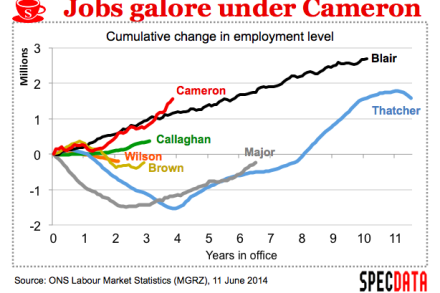
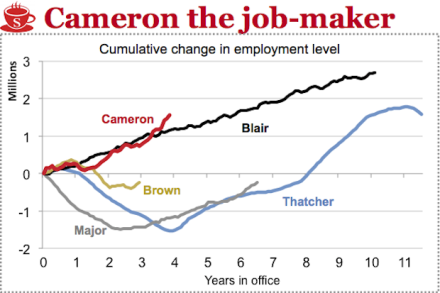
No one quite expected it, and even now ministers struggle to explain it. But the British jobs miracle has become the single biggest fact of economic life – proving that sometimes, things go badly right as well as badly wrong. Cameron has now overseen more job creation than his last six predecessors did at this stage (above). The excellent Michael Saunders from CitiGroup has produced an excellent report about it (pdf) and some of his charts are below. 1Jobs growth is beating every single forecast (see chart of total jobs, above), even the optimistic forecasts that George Osborne was publishing when he was talking about abolishing the deficit in five years. He has since given himself ten years, but look at these jobs.

We’re hiring at The Spectator: arts editor and blogs editor wanted

From our UK edition

Those of you who read The Spectator mainly for its peerless arts coverage have Liz Anderson to thank for keeping up a formula of quality, variety, heft and zest. We’re all very sad that she is retiring this summer, after many successful years at the top of her game. She’ll be a tough act to follow: we’d need someone as brilliant and well-informed about the arts as she is; with the skill and energy to promote and project our wonderful arts coverage online and in our digital editions. The candidate must show an ability to commission brilliant writers for striking, original lead stories, as well as proof-reading and sub-editing, etc. Experience of InDesign, our desktop publishing software, would also be an advantage. It’s a tough job - but a great one.

The British jobs miracle continues

From our UK edition

The avalanche of good economic news continues today, with news that the number of people in work rose by 344,000 from Feb to April – the sharpest such rise since data began in 1971. So if you're Ed Miliband, how do you pick holes in this? You can say that much of this is self-employment - that's up 8 per cent, but staff jobs are also up strongly. You can bemoan 'zero hours' contracts, but the total number of hours worked in the UK now stands at the highest for 25 years. You can blame Londoners, and imagine that shows the economic weight of the south - sucking the life out of the rest of the country, as Vince Cable says now and again. Not so. The regional data shows a pretty widely-shared recovery: the biggest rise is in the North East. Next is the North West.

Cameron calls on his ‘Northern Alliance’ to help stop Jean-Claude Juncker

From our UK edition

David Cameron visits Sweden today to discuss the future of the EU with the German Chancellor Angela Merkel, the Swedish Prime Minister Fredrik Reinfeldt and the Dutch Prime Minister Mark Rutte. The Prime Minister is attempting to block former Luxembourg prime minister Jean-Claude Juncker from securing the top job in Brussels. Earlier this year, Fraser Nelson explained how Cameron's 'Northern Alliance' may reshape Europe. If David Cameron were to divide Europe up, he’d make some crude distinctions. There would be the basket cases, like Italy, Spain, Greece, France — examples, by and large, of how countries should not be run.

Tristram Hunt is planning his own Trojan horse

From our UK edition

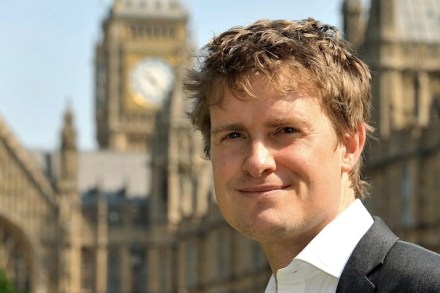
Tristram Hunt hasn’t lost much time using the Birmingham Islamist schools scandal to call for an end to the autonomy of free schools and Academies. It’s a bizarre non-sequitur. The ‘Trojan Horse’ scandal happened in schools run by the appalling Birmingham City Council (whose defects I’ve already written about). Yet Labour is using this scandal as its own Trojan horse – to take power out of the hands of parents, and give it back to the local bureaucrats whom the party (sadly) now represents: 'Cameron's schools policy has delivered a vacuum in the local oversight of our schools, leaving children exposed to falling standards and vulnerable to risks posed by extremists….

Why politicians should turn, turn, turn to the bible for timeless prose

From our UK edition

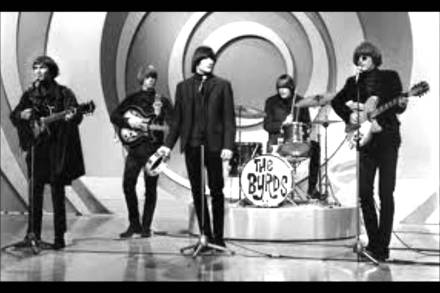
The Bible may be creeping its way back into England’s classrooms if advice from University of Exeter study is taken But it misses a trick by suggesting that kids are asked. to re-tell Bible stories - rather than study its best passages as examples of word craftsmanship. When the folk singer Pete Seeger died recently, a BBC announcer explained that he had written the song ‘Turn, turn, turn” (the Byrds' version is posted above). He had a little help: the song is straight from Book of Ecclesiastes with one word, ‘turn’, slotted in by Seeger. As he knew, these words have lost none of their power over the millennia.

Scotland’s mature teenagers make the case for all voting to start age 16

From our UK edition

I went back to my old school last week, Nairn Academy, taking my family to my native Highlands for half-term. I learned two things: that the gorgeous northeast of Scotland is one of the best places in Europe to go with young kids, knocking the spots of any of the overseas venues where I stupidly tried to holiday before*. The second, more important lesson is that the pupils of Nairn Academy are not just ferociously bright but thought-leaders to boot. A few months ago, they rejected independence in a referendum - and a survey out today shows that two-thirds of the 16- and 17-year olds able to vote in September intend to do likewise. As I say in my Telegraph column today, it does actually matters what school pupils think.

Why didn’t Piketty’s Harvard publisher spot the errors which the FT has exposed?

From our UK edition

While Americans swooned over Thomas Piketty and his thesis about ever-rising inequality it has taken a Brit, the FT’s Chris Giles, to expose the corruptions in his data. What he has found – on the cover of today’s FT and in detail on a blog here – is shocking because the errors are so basic. And yet on this, Piketty has built a manifesto for all kinds of tax rises. It makes you wonder how his publisher, Harvard University Press, allowed such flaws to enter print. Chris Giles' report is worth reading in full, but here are a couple of examples should give you a flavour of what he has found. It started when he came across a fairly major mistake.

This isn’t coalition – it’s government by blackmail

From our UK edition

We have had much occasion to reflect, recently, on Disraeli's dictum that Britain 'does not love coalitions'. It's now becoming depressingly clear that coalitions don’t much love Britain either. What started off as functional coalition government has descended into the most appalling policy blackmail which I looked at in my Daily Telegraph column yesterday. I said that granting 'minority' status to the Cornish was the result of such a horse-trade. We've had more examples today. The Daily Mail has stood up the fact that the Cornish move was in return for Clegg approving a £600 million reform of Town Hall pensions. The Times leader joins this theme, saying the horse trading is 'an example of how not to govern'. But it's an example of what our government has now become.