Fraser Nelson

Fraser Nelson

Fraser Nelson is a Times columnist and a former editor of The Spectator.

Stay, Scotland! Brits say why they want to keep their country united

From our UK edition

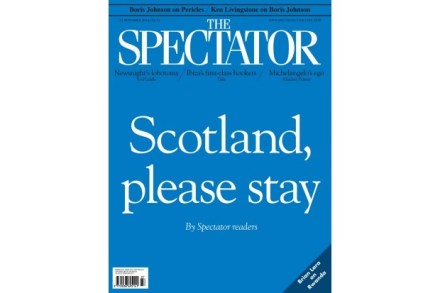
For the first time in its 186-year history, The Spectator's cover story will be written by its readers: people from outside of Scotland, saying why they want Scotland to stay and keep our country united. Even over lunchtime, we have been deluged with people writing in to say why they want Scots to stay. Please keep these coming. If you have sent an email, ask two or three of your friends to send more: editor@spectator.co.uk. Include a picture if you don't mind our using it. Put ‘STAY!’ in the subject title, and do say where you're from. We'll run them in the cover feature of the new Spectator, certainly, but I thought I'd share a few of them now: they're better than any speech you'll hear from any politician.

Join The Spectator’s campaign to save Britain (and write our next cover story)

From our UK edition

We’ve had an extraordinary response to our request for emails saying why you hope that Scotland votes to stay, and to keep our country united. So many that we’ll put this on the cover – it will be the first cover piece written by readers, not journalists. And we need more! So please, email me at editor@spectator.co.uk with why you’d like Scots to stay. People power can save the union. Alex Salmond is very good at defining England as an elite, and making out as if the rest of the UK is indifferent to the survival of Britain. He’s very good at portraying his opponent as being one, big, posh political elite.

Do you want Scots to stay in the UK? Say why – and be published in the Spectator

From our UK edition

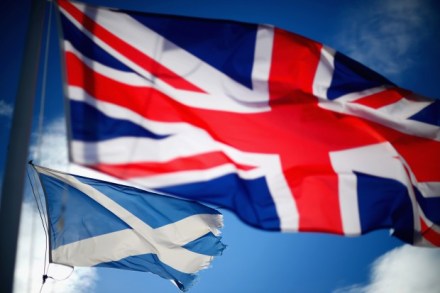
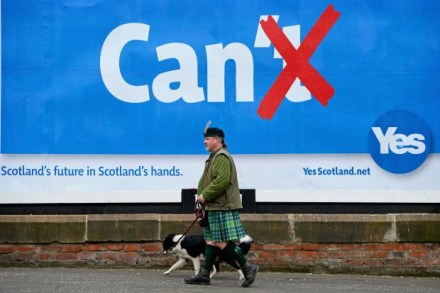
It’s extraordinary to think that we could be 12 days away from the dissolution of our country. The union of Scotland and England, perhaps the most successful and consequential alliance in history, could be ended – and for the worst of reasons. The Scottish National Party has been campaigning hard, and campaigning well. Alex Salmond has excelled in depicting his enemy as a cold-hearted England (and the people they vote for) whose values are so irreconcilable with those of Scotland that the only answer is the partition of (and, ergo, the end of) Britain. As a Scot with three English children, I loathe this agenda more than I can say. But it has been a mistake for unionists to judge nationalist arguments as too bizarre to resonate.

Spectator appeal: tell Scots why they should stay, and why Britain is worth saving

From our UK edition

It’s extraordinary to think that we could be 12 days away from the destruction of our country. The union of Scotland and England, perhaps the most successful and consequential alliance in history, could be ended – and for the worst of reasons. The Scottish National Party has been campaigning hard, and campaigning well. Alex Salmond has excelled in depicting his enemy as a cold-hearted England whose values are so irreconcilable with those of Scotland that the only answer is the partition of (and, ergo, the end of) Britain As a Scot with three English children, I loathe this agenda more than I can say. But it has been a mistake, in retrospect, for unionists to believe that the nationalist arguments are too bizarre or implausible to succeed.

Justine Greening: Cameron’s government needs more people who have worked at Morrisons

From our UK edition

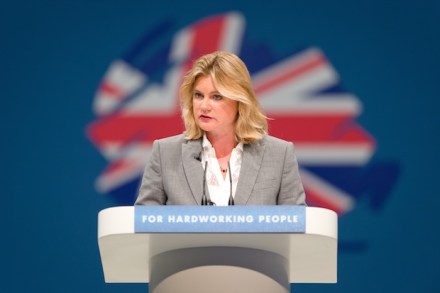
[audioplayer src="http://traffic.libsyn.com/spectator/TheViewFrom22_4_Sept_2014_v4.mp3" title="Isabel Hardman, Fraser Nelson and James Forsyth discuss the Tory civil war" startat=60] Listen [/audioplayer]David Cameron is in need of advice right now and there’s plenty of it in the new Spectator – not least from Justine Greening, his International Development Secretary. Her interview with Melissa Kite makes clear that the party needs to focus more on social mobility – and tell the story which is not exactly hardly embodied by its Etonian and Pauline leadership.

Jim Murphy laments the ‘energy of nationalism’. Where’s the energy of unionism?

From our UK edition

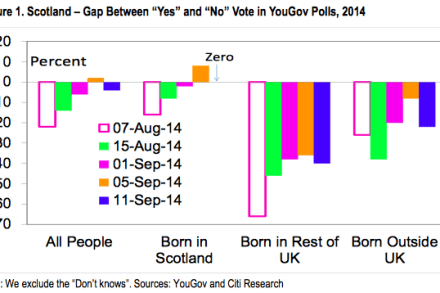
“It’s part of the energy of nationalism,” sighed Jim Murphy on Newsnight. “They’re never knocked down.” He’s right, and that that is why the Scottish referendum polls show the gap between the two narrowing - YouGov has that gap at 6 points, down from 22 last month. If even Labour’s Jim Murphy accepts that the momentum is with the nationalists – and says that the momentum is with them because they are nationalists – then it’s a rather depressing state of affairs. Where is the passion and energy of the campaign to save the United Kingdom?

If Carswell was serious about Europe, he would never have defected

From our UK edition

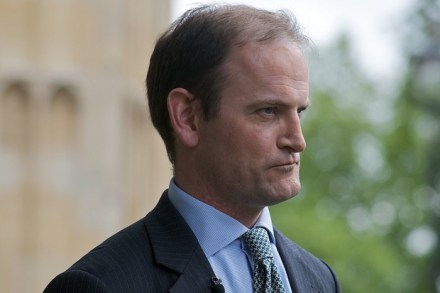
Where is this burning point of principle that drove Douglas Carswell into the arms of Ukip? I’ve read lots about his defection, and I’m still none the wiser. We’re told that he was talking to Farage for almost a year, which would have overlapped with the time he told me that the Tories need to unite behind Cameron because he was the only one promising an in-out referendum. What has changed? Carswell says that Cameron is not serious about Europe. The Prime Minister has become the only leader in the continent to promise an in-out referendum. I’m not sure how much more serious one can be. Should he lay out, now, what he wants in a renegotiation? Of course not – it would be rendered rapidly out of date.

Douglas Carswell: the rebel with an unclear cause

From our UK edition

Anyone who would rather not live in a Britain run by Ed Miliband and Ed Balls should be dismayed at Carswell’s defection to Ukip. He is an original, intelligent and eloquent MP who has done much to help the Prime Minister form the more radical parts of his agenda. For a while, I thought that this was his game plan: to avoid frontbench positions, and engage constructive opposition – which is democratic tugging of the party leader from the vantage point of the backbenches. I defended him against critics who said he was an attention-seeker whose ego would one day explode. Today, it's harder to defend him.

Worried about Britain’s poor social mobility? Here’s a way to change things

From our UK edition

At a time when politics resembles a bad soap opera, it's easy to despair about the ability of government to change anything for the better. But as the Queen pointed out in her 2010 UN address, the best changes in society tend not to come from governments but from society more broadly. Anyone concerned about social mobility need not wait for government to act: there are changes that, if you're reading this blog, you are probably able to make. You might be a position of influence, or have the ear of someone who is. That’s why this year, as last year, The Spectator is not asking its readers to offer money to a charity, as newspapers often do.

Britain must do more for the new wave of asylum seekers

From our UK edition

Over the summer I read Vilhelm Moberg’s The Emigrants, a documentary novel about the Swedes who emigrated to America in the 18th century. It powerfully describes what drove illiterate peasants to take such an extraordinary gamble on a country about which they knew almost nothing. The story, of course, could have been written about migrants from many European countries, and particularly those (including some of by relatives) from the Scottish Highlands. Moberg tells how some fled starvation, some religious persecution; some sought economic and political freedom. And they all risked a voyage which they might not survive: Moberg's ship’s captain would take a clump of earth with him to scatter on corpses in the funerals he knew he’d be presiding over.

Why Britain is poorer than any US state, other than Mississippi

From our UK edition

Now and again, America puts its inequality on display to the world. We saw it after Hurricane Katrina and we have seen it again in the unrest in Ferguson, Missouri. A white police offer shoots dead a black man, after having stopped him for jaywalking. Britain’s police don’t have guns, so these scenes are unthinkable to us. But American-style inequality? We have plenty of that too, we’re just better at hiding it – as I say in my Telegraph column today. I came across a striking fact while researching this piece: if Britain were to somehow leave the EU and join the US we’d be the 2nd-poorest state in the union. Poorer than Missouri. Poorer than the much-maligned Kansas and Alabama.

Inflation down, Osborne up

From our UK edition

David Cameron is back on holidays again, this time to Cornwall. He missed a trick. His economic recovery is making the pound strong and, ergo, the continent cheap for British holidaymakers. This also makes imports cheaper which has, in turn, cut UK inflation to 1.6 per cent in July – down from 1.9 per cent in June. This will be deeply annoying for Ed Miliband, as it interferes with his ‘cost of living crisis’ narrative. This had more potency when inflation was high (see the graph above) but it becomes that much harder to push the line now. Especially when inflation is expected to trot along near the target of 2 per cent until the election.

The Afghans found in Tilbury Docks remind us that slavery is back in Britain

From our UK edition

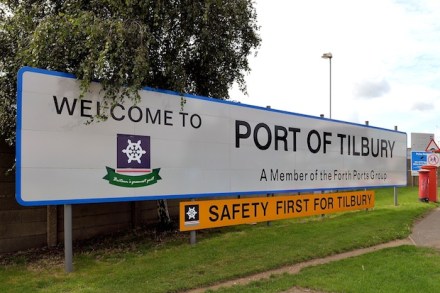
How seriously should we take modern slavery? To some, the very phrase sounds hysterical: slave markets are seen as something belonging to 18th century Jamaica (or present-day Mosul) but not modern Britain. It’s true that slavery has mutated, but it’s very much still with us - which is why, at 6.30am on Saturday, screaming and banging could be heard from a cargo container offloaded from a P&O boat in Tilbury Docks in Essex. It was found to contain 35 Afghan Sikhs, including 13 children. One adult died from dehydration. The facts of this case are still being established, but it fits a grim pattern. They likely fled Afghanistan seeking religious freedom: Sikhs are subject to hideous discrimination there, in spite of the warm noises made in Kabul.

Sales of The Spectator: 2014 H1

From our UK edition

I’m delighted to announce another strong set of figures for The Spectator. It’s still a pretty tough market out there for magazines but today, we’re reporting a headline print ABC that’s actually up on last year: 62,684 in the first half of this year. Add digital subscriptions, which rose by 24 per cent, over the year, and our circulation has passed 70,000. The website goes from strength to strength: over ​the ​last year, monthly pageviews have jumped by 59 per cent to 3.5 million year-on-year. The growth is bring driven my mobile platforms, with users up 114 per cent, and social media. Traffic from Facebook is up 120 per cent year-on-year; and it has now overtaken Twitter as our top referrer.

Changes to The Spectator’s editorial team

From our UK edition

It’s a busy summer for The Spectator. Sales of the magazine are rising and our website is now visited by well over a million people each month. Spectator TV has now joined our regular podcasts, so we’re now watched (and listened to) as well as read. One of the great strengths of The Spectator is that we have a small team and a fluid structure – we all do a bit of everything. But there’s more than ever to do and I’m delighted to announce some new arrivals to that team, together with some other changes. · Freddy Gray, our managing editor, has been appointed deputy editor with oversight of all parts of The Spectator. · Igor Toronyi-Lalic, who has done a brilliant job running our new Culture House blog, becomes the new arts editor.

Caption competition: Ed Miliband meets Barack Obama

From our UK edition

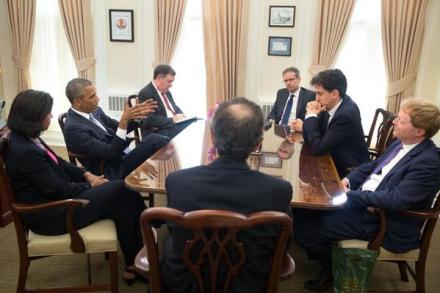
I'm in the US right now, where the national conversation is - it's safe to say - not fixed on Ed Miliband's White House trip. We now have photographic proof of this event, but what's Barack Obama saying? A prize for the best suggestion. PS some unkind souls have suggested that this picture is the unfortunate type, taken by a malicious photographer. This is the official picture released by the Labour Party. I assume there were a few worse ones rejected.

Exclusive – Liam Fox turns down job as Foreign Office minister

From our UK edition

I can confirm that Liam Fox was offered Minister of State at the Foreign Office with responsibility for India, China and Latin America. He politely declined the Prime Minister's idea, even when it was later sweetened with the offer of a place in the National Security Council. Fox, a former party chairman and defence secretary, had been tipped for a comeback and foreign policy is one his great loves (he recently wrote a book, Rising Tides, about the various risks the world faces). So why turn it down? My guess is that he saw Cameron's offer as a means of plonking him on a slow boat to China in the last 12 months before an election. Fox has plenty to say - on the need for a more ambitious economic policy, the Russian threat and the need for European reform.

Cameron’s reshuffle is promoting women, yes – but risks patronising them too

From our UK edition

After today's hiring and firings, the women ratio in the Cabinet rises from 14 per cent to 24 per cent. There is something horribly tokenistic, and faintly misogynistic, about boasting about what percentage of women you have in the Cabinet - as if this is a sign of how ‘progressive’ you are. It's not clear that the brains of these women have been taken into account. Liz Truss, a committed (and award-winning) education reformer, is miscast as Environment Secretary. Gove's replaced by Nicky Morgan, who is being introduced as 'a working mother' by the BBC as if this was, in itself, qualification for Education Secretary. She is a bright, accomplished minister - must she be reduced to a maternal status?

6am Spectator podcast special: Cameron’s reshuffle – the hiring begins

From our UK edition

Good morning. We’ve just had the night of the long knives – for middle-aged Tory ministers at least. Now for the promotions, and you can expect a disproportionate number of them to be younger and female. Will Britain join the list of countries with female defence secretaries? Will Esther McVey, Liz Truss and Priti Patel become the new faces of David Cameron’s government? And will any of them much welcome the idea that this is a mission to bring on the women? I discuss this with Isabel Hardman and James Forsyth in this special edition of The View from 22, The Spectator’s podcast. listen to ‘Cameron's reshuffle: now for the hiring.