Fraser Nelson

Fraser Nelson

Fraser Nelson is a Times columnist and a former editor of The Spectator.

In defence of Cameron’s posh boys

From our UK edition

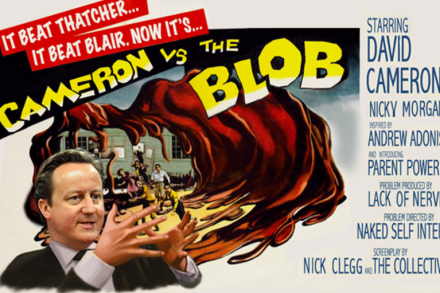
A few weeks ago, I wrote a Spectator cover story about David Cameron’s purge of the posh. My peg was a new wheeze from the Cameroons whereby prospective employees should be asked not just where they went to university, but about their childhood and parents’ assets etc. The idea was to make sure that too many posh people didn't make it to the top. Sinister, I argued, and not meritocratic. Judging people on their merits means not marking them down for being poor or posh. Inverted snobbery is still bigotry, and ought to be deplored as such. And yet the government was proposing rolling it out, first with the civil service and then.... ...

The Spectator’s two podcasts both hit iTunes top ten

From our UK edition

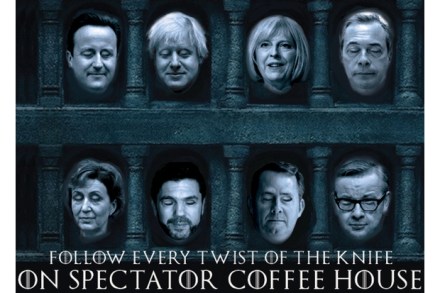
The Spectator's podcasts - our weekly one, and our ad-hoc Coffee House shots, are now both in the iTunes Top Ten. We're rather proud of this: many of our rivals have things like studios and producers. We don't: we have a few microphones, iPhones and boundless enthusiasm. If a major story breaks, you can expect proper analysis on Coffee House Shots within the hour. You can subscribe to the podcasts for free: click here to sign up to the weekly Spectator Podcast, and click here to sign up to Coffee House shots. And our rivals? A list below.

Labour and SNP join in standing ovation for David Cameron’s last PMQs

From our UK edition

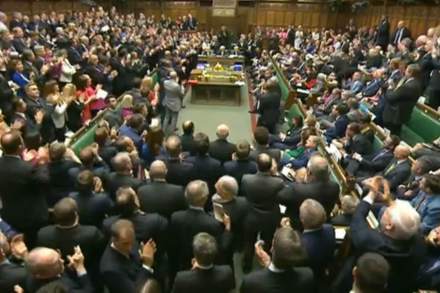
David Cameron’s last PMQs was as entertaining as you’d expect. ‘The diary for the rest of my day is remarkably light,’ he said in answer to the traditional first question about his day. The Blair-worshiper in him will remember Tony Blair’s last PMQs, when he spoke about his P45 and started finished with: ‘that is that: the end’ – to enjoy a then-unprecedented  standing ovation. Cameron, then opposition leader, stood up to join in then gestured for Tory MPs to do the same. Most did. This time, Cameron had prepped his own last words: ‘Nothing is impossible. I was the future, once.’ And with that the Tory benches stood up in applause, as joined by spectator in the public gallery.

What George Osborne should have written in the Wall Street Journal

From our UK edition

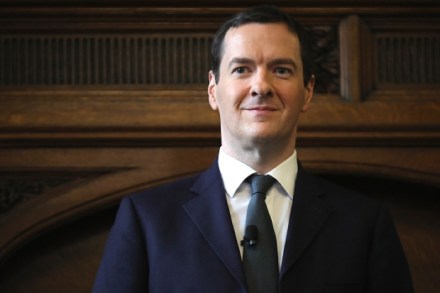
We have three months until we get a new Prime Minister but I’m not sure we can wait so long for a new Chancellor. George Osborne’s silence was bad, but his re-emergence is even worse – as his pitiful article in today’s Wall Street Journal shows. It is written as if some awful tragedy had befallen Britain, and that this visibly battered country is appealing for American support. His job is to sell Britain, its people and the historic decision they have just made, rather than disparage it. Osborne’s article is here. Below is what he should have written. On 23 July, the people of Britain voted to leave the European Union – perhaps the single most momentous decision of my political lifetime.

Andrea Leadsom drops out of leadership race

From our UK edition

In what must be the shortest-lived leadership campaign in the history of the Conservative Party, Andrea Leadsom has just announced that she's dropping out. She said in her resignation statement that there was not "sufficient support" from her colleagues - perhaps a nod to how many of them said that they would quit the party if she won. She said she wants "the immediate appointment of a strong and well-supported Prime Minister". And that woman, she said, must be Theresa May. In the four days since the formal leadership race began, it became painfully obvious that Ms Leadsom was simply unfit for the job. She messed up an interview with The Times, saying she didn't want to attack Theresa May for being childless but going on to do just that.

‘I had to step up’

From our UK edition

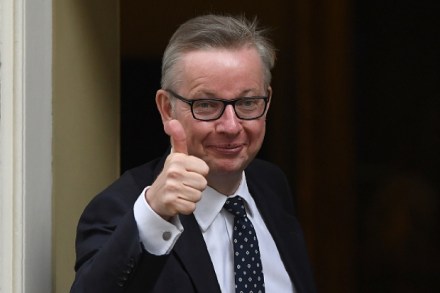
On the way to interview Michael Gove, we meet a government minister, an Old Etonian, who suggests we ask him, ‘How can anyone trust you ever again?’ Just a fortnight ago, proposing such a question would have been unthinkable: the Justice Secretary had a reputation for being one of the most consistent, decent and honourable men in the cabinet. When Gove agreed to back Boris Johnson’s leadership bid, the pair seemed a dream team. But on the morning of their campaign launch, Gove announced that Johnson was unfit for the job, so he’d stand himself instead. Then, he was knocked out by Conservative MPs who were still recovering from the drama.

A new workers’ party

From our UK edition

We are living through the most intense political drama in modern British history. The vote to leave the European Union is the greatest act of defiance against the establishment since the coming of universal suffrage. It has triggered leadership challenges crises in the three most popular political parties: Labour, the Conservatives and Ukip. As Tony Blair might have put it, the kaleidoscope has been shaken and the pieces are in flux. We’re midway through a very British revolution. As in other revolutions, a seismic event has caused a vacuum. It turns out that Boris Johnson and Michael Gove were telling the truth about not using the referendum campaign to further their leadership ambitions.

As Basra slid towards hell, Blair looked the other way

From our UK edition

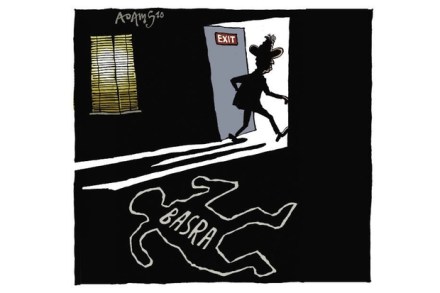
There has always been a faction of the Labour party that wanted Tony Blair in the dock for the Iraq war — no matter how pointless it would be. This was the sole purpose of the Chilcot inquiry. Gordon Brown agreed to it simply to assuage his backbenchers, and the whole exercise was intended to be more a mischievous distraction than an inquisition. But almost by accident, the inquiry has exposed the real scandal of Iraq: the appalling mismanagement of the war and the defeat of the British army, which left the people of Basra to the death squads. The WMD have become weapons of mass distraction. Mr Blair spent years answering questions about the case for war in Iraq, but he has answered far too few questions about the conduct of that war.

Some thoughts on today’s Tory leadership elections

From our UK edition

You know what to expect: Theresa May wins, Andrea Leadsom comes second. Liam Fox forced out today, Stephen Crabb probably joins him voluntarily leaving Michael Gove to fight with Leadsom for second place – or, perhaps, both dropping out to let May take the crown. You also know that the expected stopped happening in British politics some time ago. Andrea Leadsom bombed in the Tory hustings last night; one Tory MP present told me that he’d have been embarrassed to have delivered a speech of that quality to a golf club. She finished by saying she was standing to be party leader then added, in a quiet voice as if even she didn’t quite believe it, 'and also as Prime Minister'.

Wanted: broadcast producer for The Spectator

From our UK edition

If you read Coffee House you'll have noticed how busy politics is right now - and you'll have noticed that our coverage is second to none. Coffee House now offers the latest news and analysis, but also the best and most relevant soundbites, videos and podcasts. The appetite is huge. And we need people to help us meet that appetite. So The Spectator is looking to hire a broadcast producer, who will be in charge of coordinating and producing our audio and video content. The right candidate will be responsible for producing our catalogue of podcasts, from The Spectator Podcast – presented by Isabel Hardman, and listened to by thousands of people every week – to the newer Coffee House Shots, where our stable of writers analyse political events as they unfold.

Philip Hammond repeats Theresa May’s threat to EU immigrants

From our UK edition

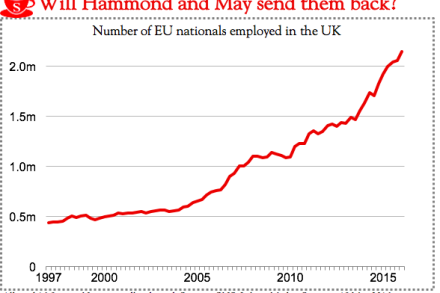
Appallingly, Philip Hammond has just echoed Theresa May’s threat to use the two Britain’s million European Union immigrant workers as bargaining chips in negotiation with Brussels. He said it would be "absurd" to say - as Michael Gove, Boris Johnson, Dan Hannan and Vote Leave members have said - that no EU national will be deported no matter what. Here's the exchange on the Today programme. Philip Hammond: “Neither EU nationals in Britain nor British nationals in EU countries will find any change to their circumstances over the next few years.” Nick Robinson: “Crucial words, though, isn’t it: “over the next few years.

Merkel tells Juncker: Britain needs plenty of time to invoke Article 50

From our UK edition

Der Speigel has published a fascinating write-up giving last week’s extraordinary events from Angela Merkel’s perspective. Specifically, it seems, she’s had enough of Jean-Claude Juncker, the egregious president of the European Commission, and has told him to bow out from future negotiations with the UK. She’s fed up of him insisting that Britain rushes to invoke Article 50. Indeed, her “utmost concern,” says the magazine, is “giving Britain as much time as possible” for an orderly transition. Here’s an extract:- At 1 p.m. on the Friday after the Brexit referendum, Merkel makes a statement to Berlin journalists in which -- in contrast to Schulz -- she does not demand a rapid British withdrawal.

Is Theresa May really threatening to deport Europeans?

From our UK edition

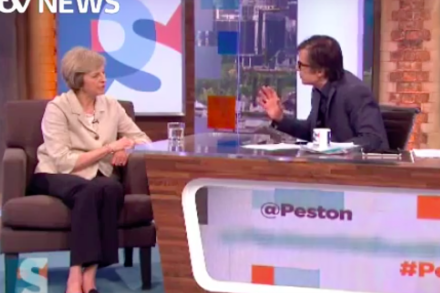
Does Theresa May really understand Brexit? Speaking to Robert Peston today, the Home Secretary seemed to be entertaining the idea of deporting European nationals staying in Britain. Or, almost as bad, using them as collateral in some negotiation with Brussels: a deeply worrying and, to me, revolting suggestion. But coming from the Home Secretary, we have no choice but to take it seriously. Robert Peston: Now, there’s a lot of anxiety among migrants who’ve come here from the rest of the EU about whether they’ll be allowed to stay. There’s also quite a lot of anxiety among Brits living in the rest of Europe. What would you say to them?

Andrea Leadsom’s scratchy job interview on the Marr show

From our UK edition

Is Andrea Leadsom a serious contender to become Prime Minister? A few days ago, she was almost about to sign up to Team Boris, and even held talks with Team Crabb & Javid. Which made sense: she has been in parliament for just six years, and has been a junior minister for an even shorter time. But to those Tories unable to forgive Michael Gove for knifing Boris, she is the only viable Brexit candidate. Until Leadson turned up on the Brexit debates, she was virtually unknown. Now, we’re being asked to assess her as a Prime Minister. Her appearance on the Marr show today was a chance to do that: it as a job interview, on live TV.

In praise of Stephen Crabb and Sajid Javid

From our UK edition

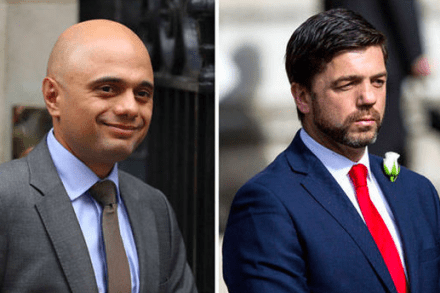
Stephen Crabb has a 3pc chance of winning the Conservative leadership, according to to the bookmakers. Yes, the same ones who said there was a 10pc chance of David Cameron winning a majority and a 7pc chance of Brexit. The seemingly impossible is happening all the time in politics. The obstacles to his joint bid with Sajid Javid are obvious: lack of government experience, lack of MPs' support (he has 21 so far) and having supported Remain. This is the type of leadership bid aimed at putting down a marker. But for those who believe that this race ought to be as much about ideas as personalities, it's worth considering their arguments. Both are interested in blue-collar Conservatism, both have inspiring backstories in an era that regards politics as biography.

The pollster who called it wrong. Again

From our UK edition

A few hours after voting started in the European Union referendum, Populus released its final opinion poll showing a ten-point lead for Remain. This carried weight because the founder of Populus, Andrew Cooper, was also pollster for the official Remain campaign. His findings had been passed to 10 Downing Street earlier, leading David Cameron and his team to become very confident. There were reports that the Prime Minister was not even going to stay up for the result: he intended to go to sleep early and wake up to victory. The vote for Brexit, by 52 per cent to 48 per cent, confounded the financial markets and wrongfooted most opinion pollsters. The telephone polls struggled; they gave undue weight to graduates, who disproportionally favoured Remain.

George Osborne as Foreign Secretary? A bad idea

From our UK edition

We haven’t heard much from George Osborne since the referendum, but that will change tomorrow morning. He’s due to make a statement, according to the Times, which also says that the Chancellor he is considering giving his backing to Boris Johnson’s leadership ambitions in exchange for being made Foreign Secretary. I’m not so sure that this would be a good idea. In Brexit Britain, being Foreign Secretary will be perhaps the most important job in the Cabinet (other than the Prime Minister). It will involve renegotiating our relationship with Europe - not just the EU itself, but making immediate and strenuous efforts to strike a whole new series of bilateral deals.

Brexit won’t hand victory to the SNP. A unionists’ breakdown just might.

From our UK edition

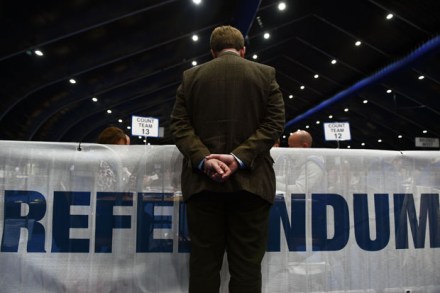
Over the last few years, Scots have had to get used to Nicola Sturgeon telling them what they think. When the SNP had its majority (one the voters stripped away in the recent Holyrood election) she was keen to present herself as the voice of the country: l’Ecosse, c’est moi. If the SNP wants X, then Scotland wants X. She’s at it again, saying that the UK has voted out of the European Union and Scotland has voted in – so the UK was voting ‘against the interests of the Scottish people’ and finally provided the provocation needed to launch a new referendum. In fact, two-in-five Scots – and even a third of SNP voters – supported Brexit.

Did referendum rage get the better of David Cameron?

From our UK edition

I suspect a lot of people who voted out have mixed emotions this weekend, especially given how emotional the debate became. People on both sides did go a little bit mad. My Twitter feed reminded me of that Danny Boyle film 28 Days Later: you watch with horror as friend after friend (on either side of the debate) is infected with the Human Rage Virus. All of a sudden, it’s not possible to have friendly disagreements: you turn into The Enemy for them. And it’s not just a social media thing: there are still people, this weekend, afraid to tell their friends and family how they voted. Alex Massie’s piece warning England about referendum rage turned out to be prophetic. And I suspect that Cameron, himself, suffered a bit of referendum rage.