Fraser Nelson

Fraser Nelson

Fraser Nelson is a Times columnist and a former editor of The Spectator.

There is no crack in Theresa May’s case against Russia

From our UK edition

Theresa May has never published her case blaming Russia for the Salisbury poisoning. She has reason to be wary of Blair-style intelligence dossiers, and she didn’t need to make everything public to win the support of allies. But as things stand, her case against Russia is open to misinterpretation by the Kremlin. As we have seen with this morning’s headlines. Yesterday, Sky News interviewed Gary Aitkenhead, chief executive of Porton Down, who said: “We were able to identify it as Novichok, to identify it was a military-grade nerve agent. We have not verified the precise source, but we have provided the scientific information to the government, who have then used a number of other sources to piece together the conclusions that they have come to.

Why Primo Levi’s warning about the young forgetting the holocaust resonates now

From our UK edition

One of the most thought-provoking pieces in The Spectator this week is from Alastair Thomas on why his generation don’t get so upset about anti-Semitism. He explains the phenomenon and offers an explanation: the years have passed, the memories of the holocaust have dimmed. It’s no longer the experience of someone’s grandparents’ generation, but further back. Since then, there are more recent memories: of the Israeli Defence Force and Gaza. The conflation between Jews, Israel and Zionism has restored the idea of the Jews as being suspiciously powerful – the oppressors rather than the oppressed. This certainly stands to reason. Memories of the holocaust were kept alive for my generation by films like Schindler’s List.

Boris Johnson’s undisclosed meeting with Alexander Nix of Cambridge Analytica

From our UK edition

Now that Alexander Nix has been suspended as Cambridge Analytica chief executive, the hunt is on to see who else he has been meeting – in London or Washington. His meetings with UK officials would have been disclosed. But one wasn’t: a meeting with Boris Johnson in December 2016. The Foreign Secretary wasn’t seeking the algorithm that took Trump to victory – his objective was to try to learn about, and improve links with, Team Trump. And here was a Brit who, apparently, was a close part of that team. Boris and Nix met on the advice of Foreign Office officials, at a time when Britain was scrambling for routes into the Trump administration. Nix had been deftly promoting himself as someone who had all sorts of connections in Trumpworld.

Good, bad and ugly: Philip Hammond’s Spring Statement in nine graphs

From our UK edition

Philip Hammond declared himself to be an optimist in his Spring Statement today – and he had a few boasts to prove it: manufacturing enjoying the continued longest growth in 50 years, three million more jobs, borrowing down. He was laying into Labour, in a way he wishes he’d been allowed to during the general election campaign. But the news was in the accompanying financial forecasts: here’s what jumped out at me. 1. The Tories have given up trying to balance the books. Hammond didn’t make an announcement to this effect, but he laid out plans for deficits for years to come. George Osborne at least pretended to be, say, five years away from eliminating the deficit. Hammond has abandoned the pretence.

A victory for press freedom (with thanks to Spectator readers and a few brave MPs)

From our UK edition

At the start of last year, The Spectator sought the help of readers in defending press freedom. Theresa May’s government was consulting on whether to press ahead with a draconian new law that would make publications like ours liable for the costs of anyone who wanted to sue us, for any reason they chose. The law, a hangover from the Leveson Inquiry, was intended as a way of bullying titles into signing up to Impress, a would-be press regulator bankrolled by the egregious Max Mosley. The legislation in question – Section 40 of the Crime & Courts Act – had been put out to consultation by the Culture Secretary and such things are often a numbers game.

The secret of Östersund, the tiny Swedish team who beat Arsenal

From our UK edition

Last night, a tiny and almost penniless Swedish football club beat Arsenal 2-1 at home. The story of Östersund Football Club is quite unlike any other in sport: I wrote about it in my Daily Telegraph column a while ago when they hadn’t really featured on a British radar. This morning, with Arsene Wenger in despair at his team’s complacency, a lot of people will be wondering what happened. The answer is an inspiring one, full of lessons for politics and life in general.  Östersund is a tiny vodka-belt town in the frozen north of Sweden with a population smaller than the capacity of the Emirates stadium. It has no football tradition, or didn’t before Daniel Kindberg, a local businessman, was crazy enough to try to start a team there.

Danielle Wall becomes editor of Spectator Life

From our UK edition

We have a new editor here at The Spectator: Danielle Wall has taken the reins of Spectator Life, our quarterly 52-page supplement. We don’t normally write about our staff changes, but Danielle is someone that regular readers ought to know about. She has been a mainstay of The Spectator for ten years, but her route into journalism was an unusual one. She worked as a PA for several of the best editors in Fleet St: Dominic Lawson, Patience Wheatcroft, Matthew d’Ancona and more. You couldn’t ask for better people to learn from. When we redesigned The Spectator magazine in 2010, Danielle proved herself invaluable and took on a succession of new projects and responsibilities ever since.

For one night only: Rod Liddle at the London Palladium

From our UK edition

If Rod Liddle is one of your guilty (or not so guilty) pleasures and you’ve been toying with the idea of subscribing to The Spectator, then we have the perfect excuse. We do reader events every so often, the most popular of which have been with Rod Liddle. They have both sold out in a flash. The last one, a thousand-seater venue, was filled within four days – we barely had time to put an advert in the magazine. This time, we’ve booked Rod again – but this time in the 2,300-seater London Palladium on Tuesday 15 May at 7pm. It will be the biggest event ever held by The Spectator. Tickets will go on sale soon, priced at £35 (or £22.50 for our subscribers). But if you’re not (yet) a subscriber, we’d like to make you an offer.

Sales of The Spectator: 2017 H2

From our UK edition

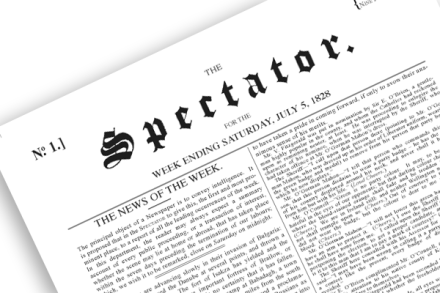
The magazine industry releases annual circulation figures today and the results for The Spectator are historic in two ways. First: our sales are at a record high, at 73,328, which is quite something for the world’s oldest weekly magazine. But we can today announce something I never thought I’d say: sales of the print magazine have now surpassed their 2006 peak to hit a new all-time high of 62,940. The Spectator celebrates its 190th birthday in July and will soon become the first weekly in history to print a 10,000th edition. Never in our long history have more people been reading (and, more importantly, buying) the print magazine. Our archivist, Prof David Butterfield, has been building a sales chart dating back to our first issue in July 1828. It’s above.

Katy Balls nominated for Political Commentator of the Year

From our UK edition

At the start of last year, Katy Balls was assigned to the political beat for The Spectator. With the snap general election, she had a baptism of fire – and, before too long, a regular column in the national press (the i newspaper). This morning, she was one of the six journalists shortlisted as Political Commentator of the Year in the Press Awards, the Oscars of the UK media, alongside Stephen Bush of the i and New Statesman, John Harris of the Guardian, Dan Hodges of the Mail on Sunday, Marina Hyde of the Guardian and Rachel Sylvester of the Times. You can read her entry here. The Spectator’s political team – James Forsyth, Isabel Hardman and Katy – is as strong as that of any UK publication.

Hear Steven Pinker speak, and take out a trial subscription to The Spectator, for £12

From our UK edition

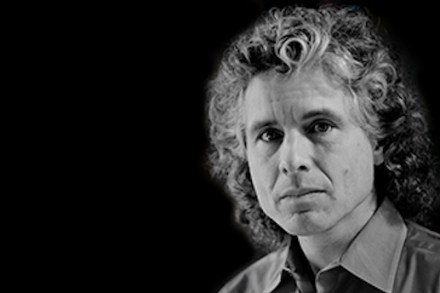
If you have been browsing The Spectator’s website as a visitor, we have the perfect opportunity to subscribe. Perfect, that is, you’re a fan of Steven Pinker – and if you’re not, you should be. He’s one of the most original, agenda-setting writers of our time. From the use of language to the use of violence, his books are the sort that you return to over and over again. His latest book, Enlightenment Now, is out next week. I read a review copy over Christmas and while the embargo prevents me from saying anything about it I can say that it is, in my opinion, his best book yet. It’s about the many ways in which the world is improving: a feast of evidence, and also why we don’t believe it.

Announcing a change to Toby Young’s Spectator column

From our UK edition

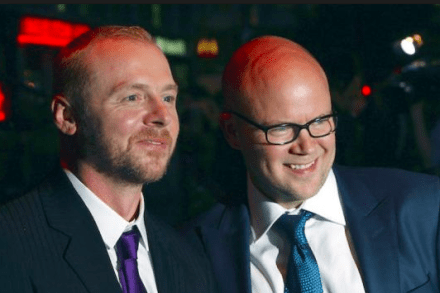
A few years ago, we had a bit of a problem with Toby Young’s column - one that never quite went away. He started writing for us regularly shortly after he’d written a book called How to Lose Friends and Alienate People about his complete failure to make it big in New York. His column was called Status Anxiety and the idea was to showcase his self-deprecating humour, while exposing the pieties of those who take themselves and high society too seriously. From the offset, readers loved it. But in the last few years, Toby's life has taken a different turn. He dedicated himself to setting up new schools for disadvantaged children, schools that he’d be happy sending his own kids to.

A deleted tweet shows how even police are confused by the law on SatNavs

From our UK edition

Yesterday, the Greater Manchester Police tweeted out the above picture claiming that that 'the only legal place' to put a SatNav is 'the bottom right hand side of your windscreen… everywhere else is illegal.' It was quite untrue. Deliciously, the picture showed a suspicious mark on the middle of the car windscreen that looked very much as if the police themselves had been holding their SatNav in the wrong place (see enlargement below). When this evidence was widely shared, and mocked, the Tweet was deleted without comment. A shame, because it's a great example of how the absence of any modern law on driving, mobile phone and SatNav use is leaving even police confused about the law.

Look down on me at your peril: I’ll eat you alive

From our UK edition

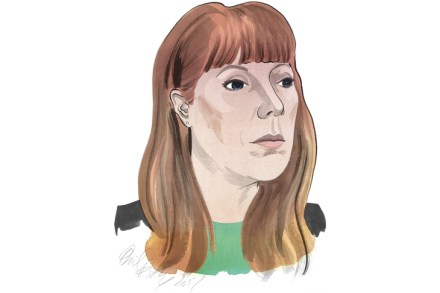
Angela Rayner is perhaps the only Labour MP who works with a picture of Theresa May hanging above her desk. It’s there for inspiration, she says, a daily reminder of the general incompetence of the Conservative government and the need for its removal. ‘That picture motivates me, in a strange way,’ she says when we meet. ‘They are doing such a bad job of Brexit, and a lot of people will be let down. Again. The people who already think that politicians are lower than a snake’s belly.’ The anger is with politicians in general. ‘It just feels that this generation is not doing a very good job.’ Ms Rayner, 37, has been a politician for not even three years and her rise has been nothing short of extraordinary.

Angela Rayner on education and white working-class culture

From our UK edition

I interview Angela Rayner, the Shadow Education Secretary, for the forthcoming edition of The Spectator. I met her before Christmas and was fascinated by the way she explains her politics in terms of her biography. She tells me how much she owes to a welfare state that was there for her, in a way that it wasn’t for her mum, who left school aged 12. She worked her way up, and says a few Tories ask her why she isn’t a Conservative. Simple, she says: Labour is the party of the helping hand, and the Tories are not very sympathetic to single parents like her. The ones who’ve made it: sure, Tories like them. They like success. But those who still struggle? Who might not be so successful? Only Labour stands for them. I could have ran four pages words of interview with her.

The Queen of Scots

From our UK edition

'You wouldn’t make good spies, would you,’ chuckles Ruth Davidson as she finds us sitting with our backs to the door in the Scottish Parliament café. She then triumphantly declares that she knows who we’ve been speaking to when preparing for the interview — getting two out of the five names isn’t bad going. After this, she sets off for her office at a pace that leaves us and her communications director trailing in her wake. She scrolls impatiently through her phone as she waits for us to catch up at every security door. Davidson is as direct as she is energetic. When the editor begins by pointing out the state of the Tories when he left Scotland 15 years ago, Davidson cracks back, ‘Did you leave your accent behind?

No 10 should have seen Alan Milburn’s resignation coming

From our UK edition

For the whole board of the Social Mobility Commission to resign with its chairman, Alan Milburn, condemning the Prime Minister’s commitment to the agenda is pretty damaging. But this attack was inevitable, for reasons that haven't (so far) been picked up by the newspapers. Ever since Theresa May took office, she has shown almost no interest in the Social Mobility Commission, set up under the coalition years. No10's approach seems to have been one of strategic neglect. Alan Milburn's five-year term came up for renewal last July: Justine Greening, the minister responsible, was keen for him to stay. But No10 refused, and asked her to come up with other names.

No, the Kremlin is not behind Legatum – or Brexit

From our UK edition

Given that most think tanks and universities are heavily against Brexit, the recent arrival of the Legatum Institute into the arena of trade policy mattered. It was filling a a gap in the market: proper research into potential trade relationships, on the basis that Brexit might not be a disaster. It has also acquired the services of Shanker Singham, an experienced trade lawyer. Both he and Legatum have come under the microscope today with a Mail on Sunday splash suggesting that the Kremlin might be behind it all. Its headline: ‘Putin link to Boris and Gove Brexit “coup”’. Did this relationship go too far, and did Singham end up advising Michael Gove and Boris Johnson on a private (now leaked) memo to the PM?

The Norway model: a new approach to immigration and asylum

From our UK edition

Germany is this weekend seeing whether or not Angela Merkel will be able to form a government as she deals with the political fallout from her immigration policy. Quite a contrast from Norway, whose Conservative-led coalition recently entered its second term after taking a very different approach to refugees. Last week I met Sylvi Listhaug, who holds a recently-created position: Norway's Minister for Immigration & Integration. She’s with the Progress Party, the junior partner in coalition. You often read about her being 'outspoken' or 'controversial' and I was interested to see what kind of radical views she holds. At the end of the interview, I was left wondering if her take on refugee policy is actually further-sighted and more morally defensible than the Merkel approach.

After Brexit, Britain will still have European cities. Can someone tell the EU?

From our UK edition

When Britain voted to leave the EU, it didn’t necessarily follow that we’d be kicked out of its European Capital of Culture scheme – given that it aimed to be exactly that, rather than an EU Capital of Culture. After all Istanbul, Reykjavík and Stavanger all qualified and all won. There were some ominous signs: a few weeks ago, the European Parliament voted to amend the rules the scheme should be open to candidate states and EEA nations - butno mention was made of former members. So Iceland would be included in consideration for European status, but Britain excluded. It looked like a mean-hearted attempt to punish Britain for leaving, but could it really be so?