Fraser Nelson

Fraser Nelson

Fraser Nelson is a Times columnist and a former editor of The Spectator.

Tough love | 23 November 2017

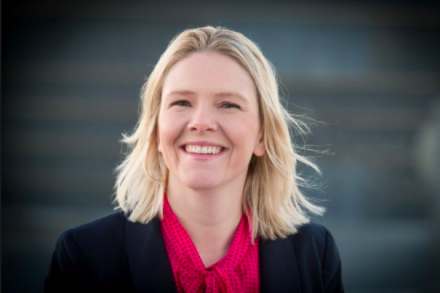
When Angela Merkel invited refugees to Germany in 2015, tearing up the rules obliging migrants to seek asylum in the first country they arrive in, the consequences were pretty immediate. Over 160,000 went to Sweden, leading to well-publicised disruption. Next door, things were different. Norway took in just 30,000; this year it has accepted just 2,000 so far. To Sylvi Listhaug, the country’s young immigration minister, this might still be a bit too much. ‘We have a big challenge now to integrate those with permission to stay in Norway to make sure they respect Norwegian values,’ she says. ‘Freedom to speak, to write, to believe or not to believe in a god, how to raise your children.’ Also, she says, what not to do.

The collapse of coalition talks in Germany makes a ‘no deal’ Brexit a little more likely

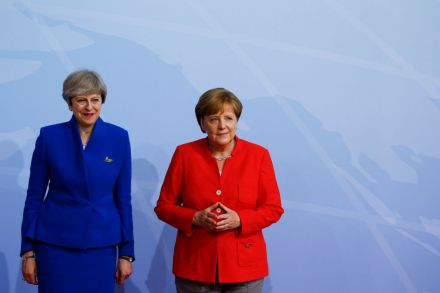
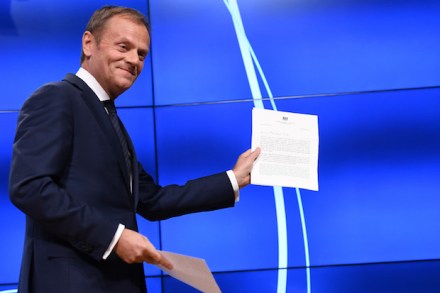
The Cabinet is expected to resume talks about Brexit today, reportedly nudging towards a £40 billion offer ahead of a meeting on Friday – but is there much point? Germany still has no government with Angela Merkel’s coalition talks having collapsed. The chairman of the Free Democratic Party ended talks with Merkel last night and her old coalition partners, the Social Democrats, refuse to enter a deal as this would confer opposition status on the populist AfD and thereby augmenting the progress they made in the recent federal elections. All of a sudden, Merkel’s fourth term has been thrown into question, and there’s talk of her doing a Theresa May and holding a snap election. 'It is a day of deep reflection on how to go forward in Germany', Merkel said.

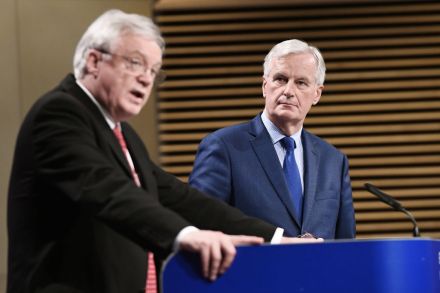
Even Michel Barnier says it’s time to prepare for ‘no deal’ on Brexit

Today’s Guardian has an odd splash headline, denouncing as 'Orwellian' a letter that Michael Gove and Boris Johnson sent to Theresa May warning her that some parts of her government are unprepared for 'no deal'. I’m not quite sure what’s Orwellian about that, or even so controversial. Here's the leaked extract of the letter. 'Your approach is governed by sensible pragmatism. That does not in any way dilute our ambition to be a fully independent self-governing country by the time of the next election. If we are to counter those who wish to frustrate that end, there are ways of underlining your resolve. We are profoundly worried that in some parts of government the current preparations are not proceeding with anything like sufficient energy.

Since Article 50 was triggered, a no-deal Brexit has been the default

Jeremy Hunt has told Tory rebels that"if we don't back Theresa May we will have no Brexit". It echoes a point Paul Mason once made - a point that you hear quite often: there’s no chance of no deal on Brexit, because there is no parliamentary majority for no deal. It's understandable, given recently chaos, to imagine that if things are falling apart then Brexit might be one of them. Lord Kerr, who helped draft the Article 50 withdrawal clause, said last week that "the Brexiters create the impression that... having sent in a letter on 29 March 2017 we must leave automatically on 29 March 2019 at the latest. That is not true."  Really?

The resignation letter blunder

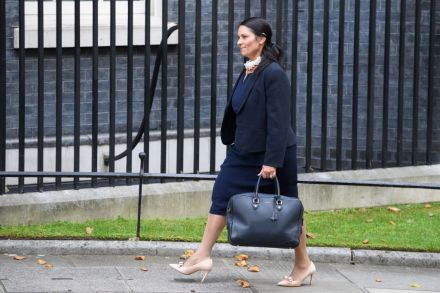
We ran a Steerpike blog entitled "the resignation letter blunder" about how Theresa May put Priti Patel's name underneath her signature. In fact, the blunder was ours. No10 was following protocol, where it's normal to put the recipient's name under the Prime Minister's signature in such letters. We - and I - ought to have known better.

Salman’s Arabia

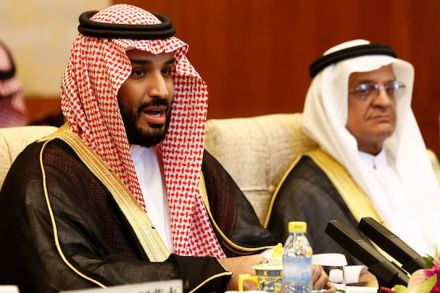
There are two ways of seeing the extraordinary rise of Saudi Arabia’s Crown Prince: the blood-stained debut of a new dictator, or the long-overdue emergence of a reformer with the steel to take on the kingdom’s old guard. The British government is firmly in the second camp. Mohammad bin Salman is just 32 years old, and his effective seizure of power means he defines the kingdom for a generation. He’s seen in Whitehall as a history maker, whose ruthless impatience might not only liberalise his country but create an alliance with Israel that could change the region. Minsters talk about MbS (as he’s known in Whitehall) with admiration and awe. He recently laid on a trade fair, and the British delegation was amazed to hear a band playing upon arrival at the airport.

The Bank of England has finally raised interest rates. More, please

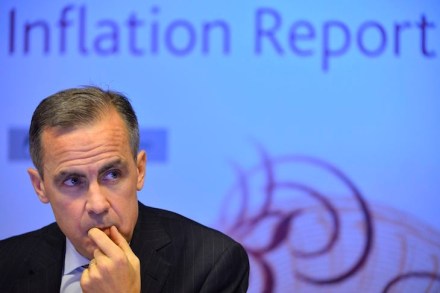
Finally, interest rates are back on their way up. The Bank of England’s rise today – from 0.25 per cent to 0.5 per cent – is the first rise for 10 years and long overdue. Ever since the Brexit vote, there has been much hyperbole about the underperformance of the UK economy when in fact employment has soared to ever-greater highs and economic growth has steadily continued. There is no need for emergency interest rates, and hasn’t been for quite some time. There is pretty much no spare capacity left in the economy, we are at any sensible person's definition of full employment. Mark Carney had allowed his Brexit gloom to cloud his judgment on this, issuing more QE when it wasn’t needed.

How I fell under the spell of Soviet propaganda posters

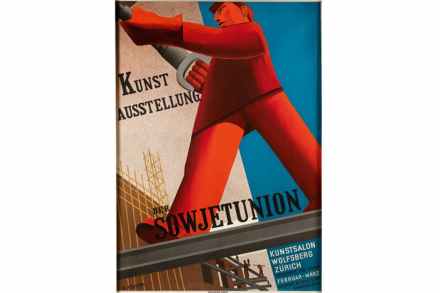
It’s hard to admire communist art with an entirely clear conscience. The centenary of the October revolution, which falls this month, marks a national calamity whose casualties are still being counted. When my father-in-law comes to visit, I have to hide my modest collection of Russian propaganda: he grew up under the Soviets and has few fond memories of the experience. He can’t work out why old agitprop is so popular today. But the simple fact is, for all the disaster they wrought, the Bolsheviks did leave a legacy of images so striking that, even now, they can draw thousands into a museum. As Tate Modern is about to demonstrate. Its new exhibition, Red Star Over Russia, showcases one of the greatest collections of Soviet propaganda posters.

Turning rejects into champions – the miracle of Östersund FC

In my Daily Telegraph column today, I write about the incredible story of Östersund football club. It hasn’t quite been picked up in Britain yet, but I suspect it will one day be made into a Moneyball-style film: about how a small-time English coach was hired to move to a small subarctic town in Sweden with a small budget, and assembled a team of misfits on £600-a-week. But his tactics, and his faith in his ability to get the best out of people, saw them not only win the Swedish Cup but they are now taking on the biggest clubs in Europe. So this town, the size of Inverness, a seven-hour drive north of Stockholm, where winter ends in May and starts in October, is now chartering aircraft to take fans to Spain where their club plays Athletic Bilbao on Thursday next week.

The art of persuasion

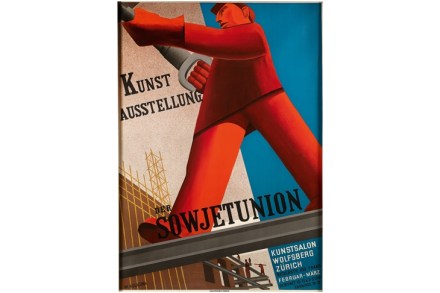
It’s hard to admire communist art with an entirely clear conscience. The centenary of the October revolution, which falls this month, marks a national calamity whose casualties are still being counted. When my father-in-law comes to visit, I have to hide my modest collection of Russian propaganda: he grew up under the Soviets and has few fond memories of the experience. He can’t work out why old agitprop is so popular today. But the simple fact is, for all the disaster they wrought, the Bolsheviks did leave a legacy of images so striking that, even now, they can draw thousands into a museum. As Tate Modern is about to demonstrate. Its new exhibition, Red Star Over Russia, showcases one of the greatest collections of Soviet propaganda posters.

Amber Rudd says that a no-deal Brexit is ‘unthinkable’. She is, alas, wrong

Amber Rudd had been admirably disciplined on Brexit. She was a passionate Remainer, who performed herself with distinction in the referendum campaign – but then, supported the Prime Minister. Things have been fraught since, and the new dividing line is whether Cabinet members can support the Prime Minister’s official position that 'no deal is better than a bad deal.' In committee today, Rudd wobbled – saying that no-deal is ‘unthinkable’. It wasn't quite as bad as it sounded. Plenty of Brexiteers argued the same during the referendum campaign: of course we'll get a deal with the EU, it's in their interests as much as ours, it ought to be the easiest thing in the world to agree given that we start from a position of complete harmony.

Wanted: a social media editor for The Spectator

The Spectator is hiring. We're looking for our first full-time social media editor, but one with a difference. We are looking for someone who understands The Spectator's voice and can present our articles on Twitter, Facebook and other platforms. The social media editor's responsibilities will include: Developing The Spectator's social media strategy. Projecting The Spectator's voice on all forms of social media. Promoting subscriptions via social media, while liaising with the marketing team. Producing web analytics. The successful candidate will work full time in our London office and report to the online editor. They will be expected to edit and maintain The Spectator's social media channels to the standard readers expect from the magazine.

In referring to the EU as ‘the enemy’, Philip Hammond has created another reason to sack him 

Is Philip Hammond trying to be sacked as Chancellor? First, he messed up his Budget after admitting he didn’t properly think about the politics of hiking National Insurance. Next, he’s refusing to prepare properly for a ‘no deal’ scenario – putting the Prime Minister at a disadvantage when she’s negotiating (the subject of my Telegraph column today). And this afternoon, another blunder: he has unforgivably referred to the European Union as 'the enemy' in what seems to be a bungled attempt to assuage Brexiteers. Here are his remarks to Sky News: 'My message is this: I understand that passions are high and I understand that people have very strong views about this. But we’re all going to the same place, we all have the same agenda...

Interview: Centrica CEO, Iain Conn, on the energy price cap

Theresa May had wanted Ofgem to introduce a energy price cap: it said this would require new legislation and today the Prime Minister will promise to create them by capping the Standard Variable Tariff. The case for the prosecution is simple: about 70 per cent of energy users are not on cheap tariffs, but the ‘standard’ variable tariff which is about £300 more expensive than the best deals. Competition works for those who switch, but for those who tend not to (especially the poor and the elderly) the system is demonstrably not working for them. Centrica thinks otherwise and it sponsored a podcast, which we released yesterday, where I ask its chief executive, Iain Conn, about the market.

Who will join the Grant Shapps and Ed Vaizey rebellion?

A move against Theresa May led by someone with their career in front of them might be seen as a bold attempt to shake the Cabinet into action for the good of the party. But a plot led by Grant Shapps, party chairman under David Cameron, is a rather different proposition. He doesn't seem to have much of a strategy – it looks like he’s readying the freezer bags and coming after the PM, as per George Osborne’s instructions. He blames the Tory whips for leaking his name to the press, and says it will only accelerate things. I'm not so sure.

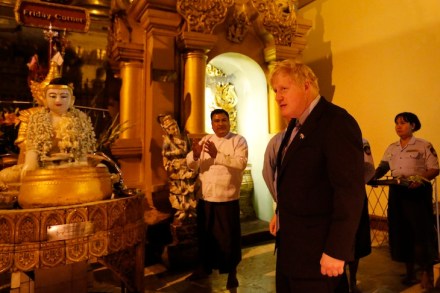
Burma, Kipling, Sinatra and Boris – the anatomy of a non-scandal

I’m an admirer of Brian Cox so I was struck by a tweet of his yesterday, where he seemed to have encountered a scientific formula for the Antichrist. ‘If you removed all that is good in Britain, leaving only blimpish sludge, and emptied the residue into one man.’ It turns out that he was referring to the Foreign Secretary. The story in question was one where the Guardian claimed that Boris Johnson had ‘recited part of a colonial-era Rudyard Kipling poem’ in a Buddhist temple. The story was written to mislead the reader into thinking that Boris had read a poem in public in Burma, causing upset to guests. In fact, he’d been reminded of the Road to Mandalay, a poem that has inspired musicians (from Sinatra to Robbie Williams) for generations.

The lady’s not for quitting: Damian Green on Theresa May

Even Damian Green seems to find it odd that he’s the second most important person in the government. When asked, the First Secretary of State plays down his influence — in fact, he plays down most things. When David Cameron wanted the Tories’ immigration policies out of the spotlight, he put Green in charge of them. And when Theresa May wanted someone she could trust to be her deputy after the disastrous general election, she chose one of the few people in the cabinet whom she can call a friend. The pair have known each other since Oxford, and now talk face-to-face every day. When we meet in his magisterial cabinet office headquarters, he talks about her with enthusiasm.

Ruth Davidson and Boris Johnson have so much in common. Why the bad blood?

Boris Johnson and Ruth Davidson are two of my favourite Tory politicians: both energetic, eloquent, optimistic, pro-immigration and – in general - liberal conservatives. Both have proven track records of winnng voters in parts of the country that had been inhospitable to Tories. Both are advocates of conservatism for explicitly progressive reasons: but because it’s the best way of helping those who need help most.  So I’ve never worked out why there seems to be a firth of bad blood between them. We saw it in the Brexit campaign: it seemed, as times, that the main reason Ruth joined the Wembley Brexit debate was the joy of giving Boris a kicking.

Spectator Briefing: A new battle of ideas

When I started out as a political journalist, I was always thrown by the word 'policy'. To most people it sounded so dull and wonky whereas for me, it was – and is – easily the most exciting aspect of politics. How to fix the NHS, tackle poverty, solve the housing crisis, make state schools as good as private schools? This is what Westminster should be about: a battle of ideas. So we're introducing a forum for this battle: Spectator Briefing, where we'll seek a variety of voices and go into greater depth than would be suitable for Coffee House. There will be graphs, more links to PDFs and we'll summarise some of the best original research. We'll also publish policy podcasts. As ever with The Spectator, we'll aim to keep it punchy, useful and to the point.