Fraser Nelson

Fraser Nelson

Fraser Nelson is a Times columnist and a former editor of The Spectator.

Wanted: an assistant digital editor for The Spectator

From our UK edition

There has never been a better time to join The Spectator. Our sales are at a 190-year high, with growth driven by readers who get to know us through the website. The growth is continuing, and we’re creating some new positions. The first is that of an assistant digital editor whose duties will include: Being across the news agenda, spotting issues that would make for a good Coffee House blog or Steerpike (and liaising with the writers) Editing copy: fact checking, proof reading, ensuring articles are legally sound, picture research and (crucially) sharp headline writing. Using WordPress on a daily basis Writing effective social media lines Basic photoshop, uploading and embedding relevant audio and video clips.

Sweden vs England: the agony of the Nelson household

From our UK edition

At 3pm tomorrow, a thin blue line will be drawn across my living room. My wife will be supporting her motherland, Sweden. I’ll be rooting for my adopted country, England. We’ll have food and drink from both countries on either side – but the question is who gets custody of the kids for those 90 minutes. It’s a harder question than I had thought. Alex, 10, and Dominic, 8, are – in my opinion – as English as Y-fronts and Tizer. Born and bred. They go to an English state primary school, have English friends, but they don’t seem at all torn about wanting England to lose. So I thought I’d place them in the English half of the living room, complete with flags. But they are protesting.

Why Danny Dyer has a point about David Cameron

From our UK edition

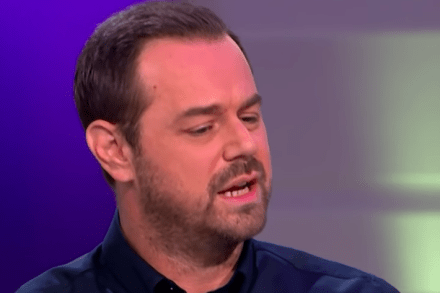
As an admirer of David Cameron, I was appalled when he broke his word and resigned on the morning of the Brexit vote two years ago. Not for the first time, I was thrown because I had taken him at his word and believed him when he said that he’d stay no matter what the result. His decision to ban Whitehall from preparing for a ‘no’ result denied crucial preparation time with consequences still being felt today. So I had a certain sympathy with Danny Dyer who had a few things to say about Cameron on ITV’s Good Evening Britain last night.  https://twitter.com/cjsnowdon/status/1012439971188310017?ref_src=twsrc%5Etfw As I say in my Telegraph column today, the UK government still has no Brexit strategy with just nine months to go.

The NHS bus pledge could have a sting in the tail for the Tories

From our UK edition

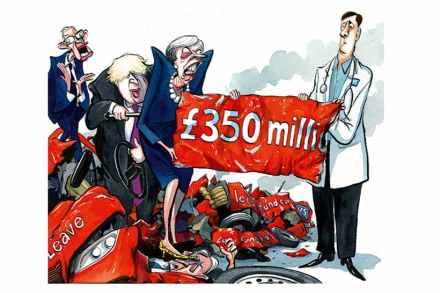
Today’s newspapers have managed to catch up with our cover story from last month: Theresa May has agreed to a massive cash splurge on the NHS. Rather than wait until the spending review to announce this, there will be a political stunt presenting the cash as a 70th birthday gift to the health service. But it is instructive nonetheless: it underlines how this is not a serious assessment of the health service’s needs but a politically motivated gesture. Once it would have been opposed by the fiscal hawks in the Tory party but now these people tend to be keener the Brexit bus pledge of £350m a week for the NHS being honoured – which, by the time of the next election, it will be. The biggest question is how to fund this.

Next up, Nato

From our UK edition

For Theresa May, the most worrying part of Donald Trump’s talks with Kim Jong-un came two days before the two men met. The US President had arrived in Singapore early after escaping the G7 summit in Canada, still sore at being upbraided by his European and Canadian counterparts about tariffs. With time on his hands, he took to Twitter to hit back by switching the conversation to defence and one of his favourite bugbears: Nato. ‘Germany pays 1 per cent (slowly) of GDP towards Nato, while we pay 4 per cent of a MUCH larger GDP,’ he announced. ‘The US pays close to the entire cost of Nato-protecting many of these same countries that rip us off on Trade (they pay only a fraction of the cost-and laugh!)’. This situation, he said, would soon end.

Will Sajid Javid force Theresa May’s hand on immigration?

From our UK edition

Sajid Javid is losing no time establishing his personal authority as Home Secretary and making the case for change. I wrote in my Daily Telegraphcolumn two weeks ago that the test of his independence would be whether he’d pick a fight with Theresa May on Tier 2 visas: doctors, engineers and other skilled workers coming from outside the EU. That fight has now begun. Andrew Marr asked him why thousands of tier-2 skilled workers had been rejected recently, usually because they're not earning £50k. Marr quoted one NHS manager saying it was “completely barmy”. It seems that the new Home Secretary agrees “When that policy was put in place, there was a cap that was established: 20,700 a year of these highly-skilled immigrants.

The great Tory health splurge

From our UK edition

A fortnight before Philip Hammond delivered his last Budget, the chief executive of the NHS gave a speech making the case for more funding. Simon Stevens had brought with him picture of a Vote Leave poster, promising £350 million a week for the health service, which he showed to his audience. What a good idea, he said. He wasn’t coming out as a Brexiteer, but he did think the Leavers had a point about giving an extra £350 million a week to the National Health Service. In fact, he went so far as to say that the ‘public want to see’ this promise honoured. And if politicians don’t cough up?

Liz Truss to Tory voters: build on the green belt or get Prime Minister Corbyn

From our UK edition

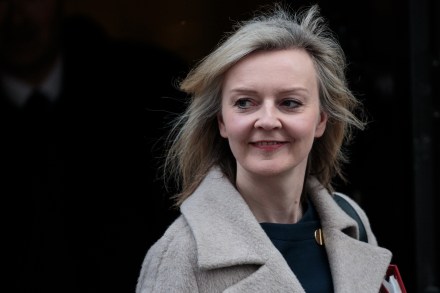
If some Conservative voters are reluctant to support the expansion of towns and villages, Liz Truss has a warning for them. "It’s a lot less uncomfortable having the field next to your house built on, than it is having your property appropriated by a bunch of Socialist-Marxists,’ said the Chief Secretary to the Treasury. She was giving the keynote speech at the Spectator Housing conference, sponsored by Lloyds, in London's Southbank Centre yesterday and said in public what a lot of Tories have said in private: that the choice is between more housing, or a Corbyn government. A choice, she said, that she's taking at home as well as in Westminster. She said that there are "plans to build behind my house in Norfolk, which some people locally are opposing.

Leveson 2 has been defeated – but the enemies of press freedom will be back

From our UK edition

The parliamentary majority for keeping a free press in Britain fell to just nine votes this evening. The attempt to bring back another Leveson Report to harass the press was defeated by a dangerously thin margin. Quite something, given that the ideas under discussion would not have looked out of place in Orban’s Hungary. The point of another Leveson Inquiry would have been to harass newspapers in general and Rupert Murdoch's titles (and staff) in particular. The other amendment was on the cards was even worse: forcing newspapers to pay the legal bills of anyone who wanted to sue them, whether or not they were in the wrong. This is an extraordinary proposal for any democracy.

Rod Liddle at the London Palladium. Final tickets on sale now…

From our UK edition

On Tuesday next week, The Spectator is laying on what is perhaps our biggest-ever event: Rod Liddle in the London Palladium. We booked a 2,300-capacity venue and have been holding 60 tickets back for the last few days. They’re on sale now, and they’re the last ones left. This will be one of these events where we’ll get phone calls at the last minute, asking if we can magic tickets out of the ether for very important guests. We can’t: there are just a few dozen left. It should be quite something: I’m not sure any other journalist could sell out the Palladium on their own. We didn’t think we’d sell out a venue as massive as the Palladium, and it looks like we will soon. A sign, surely, of what’s going right in the world.

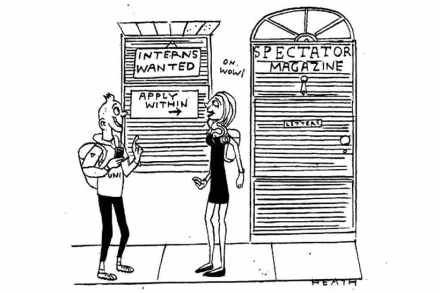
Announcing The Spectator’s political mischief internship

From our UK edition

Entries are coming in quickly for this year’s Spectator’s (paid) internship scheme, which this year we’re arranging by category: research, editing, data/tech, social media. Such is the quality of the applications received so far that we’re adding a new category: the political mischief internship. The tests are tough because we're serious. e’re doing this because we the magazine is expanding and we need recruits, or people to contribute on a freelance basis. We’re looking for someone who knows their Ben Bradshaws from Ben Bradleys. Someone digitally literate – who can file an FOI, navigate Photoshop and set up a Companies House alert. Someone who has a sense of humour, and a developed sense of the absurd.

Jeremy Corbyn had a bad night – but the Tories still have much to fear from the left

From our UK edition

It’s a bit mean to accuse the Tories of cynical expectations management, as Jeremy Corbyn has just done. Their panic was quite genuine. I’ve spoken to a great many Tories over the last few weeks, and none would have been so bold as to predict today’s results. Rallings & Thrasher had expected the Tories to lose 75 seats in aggregate, and so far they’re about flat. Given the awful time that Theresa May has had recently, it’s not a bad result. It was, as Tory chairman Brandon Lewis has said, a ‘reasonable’ night. But the fact that such a close result is described as ‘reasonable’ shows how far things have deteriorated for the Conservatives.

Sajid Javid could be the radical Home Secretary we need

From our UK edition

The appointment of Sajid Javid is something quite rare: a bold move, rather than a defensive one, by Theresa May. He was furious about the Windrush debacle and it was his pressure that made 10 Downing Street realise how politically toxic it could be. Not just because – as he put it in the Sunday Telegraph – this could have been him, or his parents. It’s because the whole episode embodies what he most hates about politics, and he had a shrewder eye for its wider implications than many others. When I first interviewed him for The Spectator he said that, when he first went into politics, his family friends all assumed that he was joining the Labour Party because what Asian would back the Tories?

Amber Rudd has gone. Can the immigration target go next?

From our UK edition

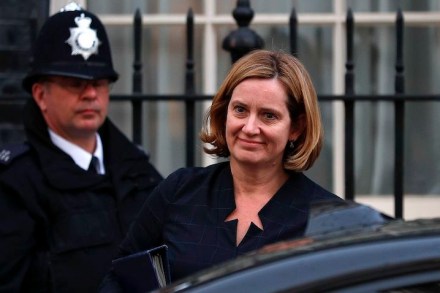
It's hard not to feel a little sympathy for Amber Rudd. She was the lighting rod of the Windrush scandal, having inherited a deeply dysfunctional department from her predecessor, Theresa May. The "hostile environment" policy that led to the shameful Windrush debacle was developed under Mrs May, as was the situation where even senior Home Office officials didn't know what going on. But as Mrs May herself said in 2004 when calling for the resignation of Labour ministers over an immigration debacle, ignorance is no excuse. Blaming others won't cut it. Had Rudd handled herself brilliantly during this crisis, she would have survived it - perhaps even enhanced her reputation. But she messed up.

The agony of Alfie Evans’ parents was made worse by bad law

From our UK edition

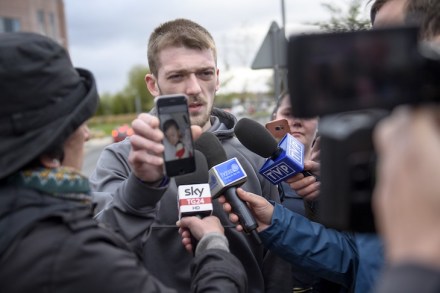
The overseas reaction to the case of Alfie Evans has been quite striking. It’s not that the NHS treated him poorly, or that anyone seriously believes that the 23-month-old boy could have recovered from his brain damage. The shock comes from the fact that English law can define the ‘best interests’ of a child as dying, overruling the parents who wished to take up the offer of treatment at a hospital in Rome. This Bloomberg article sums up much of the US reaction:- ‘It really is this simple. The British state has decided that it is the baby’s best interest to die, and it is trying to ensure that he dies expeditiously. It is overriding parental rights in the process.

Brexit blunders

From our UK edition

A few months ago, Britain’s most senior ambassadors gathered in the Foreign Office to compare notes on Brexit. There was one problem in particular that they did not know how to confront. As one ambassador put it, the English--language publications in their cities (it would be rude to name them) had become rabidly anti-Brexit: keen to portray a country having a nervous and economic breakdown. Their boss, the Foreign Secretary, later summed it up: many believe that Brexit was the whole country flicking a V-sign from the white cliffs of Dover. The job of his ambassadors is to correct this awful image. But how? Their plight has not been made much easier by the Prime Minister.

Jeremy Corbyn’s rationale for opposing the Syria strike is collapsing

From our UK edition

The Syria missile strike has been backed by the governments of Germany, Canada, New Zealand and more – but not Jeremy Corbyn. Not for him the convention of the Opposition leader supporting the government in issues of war and peace. 'I say to the Prime Minister: where is the legal case for this?' he told Andrew Marr this morning. The legal case has been published here, at some length. Corbyn then suggested that international OPCW inspectors should be called in to judge what had happened. But is there any doubt about what happened? Today, the Sunday Times publishes testimonies of victims of the gas attack: accounts of differing people corroborate the use of a chlorine bomb.

Podcast: Will last night’s Syria strikes make any difference?

From our UK edition

The attack on Syria is now over, says the Pentagon - so where does this leave us? Last time 55 missiles were fired on the airbase from which Assad launched chemical weapons attacks. It was back in use days later, with jets flying off to bomb the same rebels. The United Nations estimated that Assad went on to deploy four more chemical attacks, and that he's carried out more than 30 (its graphic below). This is why Theresa May was overstating it in her press conference this morning, saying that the international ban on chemical weapons need to be upheld. It has not been upheld: the Syria conflict has established a new norm. That if you have the right backing (in Assad's case, Russia and Iran) then you can use chemical weapons.

Meeting the Mooch

When Anthony Scaramucci announced that he was writing a book about his time with Donald Trump, the joke was that it should be entitled ‘Ten Days That Shook the World’. This, he says, does him an injustice because he managed 11 days as White House communications director before being fired — after a lava flow of stories that seemed extraordinary even by Trumpian standards. But he remained loyal to the President, and has been speaking in his defence ever since. This book promises to reveal one of the deepest mysteries in American politics: how Trump’s mind works. ‘I’m almost done with the manuscript,’ he says, fresh from a meeting with his publishers in New York. ‘Obviously, my short stint in the White House won’t be a major drama.

Internships at The Spectator for summer 2018; no CVs, please

From our UK edition

Since we abolished CVs for The Spectator’s internship scheme, it has acquired quite a reputation. There are fewer than two dozen journalists here in 22 Old Queen St and we recruit people rarely – but when we do, we seek to recruit from our interns. We’re not the only ones. Our two best interns from last year (the ones asked back for Christmas) have both just been offered jobs by national publications. The best interns we’ve had recently have included a PPE graduate, former teacher and a mum-of-three whose kids are old enough for her to roll the dice and try a new career. In journalism, all that matters is flair, enthusiasm and capacity for hard work. We don't care where, when or even whether you went to university.