Fraser Nelson

Fraser Nelson

Fraser Nelson is a Times columnist and a former editor of The Spectator.

1711 and all that: the untold story of The Spectator

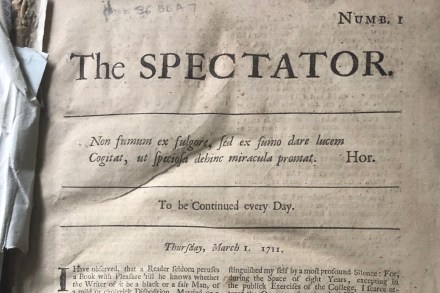
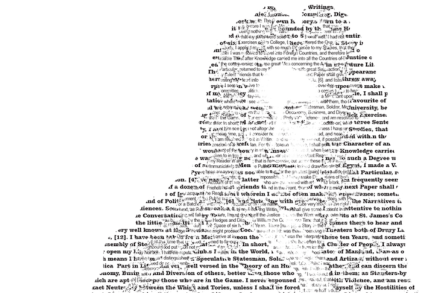
The first edition of the first Spectator was published 308 years ago today. I recently found a copy in a second-hand bookshop (pictured above), complete with every issue of the first series of that publication. It’s one of the most expensive things I’ve bought but gives me no end of pleasure and inspiration. The Spectator that you see today is the oldest weekly in the world, but that is dating it back to the current run from July 1828. The original — and the inspiration behind the reboot of The Spectator — was the 1711 edition created by Joseph Addison, a Whig politician and his womanising mate, Dick Steele. What we do now, in print, broadcast and online, samples the DNA of what was created by those two back then.

‘I’m not appealing to the nutter vote’

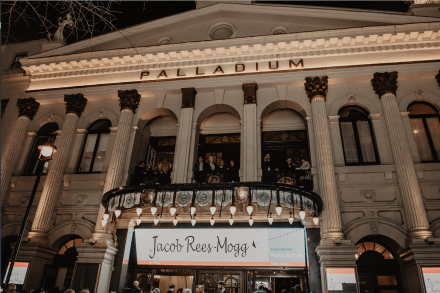
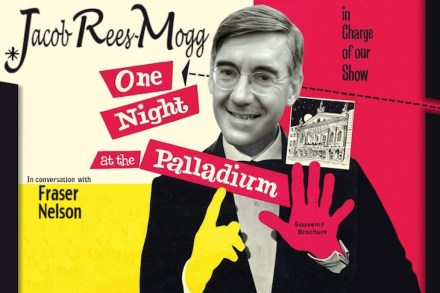
A woman dressed as a nun is standing outside the London Palladium with a placard, warning about ‘an evening with a religious extremist’. She refers to Jacob Rees-Mogg, who sold all 2,300 seats at the venue in a fortnight — a feat that enraged his critics all the more. The nun eventually found a loudspeaker to address Spectator subscribers, who waved cheerfully as they filed in to the theatre. This stage has played host to entertainers like Bruce Forsyth, Marvin Gaye, Tommy Steele and Jimmy Tarbuck — and now, the backbench MP for North East Somerset, offering an evening of political discussion. We live in strange times. He arrives late, fresh from a meeting with the European Research Group of Tory Brexit MPs, where they had to accept their game was up.

My evening with Jacob Rees-Mogg — live at the London Palladium

A woman dressed as a nun is standing outside the London Palladium with a placard, warning about ‘an evening with a religious extremist’. She refers to Jacob Rees-Mogg, who sold all 2,300 seats at the venue in a fortnight — a feat that enraged his critics all the more. The nun eventually found a loudspeaker to address Spectator subscribers, who waved cheerfully as they filed in to the theatre. This stage has played host to entertainers like Bruce Forsyth, Marvin Gaye, Tommy Steele and Jimmy Tarbuck — and now, the backbench MP for North East Somerset, offering an evening of political discussion. We live in strange times. He arrives late, fresh from a meeting with the European Research Group of Tory Brexit MPs, where they had to accept their game was up.

The law and Shamima Begum

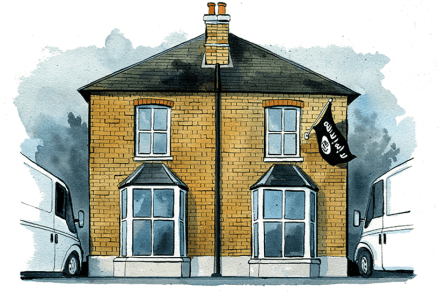
Shamima Begum, the jihadi bride seeking to return to Britain, represents an awful problem for the UK - but isn’t she our problem and shouldn’t we deal with her under our own justice system? How, morally, can we strip her of UK citizenship and dump her on Bangladesh, which she has never visited? James Forsyth’s argument yesterday resonated, especially amongst Tories who agree with him that depriving her of a passport looks like taking the easy way out. I've been struck by how many ministers also accept that citizenship deprivation is a pretty bad option - but they think that, in the circumstances, the other options are worse. Here's how they see it.

What today’s defections can teach the Tories

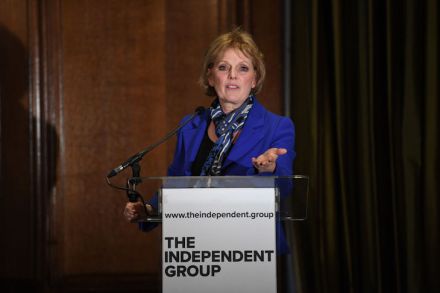
Three weeks ago, Anna Soubry and a small number of Tory Remainers gathered in a corner of the Pugin room of the House of Commons, all looking devastated. They had just failed to force the Cooper amendment upon Theresa May’s government. Meanwhile, their arch enemies, the ERG Tories, had succeeded in passing the Brady amendment. Some of them were in the Pugin room as well, drinking champagne. It was a bit of a Sharks vs Jets moment. Now and again, the Brexiteers would raise a glass to Soubry and her friends, who were drinking water. This scene was described to me by an MP who said it showed the party had already split. Today, that split was formalised as Soubry, Heidi Allen and Sarah Wollaston joined the new Independent Group. There is nothing for Conservatives to cheer about today.

Is Emmanuel Macron about to call Theresa May’s bluff on the Brexit backstop?

The EU has agreed a standard exit clause on almost every treaty it has ever negotiated - so why not the Brexit Withdrawal Agreement? Olly Robbins made a grave error in failing to have such a clause inserted, and Theresa May made a worse one in signing up to a deal that Parliament was never going to accept.  But it’s easily fixed: just make it temporary, something that can be done in one sentence adding an exit clause, and Parliament would (probably) agree the deal. So what’s the problem? It seems that other EU leaders are beginning to wonder. The Times today reports that they are willing to compromise on the Withdrawal Agreement. The acid test of all this is whether Geoffrey Cox, the Attorney-General, will agree that the changes make it temporary.

Sales of The Spectator: 2018 H2

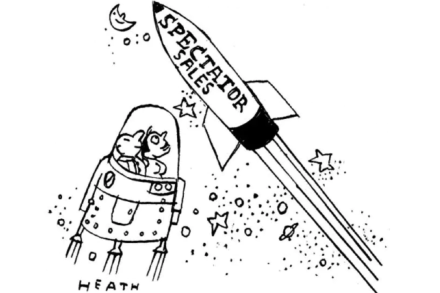
The UK magazine industry releases its circulation figures today, and I’m delighted to announce that sales of The Spectator are at another all-time high. We sold an average 76,201 copies in the second half of last year, up by over 7 per cent on the first half of the year. Subscriptions are driving this growth: they’re now up 50 per cent over the last ten years – a figure that’s all the more remarkable given how bleak it has been for print media. Digital-only subscriptions are soaring – up 32 per cent in the second half of last year, compared to the first half. But not at the expense of print, where sales now stand near an all-time high, at 62,679.

Tusk, Selmayr and the EU’s Twitter diplomacy

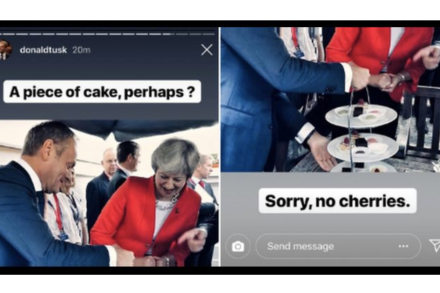
This morning, Donald Tusk had an unusually provocative line in his speech. "I have been wondering what the special place in hell looks like for those who promoted Brexit without even a sketch of a plan how to carry it safely," he said. Any politician knows that the image of Brexiteers going to hell cannot be dropped into a speech without huge controversy. Leo Varadkar, the Irish Taoiseach who had been standing next to him, spotted it instantly and was caught on mic joking to Tusk about the outrage it was intended to cause in the UK. Tusk nodded and laughed. Then for good measure, he tweeted out the incendiary point. https://twitter.com/eucopresident/status/1093112742293266435?ref_src=twsrc%5Etfw All this is an unusual way to conduct diplomacy, but this trolling fits a trend.

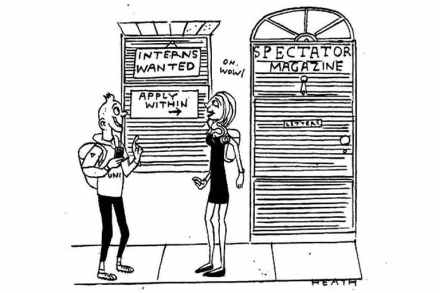
Apply now: The Spectator’s political mischief internship (no CVs please)

Every summer, The Spectator runs a paid internship scheme, which we arrange by categories: research, editing, data/tech, social media. Last year we added a new category: the political mischief internship. The quality of applicants was so extraordinary that we hired one of the applicants, John Connolly, who now works for The Spectator full time as assistant digital editor. So we're bringing it back for the new year - and out of season. Given the year-round demand for news, politics and an explanation to it all, we are looking for interns to help assist with Coffee House as soon as possible. We’re looking for someone who knows their Ben Bradshaws from Ben Bradleys. Someone digitally literate – who can file an FOI, navigate Photoshop and set up a Companies House alert.

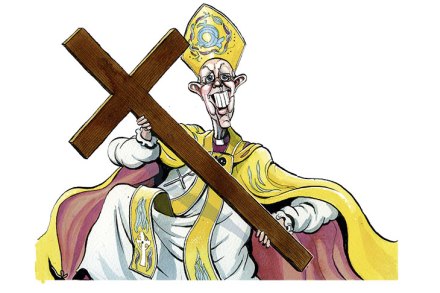
Justin Welby’s reformation

Justin Welby is working in Thomas Cranmer’s old study in Lambeth Palace, a room that looks as if it hasn’t changed at all since the Book of Common Prayer was written here almost six centuries ago. It feels like a mini-monastic retreat: there is a desk, a crucifix, several Bibles and not much else. The 105th Archbishop of Canterbury studies and prays here, deciding how best to lead a national church whose Sunday services are now attended (according to its own figures) by barely 1 per cent of England’s population. These are new times — and require new tactics. When he was enthroned six years ago, he was seen as just the man to provide the new tactics. He’s a convert, who was ordained in his thirties after a career as an oil company executive.

The Spectator’s sales are booming. Find out why

It’s been a busy weekend for subscriptions at The Spectator and already it’s our best January since our records began (in 1828). Today (Monday) we’ve already broken the one-day record. Which stands to reason. These are uncertain times, so you will want the best and sharpest analysis - all of which is up our website within an hour of any major news breaking. Given the extraordinary demand, we’re offering a month free access to The Spectator (with four issues of the magazine) absolutely free. Sign up here. You’ll find that The Spectator gives writers a lot of freedom – which can be discombobulating for some in the digital age. Now and again, we see a Twitterstorm. You’ll know the format: outrage over a sentence plucked from an article.

Live from the London Palladium: Jacob Rees-Mogg

Before Christmas, we at The Spectator arranged an evening with Jacob Rees-Mogg. The idea was that I’d interview him in front of our readers, and he’d take questions. After just one advert in the magazine, we sold out: a thousand tickets, gone. So, what to do? We may come to regret this, but we're doing something that, until a while ago, I’d never have expected to happen: booked the London Palladium, one of the biggest theatres in the West End, for an evening of political discussion with a backbench MP. This is all quite unusual, but we live in unusual times. And there’s a decent chance that we’ll sell out this one as well. So if you’re thinking of joining us, it might be an idea to book now (to do so, click here).

The three scenes from Ch4’s Brexit film that show why Remain lost

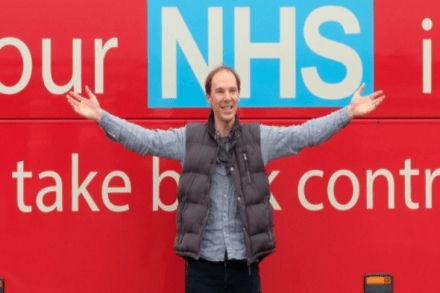
As soon as Channel 4 announced Benedict Cumberbatch had been cast as Dominic Cummings in its Brexit film, a hatchet job was expected. Some might still see it this way. I found it balanced, gripping, and at times funny, even moving. Plenty will be written about which parts were accurate and which not, but this was drama, not documentary. The story it tells is perhaps the most important story of our times: how politicians had become stuck in a late-90s time warp using a Clinton-era playbook, and thought Remain would easily win the referendum. But they lost because politics changes and the new energy was coming from forgotten voters who saw a chance to be counted. And Dominic Cummings, an outsider with contempt for the establishment, spotted this.

The three scenes from Ch4’s Brexit film that show why Remain lost | 7 January 2019

As soon as Channel 4 announced Benedict Cumberbatch had been cast as Dominic Cummings in its Brexit film, a hatchet job was expected. Some might still see it this way. I found it balanced, gripping, and at times funny, even moving. Plenty will be written about which parts were accurate and which not, but this was drama, not documentary. The story it tells is perhaps the most important story of our times: how politicians had become stuck in a late-90s time warp using a Clinton-era playbook, and thought Remain would easily win the referendum. But they lost because politics changes and the new energy was coming from forgotten voters who saw a chance to be counted. And Dominic Cummings, an outsider with contempt for the establishment, spotted this.

The Home Office must not be allowed to create a ‘hostile environment’ for EU nationals

A rather sinister tweet was sent out yesterday by the Home Office telling EU nationals that if they wanted to stay in Britain they’d best “apply” – not register – for the scheme if they "want to stay in the UK" after 31 December 2020. The tone was quite disgusting. And it raises the question as to whether, with the Home Secretary on holiday, his officials are about to launch into a “hostile environment” scheme in direct contradiction to his personal approach and UK government policy. Language matters. The phrase “hostile environment” summed up the horror of Home Office autopilot: a computer-says-no approach to immigration, with effects on human lives that will forever be a stain on the reputation of Tory government.

The Spectator’s 2018 Christmas appeal: give internships, not money

For our Christmas appeal, The Spectator is asking its readers not for money, but something more valuable: internship places for teenagers on the books of the Social Mobility Foundation. We made this appeal last year and the response was incredible. Places were offered in law firms, chemical plants and even the royal household. A few readers wrote in, too, to say how much they welcomed the chance not just to do something about Britain’s notorious social mobility problem but to find bright, young teenagers with no connections. The type of young people companies are looking for but are, by definition, hard to find. I would say that money can’t buy internships, but often it does and placements are sold to the highest bidder in charity auctions.

Why I think a no-deal Brexit is the best remaining option

There are about a dozen Cabinet members now who think the best strategy is to go full speed in preparing for a no-deal Brexit - if a better EU offer comes along, great, but if not then no-deal is better than the alternatives. In my Daily Telegraph column I say why I think they are probably right. It's not an option that anyone can, or ought to be, enthusiastic about. All of the disruption (and there would be plenty) would stem from political failure on both sides. But it would be better than the alternatives. We are (or were) very close to an agreed deal. If Brussels just granted the UK the ability to walk away from its proposed future Brexit talks in one piece (as Nato and even EU members can walk away) then May's deal would be approved by Parliament. Panic over.

The Javid manifesto

There’s an old joke that the most dangerous position in the Tory party is the favourite for the leadership. The frontrunner always ends up with a target on his back, which is why Sajid Javid should be feeling a little nervous right now. Theresa May survived a confidence vote but only after saying that she would resign before too long - so the hunt for a successor is on. He is Home Secretary, his fourth cabinet post. A poll of 700 Conservative councillors found they'd rather have him as leader than anyone else. He is also a former financier who made his name handling economic crises and is someone to whom MPs might conceivably turn if talks with Brussels fail and Britain looks set to crash out of the European Union.

Sam Gyimah’s resignation shows the limitations of Project Fear

Theresa May has sought to frame her deal as a battle between the forces of common sense and wreckers - either Brexiteers or Remainers. Sam Gyimah’s resignation complicates this narrative due to the type of politican he is. Not a firebreathing Eurosceptic allergic to the idea of compromise, not an Adonis-style hyperventilater who never recovered from losing the referendum. He’s a moderate, who tried his best to reconcile himself to Theresa May’s deal - and a young MP who, unlike her, will be around to deal with the consequences. She had hoped that the longer people had to reflect on her deal, the more people would see her deal as a sensible middle way.