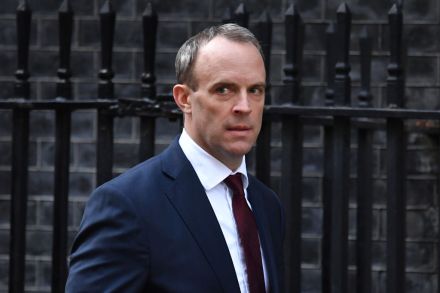
Is Boris Johnson a convert to the nanny state?
18 min listen

Fraser Nelson is a Times columnist and a former editor of The Spectator.
18 min listen
15 min listen
18 min listen
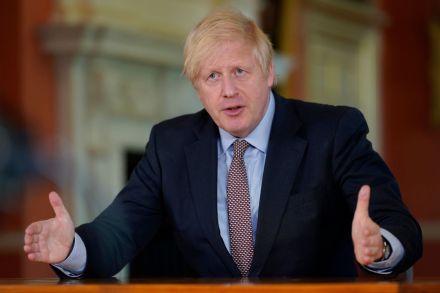
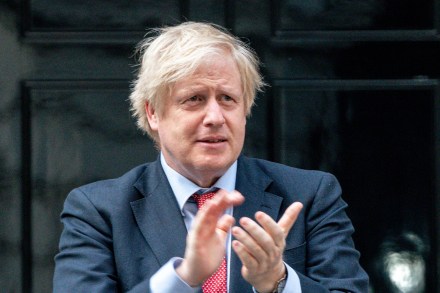
It's been six weeks since the Prime Minister first sat down to give the statement to the British public that began lockdown. Today, as James Forsyth first reported in The Spectator two weeks ago, Boris Johnson announced that the lockdown isn't over yet. From Wednesday onwards, the one form of exercise a day rule will be removed so that, social distancing provided, people will be able to spend time outside even when they are not exercising or shopping. But not much else has changed, and in his statement, Boris Johnson sets out why. The 'R' number simply isn't sufficiently low enough. A new metric for judging the risk to the population with five levels has been devised, and we are somewhere between levels 3 and 4 (with 5 being the risk at its peak).
17 min listen
What is Boris Johnson going to say in his speech on Sunday? Wales's first minister Mark Drakeford gave us a clue this morning when he announced that the Welsh lockdown will continue for at least another three weeks. Meanwhile, No. 10 has been trying to dampen speculation that the PM will announce substantial relaxations to the lockdown. Katy Balls, Fraser Nelson and John Connolly discuss the growing concern among Tory backbenchers over the government's handling of the exit strategy.
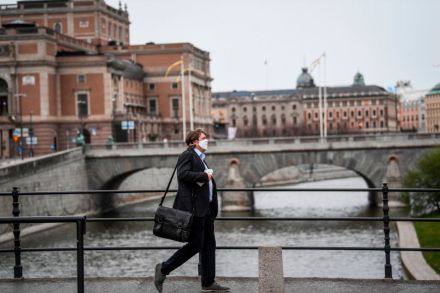
Sweden has been the world’s Covid-19 outlier, pursuing social distancing but rejecting mandatory lockdown. Schools, bars and restaurants are open – albeit with strong voluntary social distancing compliance and streets that often look almost as empty as Britain’s. Has this been enough? Sweden’s public health agency has now published a study of its R number, a metric which the UK is using to judge the success of the lockdown. The UK objective is to push R below one, by which it means it wants the number of new cases to fall. Last week, the UK’s R number was estimated at 0.8 (± 0.2 points), a figure described as an achievement of lockdown. But Sweden’s reading is 0.85, with a smaller error margin of ±0.02pts.
18 min listen
The Prime Minister will say today that 'the route back to full normality requires a vaccine'. But given that most estimates put this at a year or two away (if possible at all), does that mean we will be under lockdown until then?
17 min listen

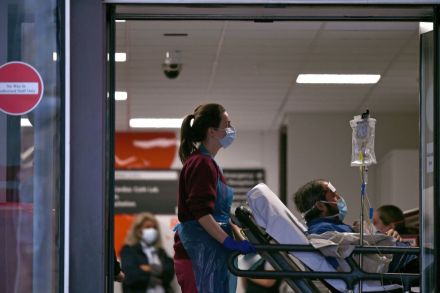
A pandemic will claim lives in two ways: directly, through those it infects, and indirectly as others who need healthcare either do not seek it or are denied it. Chris Whitty, the chief medical officer, has always made this argument - which is partly why, for so long, he was not seeking a lockdown. The focus, since then, has understandably been on Covid deaths. But about a third of the rise in excess death is not explained by Covid, and it's worth looking at in more detail. The chart showing weekly deaths will, by now, be pretty well-known.
15 min listen
The Prime Minister has kicked off his return to Downing Street with a speech to the nation, setting out the next steps in the battle against coronavirus.
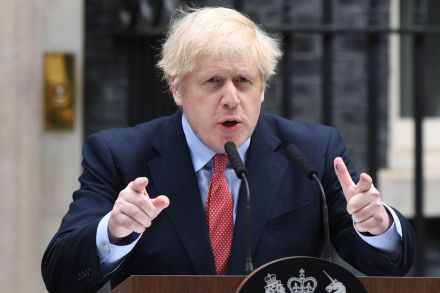
13 min listen
With James Turner, CEO of the Sutton Trust, and Fraser Nelson.Presented by Katy Balls.

40 min listen
This week, the Spectator commemorates its 10,000th edition. On the podcast, Cindy Yu speaks to David Butterfield and Fraser Nelson about the magazine's two centuries of history, finding out about how the publication started, discussing whether it is still the same now as it was originally intended, and hearing about what David calls its 'industrial drink culture'. Find out more about the history of the magazine with David's new book, 10,000 Not Out. Also on the podcast, Cindy speaks to James Forsyth and former Director of Comms at No 10, Craig Oliver. As James writes in the issue this week, when Boris Johnson comes back to work, he returns to a split Cabinet and a difficult decision - how and when to ease the lockdown?


Sometimes The Spectator goes to press very shortly after election results have been announced. In those instances, Morten Morland, our cover artist, draws versions to cover for any outcome. These have since been framed and hung at Old Queen Street in the lavatories. For our 10,000th issue, we're sharing some of them. The last UK general election was on a Thursday and our cover went Friday morning: we had three versions. Boris winning, his being held to a hung parliament and (pictured) Jeremy Corbyn winning, depicted as an unlikely saviour with Jo Swinson and Nicola Sturgeon (who were talking about putting him in power via coalition deals) depicted as the parents around the crib.
24 min listen
The NHS has been transformed to deal with the coronavirus threat, and it's thus far holding up, despite fears over capacity. But what has been the effect on the rest of the health service, and its usual patients? Fraser Nelson speaks to Alastair McLellan, Editor of the Health Service Journal.
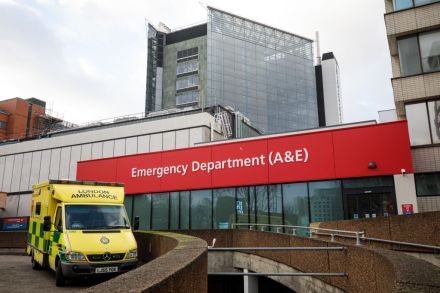
15 min listen
Behind the scenes, the Cabinet is split on whether or not to lift the lockdown. The hawks such as Rishi Sunak, Liz Truss, and Alok Sharma, are concerned about the economic and human costs of a sustained lockdown; the doves, such as Matt Hancock, worry that lifting the lockdown too soon risks a second wave. Given Boris's liberal instincts, the hawks hope that he will come down on their side. But will the Prime Minister disappoint?
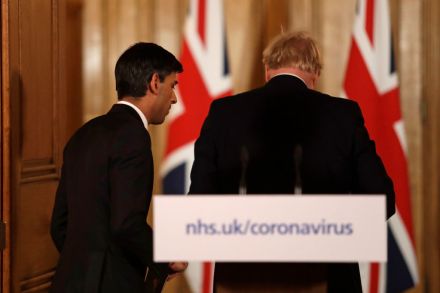
18 min listen
On the Andrew Marr Show today, Sir Jeremy Farrar, a senior scientific advisor on the government's scientific advisory group Sage, warned that the UK is on track to become one of the worst hit countries in Europe by coronavirus. So has the British government been too slow in its response?
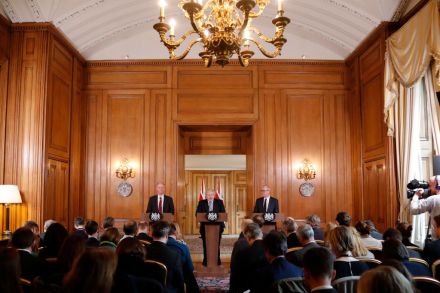
16 min listen
The government is trying to find out the human cost of the coronavirus lockdown, with one model seen by ministers estimating 150,000 'avoidable deaths'. So could the cure to the pandemic be worse than the disease itself?
While coronavirus ravages the world, a political battle is also being waged with China resisting suggestions that it’s to blame. I have just spoken about this with Mike Pompeo, the US Secretary of State, in a conference call with journalists from eight other European countries. I tried to gauge the mood in the White House towards China. Donald Trump has referred to the virus as the 'China Virus', a label vigorously resisted by Beijing. Some Chinese officials had even suggested that it might have American origins. Things seemed to have cooled after Trump’s recent call with Xi, but I asked Pompeo how worried he is about disinformation coming from China. The answer, it seemed, is very concerned indeed.

12 min listen
One of the biggest decisions in the government's approach to tackling coronavirus is when and how to lift the lockdown. But this is also one of the most divisive issues within Cabinet. With the Prime Minister not yet out of hospital, this will be one of the things that Dominic Raab can't decide in his stead.

12 min listen
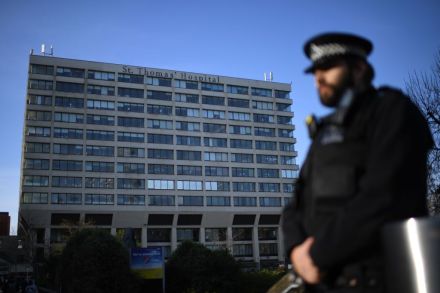
Boris Johnson was moved to intensive care on Monday night as his condition worsened. What do we know of the situation, and where does government go from here?
16 min listen
With Boris Johnson currently hospitalised with no sign of release any time soon, Foreign Secretary Dominic Raab is the 'designated survivor'. But at today's press conference, he admitted he hadn't spoken to Boris Johnson since Saturday. So who is running the government?