Fraser Nelson

Fraser Nelson

Fraser Nelson is a Times columnist and a former editor of The Spectator.

Will coronavirus overwhelm Manchester’s hospitals?

12 min listen

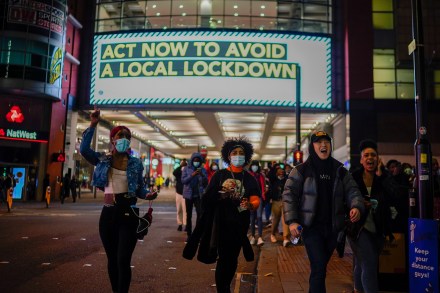
While the government has failed to strike a deal with Greater Manchester authorities to put the region into tier three, the Prime Minister is expected to announce an imposition of the restrictions in a press conference later today. But will coronavirus overwhelm Manchester's hospitals? Katy Balls speaks to Fraser Nelson and James Forsyth.

Is the NHS at risk of being overwhelmed by Covid?

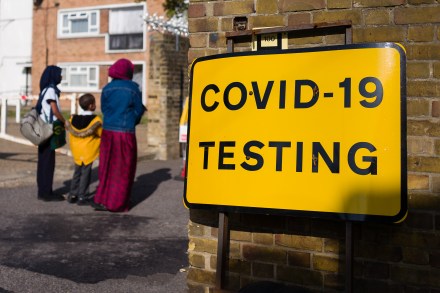
It was never the plan for the NHS to deal with a second wave of Covid. The official strategy, all through the summer, was for the £12 billion Test and Trace system to come along and zap new cases. Decisions for NHS investment this winter were made on the assumption that hospitals would be fine – because Dido Harding's new system would work - this is why the Treasury rejected funding for the rollout of NHS ‘Seacole Centres’ for Covid convalescents. But the expensive system failed and the NHS is back in the hot seat. Whether this is a second wave or (as the WHO has argued) smaller ripples after the end of the first wave, the question is how much of a risk it poses. No.

Are we heading for no-deal again?

11 min listen

Boris Johnson today told Brits to prepare for a no-deal Brexit, saying the European Union were 'not willing' to offer a Canada-style trade agreement. Is this really the end of the talks, or is progress being made behind the scenes? Katy Balls speaks to Fraser Nelson and James Forsyth.

Will Boris be dragged into a second lockdown?

16 min listen

A paper to be published by Sage scientists today claims that more than 7,000 lives could be saved if the government imposes a two-week 'circuit breaker'. With Keir Starmer today saying the policy would be in the 'national interest', Katy Balls speaks to Fraser Nelson and James Forsyth about whether Boris could put Britain into lockdown again.

Sales of The Spectator surge towards 100,000

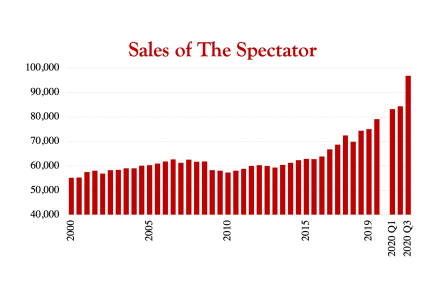
When The Spectator returned furlough money during lockdown, we set ourselves a new target. Rather than take the taxpayer subsidy, we decided to try to grow our way of this mess by hitting sales of 100,000. For a magazine that finished last year averaging 83,020 weekly sales, it was ambitious. But in times of crisis, we thought, there should be a bigger demand than ever for original, thought-provoking and wide-ranging comment and analysis. The few days after our furlough announcement brought the largest sales increase in our history and the momentum has continued. I’m delighted to announce that we are now close to hitting that target, with sales averaging 96,817 in Q3 of this year (July, August, September). We hope to break through 100,000 before Christmas.

What’s behind Sturgeon’s coronavirus crackdown?

12 min listen

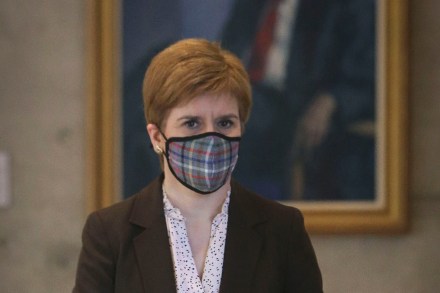
Nicola Sturgeon today announced that 3.4 million Scots will be placed under increased Covid restrictions, with bars and restaurants shutting across a central belt which includes Glasgow and Edinburgh. What's behind the crackdown, and could similar measures be announced in England? Katy Balls speaks to Fraser Nelson and James Forsyth.

Is there still hope for Unionism?

21 min listen

The SNP has had a torrid week as the inquiry into Alex Salmond's trial came to a head, topped off with MP Margaret Ferrier's Covid breach. But Nicola Sturgeon has not sustained damage - so is there still any hope for Unionism? Katy Balls talks to Fraser Nelson and Stephen Daisley, with a cameo appearance from James Forsyth.

Are local authorities fighting back against Covid restrictions?

13 min listen

Middlesborough's mayor, Andy Preston, today refused to accept the government's decision to place households in the town under a local lockdown. Accusing Westminster decision-makers of 'ignorance', the mayor said the new measures would 'kill viable jobs' and 'damage mental health'. Is this the start of regional authorities fighting back? Cindy Yu speaks to Fraser Nelson and James Forsyth.

Live at Alternative Conference

28 min listen

The Prime Minister was forced to apologise this afternoon after misstating new lockdown rules brought into force overnight in the North East. Is government incompetence costing it support? In a live episode of Coffee House Shots for The Spectator's Alternative Conference, Katy Balls speaks to Fraser Nelson, James Forsyth and James Johnson, co-founder of polling company JL Partners.

Andrew Neil to chair a new British television news network

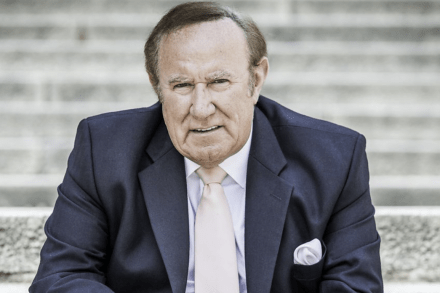
For some time now, there has been talk about a challenger television to rival Sky and the BBC. Now it’s official: GB News will launch early next year – under the chairmanship of Andrew Neil, who will be its flagship presenter. He is leaving the BBC and will join a new team of about a hundred journalists, in what is the most important television launch in Britain for a generation. GB News is raising between $55 million and $65 million  - and the lead investor is Discovery Inc, which is behind Discovery Channel and Science Channel. It's stumping up about a quarter of the cash. It looks as the fundraising will be oversubscribed, building a pretty big warchest to be spent on journalists.

The Spectator, the Co-op and cancel culture – a cautionary tale

Earlier this month, there was a bit of a fuss when the Co-op’s Twitter account said it would not be advertising in The Spectator due to our coverage of transgender issues. This is a pernicious trend in the media and The Spectator has a policy of refusing to deal with corporates who indulge in such cancel culture. It’s a firm principle of ours, but not one I expected to apply to the Co-op – which is one of the few outfits to have explicitly stated its commitment to diversity of opinion. I emailed the Co-op to ask what on earth had happened, and tried (unsuccessfully) to convey how serious this was. As I suspected they had been targeted by a troll farm called Stop Funding Hate which goes after corporates who advertise in publications with which they disagree.

Harold Evans: writer, editor, teacher

The death of Harold Evans last night will mean tomorrow’s newspapers will be rightly filled with tributes to a pioneering editor. But he left the Sunday Times 40 years ago and did a lot more with his life than his 16 years in the editor's chair. Specifically, he wrote about his trade, to share what he knew with others. The great lie about journalism (and about writing) is that you can’t learn it, that you’re either born with the gift or you’re not. That you either have the connections to get you into the industry, or you don’t.

What does Europe teach the UK about a Covid second wave?

21 min listen

As the UK seems to enter a second wave of coronavirus infections, Europe is again the guide on the trajectory of the virus and the best strategy to tackle it. But from Sweden to Belgium, which European country should we follow, and is anyone in government listening? Kate Andrews talks to Fraser Nelson and Swedish economist Fredrik Erixon.

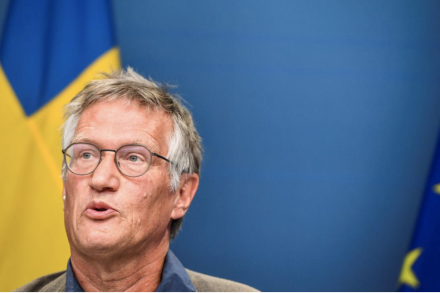
Why Boris Johnson needs to speak to Anders Tegnell

It’s not hard to understand Boris Johnson’s dilemma. He will hate the idea of a second lockdown, but his scientific advisers tell him it's the best way to fight a second wave. He’s not sure if their fears are exaggerated, but how is he to know? There are not very many expert voices around No10 to challenge the SAGE committee’s assumptions. One idea could be reaching out to Anders Tegnell, Sweden’s chief epidemiologist, who has just been interviewed by Andrew Neil for our new Spectator TV. The Swedes were able to identify the exaggerations in the Imperial College London assumptions first time around - and might be able to check the assumptions No10 is being given this time.

What’s the point of a two-week lockdown?

13 min listen

The government is reportedly considering the short-term reintroduction of nationwide social restrictions to halt the spread of coronavirus. Will a two-week 'circuit break' make a difference, or simply delay the inevitable? Katy Balls speaks to Fraser Nelson and James Forsyth.

Where’s Boris? A government at sea

37 min listen

From Covid to Brexit to even the culture wars, Boris's performance seems to have been lacklustre. Where is the effervescent leader he was promised to be? (00:45) Sweden's violent crime is spiking - and are politicians afraid to say why? (16:45) And on the other side of the world, why are the Japanese so much happier to wear masks? (27:55)With Spectator Editor Fraser Nelson; Director of Political Insight Stewart Jackson; journalist Paulina Neuding; the FT's Nordic Bureau Chief Richard Milne; Professor Jordan Sand; and Spectator Assistant Editor Lara Prendergast.Presented by Cindy Yu.

Where’s Boris?

At the end of last week, the Prime Minister invited Tory MPs to a massive conference call, a kind of digital fireside chat to lift their spirits. It was a disaster. First the MPs were astonished to learn that he wasn’t taking questions; then his connection failed halfway through — at which point the callers, who had been ‘muted’, became ‘unmuted’ and started talking loudly and all at once. One of them, Michael Fabricant, started singing ‘Rule Britannia’. When the call came to an end, the MPs were all left wondering the same thing. What’s happened to Boris? Where is the man we thought we voted for? Physically, Boris Johnson is still around.

Has the government’s Brexit plot backfired?

12 min listen

The government's Internal Market Bill won't reach the House of Lords until after the October EU Council, James Forsyth tells Katy Balls and Fraser Nelson on the podcast today. This means that the bill won't become law anytime soon, and provides the government leverage for a deal in that Council. So was this a ploy to get a better deal all along?

Can the government fix the testing meltdown?

14 min listen

Amid reports of local testing shortages, Matt Hancock told MPs today that the system is facing an 'enormous challenge' after a 'sharp rise' in demand. While the government has pledged to deliver 500,000 tests a day by the end of October, just 220,000 are currently being processed. Can the government fix the problem? Katy Balls speaks to Fraser Nelson and James Forsyth.

The economics of magic money: how real is the stock market surge?

31 min listen

Has the government found the magic money tree? It certainly seems like it when the furlough scheme and various other Covid measures have taken government debt to above £2 trillion. The crazy amount of spending has been kept afloat by quantitative easing, the Bank of England’s policy of choice since the financial crisis. Some have called this ‘money-printing’ and warned of a reckoning, yet none has come. So what does this new financial environment mean for investors, savers, and the less well off? Fraser Nelson talks to a panel of special guests in this podcast, sponsored by Charles Stanley.