Fraser Nelson

Fraser Nelson

Fraser Nelson is a Times columnist and a former editor of The Spectator.

Brown’s reign of error

Gordon Brown doesn’t boast anymore about his friendship with Alan Greenspan – and little wonder. The former Fed Chairman’s name is fast becoming mud in America, as they turn on the man they lionised for more than a decade. America is about nine months ahead of the UK in the credit crunch, and what fascinates me is not just their take on the current situation but how they are revising their view of the last decade. What Greenspan called “prosperity” they now see as a debt binge and he is being blamed for fuelling the housing bubble now bursting with such calamitous consequences. This should terrify Brown because the same charge will probably be applied to him.

We urgently need education reform, just ask the Coils if you doubt me

At 11am today, Radio Four looks at the Tory school reform plan – inspired, apparently, by our recent cover story on Cameron’s schools revolution. I’m on the panel of Talking Politics, Dennis Sewell is hosting and my fellow panellists are Michael White from the Guardian and Anne McElvoy from the Evening Standard. We pre-recorded on Thursday, and I found myself in the unusually position of being a cheerleader for a Tory proposal. Michael said my youthful idealism set alarm bells off with him. CoffeeHousers have made a similar point – I’m becoming “ever more messianic” said TGF UKIP. So why am I so het up?   Education stirs passions in politics.

More bad news for Brown

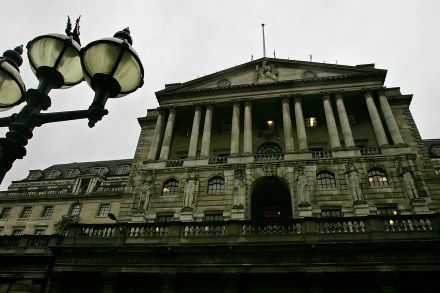
I'm in the Sky News green room, preparing for an 11.30pm paper review. The front pages coming in could be straight from Gordon Brown's nightmares.  "Consumer crunch" says The Times in huge type: mortgages up £150 a month, holidays up, petrol 107p a litre and bread up 25p in a year. Its the best way of doing a theme on all front pages: "Home loans to cost more despite rate cut by bank" as The Guardian puts it. Brown has for months been bleating on about how he is "able" to lower rates. The borrowed penny has dropped now. Bank of England rates falling does not mean mortgages falling. The more Brown tries to tell us everything is fine, the harder the public will turn against him. Brownies really could be the undoing of him.

Will borrowers be spared?

Don't breathe easily. Apart from the lucky minority with mortgages linked to Bank of England's base rates, today's rate cut won't alleviate the mortgage industry misery. The city expected this cut and many expected a larger one, so the all important Libor interbank lending rate remains sky high. As Anatole Kaletsky says today, the pain is just starting. For the mortgage brokers take on today's cut, read here. For more business news and analysis head over to Trading Floor.

Five steps to denial

Here is Gordon Brown’s five-step plan to escape blame for the credit crunch. 1) Blame America for the credit crunch, present Britain as the innocent victim of a global storm. 2) With a straight face, claim the economy is well-placed to withstand the crunch, even though the UK household debt/income ratio is the highest in the G7. 3) Present a fake narrative of the early 1990s, and compare it with equally fake stats about how good things are now. 4) Point to Bank of England rate cut as proof you are helping (even though, by making the BoE independent, no honest politician can claim credit/blame for its decisions). 5) Encourage journalists to blame lenders for “failure” to pass on rate cuts.

Out of touch | 8 April 2008

Is Gordon Brown on a mission to prove he is out of touch with what’s happening in the economy? First he tells us inflation is at a record low. Today he offers a £1,500 incentive for certain groups of people to enter a shared equity scheme to buy a house. But today the Halifax shows (Word doc) that the average house price fell by £4,870 last month alone - that's 2.5%, the worst drop since 1992. Who on a low income and in their right mind would buy into such a market? Events are overtaking Brown at a bewildering speed. For more on matters financial and economic, head over to Trading Floor.

An urgent need for change

We hear phrase "market failure" often enough - but (as Michael Prowse once said) government failure is far more common. The most egregious example is education – and David Cameron says in his press conference today with Michael Gove. Here are a few facts they highlight today in their document (read it here): 1) Some 140,000 pupils were suspended from secondary schools for violence or persistent disruption in 2005/06. Many end up in the cells - almost 100,000 under-18s are given custodial sentences. 2) Suspensions for physical assault (in primary schools) is about twelve times higher in deprived areas than in the least-deprived ones. The scourge of school violence is focused on the poorest neighbourhoods.

Watch the Tories sidling up to the Lib Dems: the foundations for a post-election pact

Now that Francis Maude is no longer lurking around Conservative headquarters dampening any high spirits he might encounter, bubbles of optimism are allowed to float with impunity around Team Cameron. For the last three weeks, the Tories have enjoyed double-digit opinion poll leads. The consensus in Westminster is that the Conservatives (or, more accurately, Boris Johnson) will capture London next month. Some bookmakers are now predicting an outright Conservative victory at the general election, whenever Gordon Brown deigns to hold it. The end of opposition appears, at last, to be in sight. In the absence of Mr Maude, the cure for Tory euphoria lies in the other dismal science: psephology.

Brown does cool. Fails

As it’s Friday, here’s some entertainment – the interview Gordon Brown gave to Radio One’s Newsbeat last year (newly added to YouTube). The interviewer, Rajini Vaidyanathan, specialises in leftfield questions and often gets hilarious results. After asking if he was a “grumpy, dour backstabber” (he was prepared for that one) she asked the then Chancellor where he would take her on a date. What film would they watch? United 93, he said. Not very romantic, she replied. He tried again: Hotel Rwanda. And his music? He likes “mod..moder…moder…modern groups” Here is a wee transcript (forward to 1’40): Rajini Vaidyanathan: Let’s pretend I’m on a political dinner date with you.

The credit dichotomy

If you haven't already, do read our latest cover story. The Telegraph follows it today, and Robert Winnett has a good analysis about the problems piling up on these voters Labour had come to rely on.  Some CoffeeHousers have asked: is it so surprising that the sub-prime crisis is concentrated in poorer areas? Of course not, but the Experian data which George Bridges provides for us shows in clear focus just how unevenly it’s distributed. For a while in the credit bubble, you could hardly turn on satellite television without seeing adverts saying “CCJs? Been refused credit before? No problem”. For the middle class, the credit bubble meant cheap lending rates and, ergo, extra spending money. But their asset-to-loan ratio broadly stayed within manageable levels.

Fixing it

The appalling story of how the Tory Party fixes its MEP candidates is told on ConservativeHome. This won’t be picked up on Fleet Street, as MEPs are such a boring business. But it raises serious questions about the Conservatives’ commitment to localism in running the country, if this is how they treat their own party members.

Where are Britain’s unexploded sub-prime bombs?

Of all the scary economic forecasts we've heard recently, perhaps the most chilling is the idea that we're nine months behind America on the credit crunch. What would it mean for us? And what political effect might it have? In tomorrow's magazine, George Bridges, former campaigns director for Cameron, does for us what politicians do for themselves at election time. He has asked Experian, the credit rating agency, to trawl its vast database and list sub-prime penetration by constituency. Of the 200 worst affected seats, all but 14 are held by Labour. It is, as George puts it, "a punch in the financial solar plexus for those Brown has purported to champion.

April Fools?

The hallmark of this ridiculous government is the difficulty one always has on 1 April trying to discern which newspaper stories are April Fools. The Guardian tickles our ribs in suggesting that Carla Bruni is being recruited in Brown's Government Of All the Talents as some kind of fashion tsar. Is that so much more incredible than the real-life attempt to recruit Fiona Phillips, the GMTV presenter, and offer her a peerage and place in the Department of Health? We had a story last week saying that only 34% people believe official statistics, according to official statistics. This is the only tool one has to spot the real stories. They go beyond the imagination of even the most contemptuous comedian. As Littlejohn says, you couldn’t make it up.

Trimming government

Was Alan Milburn on to something? When he proposed slashing Whitehall by a quarter in his interview with me for this week’s magazine – on the grounds that you can only take bureaucrats’ power away if you send them away – I imagined he was just stirring things to be mischievous. But now Matthew Taylor, former No10 policy chief, has proposed slashing the number of ministers by a quarter and, as Three Line Whip reports, No10 has slapped him down: “The Prime Minister is quite happy with the number of ministers he has got in his Government”.   I’m with Milburn and Taylor.

Decoding Lewis

It's always a pleasure when a Labour MP - panicked about impending defeat - ruminates about the future for their party strategy. It's rarer for a minister to do so - which is why Ivan Lewis’s piece in Progress (picked up in today’s News of the World) is worth reading. Here's my decoder: 1) "We must show we're on the side of ordinary people if Labour is to win again." (People don’t think we’re on their side, and we’re heading for defeat.) 2) "The New Labour coalition which has delivered our unprecedented three terms is now under severe strain." (Now Blair’s gone, the aspirational C1s and C2s are deserting us.

Was Jesus left wing?

I summarised Radio Four’s “Thought For The Day” as being “Jesus was left-wing too”. Yet a CoffeeHouser says Jesus was the first socialist and has challenged me to find one passage in the Bible suggesting otherwise. My offering is a passage from the First Book of Samuel (okay, pre-Jesus) where God warned him against big government. If the people want a King, the Almighty says, “He will take the tenth of your flocks, and you shall be his slaves.” A tenth! If only. I suppose if the Almighty suggested the state would consume 41% of national income (Excel, table26) then His followers would not have taken Him seriously. Anyway, I am sure (if my proposition is correct) that CoffeeHousers can do better than me.

Radio select

Do you ever wish you could listen to the best bits of Radio Four’s Today Programme while skipping the dross? Just as Sky Plus has transformed television by allowing you to fast forward the adverts, I have recently acquired a radio that does the same: Evoke-3 by Pure has this same “live pause” facility So just leave to record for half an hour, and then you can fast forward the irritating bits. No need to listen to “Jesus was left-wing too” Thought For The Day or environmentalism masquerading as journalism. And you get the same brilliant array of presenters (about to get less brilliant, sadly, when Carolyn Quinn leaves). It’s about £120 on eBay, and I’m sure you can get cheaper versions.

Cameron talks tax

David Cameron has an interview with tomorrow's FT where he comes up with lots of reasons why there will be no tax cuts. Here's the gist. 1. The tax burden is a not a useful yardstick to judge a government by. As he says: "Using the tax burden is never a good idea because you can reduce or increase the tax burden depending on what you do with government borrowing. It is not a good measure of our success.” 2. The “success” of a Conservative government should be judged not on tax cuts but on whether it delivered economic stability. 3. Public finances are in a “bad state” although that does “not necessarily” mean tax cuts would be impossible in the first term of a Conservative government.

Richards for the New Statesman?

Has Times Online just scooped Media Guardian on a media story? Sam Coates has a one-liner in Red Box saying that Steve Richards (one of CoffeeHouse’s favourite columnists from the other side) of the Independent and GMTV is off to replace John Kampfner as editor of the New Statesman. It’s our opposite number in the magazine world, but not really our rival: not many people stand in front of WH Smith going “eeny meeny miny moe” with our two titles. Most folk are inclined one way or the other. So I can sincerely wish Steve good luck - if the rumours are true.

Brownies galore at PMQs

My, what a lot of Brownies. I can only assume today’s PMQs was one of those weird things, where no two people can agree. Many of my colleagues in the press gallery thought it was dull. I was riveted. Cameron was taking Brown on home turf and having him resort to his litany of fake facts. Cameron was full of unscripted remarks, showing fluency and confidence. Sure, his gags weren’t roof-raisers, but it’s like Dr Johnson’s dog with improvised lines at PMQs. It’s not that improvisation is done well, it that it’s done at all. You could almost feel the two men’s contempt for each other. Brown dismissing Cameron as man who can’t do his arithmetic and Cameron responding that one duff PM plus one duff Chancellor equals one mammoth economic mess.