Fraser Nelson

Fraser Nelson

Fraser Nelson is a Times columnist and a former editor of The Spectator.

The gulf between public opinion and Westminster opinion on Europe

From our UK edition

It's Europe Day today, where the flag of the EU will be flown by 26 of its 27 member states. David Cameron is refusing to join in* — and rightly. Why celebrate an institution to which the British public is hostile? I've always found it strange that Euroscepticism is caricatured as a fringe, minority position when the polling evidence is so overwhelming. The European Commission anxiously monitors this, conducting identical polling in all member states — the largest poll in the world. The results are never publicised in Britain because they make clear the depth of public hostility. We have dug a few out, from the Eurobarometer data archives, and print them below.

The Tories’ intellectual dishonesty over the NHS

From our UK edition

Why should Cameron ditch the Lib Dems? Coalition has made his party more radical, more electorally successful – and the worst ideas in the Cabinet come from men with blue lapels. Take Andrew Lansley. His press release today would have been shocking had it come from a Lib Dem, and denounced as dangerous leftist nonsense that renders the government's overall message incoherent. Ed Balls' arguments against cuts have routinely been challenged in Coffee House. So we can hardly be expected to applaud when his arguments are plagiarised by a Tory. The hapless Lansley, whose needless and complex heath reform bill has stalled, is today trying to win back the initiative by attacking Balls and Miliband from the left.

Now Salmond can begin his battle for indepedence

From our UK edition

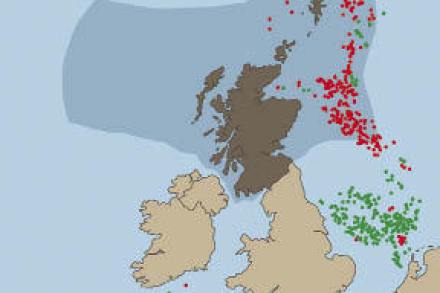
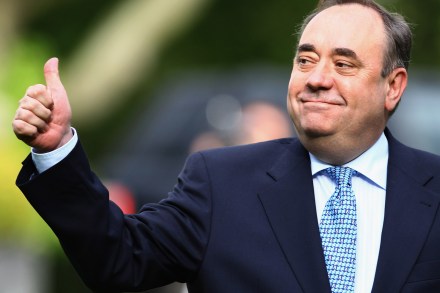
After all the carry-on with the new Scottish Parliament building, they may have to rebuild it yet again to accommodate Alex Salmond’s head. Never the smallest object, it will have swelled dangerously today – and (I hate to say it) deservedly. This was his victory. Only Smart Alec can pitch simultaneously to the left and the right, and get away with it. “The SNP has become the conservative party of Scotland,” a banker friend emails from Edinburgh. “Almost every Scot I know who is a conservative in London is now strongly pro-SNP”. Salmond talks about low tax and enterprise, etc, while vowing to keep state spending up at Soviet levels. My gran once summed up his debating technique. “If he knows the answer, he gloats.

Salmond’s victory

From our UK edition

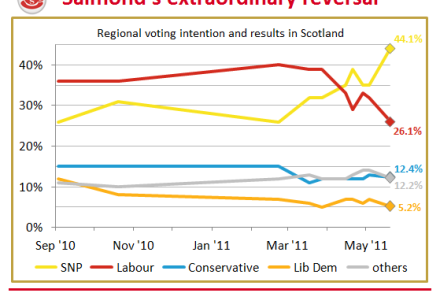
When I stood down as political editor of The Scotsman five years ago, the country looked to be forever Labour – even if they called in Salmond for some Puck-style light relief. Not so now. The SNP seems to have pulled off a minor revolution. Scotland wakes to find Labour MSPs being toppled from former strongholds like Glasgow Shettleston – the city itself is now almost all SNP. The BBC say Alex Salmond is heading for a majority, and in a Holyrood which was designed to make it almost impossible for any party so to do. Salmond is already pledging that his next mission is an independence referendum. The Lib Dems have taken what seems to be a punishment beating for coalition with the Tories in Westminster.

After bin Laden

From our UK edition

In this week’s Spectator, on sale today, we have an outstanding lineup on bin Laden’s death and its aftermath. I thought CoffeeHousers may be interested a preview of what’s in this week’s mag. Our lead feature is written by Christina Lamb of the Sunday Times: she has been writing about Pakistan for 24 years and is now based in Washington — so is ideally qualified to write about the changing relationship between the two countries. Bin Laden’s urban lair fits a trend, she says: other jihadis have been found in similar urban compounds near the Pakistan military. The country is playing a double game, she says.

John Humphrys makes the case for voting No to AV

From our UK edition

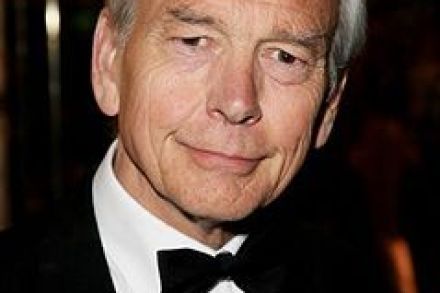
Is AV too complex? Ask John Humphrys, who unwittingly made the case against switching system today, in conversation with David Cameron on the Today programme. It became clear that Humphrys believed that everyone's second preference vote would be counted under AV — and Cameron pounced. Here's the transcript: DC: If you go to an AV system you start counting some people's votes more than once. And you end up, in the words of Churchill... JH: No you don't. It simply isn't true that you count votes more than once. DC: Yes, you count all the votes. You start eliminating candidates, and you count people's second preferences. JH: And I have a second preference, as well as you, as well as anyone else. So you don't count some people's votes more than others.

The world’s most wanted man becomes the world’s most wanted photograph

From our UK edition

Will we see pictures of the dead Bin Laden? When Saddam's sons were killed, pictures of their corpses were released by the American military, on the grounds that it was crucial for Iraqis to believe they were no more. This time, we're told that Bin Laden has already been buried at sea, the Saudis having refused to repatriate his body. The CIA say they have pictures from yesterday's assassination, and that the pictures of Bin Laden circulating right now (which have been picked up by some of the British media) are fake. It's unclear whether they intend to release the real pictures. Bin Laden's body was identified by some members of his family, and DNA tests were probably conducted to give Obama the proper degree of certainty.

How a degree of separation will strengthen the coalition

From our UK edition

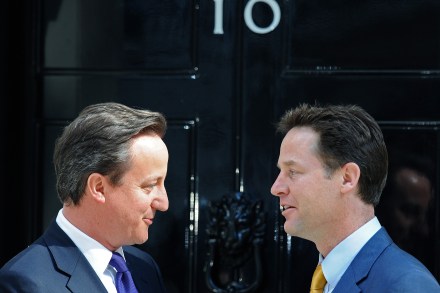
Almost a year ago, David Cameron and Nick Clegg staged their love-in at the Downing Street rose garden. As I say in the News of the World (£) today, this era is now at a close. When they come back from the 5 May elections, Clegg and Cameron have agreed that they cannot go on as before. An agreement has been struck for an amicable separation. Not divorce — the coalition will keep going. But Cameron and Clegg will put clear blue (and yellow) water between them and drop the pretence that they agree on everything. The coalition is about to enter its Phase Two.   Clegg’s analysis is that Phase One was, perhaps, too successful. His over-riding mission was to prove to a sceptical Britain that coalition governments can work and don’t lead to sclerosis.

A princely marriage

From our UK edition

There are some things that Britain does better than any country in the world, and we saw one of them today. Two particulars will have jumped out at the tens of millions watching the Royal Wedding from overseas: the sheer splendour of our monarchy, and the depth of its popular support. HD television made the beauty of today's ceremony all the more breathtaking. If this were a movie, it would win an Oscar for best cinematography. The shots from the roof of Westminster Abbey were jaw-dropping, the camera angles throughout were perfect. But no less awesome was the sight of the thousands thronging the streets, or watching in Hyde Park.

Why David Blanchflower has it wrong

From our UK edition

Gordon Brown may have gone, but advocates of his calamitous policies remain. David Blanchflower, the chief exponent of borrowing more, has a piece in The Guardian today which is worth examining. Written with his trademark chutzpah, it’s a very clear exposition of the Labour argument — along with its flaws. Here are some extracts, and my comments: "In his budget speech last month, Chancellor George Osborne suggested that he was hoping for 'an economy where the growth happens across the country and across all sectors. That is our ambition". Sadly, to judge by Wednesday's GDP figures, growth under this coalition remains just an ambition, a mere illusion." And why would that be? The GDP figures showed growth of 0.

Cameron’s new cuts narrative

From our UK edition

Aside from the "Calm down, dear" drama, there was something else worth noting from today's PMQs: David Cameron trying for a calmer debate on the deficit. He admitted that his government is not really being that much more aggressive than Gordon Brown would have been. They're cutting £8 for every £7 that Brown and Darling proposed for 2011-12, he said. It's a line that Nick Clegg road-tested in his speech to the IPPR last week, and it represents a new and welcome strategy. To date, the rhetorical differences have been stark. The Tories have said: we’re the big bold cutters, Labour are deficit deniers. Labour has replied: your cuts are too deep and too harsh, and the GDP figures prove it.

An appeal for reading suggestions

From our UK edition

Inspired by Cameron, I’m off on an EasyJet holiday to Spain this week — and would like to make an appeal to CoffeeHousers for Easter reading suggestions. When I did likewise before, the suggestions were good enough to keep me in reading material for the rest of the year (especially The Sixty Minute Father, which I now keep close-to-hand in case I ever believe what it says is The Fundamental Lie: that "a quieter time is coming"). Anyway, I'm on a political (and digital) detox session, and I've read almost every Scandi crime book going — so suggestions outside of that would be appreciated. As it stands, I've already packed Oliver Roy's Holy Ignorance.

The heir and the spare

From our UK edition

Nick Clegg has announced a review into male primogeniture, but subscribers to The Spectator will – as so often – be already well-briefed on the subject. We ran a piece on this in Thursday’s magazine by Rachel Ward, the firstborn of the younger brother of an earl. This in itself will be enough to earn her a ribbing from some commentators on this blog, I imagine, but her thoughts on the subject are fascinating.

The threat to Christianity

From our UK edition

Is secularism now a greater threat to Christianity than Islam? This is the title of our next Spectator debate, to be held at 29 June, and it grows more topical by the week. In tomorrow's Mail on Sunday, we learn that a Christian electrician could be sacked after displaying a crucifix in his white van. His name is Colin Atkinson, and he works for Wakefield and District Housing Association who ordered him to remove the cross because it may offend non-Christians. They picked the wrong guy. Mr Atkinson is a former soldier and thinks this is a battle worth fighting for. He tells the newspaper, “The treatment of Christians in this country is becoming diabolical. I am determined to stand up for my rights.

Andrew Sentance: interest rates must rise

From our UK edition

Inflation - the cost of living - is the number one issue in Britain today. It is under-discussed in the House of Commons as MPs have no say in it: the task of controlling inflation lies with Mervyn King and his nine-strong Monetary Policy Committee, and its members are rarely interviewed. Little wonder, as a lot of them should be feeling fairly sheepish. But not Andrew Sentance. He's been arguing for a rate rise for months, and doesn't have long left to serve on the MPC, so he can speak quite freely. Inflation has been above target almost all the time he's been on the MPC, he says, so in what way can it be described as a blip?

How the banks were framed

From our UK edition

A week that started with the Vickers review on banking has closed without another national explosion of banker-bashing. Thank God. Beating up on the banks has lasted almost three years now, and it’s blinding us to the real causes of the financial crisis. The banks are the perfect alibi: blaming them gets everyone off the hook. How, asks Gordon Brown, was a mere Prime Minister to know that banks were doing such fiendishly complicated things? How, asks George Osborne, was an opposition expected to detect what the government could not? How, asks Mervyn King, was the Bank of England governor supposed to know that these bankers had been so wicked? For all of them, the bankers have been the perfect scapegoat.

Blame the schools system, not Oxford

From our UK edition

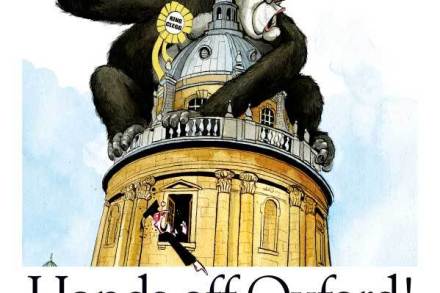
The most extraordinary row has broken out after the Prime Minister appeared to suggest that Oxford University has a racist admissions policy. He today said that, "I saw figures the other day that showed that only one black person went to Oxford last year. I think that is disgraceful." But the university has since hit back, pointing out that, "the figure quoted by the Prime Minister is incorrect and highly misleading — it only refers to UK undergraduates of black Caribbean origin for a single year of entry, when in fact that year Oxford admitted 41 UK undergraduates with black backgrounds.

Ferguson’s triumph

From our UK edition

The last episode of Niall Ferguson’s documentary series, Civilization, has just been aired — and for those who missed it, it’s time to buy the DVD box set. Or, better still, read the book. Ferguson is, for my money, one of the most compelling, readable and original historians writing today. His books stand out for throwaway lines which can change the way you think about what’s happening now. Understanding of history shapes our politics, whether we admit it or not. And myths about history also fuel political myths. How often do we hear it said that the Great Depression came about because government didn’t borrow in the hard times? A myth — but if enough people believe it, it can justify a government embarking on ruinous debt binge now.

Osborne needs to make his case for growth

From our UK edition

The Guardian have an odd story today. “Business chiefs who backed cuts now doubt UK growth,” runs the headline — suggesting that these sinners are now being confronted with the error of their own ideology. Who are the business chiefs? We have Archie Norman, the retired head of Asda, now part-time chairman of ITV. He “said the government's growth targets were too optimistic”. Set aside the fact that the government doesn’t make growth targets now, and has subcontracted that the Office for Budget Responsibility. Where is the connection between growth downgrades and cuts? In the imagination of The Guardian, I suspect.

Reinforcing the schools revolution

From our UK edition

There is extraordinary news today, suggesting that the Academies revolution is continuing apace. What was a trickle under the Labour years is turning into a flood. This time last year just 1 in 16 state secondaries had 'Academy' status: that is, operationally independent within the state sector. Now, it is 1 in 6. By Christmas, it should be 1 in 3. And by the next election, the majority of state secondary schools in Britain — about 1,600 — should have turned into Academies. Had Gove suggested such an expansion before the election, he would have been laughed at. The last time the Conservatives sought to give state schools independence was under Kenneth Baker, when just 50 availed themselves of such freedoms in three years. Now, freedom appears to be contagious.