Fraser Nelson

Fraser Nelson

Fraser Nelson is a Times columnist and a former editor of The Spectator.

What you pay for

From our UK edition

The gulf between state education and independent schools grows wider every year, says Fraser Nelson – just look at the results Why choose private education? For years — including five long ones spent at boarding school — I was convinced there was no good answer to this question. For my family, it was an obvious choice: my father had been dispatched to work in Cyprus, and his employer, the RAF, would pay for my boarding school fees if I wanted to stay in Scotland. Even a 13-year-old could see the logic. But once there, it baffled me: why would parents who did have the choice spend so much money? Now, as a parent, I know the answers all too well.

Enemies of the Crown

From our UK edition

Prince Andrew’s follies have shown the royal family who its friends are To enemies of the monarchy, Prince Andrew presents the perfect target. He has an array of vices: a love of the high life, a weakness for unsavoury company, a painfully short list of achievements and a talent for finding his way into newspapers. His foreign trips have a reputation for misadventure, with diplomats sent to smooth the feathers he ruffles. To have the reputation of being rude is hardly fatal for a royal: the Duke of Edinburgh has almost made a virtue of it. But when convicted sex offenders, Kazakh billionaires and teenage masseurs were thrown into the mix, the anti-monarchists knew it was the perfect time to pounce. It is a Labour MP, Chris Bryant, who has led the charge.

Our monetary policy needs sorting — and quick

From our UK edition

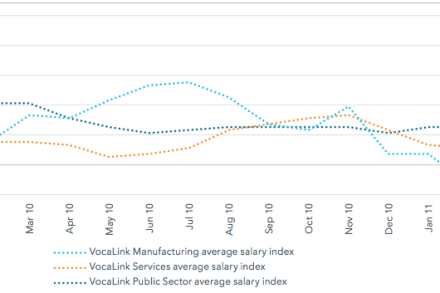
Today’s decision to leave base rates at an emergency 0.5 per cent — the lowest since the Bank of England was founded in 1694 — shows how Britain is running out of options. Not even Mervyn King would deny that Britain has an inflation problem: global prices may be up, but the UK seems to have been hit worse than almost any major economy, as I blogged yesterday. With food prices up by 6.3 per cent and CPI inflation by 4.1 per cent, what’s happening to prices? The below graph, again out today from a FTSE350 survey, suggests that pay is up by just 0.5 per cent in the private sector. And it’s even worse in the manufacturing sector.   You could argue that one should not compound this pain by jacking up debt interest.

Labour’s inflation pitch

From our UK edition

Curiouser and curiouser. We in Coffee House have been saying for some time now that – whatever Mervyn King thinks – Britain has the worst inflation in the Western World apart from Greece. An OECD report out today shows we’ve got it worse than most eastern countries too. Korea, Turkey and Estonia are the only eastern nations with higher inflation: But what strikes me most about today is that food prices are soaring here, to an extent far worse than the rest of the world. This is what voters notice most: putting food on the table is very expensive. As Micawber might put it: annual food price inflation 6.3 per cent, annual wage inflation 2.5 per cent, result: misery. And plenty of it.

Why Ed Miliband’s getting it right on the cost of living

From our UK edition

George Osborne's budget, due in two weeks' time, will be billed as an agenda for growth. This is welcome, but a year late. The burning agenda now is the cost of living. It was our cover story for The Spectator last October: why fret about mild 1 percent-a-year cuts, we asked, when the real killer will be prices? Petrol at 130p a litre is only the most visible sign of this. Other horrors confront shoppers in the supermarket - salmon fillets up by a third, potatoes and butter by a quarter. When Alan Duncan speculated that petrol could hit 200p, he was on the right scent. While the BBC is talking about cuts and Osborne is talking about jobs, Ed Miliband is now talking about the cost of living - even helping to launch a Commission on the Cost of Living.

Queen’s gambit

From our UK edition

Is Queen Rania of Jordan turning into the Marie Antoinette of Jordan? She is loved in the West, and seen as the very model of a modern Muslim monarch. But in Jordan she's viewed with increasing resentment. As the Arab Spring shakes thrones all over the Muslim world, Mary Ann Sieghart jetted off there to find out – and the results are in this week's magazine. I thought CoffeeHousers may appreciate a preview. We all Queen Rania's her background: a Palestinian beauty, hailed by Oprah as an "international fashion icon," who speaks up for women's rights. But, as Mary Ann writes: "If she mingled at parties with Hollywood stars, her people read about it online.

Corporatism is not an adequate foreign policy

From our UK edition

The events of the last two weeks have demonstrated that David Cameron needs a revamped foreign policy. This is not, in itself, a surprise. Foreign policies sketched out in opposition seldom survive contact with reality. Remember Bush saying he did “not do nation-building”? And who can forget the ignominious fate of Robin Cook’s “ethical foreign policy”? David Cameron sought to distinguish himself from the adventuring, idealistic Blair with what he regarded as a ‘pragmatic’ foreign policy – that is, promoting British exporters.

Inflation: how the nightmare will continue

From our UK edition

Each month, inflation numbers come out and seem to surprise everyone - except the chosen few who have access to the forecasts. So I thought we’d share with CoffeeHousers what is all too seldom put on public record: forecasts for inflation and base interest rates. It might be useful to anyone thinking of taking out a fixed rate mortgage deal. These forecasts are from Michael Saunders at CitiGroup, whom I regard as one of the best in the business. Pretty much every analyst thinks that interest rates will soon start a relentless march back to 5 per cent, so these 3 per cent fixed rate deals we’re getting right now will soon be a distant memory. He envisages CPI hitting 5 per cent, more than double its target, but not quite getting back to target.

A dodgy Damascene conversion

From our UK edition

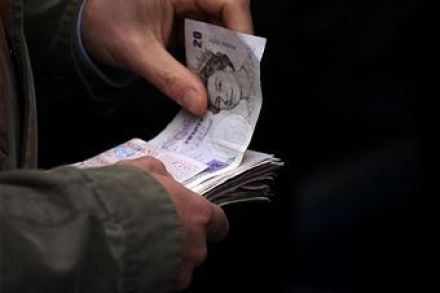
I’d like to add my tuppenceworth to the extraordinary story that Ed Howker has revealed in this week’s magazine about the funding of the ‘Yes to AV’ campaign. His investigation has exposed the Electoral Reform Society as little more than a front for a massive £21 million-a-year corporation called ERSL, which flogs voting equipment and services at a remarkable profit. Ed got hold of the accounts for ERSL, its money-spinning division, and a line jumped out at me: accounts. “A very healthy profit margin of 24 percent is nice to have,” it rather smugly said. You can say that again. That means, for every £4 it charges its clients (for the printing of ballot papers, sending of letters, etc) it made £1of profit.

The 50p tax in action

From our UK edition

Today, we have seen the 50p tax in action: reflected in January’s bumper tax receipts. A jubilant John Rentoul has just tweeted: “Where is Fraser Nelson when you need him? The 50p income tax rate has brought in a ton of money. He said it would probably reduce revenue.” He is absolutely right – but not for the reasons he thinks. Were John self-employed, he’d know that the tax paid last month was in respect of the 2009-10 tax year – when the top rate of tax was 40p. Of course, many of the super-rich are on PAYE – but that has happened since last April. It doesn't explain a January uplift. Today’s surprise tax haul can be partly explained by the fact that folk sucked forward their income, to avoid the 50p rate.

Osborne shouldn’t spend the extra money

From our UK edition

Lucky old George Osborne. The British economy is not in "meltdown," but churning out tax revenue like a fruit machine. Figures out from the ONS today show that the tax haul for January alone was £58.4 billion – pushing the public finances into a surplus £3.7 billion for that month (an almighty £3.6 billion more than expected). If this rate continues (no reason why not, seeing as we're all getting drunk on Mervyn King's underpriced debt again), then Citi estimates he will have £8 billion more to play with than expected in the current financial year. So what will he do? Osborne's decision will tell us plenty about what type of Chancellor he is.

Coffee House Exclusive: McBride joins CAFOD

From our UK edition

                  The penance of Damian McBride continues. After being ejected from No10, and disowned by his mentor Ed Balls, I can reveal that our antihero now has a new job – head of media at the Catholic overseas aid charity CAFOD. He will be doubtless be brilliantly effective at briefing against its enemies (in CAFOD's case, hunger and the devil). I imagine the pay is several leagues below what he'd get from cashing in on his notoriety and publishing a hit man's confessions. The weird thing is that McBride could have done so well, had he steered clear of Balls. He was a Treasury civil servant, specialising in VAT, before Balls trained him up in the art of character assassination.

Cameron’s back is against the wall – now he must fight

From our UK edition

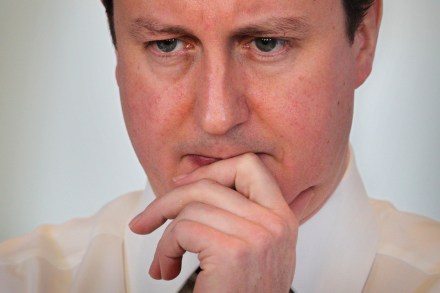
Given that David Cameron will have a tougher fight than perhaps any postwar Prime Minister other than Thatcher, it’s a bit unfortunate that his team doesn’t like political combat. Losing to Rachel Johnson over forests last week exposed major weaknesses, and sent a message to the government’s enemies: that these guys have pretty poor political combat skills. Now word is out, the cuts protests in Liverpool today will be the first in a series of challenges. Cameron, too, is stung by the avoidable mistakes of the last few weeks – and is reshaping No.10 to account for them. Some changes are great, some less so, others downright worrying. Here's my overview: 1. The Big Society. Cameron has started from first principles.

British jobs for whom?

From our UK edition

Immigration isn’t a topic much discussed nowadays, because it’s one where the Tories and Lib Dems don’t agree. That’s a shame. Because there’s an urgent problem to be fixed in the British labour market: that every time the economy grows, it sucks in immigrant workers. If this dysfunction continues, it will finish Cameron. The News of the World (where yours truly is a columnist (£)) has today looked at the latest figures for this. I reprint them for CoffeeHousers below. They show that during that disastrous fourth quarter in 2010, where the economy shrank by 0.5 percent, the number of employed British-born people fell by 110,000. As grim as you’d expect. But the number of foreign-born workers actually rose – by 7,000.

Calling all wonks

From our UK edition

With this government, it’s often hard to see the wood for the forests. But, overall, David Cameron is on the right side of a major battle over the very fundamentals of government: the size and role of state, as well as radical welfare and education reform. Politicians cannot be expected to fight this battle alone. This is about advocacy: making and winning arguments. The think tanks have a huge role to play – as Thatcher realised in the mid-1970s when she set up the Centre for Policy Studies. It’s looking for a new director right now, and as a board member I’m on the committee to find one. The CPS is on the side of the angels: advocating low tax, small governments, free minds and free markets.

The government has been weak over forests

From our UK edition

A very dangerous precedent has been established today over the forest fiasco. Caroline Spelman earlier gave the most extraordinary interview on Radio 4's PM. "We got it wrong," she said in the Commons. "How so?" asked Eddie Mair. She wouldn’t say. As he kept asking her, it became increasing clear that she didn’t think they got it wrong. They conducted the U-Turn because they were losing the media war.   Really? Is that all it takes to defeat Cameron's government? A decent two-week campaign with a couple of celebs? The forest policy was a good one: why do we need state-run timber farms? Not that this argument was ever aired. They government just sat mute, and was beaten up by Rachel Johnson and her brilliantly mischievous campaign.

Debunking the Antarctica myths

From our UK edition

In January 2009, Nature magazine ran the a cover story (pictured) conveying dramatic news about Antarctica: that most of it had warmed significantly over the last half-century. For years, the data from this frozen continent - with 90 percent of the world’s ice mass - had stubbornly refused to corroborate the global warming narrative. So the study, led by Eric Steig of the University of Washington, was treated as a bit of a scoop. It reverberated around the world. Gavin Schmidt, from the RealClimate blog, declared that Antarctica had silenced the sceptics. Mission, it seemed, was accomplished: Antarctica was no longer an embarrassment to the global warming narrative. He spoke too soon.

Why we need a rate rise

From our UK edition

Now that today’s inflation figures are up, to a predictable and predicted 4.0 percent on CPI and 5.2 percent on RPI, we can expect the usual response. Nothing from the government (even though the declining standard of living will eclipse cuts as the no.1 problem of 2011); plenty of shocked news stories; and, then, the round of commentators saying that Mervyn King should “hold his nerve,” and not increase the absurdly low base rates of 0.5 percent. Inflation is temporary, he says, and should be okay again this time next year (that’s what he said about the start of 2011). The Spectator does not have much company in finding fault with King and calling for a rate rise. So here’s my case: 1.

Defining the BS

From our UK edition

Of all the broadcast hours devoted to the Big Society, only one discussion has made me think that the whole thing is not completely doomed. Channel4’s 10 O’Clock Live show, staged last Thursday. It’s up on YouTube now (34 mins in). The comedian David Mitchell kicked off. “The clearest thing anyone can say about Big Society is that it’s the opposite of Big Government,” he said. Now, I haven’t heard anyone not paid by the Conservative Party say anything as clear (or as positive) about the BS. But, then again, neither Phillip Blond (who has built a think tank from the success of his Red Tory theme) nor Shaun Bailey (the unsuccessful Tory candidate in Hammersmith) is paid by the Tories.

Britain’s coming crunch with Europe

From our UK edition

It did not take David Cameron long to realise that there were three parties in his coalition. A few months into government, the Prime Minister worked out that only half of the policies he was enacting came from the shared agenda drawn up when the Tories and LibDems got together. The other half comes from the EU. Or, more specifically, the Civil Service machine, which is busy implementing various EU Directives, often passed many years ago. Cameron is trying to put the brakes on this process. As I say in my News of the World column, this has led to much frustration in Whitehall. And dismay: the Civil Service remembers how easily Labour waved through EU regulation and the piles of fat that Whitehall likes to pile on top of the EU regulation.