Fraser Nelson

Fraser Nelson

Fraser Nelson is a Times columnist and a former editor of The Spectator.

EXCLUSIVE: IDS on British jobs

From our UK edition

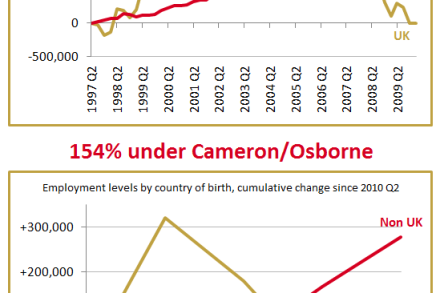
Last week, George Osborne boasted that Britain has the second-fastest job creation in the G7. In tomorrow's Spectator, we disclose official figures showing that 154 per cent of the employment increase can be accounted for by foreign-born workers. We on Coffee House have often questioned Labour's record: 99.9 per cent of the rise in employment was accounted for by foreign-born workers. The graphs for the Labour years and the coalition year are below:     The idea of 154 per cent is strange, so I will reproduce the raw figures below:     Now, no one outside Westminster expects the UK labour market to change the day a new government is elected, but what matters is that the problem still exists.

Inflation rises yet again

From our UK edition

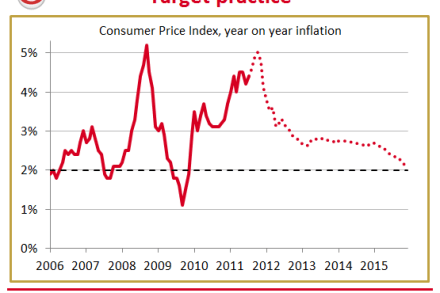
"Inflation destroys nations and societies as surely as invading nations do. Inflation is the parent of unemployment. It is the unseen robber of those who have saved. No policy which puts at risk the defeat of inflation - however great the short-term attraction - can be justified". That was Margaret Thatcher, speaking in 1980 when inflation was much higher but British politicians actually cared about it. You won't even hear the Governor of the Bank of England denounce today's figures: CPI at 4.4 per cent and the traditional measure of inflation, RPI, at 5.0 per cent. It is seen as just another statistic. The government has also chosen to announce that rail fares will be rising by 8 per cent. George Osborne is in charge of getting inflation right.

From the archives: the Bill Bratton edition

From our UK edition

As James Forsyth says today, No10 wants Bill Bratton to not just take charge of the Met but start a revolution in policing. A 'Stop Bratton' campaign has duly begun with Sir Hugh Orde, himself a candidate for the job, saying that he's not sure he wants to "learn about gangs from an area of America that has 400 of them.” But it’s worth noting, though, that Bratton has advised the British government before: in June 2006, at the beginning of John Reid’s tenure at the Home Office. Allister Heath (now editor of CityAM) went to meet him and reported back in The Spectator. His piece is below. ‘You can control crime’, Allister Heath, The Spectator, 24 June 2006 It was as if the two men had suddenly burst out of nowhere.

In response to CoffeeHousers | 13 August 2011

From our UK edition

CoffeeHousers have been generous in their response to my post on the need for an inquiry. I thought I’d respond in a post, rather than the comments. 1) Why rush to think that poverty is the problem? Rhoda Klapp raises this very good point. In 1996, American academics looked at various riots round the world since the war – I’d urge CoffeeHousers with a serious interest to read the report here). They found “little evidence that poverty in the community matters” – ie, there are much poorer cities, where people don’t riot. Other factors matter, mainly risk versus reward. I used this study as when writing the leader for this week’s magazine.

Why we need a post-riot inquiry

From our UK edition

Today we learnt that David Cameron is looking at the experience of Los Angeles’ recovery from the 1992 riots. The first lesson he should learn is the value of an inquiry, as Ed Miliband suggests. Californian policymakers held an inquiry, and it taught them plenty about the nature of modern poverty, urban unrest — and how to tackle it. Part of the reason that poverty in Britain is so ingrained is because so few politicians look at it in any detail, and even mentioning the word ‘underclass’ solicits squeals of disapproval. We remain aloof. As I argued in the magazine last month, we like harmless sketches about British poverty (Rab C Nesbitt, Little Britain etc.) but think that The Wire represents an American malaise that could never take root in Britain.

Twitter had the riot covered

From our UK edition

The revolution may not be televised, but the riot was tweeted pretty well last night. I was up at 3am (don't ask), and BBC News hadn't even interrupted their normal programming. But turning to Twitter, it was all there. Specifically, via two reporters: Paul Lewis from the Guardian and Ravi Somaiya from the New York Times. They behaved like instinctive reporters: picked up (on the news or, more likely, on Twitter) that a riot was underway, then went out and reported it. And they did so with pictures and observations that were well-judged and informative, never hysterical or futile. The presence of a TV camera, with the bright lights, have a certain effect on a crowd — so the blogger with his mobile is better able to take and broadcast truer images of what's going on.

America continues to unravel

From our UK edition

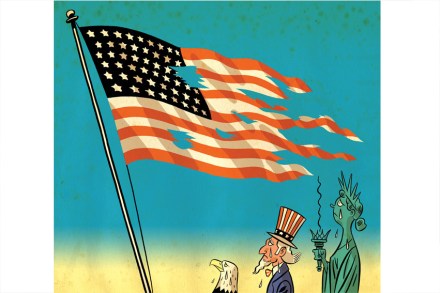
The humbling of America — the cover theme of this week’s Spectator — continues with S&P stripping Uncle Sam of his AAA credit rating. The debt downgrade, it says, “reflects our opinion that the fiscal consolidation plan that Congress and the administration recently agreed to falls short of what, in our view, would be necessary to stabilize the government’s medium-term debt dynamics.” In other words: Obama’s still addicted to debt, and it’s time to stop pretending that his government’s IOU notes rank among the safest investments on earth. Its analysis seems to be pretty much that made by Christopher Caldwell in his brilliant cover story.

Brown still hovers over the 50p tax debate

From our UK edition

A number of papers report today that George Osborne is minded to replace the 50p tax with Gordon Brown's original proposal: a 45p tax. How the ex-PM will be laughing. As he knows, even the 45p tax will lose money — that's why Labour didn't raise the top rate until the final four weeks of its 13 years. But the Tories haven't worked that out yet, and the Treasury is still working on the false assumptions he programmed into it. In short, the amount of money that either tax rate will raise depends on what's called the "taxable income elasticity," or TIE — a figure suggesting how responsive various taxpayers are to rate changes. It varies for income groups. The lower-paid are less able to move their labour or money around than the rich.

What you need to know ahead of tomorrow’s growth figures

From our UK edition

By now, George Osborne will have seen tomorrow's GDP figures and I suspect will be having a mid-afternoon whisky. Ed Balls will be warming up for his demands for a Plan B. "Austerity isn't working," he'll say — and will doubtless tour TV studios with his usual bunch of dodgy assumptions which he hopes broadcasters won't challenge. Here, as a counterweight, are a few facts and figures about austerity, how harsh it is, etc. — and the case for a Plan A+. 1. Where are the "deep, harsh" cuts? The Q2 GDP data will complete the economic picture for the first year of George Osborne's time in the Treasury. But where are the cuts? The Treasury produces figures for current spending each month. Here they are below, in cash terms and adjusted for CPI inflation.

Save Gobby

From our UK edition

Yesterday's appalling breach of House of Commons security has made the authorities furious – at the person who helped to bring the pictures to the world. He is Paul 'Gobby' Lambert, the BBC fixer who owns the voice you normally hear shouting questions at politicians as they prowl about Westminster. Gobby is known and loved by the best MPs, but is seen as an irritant by those who would prefer more deferential treatment. He is the kind of cameraman who sees a story and goes for it: the recent pictures of the Chief of the Defence Staff on targeting Gaddafi was a Gobby special, as were Cherie Blair's comments on Brown, as was the pie-man yesterday.

Crouching Tiger, Slapping Wendi

From our UK edition

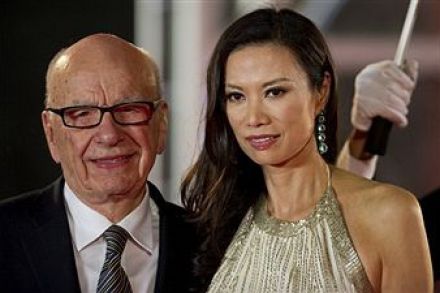
All hail, Wendi Deng. It took her a split second to attack the guy hurling a pie at Rupert Murdoch, slapping so hard that the sound was picked up by the cameras. According to the BBC's Nick Robinson she then started shouting "I got him, I got him." First tiger mums, now tiger wives. "Mr Murdoch, your wife has a good left hook," said Tom Watson afterwards. Better than his, at any rate. For all the hype, it was a strikingly uninformative session. About ten minutes into this Trial of Rupert Murdoch, it was pretty clear the committee was not going to get a "you can't handle the truth!" moment out the Dirty Digger.

Shaking our faith in money

From our UK edition

Addictive though the hacking inquiry is, the average Brit is probably more worried about the slow decimation of his spending power at a time when salaries are flat. Against this backdrop, the price of gold today has broken $1,600 an ounce.  With inflation and the Fed's printing presses whirring, faith in paper money is taking a knock – and this is reflected in the price of gold.  Fears of a debt crisis in Europe add to it too, with a disaster scenario all too easy to imagine. Over the last decade, the West blew a bubble fuelled by low interest rates and debt-financed consumption. The bubble burst. Solution: even lower interest rates, and even more debt-financed consumption – but this time, with added inflation.

A blow to an already struggling industry

From our UK edition

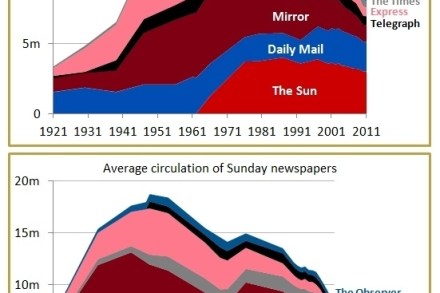
  British newspapers are haemorrhaging readers and influence, and next Sunday we will see just how much this process has accelerated. That day's newspapers will — I'm sure — all be making some kind of pitch to orphaned News of the World readers. When Today closed, there was a similar scramble ("Welcome to your place in The Sun," screamed its main rival), but this time they could be in for a shock. American experience suggests that when newspapers close, their readers just disappear — they liked their former paper, saw it as an old friend and didn't feel compelled to find a new one. Preliminary research, picked up by my old colleague Will Heaven, suggests that two-thirds of the News of the World's readers just won't pick up another newspaper again.

End of the World

From our UK edition

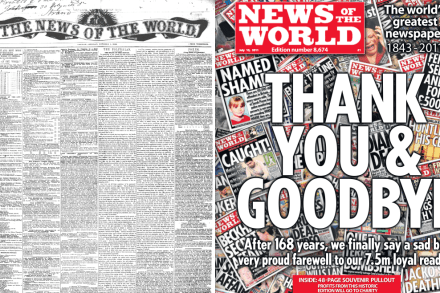
The last edition of the News of the World is now out, saying "Thank You & Goodbye". The first-ever issue of the newspaper (above) is on my wall at home and I'm struck by the consistency. Its mission statement says it aims "to give to the poorer classes of society a paper that would suit their means, and to the middle — as well as the rich — a journal from which due to its immense circulation would demand their attention." And so it was to prove. The News of the World is, even now, the best-selling Sunday newspaper on the planet. Only those who don't read it regard it as a scandal sheet.

Pushing back at Brussels

From our UK edition

The most striking thing about David Cameron is how well rested he looks. You wouldn’t guess that he was the father of a ten-month-old baby, let alone Prime Minister. He has no bags under his eyes — unlike his staff. He also seems relaxed. He jovially beckons us in to his Downing Street office and then flops down into one of the two high-backed chairs and urges one of us to take the other: ‘the Chancellor’s chair’, he calls it, with a chuckle. The last time we interviewed him, during the general election campaign, he was a different man, tired and tetchy. High office evidently suits him better than scrambling for votes. He seems to relish the variety of items on his agenda.

A toast to the first Spectator (and to CoffeeHousers)

From our UK edition

It’s The Spectator’s summer party today, and in a rather important year. It was exactly 300 years ago that Joseph Addison & Richard Steele first published the earliest incarnation The Spectator. This blog is named for the coffee houses that had sprung up all over London at that time — the original destinations for The Spectator. It had gossip, opinion, character assassinations, literary review (it hyped up Paradise Lost), theatre and the arts. It was a huge success, without about one in ten Londoners reading it at the time. Were Addison alive now, there are a few characteristics he’d recognise in this virtual coffee house. He wrote using a pseudonym, just as most CoffeeHousers use a nom-de-blog.

Web exclusive: Extended interview with David Cameron

From our UK edition

We interview David Cameron for today's issue of The Spectator. Here's an extended version of that interview for CoffeeHousers: The most striking thing about David Cameron is how well rested he looks. You wouldn’t guess that he was the father of a ten-month-old baby, let alone Prime Minister. He has no bags under his eyes — unlike his staff. He also seems relaxed. He jovially beckons us in to his Downing Street office and then flops down into one of the two high-backed chairs and urges one of us to take the other: ‘the Chancellor’s chair’, he calls it, with a chuckle. The last time we interviewed him, during the general election campaign, he was a different man, tired and tetchy.

Barroso’s EU confidence trick

From our UK edition

Say what you like about Jose Manuel Barroso, he's a wily old card. The European Commission president makes public demands for Britain to surrender its rebate in European Union membership fees. The government refuses. Then, hey presto! Headlines suggesting that Brussels has been seen off. "Brussels bribe to buy off UK rebate," says the Daily Mail. "Britain's rebate is fully justified and we are not going to give way on it," a Treasury spokesman tells the media. The quotation is true, Barroso did indeed offer £23 billion to tweak the UK funding formula, and a short-termist like Gordon Brown might have accepted. But the battle for Britain's EU spending was lost under Blair. In 2001-02, Britain was a net beneficiary of EU to the tune of £900 million.

Osborne’s voteless recovery?

From our UK edition

This is a strange old recovery. The News of the World has an interesting ICM poll today, showing that 66 per cent think the economy is getting worse. It’s not: GDP is growing and we have the second-highest job creation in the G7. Rather than losing jobs to China, we’re flogging Coventry-made Jaguars to Beijing billionaires (one of the random gems uncovered by our new Twitter feed @LocalInterest). So why is everyone so glum? And why do 52 per cent think that David Cameron and George Osborne are doing “a bad job” with the economy?   In theory, Osborne’s recovery is coming on well. His "cuts" agenda is simply a souped-up version of Alistair Darling’s, but Osborne cuts about 1 per cent a year faster.

Strike and counterstrike

From our UK edition

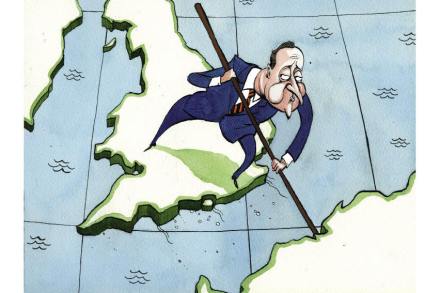
For years, David Cameron has known that he would have to fight the trade unions and that the outcome of the battle would define his premiership. But neither side expected to fight so soon. The unions had intended to wait until the cuts would be at their deepest and the government was at its least popular. But the Prime Minister is moving too quickly, and making faster progress than his predecessors. School reform now looks unstoppable. Pension reform is next. The union bosses, Christine Blower, Mark Serwotka and Dave Prentis, are not ready for a long conflict — but they believe they have little option other than to strike now. In public, they make blood-curdling threats about the greatest disruption since the General Strike.