Fraser Nelson

Fraser Nelson

Fraser Nelson is a Times columnist and a former editor of The Spectator.

How the Germans saved the Telegraph

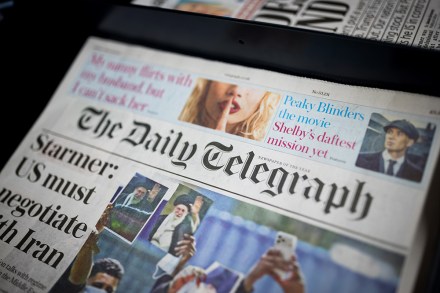
I spent my last year as editor of this magazine trapped on an auction block, hunting for a new proprietor. It was agony. There was a list of about 20 bidders for both The Spectator and the Daily Telegraph: the good, the bad and the really quite ugly. The ugliest of all – the government of the United Arab Emirates – ended up cutting a backroom deal for both titles. But parliament intervened and this magazine escaped, snapped up by a suitor who has been as good as his word on investment. The Telegraph, meanwhile, was left standing at the altar. Last week, after nearly three years of waiting, she was finally swept up by her own Mr Darcy – or, rather, Döpfner. The Berlin-based media giant Axel Springer has paid a handsome £575 million in cash for the newspaper.

2024: Cindy Yu, Michael Simmons, Angus Colwell, Igor Toronyi-Lalic, Mary Wakefield, Fraser Nelson and Michael Gove

38 min listen

On this week’s 2024 Out Loud: Cindy Yu examined Chinese work ethic (1:13); Michael Simmons declared his love of the doner kebab (6:28); Angus Colwell reported from Israel in July (9:27); Igor Toronyi-Lalic explained the inspiration behind the cinema of Marguerite Duras (14:41); Mary Wakefield analysed the disturbing truth of the Pelicot case (20:38); Fraser Nelson signed off as editor of The Spectator (27:01); and Michael Gove revealed his thoughts as he sat down at the editor’s desk (33:15).  Produced and presented by Patrick Gibbons.

Best of 2024 with Dominic Sandbrook, Mary Beard and Harriet Harman

75 min listen

This week is a special episode of the podcast where we are looking back on some of our favourite pieces from the magazine over the past year and revisiting some of the conversations we had around them. First up: the Starmer supremacyLet’s start with undoubtedly the biggest news of the year: Starmer’s supermajority and the first Labour government in 14 years. In April, we spoke to Katy Balls and Harriet Harman about just what a supermajority could mean for Keir Starmer. Listening back, it’s an incredibly interesting discussion to revisit. The aim of Katy’s piece was to communicate the internal problems that could arise from such a sweeping victory and, crucially, how Starmer might manage a historic cohort of backbenchers.

The sickness benefit trap

Now that I’m no longer editor of this magazine, I can admit that I spent the election night of 1997 cheering on Tony Blair. Reader, it gets worse. I didn’t particularly want a Labour government but I badly wanted the devolution they had promised. A parliament in Edinburgh would, I thought, consider why the East End of Glasgow – home to many of my extended family – had some of the worst deprivation in Europe. Drugs deaths, unemployment, crime, all ignored by Westminster, would surely be remedied by the new politicians in Holyrood. There are lots of organisations to help people sign on, but those who want to get back to work are on their own How naive that was. Scotland’s drug-death toll has since risen fivefold and the welfare situation has worsened.

Fraser Nelson, Cindy Yu, Mary Wakefield, Anthony Sattin, and Toby Young

31 min listen

On this week’s Spectator Out Loud: Fraser Nelson signs off for the last time (1:30); Cindy Yu explores growing hostility in China to the Japanese (7:44); Mary Wakefield examines the dark truth behind the Pelicot case in France (13:32); Anthony Sattin reviews Daybreak in Gaza: Stories of Palestinian Lives and Cultures (19:54); and Toby Young reveals the truth behind a coincidental dinner with Fraser Nelson and new Spectator editor Michael Gove (25:40).  Produced and presented by Patrick Gibbons.

Israel’s revenge, farewell Fraser & the demise of invitations

37 min listen

This week: Israel’s revenge and Iran’s humiliation. As the anniversary of the October 7th attacks by Hamas approaches, the crisis in the Middle East has only widened. Israel has sent troops into southern Lebanon and there have been attempted missile strikes from the Houthi rebels in Yemen and from Iran. Is there any way the situation can de-escalate? And how could Israel respond to Iran? Former BBC foreign correspondent Paul Wood and defence and security research Dr Limor Simhony join the podcast (1:03). Next: it’s the end of an era for The Spectator. This issue is Fraser Nelson’s last as he hands over the reins to Michael Gove. Having spent 15 years as editor, with 784  issues to his name, what are his reflections on his time here at 22 Old Queen Street?

Should we be optimistic about the next ten years?

30 min listen

Loyal listeners will know that as well as our concise daily political analysis, Coffee House Shots often delves deeper into the issues of the day. We don’t shy away from fierce debates on controversial issues. The most legendary of these debates have been between our former editor Fraser Nelson and economics editor Kate Andrews. As a parting gift to listeners before Fraser passes on the editor’s pen, Cindy Yu hosts a final contest between these two worthy debaters on whether we should be optimistic about the next ten years. Has there ever been a better time to be alive, as Fraser argues? Or should we be concerned about the growing threat to civil liberties, volatile markets and foreign policies, the failure to grapple with migration and the looming birth rate crisis?

Reflections on 15 years in the editor’s chair

In the late summer of 2009, Andrew Neil invited me to his villa in the Côte d’Azur but didn’t say why. I was mystified. I was then political editor of The Spectator and in eight years of working closely with Andrew, the then chairman, he’d never hinted that he saw me as an editor. I certainly didn’t see myself as one. I was just a writer who knew nothing about how magazines were made. I’d never written a headline and didn’t even have a desk in the office. I wouldn’t know where to start. We put a notice on our fridge asking staff to make sure that two bottles of Pol Roger were chilling at all times But when Andrew offered me the job, I heard myself saying yes. Did I think I was good enough? Not even close.

Coffee House Shots live: the struggle for the future of conservatism

39 min listen

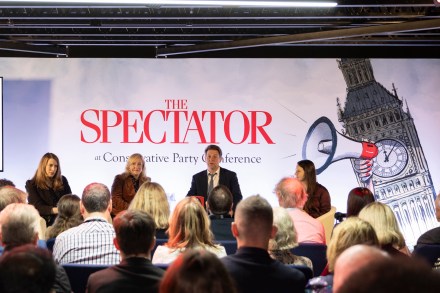
The mood at Conservative conference has been surprisingly jubilant considering the turmoil that the party finds itself in. Labour's misfortunes may have contributed to this, but there seems to be a genuine optimism around the four candidates vying for the leadership of the party. What's the latest? Have Kemi Badenoch's comments on maternity pay impacted her position with the members?  Also on the podcast, this evening will see the Vance vs Walz vice presidential debate. They go head to head in an increasingly tight election. What does Trump vs Harris say about the state of American politics? And can any of these candidates – on either side of the pond – expect to be fighting future elections for their parties?

Did Kemi Badenoch really call maternity pay ‘excessive’?

15 min listen

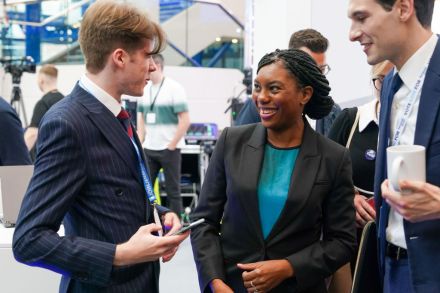
The final four leadership candidates have arrived at Conservative Party Conference to make their final pitches. However, day one and Kemi Badenoch has found herself in an online row over comments made about maternity pay. Katy Balls, Kate Andrews and Fraser Nelson take a look at what was really said, and whether there is a clear frontrunner to lead the Tory party at conference.

Is Labour’s 2030 clean power target achievable? Live at Labour conference

30 min listen

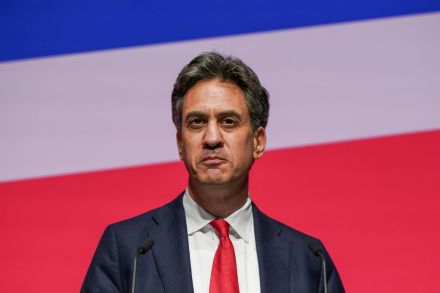
Decarbonising power by 2030 is one of the flagship policies for Keir Starmer’s government. Whether this is achievable and how we go about the green transition will impact ten of thousands of jobs and everybody's energy bills. So just how do they plan on reaching this ambitious target? Gary Smith, general secretary of the GMB, argues that there is a fundamental dishonesty about the route to net zero, with communities being hollowed out and the working class left behind. All of this has resulted in fertile ground for the far right.The Spectator's editor Fraser Nelson sat down with Gary Smith at Labour conference last week, to give an alternative take on the net zero debate.

Michael Gove is the new editor of The Spectator

13 min listen

We've had quite the day at 22 Old Queen Street.  All Westminster politics seem small in comparison to the news that Fraser Nelson will step down as editor of this publication, with Michael Gove taking charge on October 8th. Hear Fraser's thoughts on what this new chapter will mean for The Spectator, on the podcast.  Elsewhere, Labour conference has wrapped up in Liverpool and this has coincided with an update on growth from the OECD. Having predicted in May that the economy would grow by 0.4 per cent this year, the policy organisation now expects the economy to grow by 1.1 per cent. This lifts the UK from the bottom of the pack of advanced economies and ties it in second place – alongside France and Canada – for the fastest growth in the G7. Britain is growing.

Michael Gove is the new editor of The Spectator

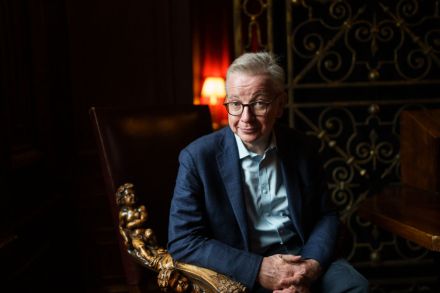
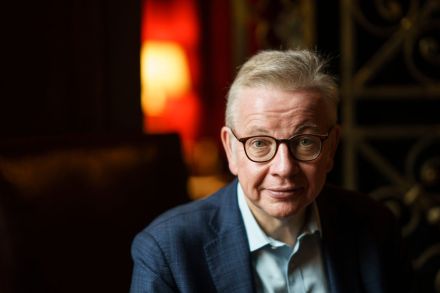
It’s a time of new beginnings here at The Spectator after Sir Paul Marshall’s historic £100 million bid for the magazine. As we plan for further growth, I’m delighted to announce two major appointments: Charles Moore is to become our new chairman and Michael Gove is to succeed me as editor. There’s never a good time to leave a job like mine but, after 15 years and a new owner with big ambitions, there is an obvious time. In many ways, Michael is the clear successor. He’s a first-class journalist who took a detour into politics and not (as so often happens) the other way around. He was my news editor when I was a young reporter at the Times and even then he was writing Spectator cover stories and being tipped as a future editor.

Do the Starmers need a personal shopper?

12 min listen

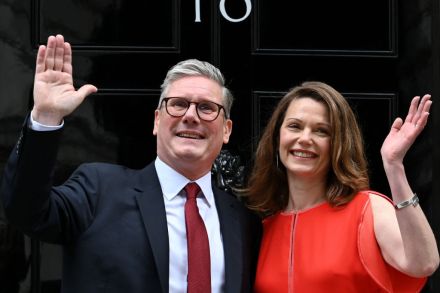
This weekend we had another twist in the story involving Labour donor Lord Alli, who was caught up in a 'cash for access' scandal a couple of weeks back. It now seems he has forked out the thick end of 20k on clothes and glasses for Keir Starmer and his wife. Foreign sec David Lammy was on the Sunday media round and gave a less than convincing defence of the prime minister and Lady Victoria. Has the PM broken the rules already?  Also today, Keir Starmer is in Rome meeting Italian prime minister Giorgia Meloni today where they will be discussing boat crossings and Italy's deal with Albania. It’s a timely first engagement for Starmer’s new border security commander Martin Hewitt. Will he succeed in 'smashing the gangs'?  Oscar Edmondson speaks to Katy Balls and Fraser Nelson.

Fraser Nelson, David Whitehouse, Imogen Yates, Sean McGlynn and Ruari Clark

31 min listen

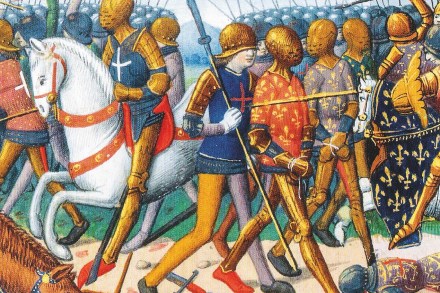
On this week’s Spectator Out Loud: Fraser Nelson reflects on a historic week for The Spectator (1:15); David Whitehouse examines the toughest problem in mathematics (6:33); Imogen Yates reports on the booming health tech industry (13:54); Sean McGlynn reviews Dan Jones’s book Henry V: the astonishing rise of England’s greatest warrior king (20:24); and Ruari Clark provides his notes on rollies (26:18).  Produced and presented by Patrick Gibbons.

Trump’s debate woes, how to catch a paedo & the politics of the hotel breakfast buffet

39 min listen

This week:  The US election is back on a knife-edge. Republicans hoped this week’s debate would expose Kamala Harris’s weaknesses. ‘They forgot that, when it comes to one-on-one intellectual sparring matches with candidates who aren’t senile, Donald Trump is very bad indeed,’ writes Freddy Gray. ‘A skilled politician would have been able to unpick Harris’s act, but Trump could not.’ Harris is enigmatic to the point of absurdity, but Trump failed to pin her down and may well have squandered his narrow lead. To discuss further, Freddy joined the podcast alongside Amber Duke, Washington editor at Spectator World.

A new chapter for The Spectator

For the past year or so, I’ve been involved in selling The Spectator as well as editing it. A long auction involving moguls, sheikhs and an act of parliament has finally produced a winner. The financier Sir Paul Marshall has become the 14th proprietor of this magazine. His faith in our prospects is reflected in the size of the deal: £100 million, five times what we were valued at when we split from the Daily Telegraph in 2005. We had 22 interested parties, some of the greatest names in British and European publishing, all bidding each other up. The result stands as a spectacular vindication of what my colleagues have achieved. I think it’s safe to say that the death of political and cultural magazines has been somewhat exaggerated.

The Spectator’s new owner – and new era

After a year-long auction drama that involved sheikhs and moguls and even ended up changing the law, The Spectator has a new owner. The financier Sir Paul Marshall is to become the magazine’s 14th proprietor. Had The Spectator been sold to the Emirati government, as was on the cards, we would have faced obvious questions about our operational and editorial independence. That will be protected under Sir Paul, who is buying The Spectator because he admires what we have achieved, believes in the magazine’s values and, most importantly, knows that we can go further with more investment. The price we’ve been sold for, £100 million, speaks to that belief in our potential.

Will Rachel Reeves soften the winter fuel cut?

14 min listen

Tomorrow MPs will vote on Rachel Reeves’ decision to cut winter fuel payments for pensioners who aren’t eligible for pension benefits. We spoke on this podcast on Friday about the pressure that Labour is under from all sides on this, but the temperature has increased over the weekend with the trade unions getting involved. What's the latest?  Also on the podcast, there have been some allegations of 'dark arts' during the first round of voting in the tory leadership contest, and possible vote sharing. Is there any truth to these rumours?  James Heale speaks to Katy Balls and Fraser Nelson.  Produced by Oscar Edmondson.

Coffee House Shots live: the Starmer supremacy

47 min listen

Join Fraser Nelson, Katy Balls and Kate Andrews, along with special guest Jonathan Ashworth, for a live edition of Coffee House Shots recorded earlier this week. They dissect the first few weeks of the new Labour government and look ahead to the policies autumn, and the budget, might bring. Having surprisingly lost his seat at the election, how blunt will Ashworth be? The team also answer a range of audience questions, including: how big of a welfare crisis is the government facing? Would – and should – they reform the NHS? And could the challenge Reform UK poses to traditional parties continue to grow?  Produced by Patrick Gibbons and Megan McElroy.