Francis Wheen

How did Robert Maxwell fool most of the people most of the time?

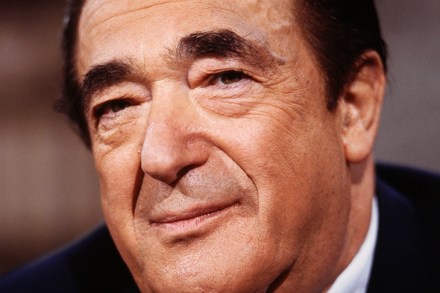
‘Everyone’s heard of Ghislaine Maxwell,’ says the blurb for Power: The Maxwells, a podcast series launched last month. ‘But there’s a shadowy figure who hangs above her who you likely don’t know: her father, media tycoon Robert Maxwell.’ Blimey. I know that 30 years have passed since his soggy demise, and time like an ever-rolling stream bears all its sons away, but it still comes as a shock to realise that such a preposterously outsize figure can be forgotten. His tumble down the memory hole may explain why this is a book of two halves. When John Preston contacted me in 2018 with a Maxwellian query, he said: ‘I’m not actually doing a biography of Maxwell but focusing on the last 18 months when everything fell apart.
Please Mr President

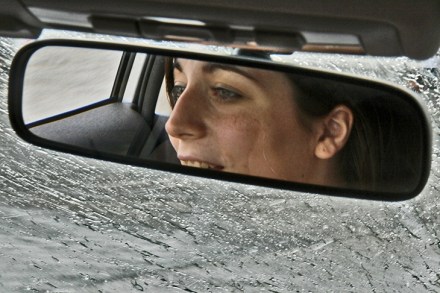
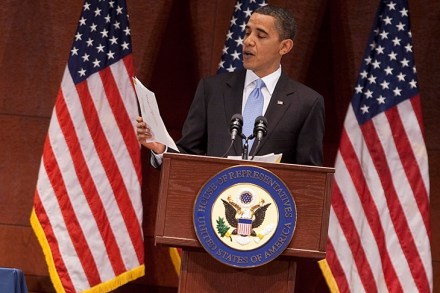
President George Washington received about five letters a day and answered them all himself. By the end of the 19th century President William McKinley was so overwhelmed by the volume of mail — 100 letters a day — that he hired someone to manage the flow. Thus began what is now called the Office of Presidential Correspondence (OPC). According to Jeanne Marie Laskas, however, it wasn’t until Barack Obama that a president committed himself to reading a set number of letters a day — the ten LADs, as they became known — from ordinary Americans. Before delving into Obama’s old mailbags Laskas talks to one of his senior advisers, Shailagh Murray.

Overs and outs

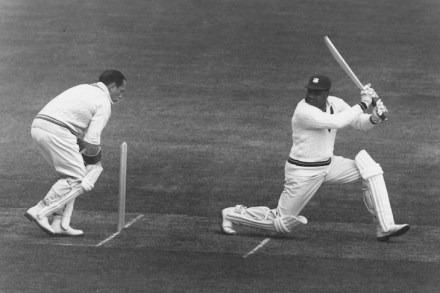
E.W. Swanton’s first published article appeared in All Sports Weekly in July 1926, soon after his 19th birthday. Thence, swiftly, into Fleet Street, covering public-school sports for the London Evening Standard and ‘rugger’ for the Times. In the summer of 1930 he made his Test debut, reporting the Ashes match at Lord’s in which young Don Bradman scored 254 out of 729 for 6 declared. Swanton had not been selected for the cricket XI at school. He forestalled any such humiliations in adult life by founding his own team, the Arabs, whose one absolute club rule was that E.W. Swanton should open the batting. As for the other players, according to Fay and Kynaston, ‘being the son of a Viscount seemed to ensure automatic selection’. All very Wodehousean.

Swine fever

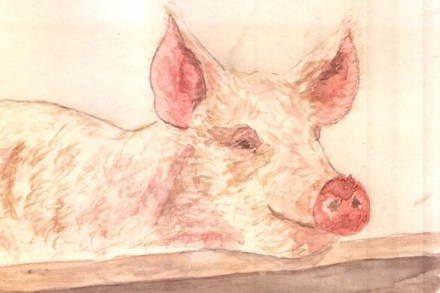
‘Rightly is they called pigs,’ says a farmworker in Aldous Huxley’s Crome Yellow as he watches porkers grunt and squelch. Pía Spry-Marqués has no time for such nominative determinism. ‘Pigs,’ she points out, ‘are in fact quite clean animals.’ Wallowing in mud isn’t nostalgie de la boue, merely the only way of keeping cool if no shade or fresh water is available. God disagrees with her. ‘The swine, though he divide the hoof, and be cloven-footed, yet he cheweth not the cud; he is unclean to you,’ he tells Moses and Aaron in Leviticus.

How scheming ratbags spread lies on social media

It's a safe bet that any post starting 'What the mainstream media won't tell you', or words to that effect, will refer to something that has in fact been extensively reported in the 'MSM'. And so it is here. I'm reproducing this Anonymous meme because a lovely Facebook friend of mine posted it, and it struck me that this is how many lies are spread on social media: scheming ratbags taking advantage of decent people's better natures. After all, from what Anonymous say about William Kamkwamba he sounds great, so let's sabotage the media conspiracy of silence by sharing his story. Kamkwamba is indeed an inspiring young man; he deserves better than to be kidnapped by a mendacious meme.

Gin and boiled cabbage with George Orwell

The Orwellian past is a foreign country; smells are different there. Pipe smoke and carbolic, side notes of horse dung and camphor — and that most inescapable odour, the ‘melancholy smell of boiled cabbage and dishwater’ seeping under a parishioner’s front door in A Clergyman’s Daughter. In Nineteen Eighty-Four, too, the hallway of Victory Mansions ‘smelt of boiled cabbage’. That was the quotidian stench of my childhood; long gone now, both the cabbage and the childhood. When Professor John Sutherland began re-reading Orwell after losing his sense of smell three years ago, the old familiar writings seemed ‘interestingly different’, their olfactory obsessions suddenly more conspicuous.