Francis Pike

Francis Pike is a historian and author of Hirohito’s War, The Pacific War 1941-1945 and Empires at War: A Short History of Modern Asia Since World War II.

How long will Xi Jinping rule China?

From our UK edition

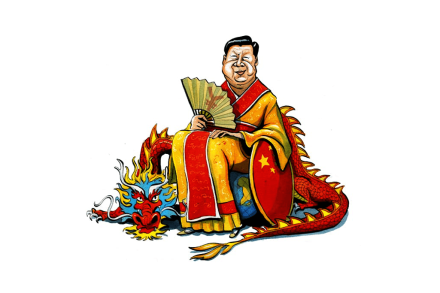
For some time now it has been assumed that in November the National Congress will rubber stamp Xi Jinping’s continued role as China’s supreme leader for a third five-year term, which would make Xi the first Chinese leader for a generation to serve more than two terms. Just a year ago his position as one of China's three pre-eminent leaders was confirmed when the 400 members of the Central Committee passed the third ‘Historical Resolution’ in the Chinese Communist Party’s 100-year history. The previous two were organised by Mao in 1945 and Deng Xiaoping in 1981. The resolution highlighted the concept of ‘Xi Jinping Thought’ as a historical equivalent to that of his two legendary predecessors.

Why does India get a free pass for supporting Russia?

From our UK edition

When Russia invaded Ukraine the Indian government rapidly launched ‘Operation Ganga’. This was not a military operation, nor did it aim to supply Ukraine with weapons – it was an operation to extract the 500 Indian students stranded in Ukraine. After Prime Minister Narendra’s Modi’s video call with Putin, the Russian president ordered his invading army ‘to ensure the safe exit of Indian nationals from the armed conflict zone.’ The Indian government quickly dispatched civil servants, not weapons, to Poland, Hungary and Romania to assist their fleeing citizens. Since February more than 22,000 have been repatriated. Otherwise, Modi’s attitude to Ukraine has been decidedly non-committal.

China’s pact with the Solomons is a direct threat to Australia

From our UK edition

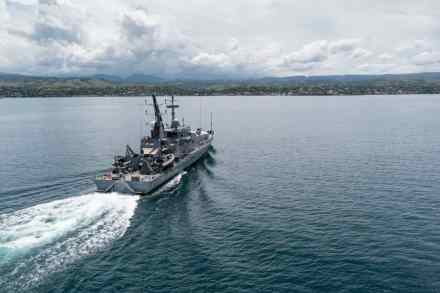
Tulagi, a 1.5 square mile island in the South Pacific’s Solomon Islands, is perhaps the most remote place on the planet to have a repeat role in world history. On 4 May 1942, Emperor Hirohito’s Japanese forces landed on Tulagi – then the capital of the British Solomon Islands Pro­tectorate – to attempt to cut off Australia from American supplies. Worse still, Aus­tralia feared invasion. These goals were ulti­mately thwarted in the naval and land battles of Guadalcanal. Not surprisingly, then, the news today that China has signed a security pact with the Solomon Islands has horrified the Australians.

Can Imran Khan cling on to power in Pakistan?

From our UK edition

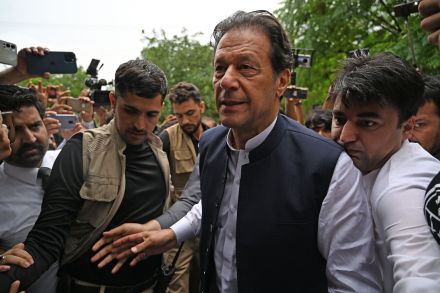
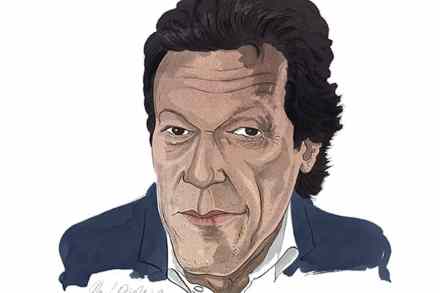
In the brief interlude of Chechen independence between the Russia-Chechen Wars of the 1990s, I travelled with Imran Khan from Grozny to Baku, where we were due to meet Azerbaijan’s finance minister. We had different reasons for our visit. I was interested in the business potential of the countries of the Caucasus, while Khan, a former cricketer turned fledging politician who had recently formed the Pakistan Movement for Justice party (PTI), was keen to support the then independent Sufi Islamic state of Chechnya. To get to Baku we had to catch a plane from the neighbouring Russian republic of Dagestan. Our Chechen hosts told us that we did not need papers to get across the border.

Turkmenistan may emerge as a global powerbroker

From our UK edition

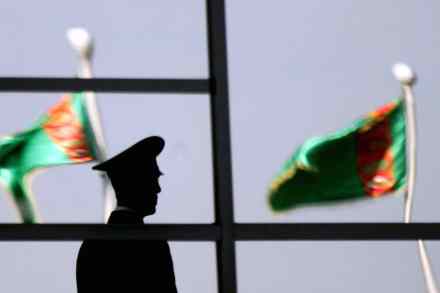
While the world is watching Ukraine, there is another former Soviet republic that has quietly undergone regime change. Turkmenistan’s 65-year-old former president, known, in the manner of a comic book superhero, as ‘The Protector’, stepped down in February. With Gurbanguly Berdymukhamedov's departure, the Mejlis Assembly duly called for elections on 12 March. As regime changes go this one was hardly revolutionary. The Protector's son, having just turned 40 (the minimum age at which a candidate can stand for the presidency) won the election at a canter. The only surprise was that Serdar, 'The Son of the Nation', won just 73 per cent of the vote compared to his father’s 97 per cent winning mandate in 2017.

Was the Kazakhstan uprising an attempted Jihadi takeover?

From our UK edition

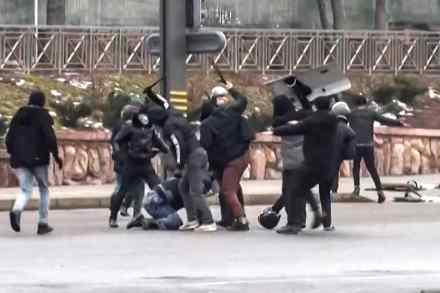
The Kazakh uprising is over. The stench of burnt-out vehicles and bombed out buildings in Kazakhstan’s most populous city and former capital, Almaty, has begun to dissipate. Life is returning to normal. Banks have reopened. Salaries and pensions are being paid. The internet is up and running again. Almaty airport is expected to reopen today. As the fog of war lifts some clarity about these events is beginning to emerge. Officials have reported that 100 businesses and banks were destroyed along with 400 vehicles. Seven policemen died and hundreds more were wounded; 8,000 people have been arrested. Some 164 civilians were killed. The government of President Kassym-Jomart Tokayev has survived and with some ease as it turns out.

What’s happening in Kazakhstan?

From our UK edition

Since the start of the new year, riots have spread throughout Kazakhstan. In the former capital of Almaty, the airport has been taken over and the mayor’s office stormed. Dozens of security forces and civilians have been killed in violent clashes while hundreds have been wounded. Is this Kazakhstan’s Tiananmen Square moment, in which the government is shaken to its roots but survives? Or will it be like the Maidan Revolution in Ukraine in which a pro-Russian ruler was overthrown by the mob? The main cause of the uprising is not dissimilar to Tiananmen Square. It is not a demand for democracy, which some inept journalists at the BBC and CNN ascribed as the main cause of China’s urban uprising in 1989.

New world order: can Britain, America and Australia contain China?

From our UK edition

43 min listen

In this week’s episode: can the new Aukus alliance contain China? In his cover piece this week, James Forsyth writes that the new Aukus pact has fixed the contours of the next 30 years of British foreign policy. Britain, he says, is no longer trying to stay neutral in the competition between America and China. On the podcast James is joined by Francis Pike, author of Empires at War: A Short History of Modern Asia Since World War II, who also wrote for the magazine this week, giving the case against Aukus. (00:45)Also this week: what can be done to save the Church of England’s parishes?

The case against Aukus

From our UK edition

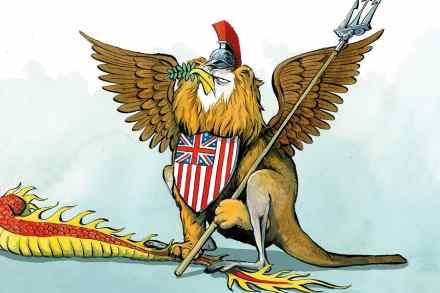
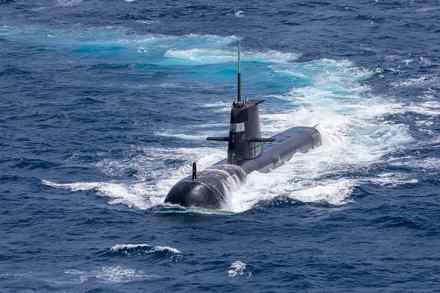
Just weeks after the denouement of the West’s misadventure in Afghanistan, Boris Johnson is again committing Britain to a risky international venture. Aukus, the naval partnership between the United States, Australia and the United Kingdom, appears to tie Britain to an Indo-Pacific strategy that is militarily and geopolitically flawed. In December 1941, the catastrophic sinking of the then imperious new battleship HMS Prince of Wales along with the battlecruiser HMS Repulse off the coast of Malaya led to the loss of Singapore and brought the curtains down on Britain’s Asian Empire. Britain was over-stretched and unable to commit resources to the defence of the Pacific. History rarely repeats itself exactly.

Did Chinese fentanyl kill Michael K. Williams?

From our UK edition

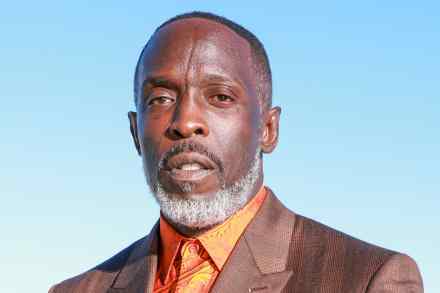
Did Chinese-manufactured fentanyl, a synthetic opioid, kill Michael Kenneth Williams, the man who played ‘Omar’ in The Wire? Within minutes of his death being announced yesterday, speculation was circulating on Twitter. New York Police Department sources have told the Daily Mail they suspect fentanyl was involved. The world only seems to notice when a celebrity overdoses. In 2016, Prince's death from a cocktail of fentanyl and other substances was an important milestone in awakening America to the horrific opioid drug epidemic that had crept up on the country since the 1990s. But lots of non-famous people are dying all the time because of fentanyl from China, which has flooded the US criminal scene in recent years.

Would Japan defend Taiwan from a Chinese attack?

From our UK edition

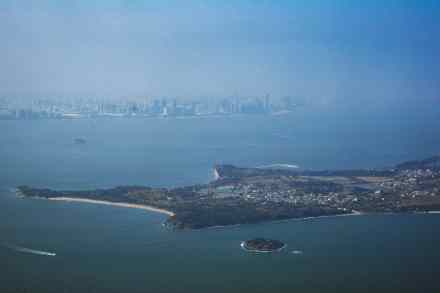
In a parliamentary debate in early June about Covid, Japan’s prime minister Yoshihide Suga said that Australia, New Zealand and Taiwan had been 'imposing strong restrictions on privacy rights.’ Whether by mistake or on purpose, Suga had crossed the Rubicon of acceptable China-Japan diplomatic language by implying that Taiwan was a country. If it was a mistake, it was one he repeated several times. China’s response was immediate. A foreign ministry spokesman, Wang Wenbin, accused Suga of a flagrant breach of ‘the Sino-Japanese Joint Statement and its solemn and repeated commitment of not seeing Taiwan as a country.

What kind of empire is China building?

From our UK edition

As Britain’s small fleet, headed by HMS Queen Elizabeth, cruises towards the South China Sea, there remains a question over the nature of China’s geopolitical ambitions. When Xi Jinping came to power in 2013 it was assumed that China would follow the relatively unthreatening path begun by Deng Xiaoping. But Xi was intent on following a different agenda. Xi’s brutal clampdown on corruption showed that there was a new sheriff in town. High profile politburo members were imprisoned. Such was the scale that Qincheng Prison began to run out of cells. Expensive wristwatches suddenly disappeared from the arms of modestly paid bureaucrats. The West applauded.

Chairman Xi and the Communist party’s delusional centenary

From our UK edition

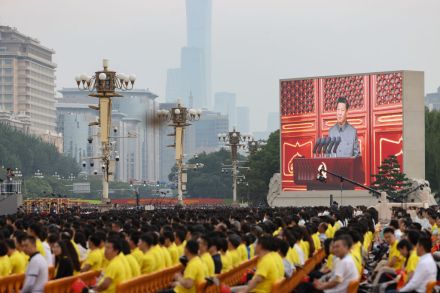
The emperor has new clothes. Arriving at a meeting to celebrate the 100th Anniversary of the Chinese Communist Party, China’s supreme leader Xi Jinping came dressed as Chairman Mao. His light grey tunic suit, four front pockets and five buttons to the neck cut an imposing contrast to the Politburo’s Standing Committee in their familiar dark suits and sober ties. This was no subtle message; ludicrous it might seem, but it was fancy dress hiding an iron fist. One can’t imagine Boris Johnson addressing the Conservative party wearing the frock coat, winged collar and white tie stock of Sir Robert Peel.

How China won over the Middle East

From our UK edition

In April, Chinese Foreign Minister Wang Yi embarked on a six-nation Middle Eastern tour to Saudi Arabia, Turkey, Iran, the United Arab Emirates, Bahrain and Oman. ‘Belt and Road’ cooperation, economic development and the Covid pandemic were the topics of discussion. The treatment of China’s Muslim Uighur population in detention camps, which some in the West have described as genocidal, didn’t come up. Both China and Saudi Arabia cleave to the belief that internal affairs are nobody else’s business — or at least as long as there are overriding economic interests at stake. Compare the silence of Muslim countries on the Uighur issue with the loud faux anger when the Danish newspaper Jyllands--Posten published caricatures of the Prophet Mohammed in 2005.

If Joe Biden really has dementia, can he be removed?

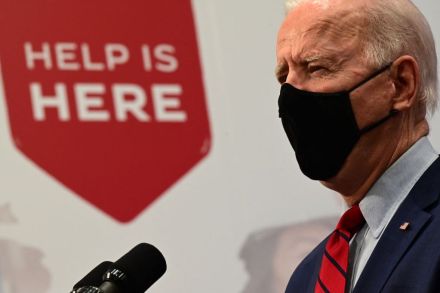
‘Is something neurologically wrong with Donald Trump?’ Yes, was Professor James Hamblin MD’s answer after the headline trumpeted in the Atlantic in January 2018. Yet in the election year that followed it was Biden who was being hidden in the cellar while Donald Trump embarked on an exhausting series of campaign rallies, giving largely unscripted bravura performances to his fanatical followers. Meanwhile on the rare occasion when his handlers let him out, Biden stumbled. On one occasion he forgot which state he was in. Shockingly, America’s Democrat-dominated media stayed silent about Biden’s failing health throughout the presidential campaign.

age joe biden

Has Britain fallen victim to the Asian vaccine war?

From our UK edition

The success story of Britain's vaccine rollout has hit its first major obstacle: five million doses of the AstraZeneca vaccine will be held up for a month. But how many of us knew it was India, not manufacturing plants in the UK or Europe, that was supplying a considerable amount of our vaccine needs? And does the delay show that Britain is now caught in the middle of an emerging vaccine war in Asia? The delayed jabs are being manufactured in the Indian city of Pune (pronounced Poona).

Is Britain heading for war over Taiwan?

From our UK edition

It is billed as a once-in-a-generation review of Britain’s foreign policy and defence strategies. ‘Global Britain in a Competitive Age’, Boris Johnson’s ‘new chapter’ for Britain, identifies two main adversaries: Russia — an ‘acute threat’ — and China — a ‘systemic competitor’. And while it nods at a geopolitical ‘tilt’ towards the Indo-Pacific, the more hawkish Tory MPs are disappointed, thinking Beijing should have also counted as a threat. They should perhaps be careful what they wish for. The Prime Minister is sending more than harsh words in China’s direction.

China vs America: the struggle for south-east Asia

From our UK edition

Is Antony Blinken, President Joe Biden’s secretary of state, preparing to abandon Barack Obama’s powder-puff Asian foreign policies? It is now widely agreed that Obama, under whom Blinken served as deputy secretary of state, ceded to China uncontested control of the South China Sea. Obama’s so-called ‘pivot to Asia’ was all talk and no trousers. Blinken, who believes that diplomacy must be ‘supplemented by deterrence’, may be about to implement a more aggressive foreign policy in south-east Asia and elsewhere. In his first speech as general secretary of the Communist party in 2012, Xi Jinping made his intentions clear.

Is Kazakhstan capable of transitioning to democracy?

From our UK edition

In the dramatic ‘reveal’ of Roman Polanski’s Chinatown, the lead character, private dick Jake Gittes (Jack Nicholson) violently extracts the identity of the young girl hidden in the house of Evelyn Mulwray (Faye Dunaway). Evelyn, after being beaten and thrown across the room by Gittes, explains, ‘She’s my sister and my daughter’. The penny drops and Gittes realises that Evelyn has had a daughter by her father. Incest is shocking enough in a film. When incest allegedly involves Nursultan Nazarbayev, the former president of Kazakhstan, and his daughter Dariga, the speaker of Kazakhstan’s Senate, the revelation is jaw-dropping. The reveal of this hard-to-believe accusation was even more extraordinary.

Coup de grâce: the downfall of Aung San Suu Kyi

From our UK edition

Coup? What coup? The early morning takeover of Myanmar on Monday by the Tatmadaw (Burmese army) barely deserves the name. The word ‘coup’ suggests that Myanmar was being ruled by a civilian and democratic government before now. It was not. Although Aung San Suu Kyi’s National League for Democracy won a landslide victory in ‘free’ elections in 2015, the constitutional revision implemented by the military in 2008 meant that Tatmadaw retained 25 per cent of seats in both houses of the national assembly. More pertinently, whatever the outcome of elections, Tatmadaw reserved its rights to three ministries: home affairs, border affairs and defence.