Francis Pike

Francis Pike is a historian and author of Hirohito’s War, The Pacific War 1941-1945 and Empires at War: A Short History of Modern Asia Since World War II.

The long and bloody history of tunnel warfare

From our UK edition

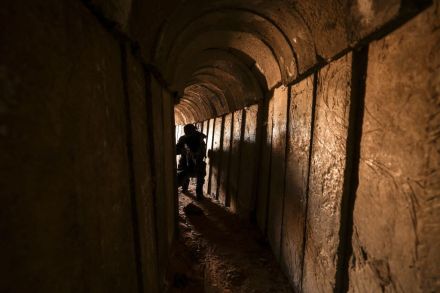
Tunnel fighting has always been a problem. As Israel battles in Gaza against some 5,000 Hamas fighters embedded in buildings, ruins and 300 miles of tunnel, it seems an appropriate moment to look at the history of tunnel warfare and its difficulties.     Jewish history is not unfamiliar with the fighting of defensive wars in tunnels. In the third leg of the Roman-Jewish war, known as the Bar Kokhba revolt, the Jewish rebels built an extensive network of tunnels in greater Judea. To date archaeologists have unearthed underground hideout systems in 140 Jewish villages. Eventually, after four years of fierce fighting and the sending of Roman legions from as far away as Galicia, the Jewish resistance was smoked out of its hideouts.

The first world war wasn’t the first world war

From our UK edition

For reasons that not even Czechs can explain, in the past they developed a habit of throwing their rulers out of windows. It started in the early 15th century, but it was in Prague in 1618 that the word ‘defenestration’ entered the English language. The word derives from the Latin word for window, fenestra.  A year earlier the dying and childless Habsburg Holy Roman Emperor, Mathias, named Ferdinand as his successor. Ferdinand II, a Jesuit educated zealot, immediately begun to row back on guaranteed protestant freedoms in Prague (Bohemia). On 23 May 1618, a group of angry protestant noblemen led a mob across the Charles Bridge and upward to Hradcany Castle. There they found Count Jaroslav Bořita of Martinice and Slawata von Chlum.

How an American racing driver and war in Mongolia helped to defeat Hitler

From our UK edition

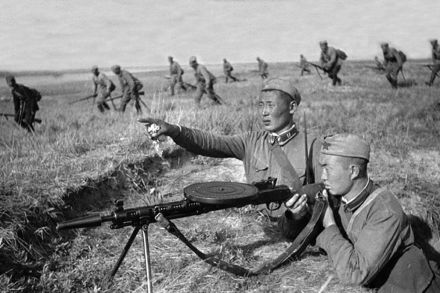
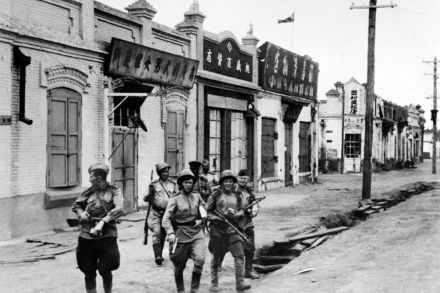
Of all the ‘practice’ wars that preceded the main events of the second world war, including the Spanish civil war and the winter war between Finland and the Soviet Union, the least well known is the four-month war on the Mongolia-Manchurian border between the Soviet Union and Japan that ended in September 1939.  This is not surprising, perhaps, because British attention was (and still is) more focused on Hitler’s invasion of Poland that took place two weeks earlier. Even the participants downplay the importance of a war that took place in a remote corner of Mongolia. Japan refers to it as the Nomonhan Incident while Russia calls it the Battle of Khalkin Gol after the river that runs through the region.

The morality of the EU’s gas grab in Azerbaijan

From our UK edition

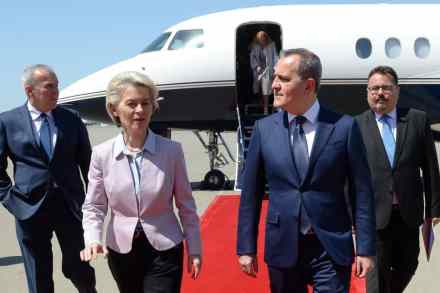
My enemy’s enemy is my friend. This ancient proverb partly describes the EU’s fast developing relationship with Muslim Azerbaijan, a Turkic country whose forever enemy is neighbouring Christian Armenia which is militarily supported by Russia. And natural gas is the crux of this unnatural alignment. On 18 July the EU gleefully announced that by 2027 the Azerbaijan government had agreed to increase its gas supply from its Caspian Sea fields to Europe from 8 bcm (billion cubic metres) to 20 bcm per annum. Although this would still only represent 12 per cent of Europe’s gas imports last year, President of the EU Commission, Ursula von der Leyen, nevertheless described Azerbaijan as ‘a key partner in our efforts to move away from Russian fossil fuels’.

The forgotten end of the second world war

From our UK edition

Two weeks ago, VJ day (Victory over Japan day) celebrated the end of the Pacific War. On 15 August 1945 Emperor Hirohito, with his high-pitched voice and arcane royal language, which was heard by his people for the first time, announced Japan’s surrender.

What explains Taiwan’s warmth towards Imperial Japan?

From our UK edition

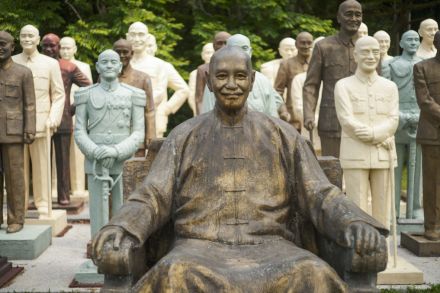
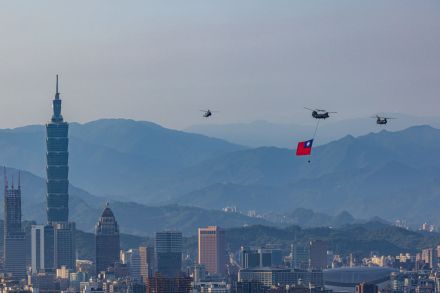
The online TaiwanPlus news agency reported recently that a new memorial had been unveiled in southern Taiwan to commemorate the thousands of Taiwanese youths who volunteered to help the Japanese war effort in the second world war. It is estimated that some 30,000 Taiwanese died while fighting for Emperor Hirohito’s Imperial army during the Pacific War. Some of these troops would have fought against Chinese soldiers on the mainland of China – a counter intuitive fact, you might think. The departure of the Japanese was regretted by many, leading to the popular expression, ‘Dogs go and pigs come.’ The story of the memorial goes to the heart of the peculiarities of Taiwan’s history and indeed its geography.

Britain’s nuclear test veterans are finally being remembered

From our UK edition

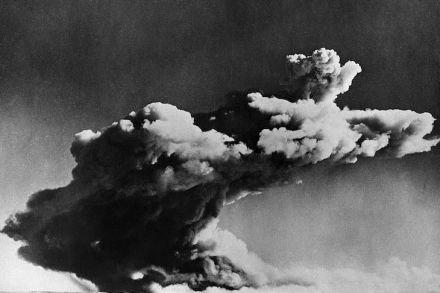
Some wars get forgotten (viz Korea and Malaya); others are constantly refreshed in memory. As the manager of an Asian investment trust in the late 1980s, some 44 years after the Second World War, I was asked by my board to cough up a large sum of money to fund a statue of Field Marshal, Viscount Slim, the general who led British forces in India and Burma. This was indeed a huge error of omission. Slim had won arguably the greatest victories of British forces in the Second World War: the Battle of Imphal in India and the Battle of Irrawaddy River in Burma. His splendidly executed statue was duly unveiled in 1993 and sits proudly in Whitehall.

Why do we forget Britain’s role in the Korean War?

From our UK edition

Today marks the 70th anniversary of the Korean War Armistice. Sadly, in the British media it will be forgotten that Great Britain and its Commonwealth forces, roughly some 104,000 troops in total, were America’s junior partner in the United Nations force that took on the defence of South Korea. The United Nations’ call to arms was made possible by the absence of a veto from the Soviet Union (which had temporarily walked out of the UN assembly because of its refusal to recognize the People’s Republic of China). It became necessary after Kim Il Sung, the revolutionary founder and leader of the communist Democratic People’s Republic of Korea (DPRK) and grandfather of the country’s current leader Kim Jung Un, invaded South Korea on 25 June 1950.

Britain’s war in Malaya

From our UK edition

On 17 June 1948, seventy-five years ago this weekend, the British Prime Minister, Clement Attlee declared war on the ethnic Chinese Malayan Communist party (MCP). Except he did not call it a war; he called it an ‘Emergency’. It seems that the British plantation and trading companies in Malaya, such as Sime Darby, Guthrie, Harrisons & Crossfield, London Tin and Dunlop, demanded that the word ‘war’ should not be used because it would make their businesses uninsurable. By contrast the Chinese Malayan insurgents called ‘the Emergency’ the Anti-British National Liberation War. The Malayan War, which lasted for 12 years, might better be called the ‘Forgotten War’. Of all the Cold War conflicts it is arguably the least known. Why? Firstly, there were no pitched battles.

The troubling arrest of Imran Khan

From our UK edition

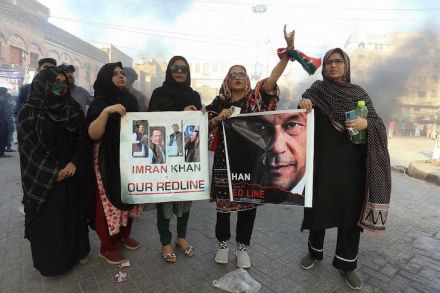
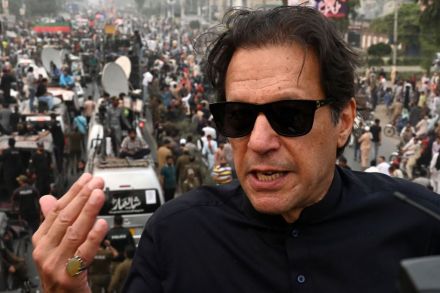
The saga of Imran Khan’s political career rumbles on. While on his way to the High Court in Islamabad yesterday to defend himself against trumped-up charges of political corruption, Khan was ambushed inside the judicial compound by enforcement paramilitaries known as the Pakistani Rangers. After Khan and his lawyers were allegedly beaten up, he was then driven away. The Pakistan government, the military or its agents, have seemingly been trying to either arrest or kill the immensely popular Khan since he was deposed by an army-backed constitutional coup in April 2022. Finally, this week they got their man. In November last year, Khan had been fortunate to survive a gun attack which left him with three bullet wounds in his leg.

China and the strange history of balloon warfare

From our UK edition

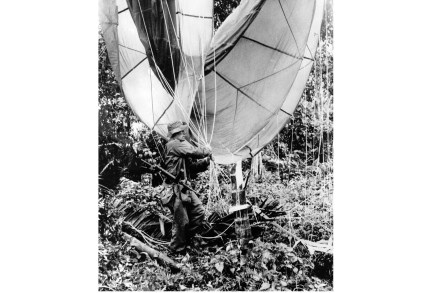
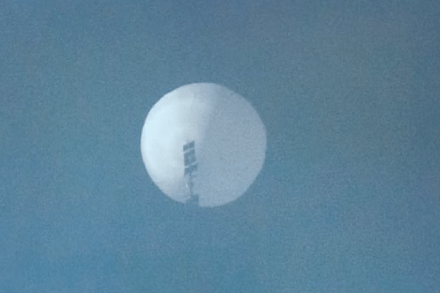
China’s ‘spy’ balloon, (or is it an errant weather balloon?), is currently being tracked across America. Picked up above the Aleutian Islands, it was buzzed by US planes above Montana and is now headed eastwards as it is pushed by the prevailing Jet Stream. The Pentagon has decided not to shoot it down; it does not want debris landing on middle America. China insists the balloon is used for meteorological research and strayed because of bad weather. But the incident has prompted US Secretary of State Antony Blinken to postpone his trip to China that was scheduled for next week. Was the balloon inspired by Japan's Emperor Hirohito?

What the revisionists get wrong about America’s nuclear bombings

From our UK edition

The use of nuclear weapons at Hiroshima and Nagasaki is hardly a festive subject. But given that in recent conversations with President Macron, Vladimir Putin has referenced Hiroshima as a precedent that he could use to justify the use of nuclear weapons in Ukraine, it seems a timely moment to evaluate the subject. And this is especially the case when the case for America using the bomb against Japan has more and more come under attack. The debate about the use of nuclear weapons at Hiroshima and Nagasaki has been increasingly won by America’s revisionist historians. In 1945, 85 per cent of Americans thought that the use of these atom bombs was justified. Sixty years later that level of support had fallen to 57 per cent.

The remarkable conversion of the lead Pearl Harbor bomber

From our UK edition

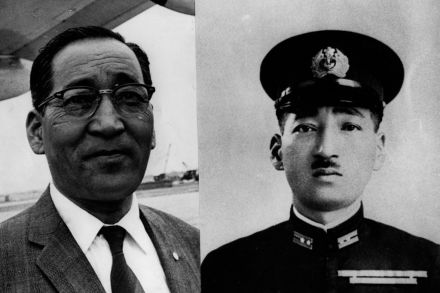
This week marks the 81st anniversary of the Japanese attack on the US fleet stationed at Pearl Harbor, Hawaii, which launched the start of the Pacific War and turned what had hitherto been a European war into a world conflict. The air attack by 353 Japanese warplanes on the US fleet at Pearl Harbor was led by flight Lt Commander Mitsuo Fuchida. His later conversion to Christian evangelism was one of the peculiar outcomes of this seminal event in 20th Century history.  In the summer of 1984, I was on a small car ferry taking me from Matsuyama, a city on Shikoku, the smallest of Japan’s major four islands, to Hiroshima, situated on the main Japanese island of Honshu. It was a journey that had a transformative effect on my future.

Who tried to assassinate Imran Khan? And why?

From our UK edition

At the end of August I warned in The Spectator that, in Pakistan politics, ‘death by assassination is always a risk.’ And so yesterday’s attempted assassination of Imran Khan – while shocking – should have come as no surprise. Perhaps the bigger surprise was that he survived. As Imran himself stated immediately afterwards, ‘Allah has given me another life.’ It seems that he owes his life to a young man wearing a snazzy FILA sports shirt who wrestled with the assassin as he was firing his pistol – though some reports have it that there was a second assassin firing an automatic rifle. The circumstances of the aftermath of the assassination attempt bear some scrutiny.

America’s chip war with China

There is a joke in Taipei that if China invades Taiwan the best place to shelter is in microchip factories, the only places the People’s Liberation Army can’t afford to destroy. The country that controls advanced chips controls the future of technology — and Taiwan’s chip fabrication foundries (“fabs”) are the finest in the world. Successful reunification between the mainland and its renegade province would give China a virtual monopoly over the most advanced fabs. Given that Xi Jinping has made clear his intention to take control of Taiwan by 2032, it is no wonder that the American government is worried about the concentration of cutting-edge semiconductor technology on the island.

semiconductors

China vs the US: who will win the chip war?

From our UK edition

There is a joke in Taipei that if China invades Taiwan, the best place to shelter will be in microchip factories, because they are the only places the People’s Liberation Army can’t afford to destroy. The country that controls advanced chips controls the future of technology – and Taiwan’s chip fabrication foundries (‘fabs’) are the finest in the world. Successful reunification between the mainland and its renegade province would give China a virtual monopoly over the most advanced fabs. Given Xi Jinping’s designs on Taiwan, it is no wonder that the US government is worried. For this reason, in recent months the United States has taken various steps to thwart China’s attempts to make advanced semiconductors.

Pakistan is on the brink

From our UK edition

On Tuesday I speculated that Pakistan’s former Prime Minister Imran Khan, now the opposition leader, was so popular that he might have to be shot by his enemies to prevent him from coming back to power. This was not a throwaway statement. After Sri Lanka and Lebanon, whose political murder rate since the second world war has been off the charts, Pakistan with 44 political murders comes a clear third, not including the peripheral hundreds if not thousands who have died in bombings. As if in sync with my warning, Tuesday afternoon saw another political murder in Pakistan. Majid Satti, the leader of Imran Khan’s Pakistan Tehreek-e-Insaf (PTI) party in Rawalpindi was gunned down by a group of armed assassins.

Is Imran Khan Pakistan’s Donald Trump?

From our UK edition

Imran Khan, the cricketing hero, legendary lothario and deposed prime minister of Pakistan, is in trouble again. His political opponents in the police and the judiciary, in a manner not dissimilar to the judicial attack on former US president Donald Trump, have moved against Khan in recent days by accusing him of terrorist activities. In theory, these charges could carry the death penalty. Khan’s crime was to threaten retaliatory action against the police and the judiciary in revenge for the arrest of his chief of staff, Shahbaz Gill. Gill had been roughly arrested by police and his assistant allegedly beaten up. In addition, police had tried to apprehend former Khan acolyte and home affairs minister, Sheikh Rashid. But he escaped the net and is now in hiding.

Nancy Pelosi went rogue in Taiwan

From our UK edition

Old leaders can be among the best. Just look at Konrad Adenauer, who became German chancellor when he was 73 or Ronald Reagan who was days off 70 when he became president. But the United States’s political leaders are at risk of taking it too far. President Joe Biden has already regressed to childhood. Nowadays even the Democratic party do not consider him fit for purpose; he has lost credibility and authority. The 82-year-old US house speaker Nancy Pelosi, who arrived in Taiwan yesterday to much trumpeting by the West and much harrumphing by China, simply ignored Biden’s limp statement: ‘I think that the military thinks it’s not a good idea right now.’ Pelosi wears her age well, albeit she has had more repair work than a British motorway.

Shinzo Abe and the long history of Japanese political violence

From our UK edition

Shinzo Abe, perhaps the most significant Japanese politician of the last 50 years, has been assassinated. The killing was carried out by Tetsuya Yamagamu, a youngish and apparently disgruntled former employee of the Japan’s Maritime Self Defence Force.  It was a brutal and sordid end to what was an important if not uncontroversial life. Shinzo Abe was the dominant politician of his era. Forced to give up the prime ministership after just one year in 2007 because of ulcerative colitis, a congenital condition, Abe came back to win landslide elections for the Liberal Democratic Party in 2012, 2014 and 2017. In an era when many Japanese prime ministers have served for little more than a year, Abe was prime minister for a record eight years and 267 days.