Ferdinand Mount

Ferdinand Mount was head of the No. 10 policy unit under Margaret Thatcher. He is author of a number of books, including ‘The New Few: Power and Inequality in Britain Now’.

A time to moan and weep

From our UK edition

Ferdinand Mount recalls the crisis years of the early 1970s, when Britain was pronounced ‘ungovernable’ The residents of Flitwick, Bedfordshire, were enjoying a wine-and-cheese party in the village hall when the invasion happened. Five hundred Tottenham Hotspur fans had run amok on the special train bringing them back from Derby, where they had been beaten 5–0. They had smashed everything smashable on the train, pulled the communication cord again and again, forcing the train to a juddering halt, and the driver had had enough. He stopped the engine and summoned the police to force the fans off.
Raise a glass to Alan Watkins

From our UK edition

Ferdinand Mount mourns the passing of his friend and colleague — and a former Spectator columnist — whose wit, humour and clarity of expression remain unrivalled As Alan Watkins lay dying last Saturday, his younger grandson Harry recited to him the passage from Macbeth he had just learnt at school. It was an apt send-off for the most enchanting political commentator of his day, as meanwhile in Downing Street Birnam Wood was inching closer to Dunsinane (though to be fair to Macbeth he did not claim that he was merely ‘securing a progressive coalition’). To those who professed to be shocked by the shenanigans of the past few days, Alan would surely have rolled his great bloodhound eyes and sighed, ‘politics is a rough old trade, you know’.

Refusing to play the game

From our UK edition

What sort of person would you expect to be bringing out a life of J. D. Salinger two months after his death, bearing in mind that Salinger was more obsessive about his privacy than any other writer in human history and fought the publication of the last biography all the way to the US Supreme Court? You might not expect the answer to be Kenneth Slawenski. Who, you may ask, is he? Well, he is a pretty private person too. I pummelled the web and the only meagre intelligence I could extract is that he was born and raised in New Jersey and has worked in computers. This may be his first book, for he mentions no other on the dustjacket, and tells us only that he runs the ‘definitive Salinger website’, deadcaulfields.com. So he is not by trade a biographer or a critic.

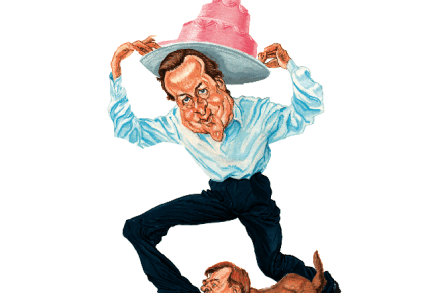
David Cameron should honour his marriage vow

From our UK edition

Labour’s Green Paper on families makes it clear that the party is opposed to promoting marriage. Ferdinand Mount says it’s crucial that the Tories don’t waver, but stick to their promise of a financial incentive What, if anything, should David Cameron promise in order to shore up family life in general and marriage in particular? Would some sort of tax incentive help to improve social outcomes and make people happier? Or is this a retro dead end, at once patronising and impractical and prohibitively expensive? Doesn’t Cameron’s self-confessed slip-up when explaining his commitment show how devilishly tricky and unrewarding the whole business is? He can at least claim to be the first party leader to have dared put the question on the agenda.

A long journey

From our UK edition

I never liked E. M. Forster much. He was too preachy and prissy, too snobbish about the suburbs, too contemptuous of the lower classes. I know this is not how a review is meant to begin. You may legitimately kick off by admitting that you have a soft spot for your subject, even perhaps that you used to be friends. But reveal a longstanding dislike in your first paragraph, and the reader may reasonably wonder why the editor did not give the book to someone else. My only excuse for this confession is that I am not alone. For a novelist, essayist and critic of such acknowledged eminence, Forster has had a surprising number of enemies. There was something about him that got people’s goat, and still does.

Diary – 10 October 2009

From our UK edition

Alan Clark will always have a special place in my heart. He remains the only person ever to sue me for libel. I still occasionally have a nightmare in which he is personally cross-examining me in the witness box and the court is erupting in laughter at his sneering sallies and my flustered answers. What happened was that, in the course of a rather turgid article in the TLS about the Tories’ prospects (it was 1996 and they were dismal), I remarked that Mr Alan Clark was ‘colourful certainly, endearing possibly but not exactly a man of bottom’. Alan erupted, claiming that I had accused him of financial dishonesty and linked him to the Tory MPs who were being skewered for sleaze at the time.

The Go-Away Bird

From our UK edition

There is no plaque yet on No 13 Baldwin Crescent, otherwise known as ‘Dunedin’. There ought to be. For on the top floor of this shabby yellow-brick house, hidden away between the Camberwell New Road and gloomy Myatt’s Fields, Muriel Spark wrote most of the four or five novels for which we’ll remember her. She was as happy in leafy, run-down Baldwin Crescent as she ever had been or was to be in her long, tense, proud, unforgiving life. She did, it is true, make an excursion to her childhood Edinburgh home to re-immerse herself in the speech of Morningside while she wrote The Prime of Miss Jean Brodie in four weeks.

How different from us?

From our UK edition

The Ends of Life: Roads to Human Fulfilment in Early Modern England, by Keith Thomas The English past is not what it was, for professional historians anyway. The rest of us still talk about the Tudors and the Stuarts, about Renaissance and Reformation and the Augustan Age. But within the academy all these dynasties and eras are now bundled up into what is called the Early Modern period. The inhabitants of this huge stretch of time can only be made sense of, it seems, if we think of them as a rough, awkward prelude to Us. It is startling how rapidly Early Mod has flattened the competition, and flattened our island story into a tale with only two parts, Before and After Modernisation. For it is a quite recent coining.

The downfall of a pessimist

From our UK edition

In some moods, I would rather read George Gissing than any other 19th-century English novelist. In the 1890s he was ranked with Hardy and Meredith, at a time when they had finished writing novels and he was only just getting into his tortured stride. Orwell called The Odd Women ‘one of the best novels in English’. But somehow Gissing has fallen off the shelves, not out of print but of public regard, fatally obscured by a reputation for gloom and pessimism. Gissing — the very word is like a South London street on a wet Monday. He himself rather revelled in that reputation. When he discovered that the next tenant in his old lodgings in Brixton had killed himself, he noted in his diary: ‘The atmosphere I left behind me, some would say, killed the poor man.

A sensitive bounder

From our UK edition

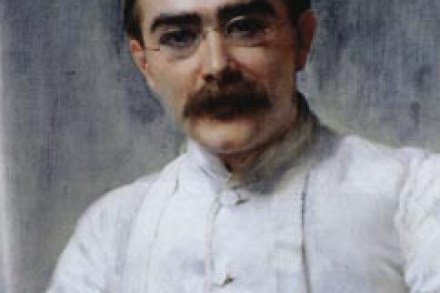
He was a noisy boy from the start. At the age of two, he was taken out for walks in order not to disturb his ailing grandfather and he would march down the main street of Bewdley shouting, ‘Ruddy is coming!’ Or sometimes, ‘An angry Ruddy is coming!’ Despite these precautions, his grandfather died and Kipling’s aunts and uncles believed that Ruddy’s tantrums had hastened and embittered his end. When he left the United Services College at Westward Ho! and returned to India, he quickly gained a reputation in the Punjab Club for boorish and bumptious behaviour.

Intolerable, unstoppable, indispensable

From our UK edition

There is no getting away from it, Edith Wharton was grand. It never occurred to her to spare expense. On her honeymoon cruise, she and her feckless husband Teddy chartered a 333-ton steam yacht with a crew of 16. When they settled down at 884 Park Avenue, they bought the house next door to accommodate their staff. The famous house she and Teddy built at Lenox, Massachusetts, The Mount — ‘a delicate French château mirrored in a Massachusetts pond’, as Henry James called it — had 100 windows and 35 rooms, looked after by a dozen servants, some of whom never dared to use the front stairs.

The monster we hate to love

From our UK edition

What is it about fruit? There is no more searing passage in the memoirs of Auberon Waugh than the bit when three bananas reach the Waugh household in the worst days of postwar austerity and Evelyn Waugh places all three on his own plate, then before the anguished eyes of his three children ladles on cream, which was almost unprocurable, and sugar, which was heavily rationed, and scoffs the lot.

The Voltaire of St Aldates

From our UK edition

Ah Oxford! Welcome to the City of Dreadful Spite, otherwise known as Malice Springs, the permanent Number One on the Bitch List. Not since the vituperative pamphleteers of the English Civil War has there been a community so dedicated to character assassination as the dons of Oxford. Living on the same staircase, dining side by side, night after night, term after term, dries up the milk of human kindness. Here is Hugh Trevor-Roper, Regius Professor of Modern History for 23 years, describing C.S.

Looking back in judgment

From our UK edition

Listing page content here The heart starts to sink on the very first page, p. xiii to be precise, because this is still the Preface: ‘When I began work on Osborne’s biography, hoping for the best, I asked his wife Helen, “What does no one know about your husband?” ’Already you can see the gleam in the biographer’s eye, the headline on the review front: Angry Playwright’s Other Life, Secret Shame of John Osborne. By p. xiv we have sunk lower: ‘What caused his depressions would send me in time on an obsessive search for the one explanation of Osborne’s torment and fury that might account for everything — “the Rosebud Theory”.

Ornery and extraordinary

From our UK edition

Decayed gentility and a feckless father. These make the springiest springboard for the angry artist. Dickens, Picasso, Joyce, Shaw, Francis Bacon all enjoyed these unsung advantages in life. So did Samuel Langhorne Clemens who called himself Mark Twain, after the cry of the leadsmen sounding the depths in the treacherous waters of the Mississippi (twain=two fathoms, or 12 feet). The Clemenses had come west from Virginia by way of Kentucky with half a dozen slaves and irrepressible dreams of remaking their fortune.

A carefully constructed person

From our UK edition

The Americans come off the boat. They may come singly, or in couples or even in a threesome, but there is no safety in numbers, for their fate is sealed the moment they step down the gangplank. The Americans are innocent of course, but they are not very nice. As a rule in the world of Paul Bowles, they tend to be mean-spirited and tight-fisted, and there is also a kind of eerie blankness about them. They think of themselves — Porter Moresby in The Sheltering Sky for example — as travellers, not tourists, belonging no more to one place than another and moving slowly from one part of the earth to another, taking no account of time.

The end of the pied piper

From our UK edition

At the age of 13, William Norton, the son of a police sergeant and a Post Office worker, wrote to John Betjeman warning him of the impending destruction of Lewisham’s Victorian Gothic town hall. In no time Betjeman put William on to the recently founded Victorian Society, urged him to organise a petition, wrote him several long letters alerting him to other fine churches in Lewisham and Catford and then turned up at the town hall to be photographed with the boy. Despite all this, Lewisham town hall was demolished. It was still 1961, after all. England still slept. Betjeman at the same time was vainly battling to save the Euston Arch and the great glass rotunda of the Coal Exchange.

One nation under Her Majesty

From our UK edition

As of last Thursday, multiculturalism was officially declared dead in this country. The funeral took place in Brent Town Hall in the presence of the Prince of Wales and the Home Secretary and was accompanied by the National Anthem and the theme music from Four Weddings and a Funeral. Although the event was not billed in these terms, these were symbolic obsequies as emphatic in their way as the pouring of the ashes of English cricket into that fragile urn in 1882. English cricket smouldered on, of course, occasionally flaring into a brief revival, but its old unquestioned dominance was gone for good. In the same way, we shall still hear people mouthing the old platitudes about Britain being a multicultural country, but that dogma will no longer be driving the debate.