Eric Ellis

Dubai’s debt crisis

A ‘new paradigm’ built on sand At Dubai’s soaring, spurious peak, one factoid the emirate’s bling-burdened battalion of ‘corporate communications consultants’ liked to slip to junketing media was that Dubai had the world’s densest concentration of cranes. Impossible to verify but too good to ignore, the glib observation almost always made it into media reports. It compelled people to want to go where the action was: subliminally, it suggested an economy where the fast buck came easy. And it certainly seemed true from the spas of Dubai’s ‘seven-star’ hotels, rising over a city-state-as-building-site which was also constructing that contrived archipelago for Premier League millionaires and their ilk.
City Life | 20 June 2009

Morning calm in financial markets despite mad Kim’s nuclear endgame I feel like Forrest Gump, a barometer of Asian Armageddon. I’ve come to South Korea via Sri Lanka, where the triumphant Rajapakse brothers were parading the bullet-ridden body of Tamil Tiger leader Prabhakaran on state television to the tune of Star Wars. And now that I’m comfortably billeted in Seoul’s Hotel Shilla, preferred hostelry of Korea’s old-monied corporate clans, local media report that the former president Roh Moo-hyun has just killed himself and mad Kim up north is threatening to irradiate us all in an insane endgame of nuclear brinkmanship. Have I dodged suicide bombers in Sri Lanka only to meet my maker in the last episode of the Cold War?

Fear and incomprehension still dominate our perception of Asia

Eric Ellis questions whether Kevin Rudd’s plan to make Australia the West’s most ‘Asia-literate’ country has anything going for it except geography An old friend of mine, a self-made corporate tyro embedded at the Big End of Sydney, asked me recently why I bother writing from miserable, crisis-racked places like Afghanistan, Sri Lanka, Nepal and Thailand. Moreover, he asked, why do I return to Jakarta, a city ranked by any measure you like as a corrupt urban hellhole of ocean-going proportions. ‘Mate,’ he emailed after scanning perfunctorily through a Speccie despatch I’d penned from Afghanistan before he rushed to his bucolic hobby farm in the Hunter Valley, ‘no one here gives a flying f**k about these places.

The return of the old-school Thais

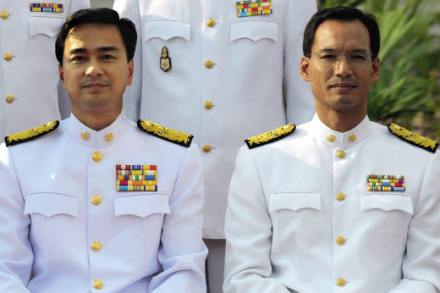
Eric Ellis meets the Wykehamist and the Old Etonian who head recession-hit Thailand’s new government, and asks whether foreign investors can have confidence in them He was born in South Kensington; his character was built at the spartan Old Malthouse prep school on the Dorset coast and at Winchester, alma mater of Hugh Gaitskell, Geoffrey Howe and Willie Whitelaw; then came the obligatory degree in PPE at St John’s College, Oxford, before successful spells with Warburgs, Robert Fleming and JPMorgan that transformed him into a very wealthy man. His father was a senior civil servant and his grandfather a Privy Councillor. He’s tall, handsome, charismatic, just 45 — and sure enough, he’s now deputy leader of his political party.

City Life | 3 January 2009

It’s early days in Indonesia’s election season, but already Jakarta is transformed into a riot of colour. Political bunting of all shades sprouts from every conceivable vantage point, brightening the grey of poverty; the green of the surging Islamist parties; the red and black buffalo of the party of Sukarno’s eldest daughter Megawati; the yellow of Golkar, the clan of the late kleptator Suharto and his cronies. Posters and promises garland walls, bridges and streetside food stalls. Some even sponsor the capital’s flotilla of kaki lima — literally ‘five feet’ — pushcarts that dispense snacks of sate, tropical fruits and sometimes salmonella.

City Life | 15 November 2008

It was Kylie Minogue who made me think Turkey and Europe might just about be ready for each other. There was the pop poppet — well, life-size images of her — flaunting her curvaceous clunes at shoppers in the Agent Provocateur lingerie outlet at Istanbul’s Kanyon Mall. It was a shocking exhibition in a country that is 98 per cent Islamic. But the thing was, it was me who was shocked. I’d been reading press accounts of Turkey’s gathering fundamentalism: how its women had embraced the hijab, while those who were disinclined to do so were having it forcibly pulled over them by Islamist vigilantes. Once a secular standard-bearer, Turkey seemed to be fast morphing into Tehran, or so one read.

Whatever happened to Sir Richard Evans?

I had read — admittedly in the Guardian — that one needed to count one’s fingers after shaking hands with Dick Evans. Anecdotes about the super-salesman who secured UK plc’s biggest and most controversial contract, the $80 billion Al-Yamamah arms deal with the Saudis that saved British Aerospace (now BAE Systems), suggested a crafty Lancastrian who has despots for breakfast, or at least to breakfast, while separating them from their defence budgets.

Farewell to Asia’s greatest kleptocrat

The strangest moment of the elongated théâtre de mort of the billionaire Indonesian dictator Suharto came islands apart on the day after the old crook died. In Central Java, the remains of the despot the United Nations last year declared to be the 20th century’s biggest thief were interred in his family’s crypt in a funeral that blended Javanese mysticism with the pomp of state. Indonesia’s elite attended in mourning dress, uniform or ceremonial sarong.

City Life: Kabul

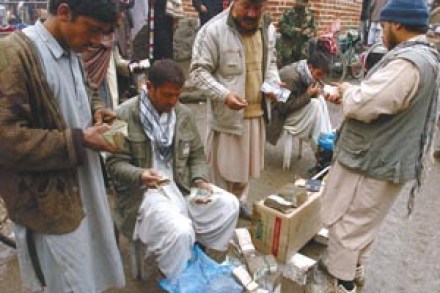
In Kabul Perhaps the best way to view Corporate Afghanistan — there’s a term you don’t often hear — is to regard it as a never-ending spigot draining sovereign wealth funds into the world’s biggest tax haven. That’s the good part. The bad bit is that you might get killed enjoying it. The West tips about $5 billion of aid a year into Kabul — while Roshan, the Aga Khan-owned mobile phone operator, collects more revenue than the Afghan taxman. Very fast money is being made here, particularly by those working for multilateral agencies or a myriad of NGOs. They’re the ones who pay $10,000-a-month rents for half-built houses in Kabul’s (relatively) upmarket Wazir Akbar Khan district, once home to Osama and friends.

City Life

Flying into Colombo’s civil war on tourist-less Sri Lankan Airlines, my eye was caught by three plugs in the in-flight magazine from the country’s investment board: ‘Gen­erous Fiscal Incentives’, ‘Transparent Legal System’, and ‘One of the Most Livable Countries in Asia’. The 70,000 who have died since 1983 in the former Ceylon’s intractable conflict between Tamils and Sinhalese would clearly disagree with the last one. But the praise for Sri Lanka’s rule of law provided pause for thought, since I had been summoned to a rural court deliberating the ownership of a property I bought here in 2003, a happier time when a fourth plug, ‘Liberal Business Environment’, was briefly true.

The island state that wishes it could be towed to less murky waters

Singapore’s property market is roaring. I know that because our lease will soon expire and our landlady wants 70 per cent more rent than she did in 2004. No matter that our flat leaks like Blair’s Cabinet and that its 1970s-wired electricity trips at least once a week: these are details too far for our poco­curante proprietrix. But she has noticed that a private banker from Tokyo has signed, sight unseen, for a same-sized unimproved flat downstairs at 150 per cent more than the vacating lessee. It’s all very puzzling: there’s no textbook rationale to the real-estate boom. The economy is growing at an unremarkable-for-Asia 6 per cent, much the same as it has for years, save the difficult ‘Asian Contagion’ period of the late 1990s.

War has already been declared in Iran — between Coca-Cola and the theocrats

The Shah is Dead. Long live the Shah — and I don’t mean Reza Pahlavi, the 45-year-old pretender to his late father’s Peacock Throne, whom many in Washington would like to install atop this most vexatious nation. The way things are going nuclear-wise, he may have a chance. But almost three decades after Khomeini’s revolution, the monarch who matters among Tehran’s business elite is the ‘Shah of Pistachios’, Akbar Hashemi Rafsanjani. Iran’s once and perhaps future president is widely believed to be the country’s richest man: his family’s writ runs to airlines, caviar, oil, mining, automobiles, property and agriculture, which pretty much covers the entire economy.

‘Asians don’t hug’

Singapore No one outside Singapore’s steel-trap judiciary knows for sure whether Darshan Singh hanged Nguyen Tuong Van, of Melbourne, in Changi on Friday 2 December. A week earlier, Darshan said he’d been sacked as chief hangman after a series of embarrassingly gruesome articles had appeared about him in the Australian press. But his masters insist he wasn’t sacked. The confusion was not what you’d expect in Singapore, a place that is in most things obsessively efficient. But we do know that 72-year-old Darshan has seen off about 850 criminals in his 40 years as hangman. He is something of a world champion at this particular discipline.