Emily Rhodes

The traffic in human misery

From our UK edition

When Sara discovers that her husband died in India, rather than being killed in Afghanistan as she was told, she travels to Delhi to uncover the circumstances of his death. On the surface, Invisible Threads is a novel about an English woman on a personal journey to India, and comes with many of the trappings we’d expect. Lucy Beresford describes the country’s assault on her protagonist’s senses and observes the seeming contradictions of poverty, such as when Sara sees a barefooted beggar — her ‘hair is matted, her turquoise sari filthy, but she is carrying a mobile phone’.

Melissa Kite comes out fighting. Again

From our UK edition

Madison Flight is a divorce lawyer, nicknamed ‘the Chair-Scraper’ for the number of times she leaps to her feet arguing in court. She has been contrary since birth, putting her mother through six days of labour before eventually being pulled out by forceps. ‘Is she saying no?’ asks the doctor, perplexed by the distinctive ‘Naaaaaaaaah!’ sound of her new-born wail. Madison’s life begins with her voicing dissent and argument fills every moment of her adult life.

The unexpected joys of working while pregnant

From our UK edition

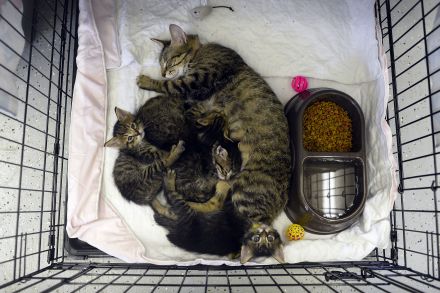
‘You are like my cat.’ So I was told when eight-and-a-half months pregnant, just before going on maternity leave from the bookshop. I had hauled myself up from putting a book away on the bottom shelf — no mean feat when one is quite so heavily spherical — and this cat-loving young woman had caught me exhaling a little too vociferously. I certainly didn’t feel especially feline, but as it transpired her cat had just had kittens, and I looked just like the cat had looked before giving birth. The lady giggled. Working in the bookshop while visibly pregnant has made me aware how touchingly awestruck we all still are by the miracle of childbirth.

Early editions

From our UK edition

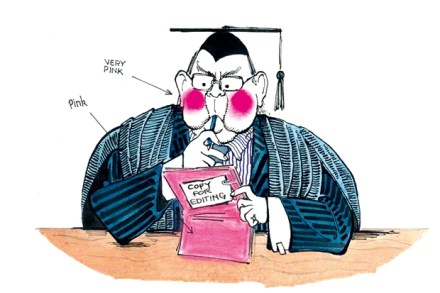
‘The bath is still stained pink,’ said Anna, laughing as we reminisced about those halcyon days, now over a decade ago, when she started a school magazine. Anna and I went to Westminster School for sixth form. We’d both come from St Paul’s Girls’ School, where magazines proliferated, and were surprised to discover that Westminster had none except for a rather grand annual put together by the development office, aimed more at Old Westminsters than current pupils. Anna was keen to set something up. It would be called Pink, she decided, after the school colour. This brings us to the bath. A launch party was deemed of paramount importance, so we duly assembled in the basement of Anna’s parents’ house, where she had turned everything pink.

L.P. Hartley’s guide to coping with a heatwave

From our UK edition

Those of us who have been struggling to endure the recent heat should turn to L.P. Hartley’s classic coming-of-age novel The Go-Between for some advice. ‘There’s no such thing as bad weather, only unsuitable clothing,’ Alfred Wainwright wisely said, and L.P. Hartley’s young Leo couldn’t have agreed more. He arrives at his friend’s smart country house without summer clothes and, as the mercury soars, suffers in his Eton collar, Norfolk jacket, breeches, black stockings and boots. ‘You are looking hot,’ everyone tells him, until at last Marian — the daughter of the house — takes him shopping for a cooler suit.

Great literary tea parties (oh, and ours)

From our UK edition

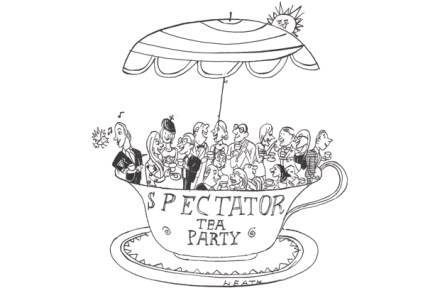
Every summer this magazine invites some of its (randomly selected) subscribers to tea in the garden. Every Englishman loves tea and the pages of English literature are richly adorned with tea-time scenes. Perhaps the most gluttonous teas are to be found in Daphne du Maurier’s Rebecca. From her exile abroad, the narrator remembers tea-time at Manderley with relish: ‘Those dripping crumpets, I can see them now. Tiny crisp wedges of toast, and piping-hot, flaky scones. Sandwiches of unknown nature, mysteriously flavoured and quite delectable, and that very special gingerbread. Angel cake, that melted in the mouth, and his rather stodgier companion bursting with peel and raisins.’ Tea at Manderley is not only sumptuous, it is unchanging.

Book clubs

From our UK edition

Everyone knows somebody who belongs to a book club. From informal gatherings of bookish friends in living rooms and cafés to ticketed events organised by newspapers, publishers and hubs like the Southbank Centre, and including rather more off-piste groups such as my own walking book club on Hampstead Heath, book clubs have become an integral part of our cultural landscape. At first glance it’s somewhat puzzling as to why they’ve become such a phenomenon. Surely it is surprising that readers, whom one assumes to be on the more introverted side of the spectrum — content to retire with a book of an evening rather than paint the town red — can be such keen talkers? The act of reading is by necessity anti-social.

First novels: When romance develops from an old photograph

From our UK edition

The intensely lyrical Ghost Moth is set in Belfast in 1969, as the Troubles begin and when Katherine, housewife and mother of four, finds herself remembering an old love affair. Michèle Forbes achieves a vivid depiction of family life — the daily squabbles and teasing, the nuances of Katherine’s love for her children through a haze of exhaustion, one daughter’s struggle to be liked by bullying friends and another’s blushingly awkward first crush. Interwoven with these domestic scenes are chapters set 20 years earlier, in which we see the unfurling of Katherine’s haunting romance.

By the book: The NSA is behaving like a villain in a 1950s novel

From our UK edition

The continuing drip-feed of stories about governments and friendly-seeming internet giants sifting through our data has left some citizens feeling outraged and a bit duped. I have no doubt that they would sympathise with poor deceived Ellen North in Dorothy Whipple’s brilliant 1950s novel Someone at a Distance. ‘Ellen was that unfashionable creature, a happy housewife’, who works herself to the bone to make a cheerful home for her children and indolent, self-satisfied husband, Avery. When Avery’s mother employs a young French companion — the vain and poisonous Louise Lanier — we sense that Ellen may not be a happy housewife for long.

Rosh Hashanah reading list

From our UK edition

Happy New Year! No, it isn’t three months’ early if you’re Jewish, and those of you who aren’t might like to cash in on the celebration. So, in honour of Rosh Hashanah – Jewish New Year – today, I thought I’d pick out a few of my favourite Jewish books. This proved to be such a hopelessly vast category, however, that I’ve narrowed it down to books about Jewish London – the place where 60% of British Jews, including myself, live. Whether or not you’re Jewish, might I encourage you to pick up one of these excellent books as a means both of discovery and of celebration. Happy New Year, and happy reading. 1).

Last orders

From our UK edition

Sad news from the Campaign for Real Ale, which says that more and more young people are drinking at home rather than down the pub. ‘Pre-loading’ at home before clubbing has seen the number of 18- to 24-year-olds going to the pub at least once a week fall from 38 per cent to a measly 16 per cent, over the last seven years. Eight thousand pubs have closed during this period. Time for some drastic measures and instructive reading. Camra should provide youths with literary inspiration. Surely, after encountering some of literature’s glorious pubs, with their jolly and eccentric regulars, no reader will be able to resist the charm of their local.

Lose weight the Muriel Spark way

From our UK edition

Those of you dieting your way to a svelte physique amid the flesh-exposing terrors of summer should take courage from Mrs Hawkins, the heroine of Muriel Spark’s wonderful novel A Far Cry from Kensington. Mrs Hawkins, with her unfortunate ‘Rubens quality of flesh’, only starts to worry about her weight when she gets a new job and notices that all her colleagues suffer from some kind of affliction. These range from stammers to stomach ulcers, pock-marked faces to war-wounds, and so, lying awake one night, she wonders what her own ailment might be. She gets out of bed to look at herself in the mirror: ‘I stood there, massive in my loose, warm nightdress.’ Then she realises, ‘I was immensely too fat.

The tough life of a celebrity tortoise

From our UK edition

You might be interested to see how Daphne the tortoise reacted to being on the front cover of the Spectator. Here she is just having spotted her headline (halfway down on the left): And here is her reaction (look closely at her mouth) Yawn!

What a tortoise can teach us

From our UK edition

‘Are you a dog or a cat person?’ It’s one of those questions that comes up eventually — in conversation, on Blind Date or during an Oxbridge interview. The theory is that either you like a dog’s boundless tumble of affection, or you respect the sleek independence of a cat, and explaining your choice reveals your personality. Well, I’m a tortoise person. I write this having recently acquired a tortoise. Little Daphne caught my eye from a tank in an Essex pet shop, where she was surrounded by other one-year-old tortoises busy burrowing away. Daphne stopped, turned her wrinkled neck and looked straight at me before coolly yawning. I knew then that she was the one.

Shire, by Ali Smith – review

From our UK edition

Pastoral elegy is not what you expect to find in a collection of short stories, but then Ali Smith is a wonderfully unexpected writer. In the first story, ‘The Beholder’, which was shortlisted for the Sunday Times Short Story Award, a patient develops a growth on her chest — ‘woody, dark browny, greeny, sort-of circular, ridged a bit like bark, about the size of a two pence piece’. The doctors are mystified, but a gypsy recognises it as ‘a young licitness’, a pun of mishearing later revealed to be ‘a Young Lycidas’, a rose named after Milton’s pastoral elegy.

Summer reading? What about summer re-reading?

From our UK edition

What will you read over the summer? The newly announced Booker longlist? A selection of books from newspaper and magazine summer reading lists? A book that a Spectator columnist is taking on holiday? There are so many good new books to read – if not newly published, then at least new to you – and now is a good time to get stuck in. Why not, however, also choose something to re-read this summer? There is something about summer and its particular feeling of stepping off the treadmill and slowing down that makes it ripe for taking the extra time to re-read a book. It’s a good moment to look back over what we’ve read and pick out a lucky book or two to revisit. After all, how can we really know a book if we’ve read it just once?

By the book: All passion rent

From our UK edition

According to the Council of Mortgage Lenders, 81 per cent of British people want to own their homes within the next ten years. George Osborne is the latest in a long line of politicians, including Thatcher and Macmillan, who have made our nation’s obsession with outright ownership central to their policy. This preoccupation with actually owning a freehold is noticeably absent in my favourite literary depiction of acquiring a house, Vita Sackville-West’s All Passion Spent. On the death of her husband, Lady Slane defies her awful children and moves from Chelsea to rent a house in Hampstead, which she remembers from many years ago.

The Flamethrowers, by Rachel Kushner – review

From our UK edition

This bright, burning flame of a novel takes place in the art world of 1970s New York. Our guide to this scene of glittering parties and eccentric characters — such as the White Lady, who wears white and goes to a grocery store to buy ‘milk, white bread, a can of hominy, and two jars of mayonnaise’ — is Reno, a young aspiring artist. Alone and new to the city, Reno asks herself, ‘How do you find people in New York City?’ She relies on chance: ‘Chance shaped things in a way that words, desires, rationales could not. Chance came blowing in, like a gust of wind.’ She chances her way around New York, falling in with a crowd at a bar, tagging along to parties, going home with a man whose name she doesn’t want to know.

Things I Don’t Want to Know, by Deborah Levy – review

From our UK edition

In her powerful rejoinder to Orwell’s 1946 essay ‘Why I Write’, Deborah Levy responds to his proposed motives for writing — ‘sheer egoism’, ‘aesthetic enthusiasm’, ‘historical impulse’ and ‘political purpose’ — with illuminating moments of autobiography. Levy begins one spring when she was crying on escalators, ‘at war with my lot’. She flies to Majorca, where, stuck on a mountain the night she arrives, she takes comfort in ‘being literally lost when I was lost in every other way’. Reading her notebooks later, she alights on a Polish director’s advice to a young actress: ‘to speak up is not about speaking louder, it is about feeling entitled to voice a wish’.

The Special power of the printed word

From our UK edition

A few weeks ago, three colossal boxes of new books from Penguin arrived in the bookshop. I made myself a strong cup of tea and then began the lengthy task of unpacking them, taking out the books and piling them up in neat stacks, ready to tick them off the invoice before zapping them on to our computer system and putting them out on the shop floor. Rather unusually, one stack of books was visibly shrinking, even as I added to it. Strictly Bipolar is a smartly designed, pocket-sized paperback, in which psychoanalyst Darian Leader challenges the rise of ‘bipolarity’ as a solution to complex problems. There were ten copies of this book in the delivery, but it seemed that any customer who found his or her way to the back of the little bookshop couldn’t help but take one.