Emily Rhodes

Life is a game of cards: Burning Angel and Other Stories, by Lawrence Osborne, reviewed

From our UK edition

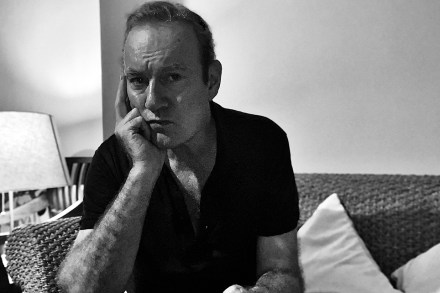
This compelling and unnerving collection of stories is Lawrence Osborne’s first, coming in the wake of recent critically acclaimed novels – including The Forgiven, adapted into a film – and earlier works of memoir, essays and travelogue. Born in England, currently residing in Bangkok, Osborne has earned comparisons with Graham Greene for his portraits of flawed white characters in foreign settings, and Patricia Highsmith, thanks to the menacing noir atmosphere. These nine stories, written over the past decade, do not disappoint. Osborne removes his protagonists – English or American, on the young side of middle age – from their native environments and transplants them into exotic, perilous locations.

Terrorists you might know or love: Brotherless Night, by V.V. Ganeshananthan, reviewed

From our UK edition

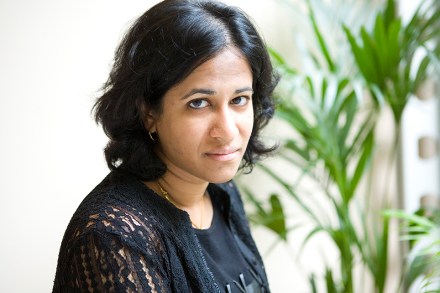
Brotherless Night is the second novel by V.V. Ganeshananthan, an American writer of Sri Lankan Tamil descent, whose debut, Love Marriage, was longlisted for the Women’s Prize for Fiction in 2008. Here, as in her previous book, a female narrator unpicks the lives of a Sri Lankan family torn apart by civil war. Sashi’s reason for studying medicine, and her oft-repeated mantra, is: ‘First do no harm’ The prologue, set in New York in 2009, explodes with its opening sentence: ‘I recently sent a letter to a terrorist I used to know.’ But the bulk of the novel, set in 1980s Sri Lanka, is a mesmerising portrait of time and place in which the narrator gradually reveals who this terrorist is, and explores why ‘that word, terrorist, is too simple for the history we have lived.

Picture study: Second Self, by Chloë Ashby, reviewed

From our UK edition

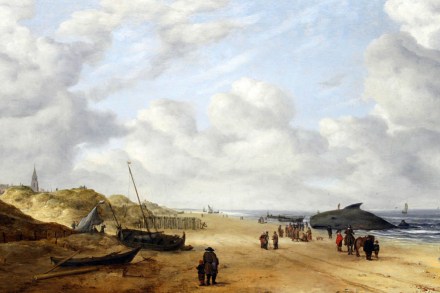
Having established a name for herself as a talented art critic for the national press, Chloë Ashby employs her expertise with illuminating effect in her fiction. In her first novel, Wet Paint, she used the uncomfortable gaze of the barmaid in Manet’s ‘A Bar at the Folies-Bergère’ to explore how her protagonist sees and is seen. In her new novel, Second Self, the central painting is ‘View of Scheveningen Sands’ by Hendrick van Anthonissen, which again becomes an insightful parallel to the protagonist’s life. Cathy, 35, an art conservationist, is happily married to Noah, 11 years her senior, an academic and authority on international relations.

Turmoil in Tuscany: The Three Graces, by Amanda Craig, reviewed

From our UK edition

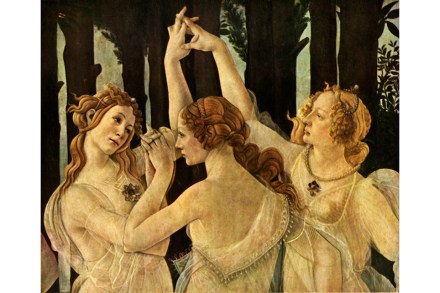
The title of Amanda Craig’s enjoyable and provocative ninth novel might conjure the dancing trio in Botticelli’s ‘Primavera’ (which we visit in the book, set in Tuscany); but the three graces here are Ruth, Diana and Marta, elderly expat friends who meet for weekly gossips over coffee, ‘united by age, exile, the love of dogs and their disinclination to discuss their infirmities’. The women may be less beautiful than Botticelli’s, but they are certainly more formidable. By the end of the first chapter they’ve already smashed a car window to rescue an overheating dog.

Michela Wrong, Emily Rhodes and Cindy Yu

From our UK edition

21 min listen

This week: Michela Wrong asks whether anywhere is safe for Kagame's critics (00:58), Emily Rhodes charts the rise of fake libraries (07:54), and Cindy Yu reviews a new exhibition at the British Museum on China's hidden century (15:25).  Produced and presented by Oscar Edmondson.

Harry’s crusade: the Prince vs the press

From our UK edition

31 min listen

This week:  Prince Harry has taken the stand to give evidence in the Mirror Group phone hacking trial which The Spectator’s deputy editor Freddy Gray talks about in his cover piece for the magazine. He is joined by Patrick Jephson, former private secretary to Princess Diana, to discuss whether Harry's 'suicide mission' against the press is ill-advised. (01:22) Also this week:  In The Spectator professor Robert Tombs details the trouble with returning the Benin Bronzes back to Nigeria, arguing that their restitution is more complicated than some claim.

Cooking the books: the rise of fake libraries

From our UK edition

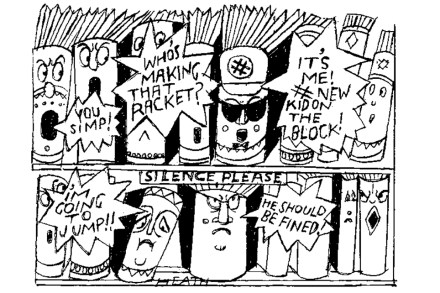
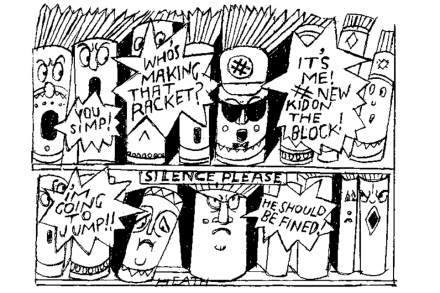
There is a growing fashion for fake books. Not fake as in written by a series of AI prompts, but fake as in things – cleverly painted empty boxes, or a façade of spines glued to a wall – designed to mislead the casual onlooker into thinking that they are books. A recent New York Times article highlighted the trend. It featured various interior designers offering spurious arguments in favour of fakes over real books: they can be a practical solution for hard-to-reach shelves; a smart example of upcycling unwanted volumes destined for landfill; useful and humorous storage boxes. Neat, quirky design solutions are, however, the least of it. This fashion signals a profound shift in our attitude to books.

The Native American lore of Minnesota’s lakes and islands

From our UK edition

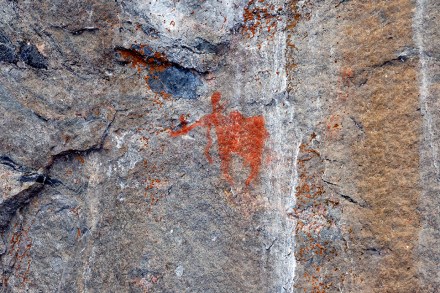
Louise Erdrich intrigues with her very first sentence: ‘My travels have become so focused on books and islands that the two have merged for me.’ She explores this integration in her astonishing account of her trips to the lakes and islands of Minnesota and Ontario, where ancient painted signs on rocks inspire her to perceive some islands as ‘books in themselves... You could think of the lakes as libraries.’ There is a productive tension between German logic and Native American spirituality in her refreshingly unusual take on the world: she calls herself a ‘mixed-blood’, born of a German-American father and French-Ojibwe mother.

Max Jeffery, Emily Rhodes and Daisy Dunn

From our UK edition

19 min listen

This week: Max Jeffery reads his letter from Abu Dhabi where he visited the International Defence Exhibition (00:56), Emily Rhodes discusses the tyranny of World Book Day (05:59), and Daisy Dunn tells us about the mysterious world of the Minoans (10:22).  Produced and presented by Oscar Edmondson.

The tyranny of World Book Day

From our UK edition

‘Dear parents, a reminder that we are dressing up for World Book Day! Don’t forget your child should come to school in costume as their favourite character tomorrow…’ It’s the email every parent dreads receiving. (Or one of them, anyway.) It tends to be opened at eight o’clock the evening before World Book Day, to be met with feelings of exasperation, desperation and guilt. Dressing up is, in fact, the antithesis to reading for pleasure How is it that the charity World Book Day, founded by Unesco in 1995 with the laudable mission ‘to promote reading for pleasure’, has morphed into yet another occasion for parents to buy stuff?

Seeing and being seen: Wet Paint, by Chloë Ashby, reviewed

From our UK edition

In this arresting debut novel we follow 26-year-old Eve as she tries to come to terms with the loss of her best friend Grace. Flashbacks punctuate the present day of Eve’s London life, gradually revealing her role in the grim circumstances of Grace’s death. Eve lives in a flatshare with a patronisingly well-meaning couple who give her cheap rent in exchange for cleaning. The awkward dynamic is made worse by Eve’s casual kleptomania (helping herself to Karina’s lipstick, necklace, gloves and dressing gown) and by the inappropriate leers of Bill ‘who likes to start conversations when I’m wrapped in a towel’.

A modern Medea: Iron Curtain, by Vesna Goldsworthy, reviewed

From our UK edition

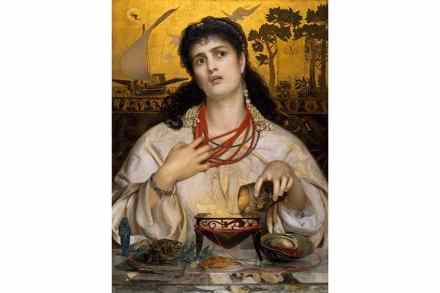
Vesna Goldsworthy’s finely wrought third novel explodes into life early on with a shocking scene in which Misha — the boyfriend of our protagonist, Milena Urbanska — returns from a short, tough spell of military service, initiates a game of Russian roulette (‘the only Russian thing I could face right now’) and blows his brains out. It is 1981. Misha and Milena are children of the political elite in an unnamed capital city in the Eastern Bloc. As such, they are afforded privileges their compatriots lack: palatial homes, preferential treatment, western luxuries as seemingly innocuous as cans of Bitter Lemon from Italy and imported tampons, instead of ‘the scratchy home-produced sausages of grey cotton waste encased in a flimsy net that...

The stuff of everyday life: Real Estate, by Deborah Levy, reviewed

From our UK edition

Real Estate is the third and concluding volume of Deborah Levy’s ground-breaking ‘Living Autobiography’. Fans of Levy’s alluring, highly allusive fiction will appreciate the insights into her life; moreover, anyone with an ounce of curiosity will be fascinated by her compelling tour of city streets, island rocks and meandering diversions into ideas from a wealth of writers and artists. We begin the book with the author buying a plant from a flower stall. (Our modern-day Mrs Dalloway purchases a banana tree in Shoreditch rather than cut flowers in Westminster.

Rock, a hard place

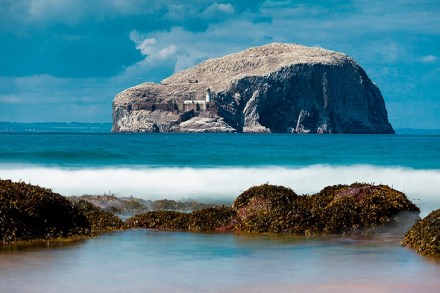
‘It’s a woman’s thing, creation,’ says Sarah, a girl accused of witchcraft in 18th-century Scotland, in one of the three storylines in Evie Wyld’s powerful new novel. Sarah is pregnant, having been raped and nearly killed. She is looking at a piece of sacking sewn by a sister and mother and continues: ‘You can see how they felt in each stitch, you can hear the words they spoke to each other and into the cloth.’ The Bass Rock is in many ways an amplification of these words spoken into the cloth, a feminine counterforce to the masculine violence that pulses viscerally throughout.

bass rock wyld

The art of negotiation: Peace Talks, by Tim Finch, reviewed

From our UK edition

Early on in Tim Finch’s hypnotic novel Peace Talks, the narrator — the diplomat Edvard Behrends, who facilitates international peace negotiations — reflects: ‘Peace talks settle into this repeating pattern after a while, a pattern like that of the floor carpets in places like this conference centre, in which a polygonal weave mesmerises the eye almost to a vanishing point.’ He is commenting on the lonely, relentless routine of the talks, walks, meals and drinks, as official negotiations inch forward, stall, reverse and proceed again over the course of months.Alongside the diplomatic conference, another type of peace talk is underway: the meandering, intimate prose of the novel’s first-person narrative from Edvard to his wife Anna.

Male violence pulses through Evie Wyld’s The Bass Rock

From our UK edition

‘It’s a woman’s thing, creation,’ says Sarah,a girl accused of witchcraft in 18th-century Scotland, in one of the three storylines in Evie Wyld’s powerful new novel. Sarah is pregnant, having been raped and nearly killed. She is looking at a piece of sacking sewn by a sister and mother, and continues: ‘You can see how they felt in each stitch, you can hear the words they spoke to each other and into the cloth.’ The Bass Rock is in many ways an amplification of these words spoken into the cloth, a feminine counterforce to the masculine violence that pulses viscerally throughout.

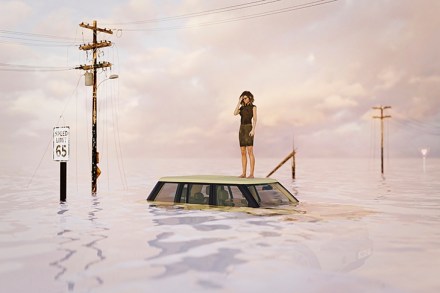
Hell and high water: eco-anxiety dominates Jenny Offill’s latest novel

From our UK edition

Lizzie, the narrator of Jenny Offill’s impressive third novel Weather, is ‘enmeshed’ with her brother, according to her psychologist-cum-meditation teacher. The word ‘mesh’ returns a few pages later, in a podcast, referring to the interconnectedness of different species: ‘a better term than “web”, they think’. With its paradoxical meaning of both containing spaces and joining things together, ‘mesh’ could be used to describe the unusual form of this novel, which is written in short paragraphs, separated widely on the page, yielding a patchwork of Lizzie’s fragmentary thoughts and observations about life in contemporary New York, and the people caught up in it.

Kathleen Jamie’s luminous new essays brim with sense and sensibility

From our UK edition

There is a moment in one of the longer pieces in Surfacing, Kathleen Jamie’s luminous new collection of essays, when the author trains her binoculars on an animal in the distance. She is on an archaeological dig in Quinhagak, a Yup’ik village in Alaska. Unsure as to what the creature is — perhaps a bear, or perhaps a woman picking berries — she waits for it to move: ‘After long minutes, my woman-or-bear spread two black wings and took to the air. A raven!’ She wonders: Maybe it showed how readily, in this unfixed place, the visible shifts. Transformation is possible. A bear can become a bird. A sea can vanish, rivers change course. The past can spill out of the earth, become the present.

Jessie Burton’s The Confession is, frankly, a bit heavy-handed

From our UK edition

Jessie Burton is famous for her million-copy bestselling debut novel The Miniaturist, which she followed with The Muse. Now she’s written her third, The Confession. Like The Muse, it is a double narrative, moving between the early 1980s and 2017 (a departure from the historical settings of her previous books). In 1980, 20-year-old Elise meets Connie — ‘a vixen, upright on her legs’ — on Hampstead Heath. Elise soon forms an intense relationship with this older woman, a successful writer, but when they go to Los Angeles for the filming of Connie’s novel, cracks begin to show. In 2017 we are with Elise’s daughter, Rose, who’s spent her life inventing stories about her mother to try to fill her absence, unexplained since she left her as a baby.

Brutish Brits

From our UK edition

Damian Barr explains the upsetting genesis of his impressive debut novel, You Will Be Safe Here, in his acknowledgements: This story began with a picture of a boy in a newspaper. That boy was Raymond Buys and he’d been killed in a camp not unlike New Dawn. He was just 15. This book is dedicated to him. So the novel opens with a prologue in which a boy, Willem, is left at the New Dawn camp, south of Johannesburg, in 2010. Then Part One takes us back to 1901, to the diary entries of Mrs Sarah van der Watt, about to be taken from her farm — which she watches burn under the British scorched earth policy — to a concentration camp near Bloemfontein.