Emily Rhodes

The cruise of a lifetime

From our UK edition

Near the start of Fleur Jaeggy’s extraordinary novel Proleterka, the unnamed narrator reflects: ‘Children lose interest in their parents when they are left. They are not sentimental. They are passionate and cold.’ Passionate and cold is also an apt description of Jaeggy’s writing: the fierceness of her words erupts from the seams of her tiny, frigid sentences, sometimes just a word or two long. It also fits the narrator, even though she evidently hasn’t lost as much interest in her abandoning parents as she’d like. Her ‘sudden desire’ for her father’s ashes opens the book; then we are plunged back into her recollection of a fornight’s holiday with him on a cruise to Greece on SS Proleterka when she was 15.

Love’s myriad forms

From our UK edition

Carmen Maria Machado’s debut collection Her Body & Other Parties (Serpent’s Tail, £12.99) takes a confident straddle across speculative fiction, erotica, fable and horror. In these electric stories, the author explores the challenges and promises of women’s bodies with forceful verve. In ‘Real Women Have Bodies’, a mysterious illness makes women gradually fade away; many of them ask a seamstress to stitch their disappearing bodies into the fabric of dresses. In ‘The Husband Stitch’, a woman gives herself completely to her husband and son, insisting only that they never touch the ribbon she always wears around her neck. When this tiny privacy is not permitted, we see just how much unravels.

A violent, surrealist world

From our UK edition

Kristen Roupenian’s debut collection, You Know You Want This (Cape, £12.99), comes hotly anticipated. Her short story, ‘Cat Person’, went viral when the New Yorker printed it in December 2017, becoming the second most read article published by the magazine that year. Told in an apparently simple, confessional voice, it recounts 20-year-old Margot’s courtship with 34-year-old Robert, beginning when she flirts while selling him sweets at an art-house cinema, building via text messages, culminating in a night of terrible (for Margot) sex from which she can’t quite be bothered to extricate herself, and continuing in the nasty afterlife of Robert’s increasingly aggressive texts. Everyone read it and everyone argued about it.

The witching time

From our UK edition

All Among the Barley, Melissa Harrison’s third ‘nature novel’, centres on Wych Farm in the autumn of 1933, where the corn fields are ‘acres of gold like bullion, strewn with the sapphires of cornflowers and the garnets of corn poppies and watched over from on high by larks’. Our narrator, 14-year-old Edie, has finished school and her older brother Frank tells her: ‘Something will happen next, and you should choose it.’ In Edie’s provincial life, her choices are limited. Essentially, she can stay at home and help on the farm, marry like her older sister and ‘push out a baby a year’, or become a teacher — she is sufficiently clever, but finds children ‘exasperating’.

Ways of escape | 28 June 2018

From our UK edition

Olivia Laing has been deservedly lauded for her thoughtful works of non-fiction To the River, The Trip to Echo Spring and The Lonely City. Her first novel, Crudo, is every bit as intelligent and provocative, with a roar of energy that comes from having been written, remarkably, in just seven weeks. Perhaps the novel’s most unusual element is its narrator: ‘Kathy by which I mean I’ is a 40-year-old hybrid of the post-punk icon Kathy Acker and a fictionalised version of Laing herself. Acker died in 1997, but Laing brings her back to life for the politically turbulent summer of 2017.

Running for her life

From our UK edition

Françoise Frenkel was a Polish Jew, who adored books and spent much of her early life studying and working in Paris. Her passion for French literature led her to open the first French bookshop in Berlin in 1921, a resounding success in spite of the predominantly Francophobe sentiment in Germany following the first world war. She happily reminisces over its ‘curiously mixed clientele’: ‘Famous artists, celebrities and well-heeled women pore over the fashion magazines, speaking in hushed tones so as not to disturb the philosopher buried in his Pascal.’ It soon became a place of readings, lectures, plays and parties and an essential stop for any French writer passing through Berlin.

A choice of first novels | 19 October 2017

From our UK edition

Black Rock White City (Melville House, £16.99) is ostensibly about a spate of sinister graffiti in a Melbourne hospital. ‘The Trojan Flea’ is scrawled across X-ray screens; ‘I am so full of your death I can now only breathe your rot’ on a stairwell; and, on a dead body, ‘cut into the flesh with a scalpel, from throat to navel, is the word INSPIRATION’. A.S. Patric grabs his reader’s attention with the riddle of ‘Dr Graffito’s’ identity, while a more subtle mystery unfurls alongside. Jovan, the hospital cleaner — whose job it is to remove the offensive graffiti — has come to Melbourne from Sarajevo, where he was a teacher and ‘used to wake in the mornings with poetry emerging in rhapsodies’.

Mysticism and metamorphosis

From our UK edition

‘I frankly hate Descartes,’ states a character in Nicole Krauss’s new novel, Forest Dark: ‘The more he talks about following a straight line out of the forest, the more appealing it sounds to me to get lost in that forest …’ Like the author, this character is called Nicole, lives in Brooklyn, and is a writer and mother. Struggling with her work and her marriage, life is indeed a ‘forest dark’, and we follow her through the tangle of it.

The dark side of creativity

From our UK edition

In Eureka, Anthony Quinn gives us all the enjoyable froth we could hope for in a novel about making a film in the 1960s — champagne, drugs, threesomes, gangsters, a Silver Cloud Rolls-Royce, hula-hooping girls and Pucci scarves flung over smears of vomit. Underneath, however, lies an intellectual question. The film is an adaptation of Henry James’s ‘The Figure in the Carpet’, a story about obsessively trying to understand the secret key that unlocks an author’s work: ‘The idea that governs the whole and gives it meaning… a string that my pearls were strung on.’ (Ought I admit that I enjoyed Quinn’s saucy 1960s screenplay, spliced between chapters of the novel, more than James’s original?

Dark secrets of village life

From our UK edition

Jon McGregor’s first novel, If Nobody Speaks of Remarkable Things, a surprise inclusion on the 2002 Booker longlist that went on to win the Somerset Maugham and Betty Task Awards, captured 24 hours in the life of a suburban street. Fifteen years later, his fourth novel, Reservoir 13, has a similarly concentrated focus, but this time on a village in the north of England and the lens remains open for 13 years. McGregor’s portrait of a village is an astonishing feat.

Intimations of immortality

From our UK edition

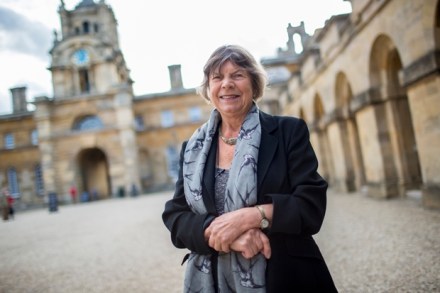
A preoccupation with death is felt from the start of Margaret Drabble’s new novel, which opens with Francesca Stubbs, in her seventies, considering whether her last words will be ‘you bloody old fool’ or ‘you fucking idiot’. Fran is central to the web of characters that populate the book, linked by varying degrees of friendship and kinship, but tied more firmly together by the approach of death. Drabble squares up to old age with pragmatism: she shows us its terrible physical pain, loneliness and expense, but lightens what could threaten to be a grim read with observational humour, delighting in her characters’ eccentric pleasures.

Words on the street

From our UK edition

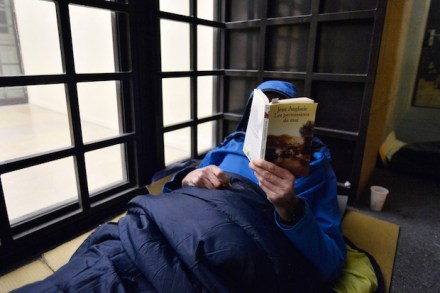
A white van pulls up outside St Giles in the Fields, an imposing 18th century church in central London, around the corner from Tottenham Court Road station, for a couple of hours every Saturday afternoon. St Giles is known as ‘The Poets’ Church’ because it has memorials to Andrew Marvell and George Chapman, but this humble van makes the nickname more fitting. It’s a library. To be homeless is to have no fixed address, which means you can’t borrow books from a public library — but it doesn’t mean you’ve no desire to read. Quaker Homeless Action set up this mobile library in 1999, making runs into London twice a week and lending books to more than a thousand homeless people a year.

London’s lost rivers

From our UK edition

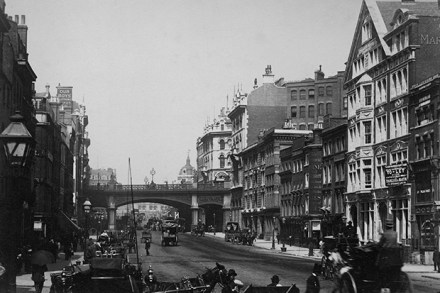
I found my first of London’s many lost rivers when I walked across Holborn Viaduct, looked down at the sweep of Farringdon Road below and realised that it had to be the path of a river, not just a road. Indeed, I was soon to learn that the river Fleet runs directly beneath, coursing down to meet the Thames by Blackfriars Bridge. The Fleet is perhaps the most famous of London’s lost rivers; it was once large enough for boats to navigate it, and an anchor has been discovered as far up as Kentish Town.

The power of music and storytelling

From our UK edition

Madeleine Thien’s third novel, recently long-listed for the Man Booker Prize, begins in Vancouver with Marie, who, like the author, is the daughter of Chinese immigrants to Canada. Marie tells us that her father committed suicide in 1989 and that, soon after, the 19-year-old Ai-ming — whose father knew Marie’s father — came to stay, having escaped China in the aftermath of Tiananmen. Ai-ming is drawn to a notebook that has been found among Marie’s father’s surviving paperwork: a handwritten copy of part of a mysterious Book of Records. Marie persuades Ai-ming to tell her the story. Her tale transpires to be not the content of that book, but the crucial role it has played in the lives of their families.

Holiday reading

From our UK edition

Holidays are a welcome chance to lose ourselves between the covers of a book, especially for those of us who struggle to find time to read amid the assorted tyrannies of daily life. So the book that ends up in your suitcase had better be a worthy companion. The disorganised need not fear: you could do worse than grabbing a paperback at the airport. A holiday is a great time to read an easy new bestseller, not least because your friends are likely to have read it, so you can all discuss it over the third bottle of rosé during a long lunch. Just one note of caution: time tells. Many current bestsellers will have all but disappeared within a few years, whereas a classic endures for a reason. So to avoid your reading being too forgettable, for each new book, take an old one, too.

When novels kill

From our UK edition

[audioplayer src="http://feeds.soundcloud.com/stream/261189280-the-spectator-podcast-the-wrong-right.mp3" title="Emily Rhodes and Lara Prendergast discuss the danger of books" startat=1095] Listen [/audioplayer] Who can forget the terrible climax of Howards End, when Leonard Bast is killed by a deluge of books? Death by books holds a horrible irony for poor Bast, as he had thought they were his salvation, seeking to escape ‘the abyss’ of poverty by reading Ruskin in the evening and trying to impress the middle-class Schlegel sisters by listing his favourite titles. Try as he might, he can only fail, as E.M. Forster shows books to be extremely treacherous: they don’t save Leonard Bast, they kill him.

A mix of myths

From our UK edition

With ‘both arms stretched out like a starfish, her long hair floating like seaweed at the sides of her body’, Kitty Finch swam naked into view in Deborah Levy’s Booker-shortlisted Swimming Home. Similarly, in Hot Milk, Sofia Papastergiadis loves to swim —as, indeed, does Levy herself. Only, whereas Kitty swims up and down the gravelike plot of a villa’s swimming pool, Sofia prefers the open expanse of the sea. She swims off the coast of Spain, in Almeria, where she is helping her mother find treatment for the periodic ‘mysterious’ paralysis of her legs. Caring for her mother means that she has given up pursuing a doctorate in anthropology, despite her first-class degree.

Who steals books?

From our UK edition

[audioplayer src="http://rss.acast.com/viewfrom22/donaldtrumpsangryamerica/media.mp3" title="Emily Rhodes talks to Isabel Hardman about book thieves" startat=1139] Listen [/audioplayer] Notoriously, during the riots in London five years ago, Waterstones was the only high-street shop that wasn’t looted. But that depressing lack of book-pinching belied a thriving -tendency. Think of a bookshop and you think of a musty, hushed spot where people browse and whisper. In fact, it is thick with thieves. As a bookseller, I’ve encountered many a thief over the years. Most dramatic was the Mr Men thief, who used to steal a whole shelf of these tiny children’s books every couple of months. One afternoon I emerged from the stockroom to find the shelf newly emptied.

The library in the Jungle

From our UK edition

Sikander and I are sitting at a small table in a small shed. The shed is filled floor-to-ceiling with books: chick lit, thrillers and a neat set of Agatha Christies line the shelves, alongside a large atlas, a few dictionaries and grammars, and the thin green spines of children’s learning-to-read books. More books spill out of boxes stacked in the corner, and pens, notepads, bags of clothes, a globe, a guitar and a game of Battleships are useful flotsam. We are in Jungle Books, a library which British volunteer Mary Jones set up a few weeks ago in the Calais migrant camp known as ‘The Jungle’. Sikander, a lean Afghan, tells me that the last book he took out was about starting a small business.

Idolising Ida

From our UK edition

Jonathan Galassi is an American publisher, poet and translator. In his debut novel Muse, his passion for the ‘good old days’ of the publishing industry is palpable: a time when books were books, with glued or even sewn bindings, cloth or paper covers, with beautiful or not-so-beautiful jackets and a musty, dusty, wonderful smell … their contents, the magic words, their poetry and prose, were liquor, perfume, sex, and glory to their devotees. The halcyon days of print publishing were not, in fact, so very long ago, with the first e-reader going on sale only in 2004 and Amazon’s Kindle in 2007; it is astonishing that the digital revolution has taken only a decade to change the publishing landscape dramatically enough to inspire a novel so thick with nostalgia.