Elisabeth Dampier

John Power, Nick Carter, Elisabeth Dampier, Maggie Fergusson & Mark Mason

26 min listen

On this week’s Spectator Out Loud: John Power argues the Oxford Union has a ‘lynch-mob mindset’; Elisabeth Dampier explains why she would never date a German; Nick Carter makes the case for licensing MDMA to treat veterans with PTSD; Maggie Fergusson reviews Island at the Edge of the World: The Forgotten History of Easter Island by Mike Pitts; and, Mark Mason provides his notes on guided walks. Mark will also be hosting a guided walk for the Spectator, for tickets go to spectator.com/events Produced and presented by Patrick Gibbons.

Never date a German man

Call me unpatriotic but, although I’m German, nothing could ever have persuaded me to date a German man. I married an Englishman, finding Teutonic attitudes towards romance unbearable. Dating can go on for years, often ending in a quiet, dry dissolution after a decade. If you’re lucky, the relationship will limp on towards marriage, driven more by the need to save on taxes than any belief in what many Germans consider an antiquated institution. Two hundred years ago, we had the tragic intensity of Goethe’s The Sorrows of Young Werther, a cornerstone of the Romantic movement. It was so wildly popular that it sparked one of the first waves of romantic consumerism: perfumes, clothing and even mugs depicting scenes from the novel were sold.

The right-wing extremist making a mockery of Germany’s self-ID laws

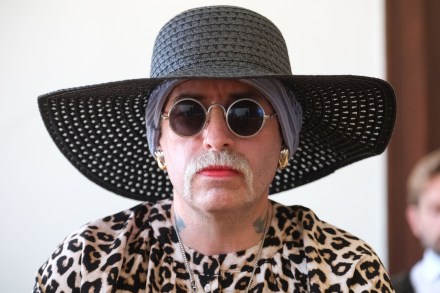
The leopard-print dress, earrings, and lipstick are quintessentially feminine. The thick handlebar moustache and neck tattoos, somewhat less so. The man in court is Sven Liebich, a right-wing extremist who has been photographed wearing a Nazi-style uniform at rallies. In 2023 he was sentenced to 18 months in prison for incitement, slander, and insult. This year his final appeal was rejected and he is now due to be sent to prison. Due to Germany’s comically woke laws on transgenderism, it is a women’s prison that he will be sent to. The new law has also had a chilling effect on freedom of speech in Germany Last year, the last German government passed the Self-Determination Act ('Selbstbestimmungsgesetz').

J.D. Vance is right about Germany’s civilisational suicide

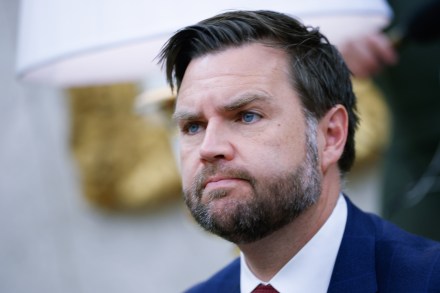
This week, US Vice President J.D. Vance levelled a blistering critique at Europe, accusing it of ‘committing civilisational suicide’, and Germany in particular of bringing about its own demise, saying: ‘If you have a country like Germany, where you have another few million immigrants come in from countries that are totally culturally incompatible with Germany, then it doesn’t matter what I think about Europe… Germany will have killed itself, and I hope they don’t do that, because I love Germany and I want Germany to thrive.’ While some dismissed his remarks as yet another post-Munich Security Conference jab, Vance insisted his concerns for Germany were sincere. And he seems to have a point.

Germany isn’t really cracking down on migration

Germany’s new interior minister, Alexander Dobrint of the Christian Social Union (CSU), has made quite a stir with his proposals to end family reunification and ‘turbo citizenship’, which allowed people to become citizens after as little as three years in Germany. However, as usual in Germany, under the outrage is a more prosaic reality. Only those without official refugee status will be barred from bringing family members to Germany, and it won’t even apply to those who have already come to Germany to claim asylum. It’s a strange irony that freedom of movement across Europe could end up being curtailed because of the EU’s collective failure to tackle migration.

Germany is dangerously close to banning the AfD

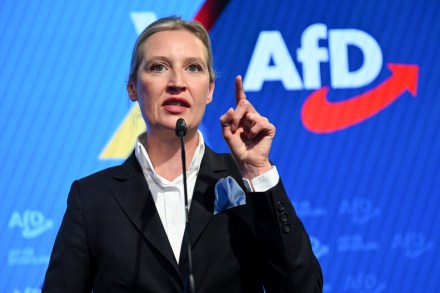
Alternative for Germany (AfD) has been declared ‘right-wing extremist’ who are ‘against the free democratic order’ by Germany’s domestic intelligence service. The Office for the Protection of the Constitution (BfV) can now increase its investigation of the AfD, including tapping their phones, intercepting their electronic communications, and recruiting informants within the party. Public servants, especially those in the police or military, may find themselves fired unless they leave the party. Members of the party may find themselves barred from gun ownership. Some in public sector television are calling for the AfD to be kept off the airwaves. The AfD is being treated as though it were a dangerous fringe group, when in fact it is the second-largest party in Germany.

Why the AfD is leading in the polls

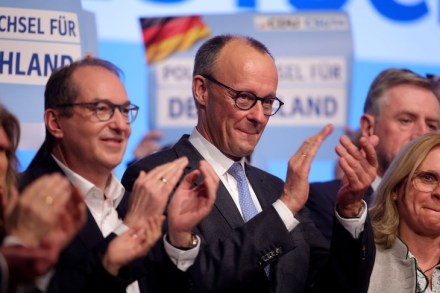
Germany has a new government. It may also have a new government in waiting. On the same day that the centre-right Christian Democratic Union (CDU) and centre-left Social Democratic party (SPD) announced they had concluded coalition talks to form a government, a poll showed the hard-right Alternative for Germany (AfD) is the most popular party in Germany. A quarter of all voters now support the AfD. Since the election in February, the CDU has lost 5 per cent of its support. It's easy to see where it all went wrong for the CDU. Having promised fiscal responsibility, moderate right-wing governance, and the return of controlled borders, the party has instead rolled into bed with the SPD.

Germany is heading towards an immigration catastrophe

The German Social Democratic party (SPD) has published its working paper on immigration. It calls for half a million more migrants every year, no deportation of illegal immigrants unless they are extremely violent, voting rights for foreigners, automatic citizenship after 25 years, and a new ministry for immigration and integration. You would think the left-wing party was in no position to make demands. After all, the SPD led the coalition government which lost the last election, when it failed to be one of the top two parties for the first time since the 19th century. But the centre-right Christian Democratic Union, which won the most votes in the election, has ruled out dealing with Alternative for Germany (AfD), which came second.

Why even parts of Berlin are moving right

‘Berlin is more East than West’, said Thilo Sarrazin. A member of the centre-left SPD, in 2010 he published Germany Abolishes Itself, a book which warned about the impact of mass immigration. It sold over one million copies in a year but it went down less well with his own party, which tried to kick him out for writing the book. In 2020, after three attempts, the party finally succeeded, but it was a Pyrrhic victory. Over the course of those ten years, the SPD’s grasp on Berlin, which they had ruled since reunification, slipped away from them, as mass immigration not only changed the country but also its politics. Berlin has a reputation for being left-wing, yet it now has a CDU mayor, and in last week’s federal election the hard-right AfD won several districts.

Germans won’t get the right-wing government they voted for

Germany is still a divided country – at least when you look at its electoral map. After this weekend’s federal election, the east of the country is coloured in the light blue of the hard-right Alternative for Germany (AfD), while the west is dominated by the black of the centre-right Christian Democratic Union (CDU), with scattered green and red spots that show where the Greens and the Social Democratic party (SPD) have maintained their left-wing hold on the cities. One third of all voters were undecided just one week before the election. That shows how many voters felt dissatisfied with all the parties. As expected, the CDU did best in the election, achieving 28.5 per cent of the vote, above the AfD on 20 per cent. However, the CDU shouldn’t celebrate yet.

Why do so many gay men support the AfD?

‘There are many neighbourhoods we can no longer go to because we are in danger of being injured, attacked or murdered,’ Ali Utlu tells me. As a gay German man of Turkish extraction and an ex-Muslim, he’ll be voting for the hard-right Alternative for Deutschland (AfD) party in the German elections later this month. And he’s not alone.  A survey of more than 60,000 gay German men by Europe’s largest gay dating platform Romeo found that almost 28 per cent of its users intend to vote for the AfD, making it the most popular party in Germany for gay men. The poll showed that the AfD did best among 18 to 24-year-olds: 34.7 per cent said they’d vote for the party. Among those aged 25 to 39, it was 32.3 per cent.

Labour’s Irish insurgent, Germany’s ‘firewall’ falls & finding joy in obituaries

48 min listen

As a man with the instincts of an insurgent, Morgan McSweeney, Keir Starmer’s chief of staff, has found Labour’s first six months in office a frustrating time, writes The Spectator’s editor Michael Gove. ‘Many of his insights – those that made Labour electable – appeared to have been overlooked by the very ministers he propelled into power.’ McSweeney is trying to wrench the government away from complacent incumbency: there is a new emphasis on growth, a tougher line on borders, an impatience with establishment excuses for inertia. Will McSweeney win his battle? And what does this mean for figures in Starmer’s government, like Richard Hermer and Ed Miliband? Michael joined the podcast alongside Starmer’s biographer Tom Baldwin. (1:04) Next: can the AfD be stopped?

‘Our side is significantly sexier’: an interview with Germany’s most controversial politician  

‘My knife is at your throat,’ says a Turkish barber, wielding a razor blade around Maximilian Krah’s face. Krah, one of the most controversial figures in Germany’s right-wing Alternative for Germany (AfD) party, sits for a shave – and a grilling. The TikTok video of the conversation has racked up 2.8 million views. Does Krah hate foreigners, the bearded barber asks. No, but ‘eight million have come since 2013’, he says, and ‘too many don’t work and don’t want to work’. Does he hate Islam? Religion is good but ‘not as a reason to blow up people’. This isn’t quite what you’d expect from a member of the AfD but Krah is not your typical politician.

The truth about grooming gangs, ‘why I’m voting for the AfD’ & exploring YouTube rabbit holes

47 min listen

This week: what does justice look like for the victims of the grooming gangs?In the cover piece for the magazine, Douglas Murray writes about the conspiracy of silence on the grooming gangs and offers his view on what justice should look like for the perpetrators. He also encourages the government to take a step back and consider its own failings. He writes: ‘If any government or political party wants to do something about the scandal, they will need to stop reviewing and start acting. Where to begin? One good starting point would be to work out why Pakistani rapists in Britain seem to have more rights than their victims.’ To unpack his piece in a little more detail, we were joined by journalist Julie Bindel, who has been reporting on the grooming gangs for almost 20 years.

Why I’m voting for the AfD

On 23 February, I will vote for the Alternative for Deutschland (AfD) party in the German general election. As someone with an immigrant parent, a postgraduate degree, and who works in the liberal world of film and TV, this is the last thing I’m supposed to admit to in public. My fellow Germans might understand my not wanting to vote for the Social Democratic party (SPD), the left-wingers who lead our deeply unpopular coalition government. But as an ‘educated’ millennial, surely I ought to vote Green? After all, our shamelessly non-neutral public broadcasters ARD and ZDF acclaim them the ‘party of youth’.