Eliot Wilson

Eliot Wilson

Eliot Wilson was a House of Commons clerk, including on the Defence Committee and Counter-Terrorism Sub-Committee. He is contributing editor at Defence On The Brink and senior fellow for national security at the Coalition for Global Prosperity

Grey zone warfare is here. Britain must catch up

The 'grey zone' is the kind of ominous jargon beloved of the military, but for once it is well named: a wide range of hostile activities between states which stops short of the threshold of full-scale conflict, including espionage, cyber disruption and disinformation. It is a state which is neither peace nor war, and it is expanding all the time. The House of Commons Defence Committee has just published a report on the subject, Defence in the Grey Zone. It emphasises that, while the vast majority of the population has become insulated from conflict, this kind of activity brings the reality of disruption and violence to our everyday lives and is being exploited by our adversaries, especially Russia. Labour MP Tan Dhesi, chair of the committee, warned: Are we at war?

Europe must prepare to support Ukraine without America

It is unquestionably the case that people who should have known better were blinded by the Capri-Sun King’s glare when they reassured us that Donald Trump would not abandon Ukraine, that a second Trump administration would not really cut off military aid to Kyiv or effectively offer a free pass to Vladimir Putin. Yet that is what is happening. Last week the US Department of Defense halted a planned delivery of air defence missiles and precision munitions to Ukraine, the third time this year that such a stoppage has been put in place. The weaponry was part of a supply programme agreed under President Biden, but was halted as the Pentagon undertakes a 'capability review' to assess stockpiles currently held by the United States.

Why does Starmer want to grow Britain’s nuclear arsenal?

The government published its National Security Strategy 2025 earlier this week, a strange pushmi-pullyu document building on some policy reviews and anticipating others. It is disappointing and unfocused. The national security strategy was accompanied by an announcement perhaps just as significant: the government will buy at least 12 Lockheed Martin F-35A Lightning strike fighters which are 'dual capable', that is, they can deliver both conventional and nuclear weapons. These aircraft will give the Royal Air Force a nuclear role for the first time since 1998, and the UK’s nuclear capacity will no longer be reliant on the Royal Navy’s Vanguard-class ballistic missile submarines.

Starmer’s national security strategy fools no one

Sometimes it feels as if the government’s approach to defence and security could be summed up by the venerable punchline of the Irish farmer, 'I wouldn’t have started from here'. Despite having had more than four years as Leader of the Opposition to prepare, Sir Keir Starmer never quite seems able to seize the initiative as Prime Minister, often being left puce and blinking. Yesterday saw the publication of the UK’s national security strategy (NSS) 2025, Security for the British people in a dangerous world. It had been announced in February and promised before this week's Nato summit (in fact, it was released on the summit’s first day).

Why shouldn’t Nato become a subscription service?

Today is the first day of Nato’s annual summit. Some have billed it as potentially the most important meeting in the alliance's recent history, while others have played down any expectations of major announcements. One issue which will undoubtedly concern the 32 Nato heads of state and government is the level of defence spending. Nineteen years after it was first agreed by defence ministers and 11 years after it was reaffirmed in the Wales Summit Declaration, the target of spending 2 per cent of GDP on defence is expected to be met by all member states in 2025. It is clear, however, that 2 per cent is woefully inadequate. Rutte said in a recent speech that this summit would agree a new target of 5 per cent – 3.5 per cent on core military requirements and the remaining 1.

Is Britain ready to defend itself against Iranian reprisals?

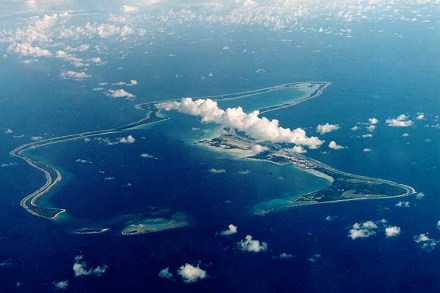
Operation Midnight Hammer, America’s air and missile strikes against Iran at the weekend, did not involve the United Kingdom. Although the Prime Minister was informed of the military action in advance, there was not, so far as we know, any request from the United States for British approval, participation or support, and Sir Keir Starmer continues to call for a de-escalation of the conflict. There had been a great deal of suggestion that the UK might be drawn into action against Iran. The most likely scenario was thought to be a request from Washington to use Naval Support Facility Diego Garcia, the maritime and air base America leases from Britain in the Chagos Islands, for the B-2 Spirit stealth bombers which struck the nuclear facility at Fordow.

Palestine Action’s RAF vandalism was no protest

Members of an activist group called Palestine Action have broken into the Royal Air Force’s largest base, RAF Brize Norton in Oxfordshire, and vandalised two Airbus Voyager refuelling aircraft. With breathless self-congratulation, the organisation said its members ‘used electric scooters to swiftly manoeuvre towards the planes’, sprayed red paint into the turbine engines and used crowbars to damage the fuselages of the aircraft. The red paint, of course, is symbolic of Palestinian bloodshed. https://twitter.

‘De-escalation’ won’t work on Iran

As Donald Trump hastily dashed home from the G7 meeting in Canada to deal with the escalating conflict between Iran and Israel, Prime Minister Keir Starmer went to speak to reporters. The G7 resolution on Iran, he said, 'was about de-escalation'. 'The thrust of the statement is in accordance with what I was saying on the way out here, which is to de-escalate the situation, and to de-escalate it across the region rather than to escalate it,' he added. The Prime Minister has clung doggedly to this line since the first reports came through early last Friday morning of massive and coordinated Israeli air strikes on Iran. That afternoon, Downing Street announced that Starmer had spoken to his counterpart in Jerusalem, Benjamin Netanyahu.

Keir Starmer must raise defence spending higher and faster

Mark Rutte, the former prime minister of the Netherlands, has been secretary general of Nato for less than nine months. Rutte knew when he decided to seek the job that it would not be easy, but even the famously phlegmatic and unflappable Dutchman cannot have foreseen the intensity of events. Even so, he has stepped up to the challenge. At the Royal Institute of International Affairs, yesterday, he issued a stark warning: This is a huge political and financial headache for Sir Keir Starmer Because of Russia, war has returned to Europe… Russia has teamed up with China, North Korea and Iran. They are expanding their militaries and their capabilities.

Can Richard Knighton revamp Britain’s armed forces?

With the Strategic Defence Review finally concluded and published, the government has reportedly chosen its candidate to implement the recommendations and changes. Air Chief Marshal Sir Richard Knighton, currently Chief of the Air Staff, will replace Admiral Sir Tony Radakin as Chief of the Defence Staff (CDS) and professional head of the armed forces later in the year. His task will be to lead Britain’s sailors, soldiers and airmen into a 'new era of threat, which demands a new era for UK defence'. Radakin had been appointed to a three-year term as CDS in 2021, but in March last year he agreed to stay on for an extra year. Summer 2025 was therefore pencilled in for the selection of his replacement; yet several unexpected factors still emerged.

What was the point of the Strategic Defence Review?

This weekend has not been a masterclass in political communications by the government. Selected morsels of the Strategic Defence Review were dropped over several days, concluding with an anodyne launch by the prime minister at BAE Systems in Govan. The result: the prime minister and the defence secretary contradicting each other on defence spending, a rightly furious tirade from the speaker, Sir Lindsay Hoyle, for neglecting Parliament and an urgent question from the Opposition. They are not good at this. The SDR was never going to be a radical reassessment of Britain’s place in the world It is plainly unacceptable that some journalists had sight of the full text of the SDR five hours before Members of Parliament could obtain copies.

Is Jonathan Powell unaccountable?

For the past three months there has been an exchange of bureaucratic fire across the 600 yards that separate the Cabinet Office from parliament. Matt Western, the Labour MP who chairs the Joint Committee on the National Security Strategy (JCNSS), is engaged in epistolary warfare with the dour-but-canny Pat McFadden, Chancellor of the Duchy of Lancaster and minister in charge of the Cabinet Office. The casus belli is whether Jonathan Powell, the UK’s national security adviser, should appear as a witness in front of the committee to discuss his role. The post of national security adviser was created by David Cameron in 2010.

There is nothing strategic about Starmer’s defence review

This Strategic Defence Review has been a long time coming. Back when he was still shadow defence secretary, John Healey had promised a 'strategic defence and security review' as far back as May 2022. The process was then launched eleven days after the Labour government took office last July. There had been reviews in 2010, 2015, 2021 and 2023, but this one was different, as it would be conducted not by serving Whitehall mandarins but by external reviewers. The team was led by former Labour defence secretary and Nato secretary general Lord Robertson of Port Ellen, who had overseen the 1998 Strategic Defence Review.

Is Britain spending 3 per cent on defence, or not?

Your starter for ten: what is the difference between an ambition, a promise, a certainty and a commitment? If you can work it out, send a postcard to 10 Downing Street, SW1A, and you may have clarified the government’s plans on defence spending. Today, ten months after it was launched and following a weekend of drip-feeding of various elements by ministers, the Strategic Defence Review will be published today. The prime minister launched it – a demonstration of his strange literalism – at a dockyard, rather than risk anything so exacting as announcing a major policy review to parliament first. Already, however, ministers are coming badly unstuck over how much money they are planning to spend to implement it.

The problem with Trump’s Golden Dome project

Donald Trump did not get to where he is today by taking no for an answer. Mark Carney, the Prime Minister of Canada, could scarcely have been clearer when he visited the White House earlier this month that the President’s notion of Canada becoming America’s 51st state was not even being entertained. 'Canada is not for sale,' he said bluntly. When Trump chided him that he should never say never, he mouthed silently, 'Never, never.' Undaunted, President Trump has tried a new tack: the proposed Golden Dome, a missile defence system covering the United States which Trump initiated by executive order in January. He announced on his Truth Social platform that Canada was keen to be part of Golden Dome, and he had an offer.

Could the EU sideline Britain in its defence loan scheme?

The Security and Defence Partnership which the government agreed with the European Union this week has had more spin applied to it than a thousand cricket balls. The central argument in its favour, apart from vacuous reiki-like attempts to change the 'mood' of relations with the EU, was that it would allow the UK defence sector to engage with the Security Action for Europe (SAFE) loan instrument providing €150 billion (£127 billion) for defence procurement over the next five years. It does not do that. You would be hard pressed to realise that the partnership has not succeeded in what many saw as its central purpose.

Can Trump get Britain to up defence spending faster?

When Sir Keir Starmer was elected leader of the Labour party five years ago, it must have been a feat of imagination to picture himself as prime minister. It would surely have gone beyond his strangest fever dreams to think he would be dealing more or less weekly with defence policy. That he would be making spending decisions with an eye to placating President Donald Trump probably would have caused some kind of internal short circuit. Yet here we are. It is five weeks until Nato’s annual summit, held this year in The Hague, the first such gathering since Trump returned to the White House.

Labour’s defence review is anything but strategic

Fans of the classic British sitcom will feel a warm glow, as details of the forthcoming strategic defence review (SDR) were revealed this weekend. It leads with a proposal for a 'home guard' of civilian volunteers to protect the UK’s critical national infrastructure of power plants, airports, telecommunications networks and subsea connectors. Predictably, this cued up references to Dad’s Army, Captain Mainwaring and the Local Defence Volunteers (LDV) raised in the dark days of 1940.

How to get Gen Z to fight for Britain

It is easy to despair of young people as self-absorbed, isolated from reality and unwilling to take on the hard tasks that previous generations had to face. I have done it myself, and I suspect humans have been doing it since Adam and Eve worried that Cain seemed to lack dedication and work ethic. It is particularly tempting when we look at the armed forces: serving your country is physically and mentally demanding, inherently dangerous and inadequately rewarded. Why would Generation Z, which is so insular and fragile, be induced to join up? Selling a career in defence as an escape from unemployment is hardly reaching for the stars We may have underestimated young people.

What exactly is the point of Starmer’s EU defence pact?

Sir Keir Starmer’s cherished agreement on defence with the European Union seems to have been high on the diplomatic agenda for a very long time without ever quite reaching its top. The Labour party’s manifesto for last year’s general election promised an 'ambitious new UK-EU security pact to strengthen cooperation on the threats we face'. We have heard the word 'reset' in terms of our relationship with the EU so often that it has lost most of whatever meaning it once had. Next week, however, the UK will host a summit for the Prime Minister to engage with EU leaders and, at last, approve this long-anticipated and discussed defence deal.