Edmund West

Nadine Dorries, Katy Balls, Edmund West, Sam Dalrymple, and Tanjil Rashid

32 min listen

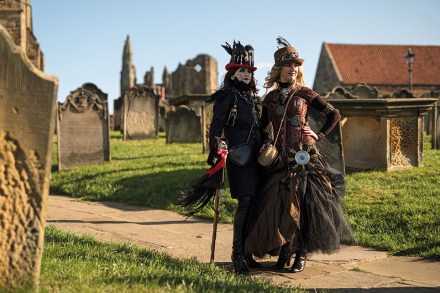
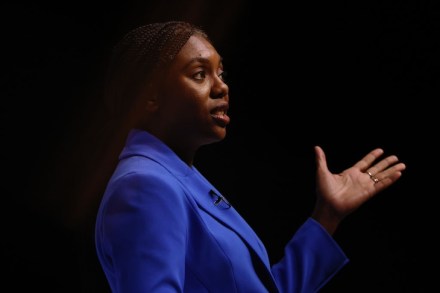
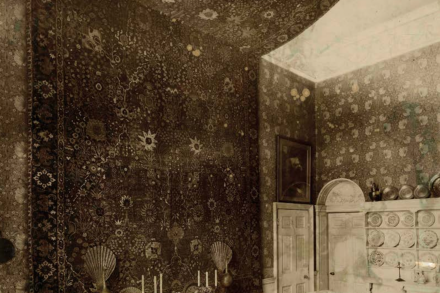
On this week’s Spectator Out Loud: Nadine Dorries reads her diary (1:12); Katy Balls analyses the politics behind the Assisted Dying debate (5:58); Edmund West allows us a glimpse into Whitby Goth Week (11:55); reviewing Avinash Paliwal’s book India’s New East, Sam Dalrymple looks at the birth of Bangladesh (17:39); and Tanjil Rashid reveals William Morris’s debt to Islam (21:23).  Produced and presented by Patrick Gibbons.
Elon’s America, Welby’s legacy & celebrating Beaujolais Day

45 min listen

This week: welcome to Planet Elon. We knew that he would likely be a big part of Donald Trump’s second term, so it was unsurprising when this week Elon Musk was named – alongside entrepreneur Vivek Ramaswamy – as a co-leader of the new US Department of Government Efficiency, which will look at federal government waste. When Musk took over Twitter, he fired swathes of employees whose work was actively harming the company, so he’s in a perfect position to turn his sights on the bloated federal government. It is, writes Douglas Murray, a once-in-a-generation opportunity to strip a whole layer of rot from the body politic. But can he translate his success in the private sector to the public sector?

Fear and gloaming at Whitby Goth Weekend

Every April and every Halloween weekend, Whitby in Yorkshire is chock-full of goths. As I seem to be The Spectator’s adopted goth, I was asked if I might like to write about Whitby Goth Weekend (WGW). Goth is a fashion that emphasises darkness and death: Edgar Allan Poe and Alice Cooper are the best examples. But the only thing to fear from WGW is the horrific train journey. It took six hours to go from King’s Cross to Whitby. Whoever called the TransPennine Express an express needs to explain themselves. When I finally got to Whitby, I was met by thousands of people in costumes. Even the dogs were taking part. Some were wearing wings covered in silver cobwebs, others had orange witches’ hats. One was dressed as a bat.

Is Kemi Badenoch right about autistic people being advantaged?

Tory leadership candidate Kemi Badenoch has been criticised for endorsing ‘Conservatism in crisis’, a pamphlet put out by her campaign team that says autistic people like me get ‘economic advantages and protections’. Is this right? The report says that: ‘Being diagnosed as neuro-diverse was once seen as helpful as it meant you could understand your own brain, and so help you to deal with the world. It was an individual focused change. But now it also offers economic advantages and protections. If you have a neurodiversity diagnosis (e.g. anxiety, autism), then that is usually seen as a disability.’ The document suggests that other 'perks' we're entitled to include getting 'better treatment or equipment at school – even transport to and from home'.

Why Britain riots

33 min listen

This week: The Spectator’s Gus Carter was in Rotherham and Birmingham in the days after the riots. Locals tell Gus that ‘violent disorder isn’t acceptable but people from down south don’t know what it’s like up here’. A retired policeman in Birmingham adds that ‘it’s just yobs looking for an excuse – and yobbos come in all sorts of colours’. You can hear Gus’ report on the podcast. (02:25)  Next: Gus and Lara take us through some of their favourite pieces in the magazine, including Flora Watkins’ notes on ragwort and Isabel Hardman’s review of Swimming Pretty: The Untold Story of Women in Water.

How I learned to embrace my autism

I’m autistic, I teach autistic children and I care for autistic adults, but I never kid myself that we are better than other people. When I asked a fellow autistic man if he could name any famous autistic people, he replied: ‘Hitler and Einstein.’ I love his answer because it punctures the romanticism around autism. There are evil autistic people, as well as geniuses. Was Hitler autistic? We’ll never know for sure, but he showed several symptoms. People who met him found that once he started talking, he would not stop. He was also nocturnal, had an addictive personality and developed lifelong obsessions (in his case, racial purity). Around half of all the people referred to the anti-radicalisation programme Prevent are autistic males.

The truth about being a Goth

I am not your typical Goth. I don’t have piercings or tattoos (I refuse to pay for pain), I have no mental illnesses and, most shocking of all, I am heterosexual. On the other hand, my birthday is on 22 May, World Goth Day, so maybe it was my destiny. I find comfort in the gothic world. As a child, horror films never frightened me because I knew they were fictional. What really gave me nightmares were the ‘Kill your speed, not a child’ adverts. I memorised the Bride of Frankenstein film to stop me thinking about those terrifying adverts as I went to sleep. While I didn’t start wearing black clothes ornamented with skulls until I was 16, I was always drawn to the macabre.

Great and small

‘I’m not going to your place, it looks like a crack den.’ It’s not exactly a vote of confidence when your mother describes your home that way. Admittedly, the bedsit I have lived in for ten years is tiny. There is no central heating. The white blinds have faded to yellow. It’s not much good for house parties: I could fit four people, five if I sat between the sink and the microwave. However, I would like to defend living in bedsits. Whenever I hear people complaining about housing in London, I wonder whether they have considered a bedsit. I’m autistic and work as a part-time carer, but even on my salary I was able to go on holiday abroad four times last year, thanks to my living arrangements. In London, rent is my biggest expense by a huge margin.