Ed West

Ed West

Ed West writes the Wrong Side of History substack

Brexiteers need to act now, or become the most hated people in history

From our UK edition

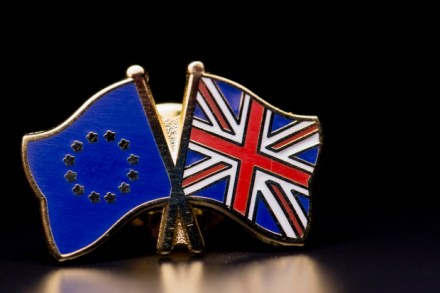
The British constitution is built on compromise and moderation; it's one of the main reasons why this country enjoyed a period of relative domination in the 19th century while our neighbours tore themselves apart. Referendums do not encourage compromise, which makes them such bitter devices, and why the last few weeks have been so painful. But now that the British people have made their choice – and I have no idea if it was the right one – we have the opportunity to make a compromise that will cause the least amount of pain. I'm talking about the Norway option, which an increasing number of Conservative MPs are coming around to. This is a half-way house between membership of the EU and separation.

Vote Leave now need to repay the people who voted for their cause

From our UK edition

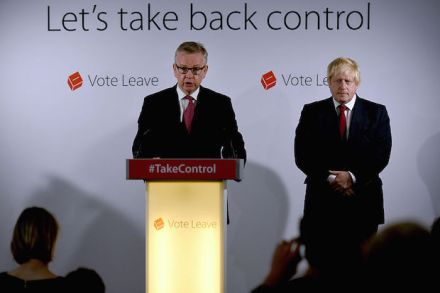
My part of north London feels like the morning after England get knocked out from the World Cup. People look genuinely angry, and down the road in Islington the benevolent moral guardians of the current year have been shouting 'scum' at Boris Johnson outside his house. https://twitter.com/LBC_Charlotte/status/746260182297088001 After the most unpleasant period in British politics for years, and a sour and recriminating atmosphere now lingering, the Vote Leave team – who may be the government in waiting – have got to unite the nation to assure stability; politically, economically and mentally.

A bitter culture war has begun in Britain

From our UK edition

I wrote a while back that the UK referendum wouldn't be at all bitter or divisive, and I think it's fair to say I was utterly, utterly wrong. I just hope whoever wins shows a spirit of magnanimity and conciliation, and tries to steer the country to the most moderate course available. Perhaps it was obvious that this debate would turn into a sort of British culture war, one that divided the country heavily over the issue of globalisation. As James Bartholomew points out in this week's issue of The Spectator, the referendum has exposed a huge rift between the metropolitan elite and the rest.

You can’t stop future Orlandos, but you can reduce the chances

From our UK edition

I'm pro-gun control, but I come from the most heavily populated corner of one of the most crowded islands on earth, where it's appropriate. I also grew up in a city and have only fired a gun once, which was basically an air rifle, and the results were predictably Woody Allenesque. But gun control may not be necessarily appropriate in sparse rural areas, although I do find some of the arguments made by American Second Amendment supporters strange. Whenever someone pops up and kills loads of people, the argument is that if only someone there was armed it wouldn't have happened. Like in a school? In a club? We can't say whether gun control would have prevented the Orlando massacre; but it can be argued that gun control overall reduces the probability of gun massacres.

Why do we indulge the crimes of the Left?

From our UK edition

What a strange human being the historian Eric Hobsbawm was. I was reminded of this the other day while reading a new report by the New Culture Forum on attitudes to Communism almost a century after the Russian Revolution. It includes this exchange between Michael Ignatieff and Professor Hobsbawm: Ignatieff: In 1934 ... millions of people are dying in the Soviet experiment. If you had known that, would it have made a difference to you at that time? To your commitment? To being a communist? Hobsbawm: ... Probably not. Ignatieff: Why? Hobsbawm: Because in a period in which, as you might say, mass murder and mass suffering are absolutely universal, the chance of a new world being born in great suffering would still have been worth backing ...

The Cincinnati zoo backlash shows how democracy is just a step away from mob rule

From our UK edition

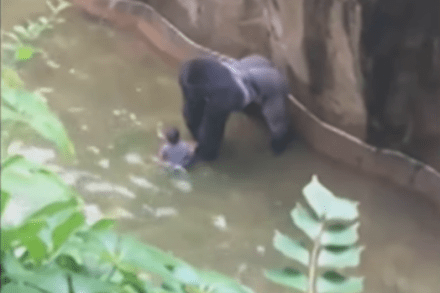
Here's a really heart warming story, about a young criminal and all-round bad guy who became a dad and turned his life around, working a regular job and looking after his four kids. Anyway, one day he decides to take his family to the zoo, perhaps thinking, what can go wrong? And, well, the rest is history. It's a shame about that gorilla, but I can't see how the zoo could have done anything else in the situation, and the main thing is the boy is safe.

Are we about to see the return of the Kings?

From our UK edition

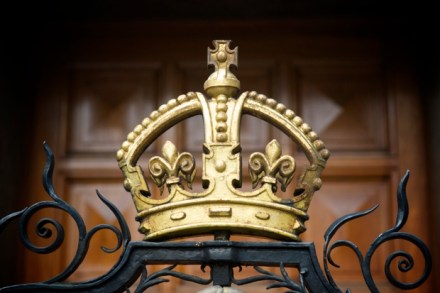
With only two months until the Rio Olympics, Brazil's woes continue, with a minister in the interim government being forced to resign after being accused of plotting to stop the country's national corruption probe. It is not just president Dilma Rousseff being investigated, of course; a full quarter of Brazil's congressmen are accused of criminal acts, which suggests the country may have a slight problem with corruption. There is a solution at hand, however, and one favoured by the people. Two thirds of Brazilians say they would like to get rid of presidents altogether - and bring back the monarchy. And there is a man waiting in the wings.

The working-class vote explains the rise of Austria’s far-right

From our UK edition

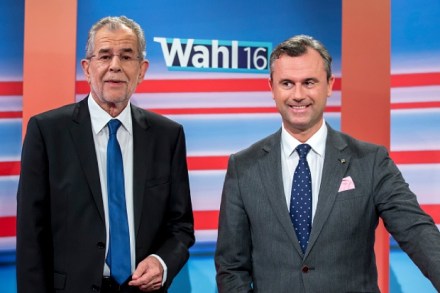
So Austria has a new leader. The radical leftist Alexander Van der Bellen, a former Green party leader running as an independent, has just edged out radical right-wing politician Norbert Hofer in one of the closest elections in European history. After postal votes were counted, Van der Bellen had 50.2 per cent and Hofer 49.8 per cent – a margin of just 0.4 percentage points. Most of the continent will probably breath a sigh of relief while still being disturbed at the size of the radical right vote; more shocking, perhaps, is the fact that among the working-class, there was almost unanimous support for Hofer, with the Freedom Party receiving 86 per cent of votes from workers.

Facebook is helping the left to eat itself

From our UK edition

I hate Facebook, mostly because it’s full of other people’s happiness. I appreciate this makes me a terrible person, but it’s a bit like being at the wedding of a contemporary whose life has panned out perfectly, leaving you to reflect on your own inadequacies and failures. I know half the happy people on Facebook are probably dying inside, but that’s no consolation. I've long suspected that the site is terrible for people's mental health, but it's probably also terrible for the political process, too, helping to drive polarisation, especially in the United States. It's something that people really don't appreciate the danger of.

What we learnt from Piers Morgan’s interview with Donald Trump

From our UK edition

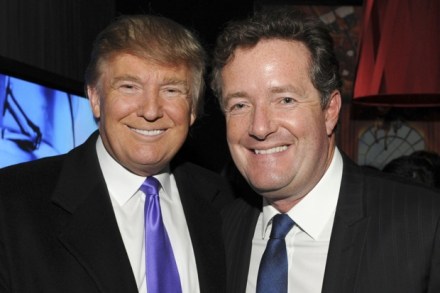
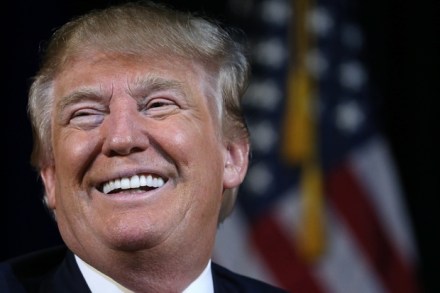
Is Donald Trump the Leicester City of US politics, the 5,000/1 outsider who took everyone by surprise? That was Piers Morgan's opening question to the likely Republican presidential candidate on ITV last night. The obvious response might be that the Donald is more like Chelsea - loads of money, everyone sorts of hates them, some dubious right-of-centre supporters. The Morgan interview was presumably part of a plan for softening his image, now that he's won the GOP base and needs to get more of the centre. There was lots of personal stuff - I'm a nice person, he kept on saying, I'm a people person, I love people - but also a strong and powerful one. And clever, too; it's puzzling how keen he is to always emphasise his intelligence; puzzling because it seems to be revealing an insecurity.

Putin’s Palmyra concert shows he is winning the propaganda war

From our UK edition

The city of Palmyra, recently liberated from Isis, has seen a return to civilisation and culture with a performance by a Russian orchestra. The concert, conducted by a 'close associate' of Vladimir Putin, was of course a propaganda exercise - but what a propaganda exercise! It fills me with genuine sadness that no western power would ever think to pull such a stunt, and this reflects a deeper problem with our foreign policy; that is, what are we promoting?

Can America survive Donald Trump?

From our UK edition

There have been many hyperbolic headlines about Donald Trump these last few days and weeks, so I’d like to add my own – can America survive the Donald as president? I don’t mean that, as chief executive, he’s going to become a dictator and begin world war three, although as this week’s leader points out, his opposition to free trade could be seriously bad news. Rather, Trump is a product of a noticeable trend in American life – the extreme polarisation of its political system – and he’s bound to accelerate it.

Is it possible to be both pro-EU and patriotic?

From our UK edition

It's safe to say that last week was a good one for the Remain camp, thanks in large part to the endorsement from President Barack Obama. Despite what people in online conservative echo chambers may believe, Obama remains fairly popular in Britain and his opposition to Brexit may well count for something. His tactic was to play on our fear of what might happen if we leave. And while leaving the EU is seen as a largely small-c conservative idea, favoured by older and less educated voters, it is paradoxically fear (that most conservative of emotions) which is driving support for Remain. https://twitter.

The ‘blank slate’ view of humanity is looking increasingly outdated

From our UK edition

Quietly, patiently, tentatively, scientists are revolutionising the way we see human nature, a breakthrough that may be as earth-shattering as Darwin's discovery 150 years ago. Or to put it this way, scientists went looking for genetic influences on human behaviour - and what happened next will blow your mind. Last month psychologist Oliver James published a book with the self-explanatory title, Not In Your Genes, which sought to minimise or deny the effects of genetics on a wide range of conditions. As intelligence specialist Stuart Ritchie observed in The Spectator: 'To open the book is to step into a parallel universe. In James’s neo-Freudian world, DNA has no effect on the mind or mental health, whereas parenting reigns supreme.

Europe, Islamism and some uncomfortable home truths

From our UK edition

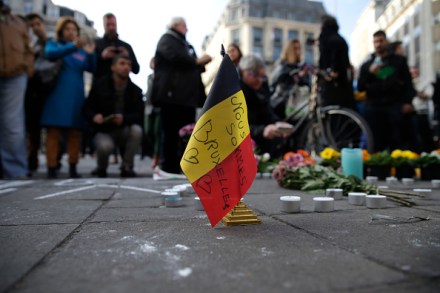
The flags are at half-mast in Westminster in a show of solidarity with Brussels, one of those ceremonies Europe seems to be getting used to. We’re long used to the statements of shock by politicians (why the shock?) as well as the platitudes about this having nothing to do with any particular religion. After that we have the now traditional focus of all our anger and grief towards Katie Hopkins, as if what she says or believes makes any difference to the growing problem facing Europe. Not all of Europe, of course. Central Europe, chiefly Poland, Hungary and the Czech Republic, remain largely safe from the terror threat, despite the former in particular being a Nato player in the Middle East.

High-rise housing is hellish. It’s time to bring back terraces

From our UK edition

On the radio this morning the subject of high-rise housing was being discussed, the hook being the new film adaptation of JG Ballard’s High-Rise. Tower blocks are widely considered to be a disaster today; they took largely working-class populations out of often sub-standard (but potentially very nice) terraced houses into technically better housing that was in reality often isolated and unsafe. Yet, despite this hindsight, I feel we’re making something of the same mistake again, with the current rush for skyscrapers across the city – with some 435 high-rise buildings now approved. Some of those being proposed and planned, such as the Paddington Pole and the new tower in Notting Hill Gate, lack any sympathy with the surrounding buildings.

Is more multiculturalism really the cure for the EU’s problems?

From our UK edition

Germany is on its feet again; the country’s answer to Ukip, Alternative Für Deutschland, made huge gains at the polls, winning a presence in three state assemblies. The shadow of Auschwitz looms over all European politics on the subject of immigration and race, but obviously more so in Germany, and many people are worried. Their growth in popularity may have something to do with the chancellor’s decision to invite one million and counting people from the wider Middle East, in an gesture historians will probably see as the grandest act of folly of early 21st century history. Some people are worried that, along with FN, Ukip and Trump, AfD are extremists who represent a threat to the established order.

Does size matter for US presidential candidates?

From our UK edition

I don't know whether men blessed with enormous manhoods are more likely to make effective leaders; social scientists probably lack the necessary data to draw any correlations between length and girth, and things like GDP per capita or the underlying rate of inflation. A few newspaper articles recently suggested that Hitler had a micropenis, but for all we know he may have been an outlier. Based on my own prejudices, I would imagine that men with quite authoritarian, right-wing political views aren't especially blessed in that department, nor do they probably make the most satisfactory lovers, but that's just one of thousands of possibly irrational beliefs I hold.

Why are so few big business leaders for remain?

From our UK edition

How come so few big business leaders signed up to David Cameron’s letter in favour of remain? [caption id="attachment_9394142" align="aligncenter" width="520"] (Credit: Nick Sutton)[/caption] As the Daily Mail reported this morning: High street shops including Sainsbury’s, Tesco and Next and banks such as Lloyds and Royal Bank of Scotland did not put their names to the letter published today. It had been suggested that bosses of 80 of the FTSE 100 firms would sign the pro-Brussels letter, but in fact only 36 have done so.

Is the next Steve Jobs really among Syria’s migrants?

From our UK edition

Steven Pinker famously observed in The Blank Slate that ‘Sophisticated people sneer at feel-good comedies and saccharine romances in which all loose ends are tied and everyone lives happily ever after. Yet when it comes to the science of human beings, this same audience says: Give us schmaltz.’ The same is true of the politics of human beings, where educated people want stories of individuals overcoming the odds, and hate discussing depressing, but more useful, overall patterns. A good example is the recent meme that among the recent Syrian influx may be the next Steve Jobs, a theme repeated by that hugely profound modern-day genius Banksy.