Ed West

Ed West

Ed West writes the Wrong Side of History substack

Donald Trump is a gift for the progressive narrative

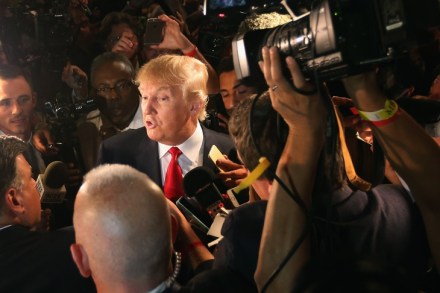
With all the awfulness in Britain this year, it's been easy to forget about what's happening across the pond, which is some small comfort. Donald Trump's travel ban came into effect last night. It is a more nuanced and reasonable version of the order he issued in March. Will it make much difference to security or, more pertinently, the rate of immigration from these countries? Who knows, but the damage from the earlier ban has already been done. When I first saw the future president speaking at rallies, he appeared to me a left-wing person's idea of what a right-wing man is - loud, confident, small-minded, Manichean in his world view, claiming to speak on behalf of the little people but clearly with his own agenda.

If you can’t afford a home, why vote Tory?

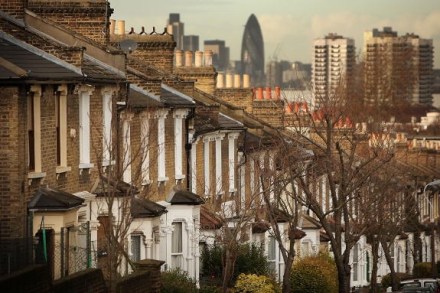
Back in the 90s and even early noughties, it was a cliché that middle-class English people used to talk about house prices at dinner parties. That hasn't been the case for a good decade, if my social circles are any indicators; it would be like bringing up interesting anecdotes of people we know discovering they have cancer. For years, a handful of miserablists, such as our own Nick Cohen, have been warning that housing inflation is not the great boom it was once believed to be, but is in fact an unmitigated social disaster. For years we've done nothing about it. And finally, in 2017, rising house prices have proven to be the crack in the dam for the right. It has lead to a flood of devastating support from the under-45s for a left-wing Labour leader.

13 things we have learnt about Britain since the EU Referendum

Happy Independence Day everyone (groan). One year on from that momentous day, here are 13 things we've learnt from the Brexit vote. Most people will take any argument that suits them. They will swap ideological clothing if needs be - note how many on the Left suddenly care deeply about the pound and the City, while many on the Right seem keen on huge economic risks. Most voters are ignorant. This applies to both sides, although on average Remainers are better educated. But as Dominic Cummings has pointed out, the average Remainer didn't know that much about how the EU actually works; they just looked at Nigel Farage and knew they were against that.

Labour is now the party of the middle class

I'm not sure I've ever been so pessimistic about this country's future, and I'm not usually a barrel of laughs to start with. Aside from the terrorism, and the recent tragedy in North Kensington, there are real black clouds in the distance. Investors are being put off Britain, a problem that pre-dates Brexit but is surely aggravated by it. There seems little hope that the Tories will follow Philip Hammond in pursuing a more moderate line in Europe. (Would the catchphrase 'Stop, Hammondtime', galvanise the public, I wonder? Kids still like MC Hammer right?). Meanwhile the opposition - even moderate members - are now calling for people's private property to be 'requisitioned', using heightened anger and emotion in order to trample over the most fundamental of rights.

The future belongs to the Left

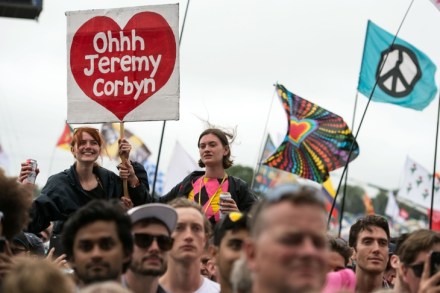
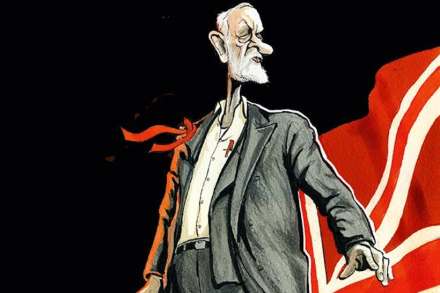
When I was in my early 20s and quite conservative I assumed I was just an anomaly, someone who develops these traits earlier than normal, and conservatism was like baldness or impotence or the other bad things that get you in middle age; most of my friends and contemporaries would catch up at some point, because these things just develop at different speeds. Now in my late 30s I realise it's worse than that and almost none of my friends and acquaintances are going to become more conservative; if anything, they've become more left-wing than they were 20 years ago, as the barometer of what is progressive and therefore acceptable has shifted. Many of them would have been among the 40 per cent of the population who voted for Corbyn last week, and the 50 per cent aged 35-44.

Why I’m voting Liberal Democrat for the first time today

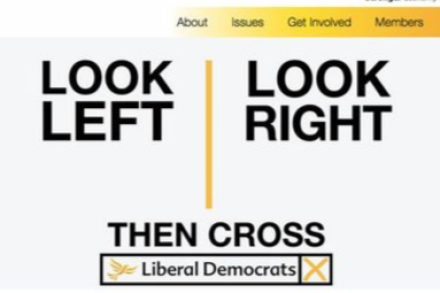
From a very early age I've been put off by sanctimoniousness; it's why, I think, I've never been attracted to the political Left, which when I was growing up was heavy on the finger-wagging, and why I find a certain style of newspaper column irritating. They remind me of the sour-faced old guys we used to see at church all in competition to see who could look the most serious and disapproving. This whole idea that if you don't support Labour and the Left you're not just wrong or misguided but a bad person is what puts me off; this Daily Mash article is depressingly close to reality in my experience. Yet this election has made me feel the same, for the first time; my area is flooded with Labour posters outside front doors and when I look at them I find myself shaking my head.

‘British Values’ won’t help in our fight against terrorism

Steve Hilton has called for Theresa May to resign as Prime Minister, blaming her for the security failures that lead to the three recent terror attacks. Without intimate knowledge of the workings of the Cameron administration it's hard to know where blame does lie. And there certainly has been a large increase in the number of terror plots for the authorities to deal with this year. The security services have an awesome job in keeping track of as many as 23,000 individuals, and so we may now be facing a sort of Israelification of British life, with barriers going up on London's bridges this morning. Already we now have bag searches around London museums and the occasional appearance of armed policemen outside cathedrals.

Terrorism does divide society – but not in the way some might think

What does Isis want? As Douglas Murray writes in this week's cover piece, jihadis are quite clear on the subject - but we just aren't listening. The question that never seems to be asked, however, is: what do we want? That is the core of my objection when our politicians tell us to continue as normal and that terrorism is just 'part and parcel of living in a big city'. It really shouldn't be and it isn't - in Warsaw, Prague, Budapest, Tokyo or a number of first-world cities. In the words of the writer Ben Sixsmith: Jihadism was not inevitable. It has been imported. Cosmopolitans see this as the bad part of a trade-off for a more open, equal and diverse society. Nationalists believe it is a self-inflicted wound.

Are Remainers brighter than Brexiteers?

Are Leavers thicker than Remainers? The short answer is: yes. At least, on average. That's according to a paper analysing voters on both sides of the godawful Brexit referendum, which says that: 'When compared with Remain voters, Leave voters displayed significantly lower levels of numeracy, reasoning and appeared more reliant on impulsive ‘System 1’ thinking.' Now obviously I voted Leave and I'm super-duper clever, but this is not remotely surprising; June 23 was effectively a vote on globalisation, which favours the more intelligent and educated at the expense of the less gifted. When rising sea levels turn our little ponds into great lakes, the big fish are going to benefit a great deal more.

The Tories have got something right – but what?

Twenty years ago this week Tony Blair came to power with a thumping majority, claiming Labour to be 'the political arm of none other than the British people as a whole'. As a phrase it sounds mildly deranged but it wasn't totally cut off from reality. New Labour had claimed support among a cross-section of the public, including over 60 per cent of DE voters and a clear majority of those in the C2D category. Today, the Conservatives have a 17-point lead among working-class voters, despite there being a squeeze on health and education spending, and the party offering not much in the way of optimism or charisma. What went right, then?

Prince Philip, the timeless rebel

The Duke of Edinburgh is finally to retire in the autumn, after more than 70 years of public service, just after his 96th birthday. Philip – a former first lieutenant in the Navy – is one of the last prominent figures in British life to have served in the second world war; he’s also possibly the only one worshipped as a living god, as far as I know. Yet this man at the very heart of the British Establishment has come to be known as a sort of arch-reactionary, an English colonel figure who goes around insulting foreigners ­­– either to our amusement or utter horror. He was once, in the distance of time, the royal family's most progressive reformer; the newcomer from impoverished Greek-German nobility (though his first language is French).

Civil life in London is now balanced on a knife edge

I'm a member of a small and weird minority, the conservative urbanophiles. Obviously cities are nests of degeneracy and, even worse, the false faith of progressivism - my postcode voted 82 per cent Remain and the Tories finished fourth in 2015 - but nevertheless urbanisation is glorious, the best thing our species ever did. City life means socialising, culture and prosperity.  But the English-speaking world forgot two important things about city life in the 20th century, lessons that have been painfully half re-learned: that cities should be beautiful and cities need to be civilised.

Could a big Tory victory make a soft Brexit more likely?

Whatever happens in the forthcoming general election, no day of social media can ever compete with the dizzying heights of May 2015. I think I laughed more on the day of the result than I had in the previous decade; sure, it was the twisted and cruel laughter of someone whose dreams are slowly fading, but aren't those the most genuine and heartfelt? This time it won't be quite as funny because everyone expects Labour to be slaughtered, aside from one or two Comical Ali-like figures who continue to maintain steadfast confidence despite all evidence to the contrary.

Forget fake news. The bigger problem is misleading news

The way that 'fake news' became an overnight crisis is telling; just as progressive ideas were being rejected by voters across the western world, the media suddenly discovered a glitch which explained why. Fake news is the new false consciousness. All democracies face the problem of uninformed voters. But in a reasonably educated society, this should not be critical, especially as the ignorant are far less likely to vote anyway. This has traditionally been a conservative and indeed ultra-conservative worry, but since the Anglo-Saxon Spring (or should that be Fall?), liberals have started to show more concern about it. The left-right axis is morphing into a globalist-nationalist one, and the majority of less educated voters fall into the latter camp.

Now is not a good time to be making enemies

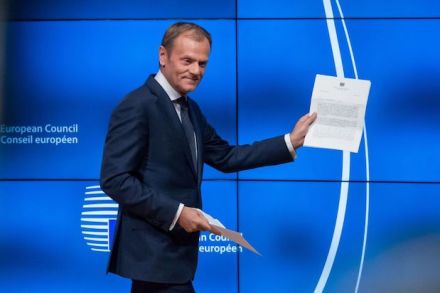
I always thought leaving the EU would be a cause for celebration, but the sight of Donald Tusk accepting the Article 50 letter this week just made me feel a bit sad, and that we had let down our friends and neighbours. One of the things Brexit has done is made me realise how European I feel, and I'm sure I'm not alone. I always found Vote Leave's whole Commonwealth shtick a bit disingenuous, because we have far more in common with the Dutch and the Germans than with most non-European countries, even those we did forcibly make part of our empire against their will.

History teaches us that Brexit will be okay in the end. Probably.

Happy Brexit Day everyone. I guess we'll be okay in the long term. March 29th is the bloodiest day in English history, a day on which a London-dominated clique funded by the City defeated an army raised from the north and Midlands; history has since come to know it as the War of the Roses although it barely affected people who weren't directly involved. (Historian John Gillingham even states that direct taxes went down and housebuilding continued, which is more than can be said for the past few years). On that date in 1461, in a snowstorm in Towton, north Yorkshire, the young usurper Edward IV - only 18 years old - beat Lancastrian forces loyal to the insane Henry VI and his French wife Margaret of Anjou.

Around the world, Westminster is a byword for political moderation

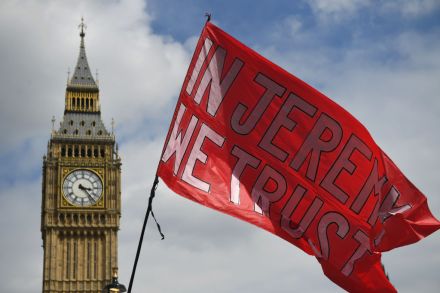
As many people have remarked, a terror attack in the centre of London was expected at some point, although it is no less shocking for that. Aside from St Peter's Basilica or perhaps the Eiffel Tower, there is probably no other European building as recognisable to Europe's enemies as the Palace of Westminster. Theresa May wasn't quite correct when she referred to it as the oldest Parliament - both Iceland and the Isle of Man have more ancient bodies, being descended from those egalitarian Vikings - but it's certainly fair to call Westminster the Mother of Parliaments, a powerful symbol of representative government.

An independent London would be a Thatcherite dystopia

Tottenham MP David Lammy has been writing in the Evening Standard about how it makes sense now for London to become a 'city-state', following Brexit: Over the course of the next two years as the reality of Brexit begins to bite, the economic, social and political cleavages between London and other parts of the country will become more pronounced. London’s status as a de facto city-state will become clearer and the arguments for a London city-state to forge a more independent path will become stronger. I've argued before that there is an increasingly strong case for London leaving the union because the aspirations of Londoners and the people of England are diverging so much.

Classical architecture makes us happy. So why not build more of it?

The key to a happy life, it's been discovered, is living near to Georgian architecture and a Waitrose. Bath, York, Chichester, Stamford, Skipton, Harrogate, Oxford and Cambridge are among the towns listed in the Sunday Times 20 nicest places to live in Britain survey. Almost all these areas have one thing in common: they all feature a great deal of Georgian housing. And they're all mostly unaffordable. There is a fair amount of research suggesting that traditional architecture, such as Georgian and Victorian terraces and mansion blocks, contributes to our wellbeing. Beauty makes people happy. This can be measured through house prices, which consistently show bigger increases for more traditional buildings.

Why do so many French youngsters support Marine Le Pen?

I'm very sceptical of the idea that the younger generation are more conservative than their elders, and that this makes conservatism somehow cool, which it isn't. There have been times where the kids are more reactionary than their parents but generally only as a result of religious movements - and Britain is as atheistic as can be. Young Brits are very liberal and cosmopolitan, even compared to their peers in other European countries. In polls they express low levels of pride in their country and an unwillingness to fight in any theoretical war. The Brexit vote, and the big gap between old and young, showed just how liberal the young are.