Ed West

Ed West

Ed West writes the Wrong Side of History substack

What have we done for ISIS not to hate us?

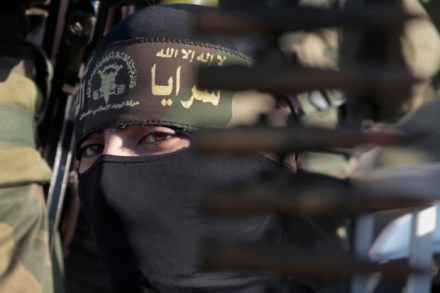
After 9/11 the Western world's response fell between two poles; on the one hand lots of people agreed with General Norman Schwarzkopf that it was not our job to forgive the terrorists, it was God's job; ours was simply to arrange the meeting. On the other hand some on the American Left asked the question: why do they hate us so? Perhaps more worrying might be the question: why don't they hate us? This week Abu Bakr al-Baghdadi, head of the lovely Islamic State of Iraq and the Levant—now just 'Islamic State'—issued a statement to the worldwide faithful in his new role as self-proclaimed caliph. In a reasonably slick document issued in several languages al-Baghdadi celebrated the month of Ramadan with his own message, rather like the Pope does at Christmas.

Britain is part of a secret Anglo-Saxon world conspiracy. How can it also be part of Europe?

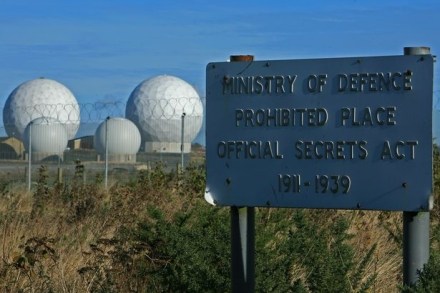
I’m not a great believer in the ‘special relationship’, a concept that exists almost entirely in the mind of British journalists, especially during those occasional moments when the English-speaking nations have to bomb some awful former colony. Americans and Brits have a generally positive view of each other—speaking the same language will do that—but American foreign policy does not have some special place for us, even during the rule of Anglophile presidents like Reagan; let alone that of ambivalent ones like Obama. America does have three special relationships: two emotional ones with Ireland and Israel, and a sado-masochistic political-financial one with Saudi Arabia. Still, there is one area where the special relationship is real – spying.

Rod Liddle is right about the faux Left

‘I deserted my children for my own personal happiness: it is as simple as that, regardless if I sometimes reassure myself with caveats, with a rationale which I have constructed for myself out of cardboard or tinplate over the years.’ So writes Rod Liddle in his brutally honest memoir-cum-polemic Selfish Whining Monkeys, which got a huge boost last Friday thanks to Yasmin Alibhai-Brown’s rational and entirely sane attack on him on Channel 4 (see above). I admit to being a fan of Rod.

The Left’s blind spot with Islam: opposing bigotry does not mean liking a religion

I agree with something Owen Jones has written, a confluence of beliefs that will next occur on September 15, 2319. Addressing the subject of Christian persecution, he argues in the Guardian: ‘It is, unsurprisingly, the Middle East where the situation for Christians has dramatically deteriorated in recent years. One of the legacies of the invasion of Iraq has been the purging of a Christian community that has lived there for up to two millennia. It is a crime of historic proportions.

America and Britain could save Iraq’s Christians – it’s just they don’t care

The Syro-Iraq war, as the firestorm should probably now be called, rages on, with the sword of Damocles hanging over us in Britain. Some 400 British Muslims are fighting with ISIS – only 150 fewer than the number of Muslims in the whole British Army – and we can be pretty sure of blowback when they return home. Afterwards I imagine we’ll have the politicians lecturing us about how this has nothing to do with Islam and then those bizarre ‘one London’ style posters will appear all over the capital; and 90 per cent of the media coverage will be on the danger of Islamophobia – cue footage of football hooligans waving flags.

Debate: will a robot steal your job?

Was Karl Marx right all along about capitalism? One of the subjects I like to bore everyone about whenever I get a chance is the hollowing out of middle-class jobs as a result of technology, squeezing wages just as the old German predicted. It's the subject of a Spectator debate tonight, which will be well worth attending, and a subject I wrote about for the magazine last year: 'Jaron Lanier, the Silicon Valley philosopher and author of Who Owns The Future?, has shown how technology and the free-flow of information are removing secure, middle-class jobs. Far from being egalitarian, the digital revolution has reduced financial rewards for those in the middle — and concentrated wealth at the very top.

Prepare for another year of our empty lives without Game of Thrones

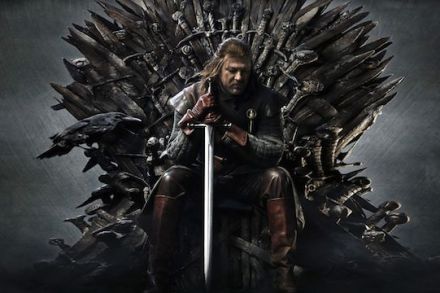
So farewell, then, Tywin Lannister, you truly were the people’s Hand of the King. But this being Game of Thrones, it was never going to last, and now you’ve been shot with a crossbow by your dwarf son while sitting on the toilet. Not how you envisioned it all ending, I imagine. The final episode of season 4 has left us bereft at the thought of another year to fill with our empty, meaningless lives; it saw Jon Snow going off to kill Mance Rayder, the rather likeable leader of the Wildlings, a suicide mission that would entail Snow breaking the rule of hospitality, which is especially sacred in Westeros (as it was in most of the ancient world from which George RR Martin drew his books).

Don’t apologise for holding The Sun, Ed

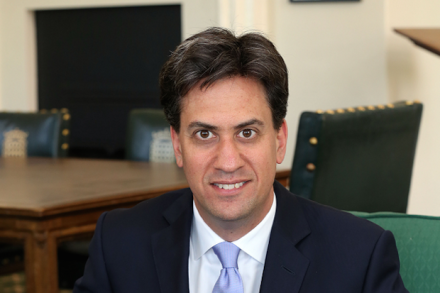
I’d like to say that when I’m low and feel I can’t go on anymore that it’s the thought of a child’s smile or a better future for humanity that gets me through, or maybe one of those inspiring Maya Angelou quotes people were sharing last week: but to be honest, it’s actually that picture of Ed Miliband trying to eat a bacon sandwich. I know that certain Labour commentators are unhappy with Ed’s performance, and many Tories are concerned about him actually running the country, but his visual mishaps do provide such cheer during these dark periods. A friend of mine brought a copy of the bacon picture to his 83-year-old father in hospital, who had suffered a stroke, and said his dad laughed so much he almost had another one.

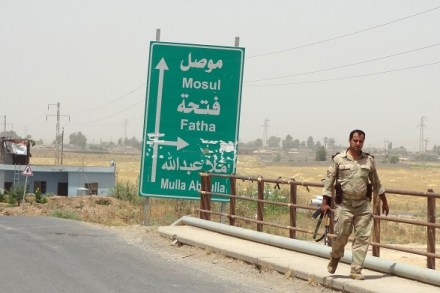
Now that Iraq really is threatened by jihadists, should we intervene?

The war on terror has gone not necessarily to our advantage. For the second time in a dozen years the land of Abraham has been invaded by a partly-British army, although this time it is composed not of regular soldiers but of bearded lunatics from Crawley. The Islamic State in Iraq and the Levant, an Islamist offshoot so extreme that even al-Qaeda thinks they’ve taken things a bit too far, now controls a huge swathe of Syria and Iraq, roughly in the region of 40,000 square miles, or 4.0 Wales on the International Wales Scale. That makes Sunnistan larger than an independent Scotland and with a great deal more oil. The failure of the Americans to nation-build was epitomised by the fact that a US-trained Iraqi army of 30,000 fled from just 800 ISIS militants in Mosul.

I dread the thought of my children being taught ‘British values’

I’ve been off the past week poncing around Rome in a frilly shirt, and so am naturally gloomy about coming home. Just to make it worse, I return to hear of the death of my childhood hero and news that schools are now going to be teaching ‘British values’, following the Birmingham Trojan Horse scandal. Many are shocked about what happened in the city. After all, who would have thought that importing millions of people from totally different cultures would cause so many problems? You’d literally have to be Nostradamus to see that one coming.

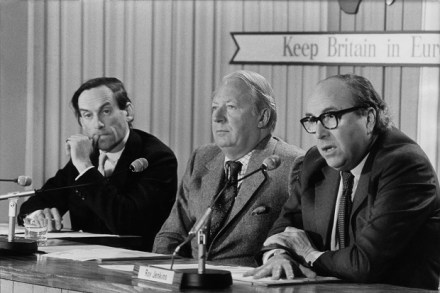
If Britain has a culture war, it’s the euro-enthusiasts who started it, not Ukip

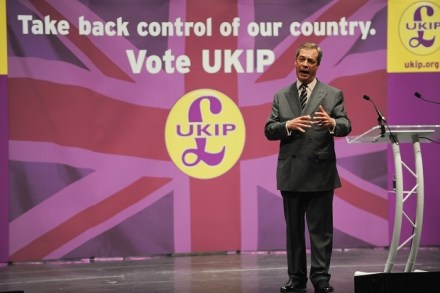
Following last week’s Purple Revolution in which the pro-democracy Faragist rebels liberated Britain from the hated pro-EUSSR LibLabCon stooges (at least this is the version I’m telling my kids to repeat to their teachers), a number of people have written about what appears to be the opening of a ‘culture war’ in Britain. Andrew Sullivan talks about ‘blue Europe and red Europe’ in the sense of America’s blue and red states, and sees Ukip as representing the latter just as the Republican Party does conservative, left-behind America. I think there’s some truth in that.

The California spree killer: why is that loser’s face all over the media?

Last Saturday a young man in southern California murdered six people. I’m not going to name him or link to his picture because you would have probably seen it anyway, and he does not deserve to be remembered except by his family. He achieved nothing. One of the depressing inevitabilities of such atrocities is the eagerness with which people in the media jump to some sort of political explanation; since many of these killers are men hateful of women or other people generally, and are obsessed with guns, some commentators put this in a wider context of political conflict where scant evidence actually exists.

You know you’re a European when…

Today’s European election is not just a matter of deciding who gets to represent my made-up region in Brussels’ toy town parliament. It is a celebration of our common heritage as a people, and our proud record of centuries of killing each other in futile wars and thinking up political schemes that never work. Some proud Europeans have described their own ideas about what marks us out as Europeans. Here are mine: 1). You work to live, not live to work, and after 30 years of 30 hour-weeks you get to retire for another 27 years. And you get angry when people suggest that this insane system will leave your grandchildren impoverished. 2).

Why people will be voting for Ukip this Thursday

Despite levels of media scrutiny and hostility unseen in recent political history, this Thursday up to 30 per cent of British voters will opt for Ukip. The odd thing is that the more outrageous the slurs made against them, and the wackier the members unveiled in the press, the more their popularity surges, perhaps out of bloody-mindedness; if a Ukip candidate was caught committing autoerotic asphyxiation dressed in a Gestapo uniform tomorrow the party would probably be on 50 per cent by the end of the week. One of the reasons is that Ukip is a product of lowered trust; the party’s supporters have noticeably less trust in politicians than voters in general, and I would hazard a guess that they have far less trust in the media.

What’s the difference between German and Romanian immigrants?

Nigel Farage is in the papers again today – unbelievably! – this time with a full-page advert in the Telegraph responding to his remarks about Romanians on LBC radio. Such was the universal media condemnation over his interview with James O’Brien that on Saturday even the Sun had an editorial on anti-Romanian racism. You couldn’t make it up. Farage was stereotyping, and his tone of ‘you know what the difference is’ hit the wrong note, which lost him the argument over a fairly reasonable point; that is, the typical profile of a German migrant is very different to that of a Romanian migrant.

Should London leave the union?

We're four months away from Scotland's day of destiny, with the London-Scottish media fraternity becoming increasingly alarmed, and ironically (considering their total unionism) far more noticeably Scottish. At the Telegraph Graeme Archer made a characteristically elegant appeal to Sir Malcolm Rikfind to step forward, and there would indeed be something touching and rather beautiful about the grandson of Jewish immigrants being the man who saves Britain. The film script would write itself, if someone were to make a film about the Scottish referendum (which I admit is pretty unlikely).

America’s Left is just as ‘eccentric’ as its Right

Rory Sutherland writes in this week’s magazine that the Mozilla/Brendan Eich affair has finally put him off his dream of moving to the United States, quoting Andrew Sullivan that ‘The whole episode disgusts me – as it should disgust anyone interested in a tolerant and diverse society.’ The issue of gay marriage has changed politics in the English-speaking world in a way that perhaps people didn’t expect – breaking the liberal-Left’s final link with the ideal of John Locke that permitting something did not mean approving of it. This notion has been coming under pressure for some years, especially with discrimination laws, but SSM has snapped it. (Brendan O’Neill has written about this extensively for Spiked and Telegraph blogs.

Why I’ll be voting Liberal Democrat on May 22

One of the interesting things I learned from a recent Lord Ashcroft poll was the startling fact that three times as many people identify themselves as Labour voters, tribally, as Tories (around 30 per cent versus 10), despite the two parties having roughly similar base support in general elections. This says something about the different way the two groups think; loyalty to the Labour Party runs deep and is emotional, while for Conservative voters the party is pretty much a pragmatic organisation to keep even worse politicians from running the country. I’m not sure which group will suffer more in the long term from the current crisis of party politics; Tories can be detached from their party more easily, but for Labour voters the break may be more bitter and permanent.

Will the Union be a victim of multiculturalism?

One of the more striking statistics in yesterday’s Policy Exchange report on multi-ethnic Britain is the revelation that only 25 per cent of white Britons identify as British. This low figure may reflect people not wishing to fill out two boxes (that’s what Alex Massie says, anyway), but it certainly follows a noticeable trend of recent years – the decline of British identity in England. In contrast 64 per cent of white Britons in this report called themselves ‘English only’. With the arrival of post-war migrants a great deal of effort was made to make the British identity less racial, more welcoming, and rightly so.

Darwin’s unexploded bomb

'This book is an attempt to understand the world as it is, not as it ought to be.' So writes Nicholas Wade, the British-born science editor of The New York Times, in his new book A Troublesome Inheritance. For some time the post-War view of human nature as being largely culturally-formed has been under attack just as surely as the biblical explanation of mankind's creation began to face pressure in the early 19th century. What Steven Pinker called the blank slate view of our species, whereby humans are products of social conditions and therefore possible to mould and to perfect through reform, has been undermined by scientific discoveries in various areas.