Douglas Murray

Douglas Murray

Douglas Murray is associate editor of The Spectator and author of The War on the West: How to Prevail in the Age of Unreason, among other books.

What the BBC doesn’t understand about gay voters

From our UK edition

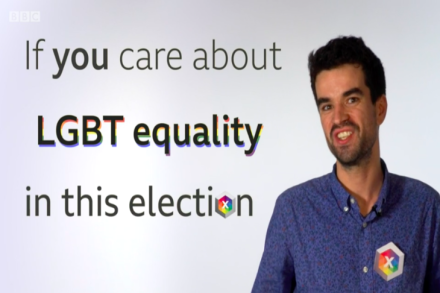
In my latest book, ‘The Madness of Crowds’ (copies of which can be found in all remaining [not remainder] bookstores, etc) I mentioned in passing that I sometimes wondered how it feels to be a heterosexual reading the news these days. That feeling wafted past me again over the weekend as I went to the front page of the BBC News website and came across a video titled ‘General Election 2019: What to look out for on LGBT issues’.  The video is presented with positively boastful impartiality by a BBC journalist called Tobias Chapple who wears a charming form of blue nail polish. The camera often lingers on this, as though to prove to us that what we are watching is a truly queer production.

How I was ambushed by Nick Robinson

From our UK edition

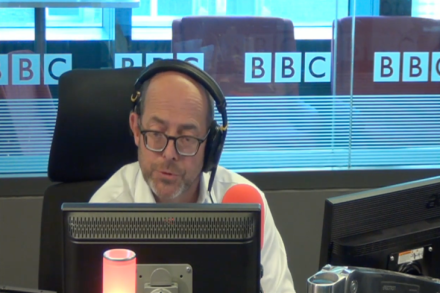
Ah, the BBC. There’s really nothing like it is there? This morning I had the pleasure of appearing on BBC Radio 4’s Today programme. I know what you’re already thinking: ‘You fool, you fool – it’s a trap’. But I was phoned last night and asked if I would come on this morning to discuss Barack Obama’s recent remarks against ‘wokeness’. At some inconvenience to myself I rearranged my schedule, got up early and headed to the BBC. Only to discover that I was today’s BBC effort at replaying the recent Rod Liddle – Emily Maitlis exchange.  I was on with a professor of grievance studies from Birmingham City University called Kehinde Andrews. Which is fair enough.

Don’t be such a chicken about Chick-fil-A

From our UK edition

While never having felt any previous urge to dine in Reading, I now find myself trying to secure a table at the Oracle Shopping Centre. Should any Spectator reader wish to join me there over the next week, I can ask Chick-fil-A to make it a table for two. There we can dine on any number of foodstuffs. We could start with a chicken sandwich and then progress to either eight or 12 chicken nuggets as our main course. Or we could do the same in reverse order, treating the nuggets as an amuse-bouche before the main event. All washed down with one of those sugary, non-alcoholic drinks that cause the locals to get into fights. If that doesn’t sound like a good night out then you may just have to accept that the war for liberty involves sacrifice.

On black privilege

From our UK edition

Discussions of ‘privilege’ have become one of the themes of this age. In a short space of time, the obsession with the subject has forced its way from the margins of the social sciences right into the centre of all cultural and political debate. Politics and office politics is increasingly consumed by it. One day it is Rory Stewart being asked to account for his privilege by that ghetto-denizen Cathy Newman. Another it is Don Lemon being talked over by a black trans woman at the mass asylum breakout that constituted last week’s Democrats LBGT Town Hall. Everywhere the privilege discussion is the same. Who has privilege? Who should give it up? Who should have more?

What Michael Gove really said at the German embassy

From our UK edition

In the magazine cover piece this week I describe how institutions as well as individuals are having a hard time making it through this deranging age. Bishops call for restraint but then have outbursts of ungodly anger. MPs and peers talk about the need for civility and then are found jabbering like street-corner lunatics. But something that happened yesterday evening provides almost a case-study of the era. There is no reason why most people should have heard of Peter Neumann. A minor left-wing pundit, he is currently a professor of ‘security studies’ at King’s College London. As it happens, King’s is fast-becoming a home for insignificant polemicists masquerading as academics. But perhaps that is a subject for another occasion.

The death of civilised debate

From our UK edition

Today nearly all real public discussion has become impossible. Which is why nearly all public thinking has become impossible. Which is why the thinking has gone bad on nearly every major issue now facing us. It isn’t just politics that is finding it hard to operate. It is also the media and every other piece of sense-making apparatus we used to possess. The negatives accrued to any individual or institution for thinking or saying anything remotely controversial now means that they don’t bother any more. We’ve lost the art of discussion and with it the ability to find honest solutions. There are a number of causes. Take the collapse of the ideas of private and public language brought about by technology.

MPs and the outrage game

From our UK edition

It was never clear what this Parliament was going to do if it was no longer prorogued. For three years the UK Parliament has been unable to act on the 2016 referendum result. It was never clear what they were hoping to achieve if they got an extra three days, weeks or months. But the Parliament that reassembled yesterday managed to live down to even what low expectations there might have been. The Members appear to have decided, as is the way in modern British politics, to win by playing games of language and offence taking. The signs were clear when the Attorney General, Geoffrey Cox, at one stage referred to a question as being like a ‘When did you stop beating your wife’ question. Emma Hardy, an MP for Hull, swiftly contrived to squeeze some offence out of that.

An uncanny gift for prophecy — the genius of Michel Houellebecq

From our UK edition

The backdrop of Michel Houellebecq’s novel is by now well established. In this — his eighth — the bleak, essentially nihilistic nature of life is once again only relieved by equally nihilistic humour and sex. From the opening of Serotonin it is clear that we are in safe Houellebecqian hands. About the new anti-depressant that the narrator has been prescribed: ‘The most undesirable side effects most frequently observed in the use of Captorix were nausea, loss of libido and impotence. I have never suffered from nausea.’ There are also those volcanic side explosions which are occasionally mistaken for bigotry by people who don’t recognise that Houellebecq suffers just one bigotry, which is species disgust.

The white lies of the gay press

From our UK edition

Readers may be unaware that I have a new book out this week (which readers might purchase from Amazon or anywhere else where books are found). The Madness of Crowds: Gender, Race and Identity came out on Tuesday with a big bash at The Spectator’s offices in London. But the thing I was hoping for most – the thing that has made me happiest about the reception of the book – is neither the plaudits of the friendly nor the congratulations of the wise. The thing that I anticipated most eagerly were the attacks on me from what remains of ‘the gay press’. True, I have not been kind to them in my book. The gay press had a purpose in the 1970s and ‘80s. It even had a purpose in the 1990s.

James O’Brien and the other VIP child sex abuse lies

From our UK edition

Last week I wrote here about James O’Brien of LBC. In particular, I highlighted the platform he gave to the convicted liar and paedophile Carl Beech (aka ‘Nick’). In July Beech was sent to prison for 18 years for fraud and perverting the course of justice. Over the course of some years, he had made outrageous and untrue claims about a number of public figures, including two D-Day veterans. And while most of the British media was incredibly wary of giving a megaphone to Beech’s lies, James O’Brien consistently used his LBC show to give publicity to Beech and his main promoter, Mark Watts of the now-defunct media organisation Exaro.

James O’Brien and the Carl Beech witch-hunt

From our UK edition

There is an awful lot going on at present. But there is something that happened recently that I should like to return to. Not least because I get the sense that so many people involved would like everyone else to forget about it. I refer to the appalling case of Carl Beech – the convicted liar, fraudster and paedophile who made unfounded claims against numerous public figures and was sentenced in July to 18 years in prison. Beech’s crimes were not harmless. They included the most disgusting lies made against two D-Day veterans. Heroes of this country. The wife of one of those men – Lord Bramall – went to her grave without knowing that her husband would be fully vindicated and his accuser imprisoned.

Who’ll be the next jihadi-jackpot winner?

From our UK edition

Reading the news this week of Jihadi Jack (née Letts, of Oxfordshire) having his UK passport withdrawn, my mind went to a Canadian television programme earlier this year. While most people can’t recall what was on TV last night, for us connoisseurs of western masochism the 2019 Easter edition of Tout le monde en parle (Television de Radio-Canada) was a collector’s item. The subject was Omar Khadr. In case you haven’t had the pleasure, the Khadrs are a Canadian family of Palestinian-Egyptian origin. Since 2001 they have had a sketchy patch. Specifically, family members have shown a terrible propensity for being at ‘weddings’ at the wrong place and time. Specifically around the Pakistan-Afghan border.

War of words | 15 August 2019

From our UK edition

Italy is preparing to go back to the polls and this time Matteo Salvini looks set to return as the undisputed king of Italian politics. His Lega party (formerly the Northern League) has split with its coalition partner, the Five Star movement. For Salvini, the appeal of a general election is obvious: Five Star’s popularity has slumped during the 14-month government, but Lega’s has soared. It now boasts of being the biggest party not only in the north of Italy but — previously unimaginably — in the south. So Salvini can now ditch his coalition partner and seek his own majority. If he succeeds, this will cause fresh headaches for Brussels and embody a far deeper conundrum.

A classic Bond villain

From our UK edition

North Korea watchers are good book-buyers, rarely able to resist scratching that itch of interest caused by the world’s worst regime. Accounts by escapees sit on our shelves alongside the memoirs of anyone (Kim Jong-il’s sushi chef, for example) who has come into contact with the country or its leadership. Some books, such as Barbara Demick’s 2009 Nothing to Envy, break through to a wider audience. But the questions still need to be satisfied. What is the world’s most closed society like? What do its captive population actually believe? And who are the leaders of this communist monarchy?

Any type of Brexit is better than no Brexit at all

From our UK edition

It’s a strange beast, the internet. On Monday night, I was slightly reluctantly dragged onto Newsnight to discuss Brexit. Attentive readers will know that I very rarely write or speak about the subject. There are many reasons for this, one of which is that I said most of what I had to say three years ago when I cast a vote in a referendum. Another reason – I must admit – is that I have wanted little to no part in the bile-fest of the last three years. I would like us still to have a country after this, and there seems very little chance of that if both halves of it continue to spit at each other.

Antisocial media

From our UK edition

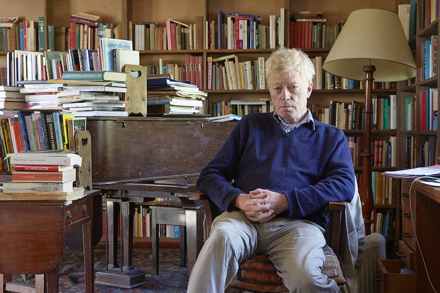
Two considerable injustices were undone this week. The first was the reinstatement of Sir Roger Scruton to the government’s ‘Building better, building beautiful’ commission. The second was the prosecution of Carl Beech for fraud and perverting the course of justice. The cases may be very far apart in their details, but their origins lie in precisely the same contemporary malady. Scruton was sacked from his unpaid position in April. The root cause was a doctored and false interview carried out by George Eaton. The New Statesman subsequently apologised for misleading its readers.

Roger Scruton gets his job back

From our UK edition

Roger Scruton has been reappointed as head of a government housing body after he was sacked in April following a magazine interview in which his views were misrepresented. The letter from housing secretary James Brokenshire, who fired Scruton, is published below: Dear Sir Roger, Thank you so much for our conversation about the next steps on the Building Better, Building Beautiful Commission.  As we both recognise, the publication of the Commission’s Interim Report provides an opportunity to consider next steps in finalising recommendations to Government to promote quality and beauty in the built environment.

Is Boris wrong to claim Islam set the Muslim world back?

From our UK edition

I do love the Guardian. As the years go by almost no publication continues to give me such constant amusement. This week has been no exception. A couple of days after first reading it I still remain almost impossibly amused by the paper’s lead, front-page story from earlier this week. The banner headline read ‘Boris Johnson claimed Islam put Muslim world “centuries behind”.’ As the sub-header for Frances Perraudin’s piece put it: ‘Anger as 2007 essay lamenting ‘no spread of democracy’ in Islamic world comes to light.’ Comes to light, eh? Must be some under-the-counter pamphlet, previously hidden-from-public-view stuff.

The three unanswered questions from the Roger Scruton hit job

From our UK edition

The New Statesman has apologised to Sir Roger Scruton. In a statement published on its website, the magazine has admitted that in April this year its deputy editor, George Eaton, tweeted out ‘partial quotations’ from an interview with the philosopher ‘including a truncated version’ of a quotation. The New Statesman has further admitted that the effect of this quote-tampering was that: The views of Professor Scruton were not accurately represented in the tweets to his disadvantage.  We apologise for this, and regret any distress that this has caused Sir Roger. It is good of the New Statesman to finally admit what any fair observer has known for months.

Billy Connolly and the death of free speech

From our UK edition

I hope readers will forgive me for returning to a subject I addressed here recently. It was a reflection on the current confusion over who in our society is allowed to speak and who is not. Back then I referred to the oddity of the YouTuber Carl Benjamin being forced to live with his worst ‘joke’ forever while Jo Brand appeared to be able to be forgiven for hers in no seconds flat. Incidentally, since the comedienne advocated an upgrade in the contents of the trend for ‘milkshaking’ it has indeed been stepped up a gear.  Last weekend in Portland, Oregon so-called ‘anti-fascists’ reportedly laced their offerings with skin-corroding substances to attack a journalist.