Douglas Murray

Douglas Murray

Douglas Murray is associate editor of The Spectator and author of The War on the West: How to Prevail in the Age of Unreason, among other books.

In this strange new world, where do we find purpose?

From our UK edition

Perhaps we are at least past the beginning of this crisis. The phase where the hunt for multipacks of loo-rolls briefly became the national sport. Now we are into the second, perhaps even less glorious stage, in which we all have to sit in our solitude and hope that the storm blows over us. And if this passivity is the great demand of our generation — a demand that brings its own ironies — then now is a good time to ask the question: ‘How do we spend our time well?’ The question is one we ought to ask more throughout our lives. But the truth is that most of us tend to ask it only at moments of personal crisis: when a job or relationship suddenly ends, or a loved one dies. By asking ‘How do we spend our time well?

The Guardian’s trans rights civil war rumbles on

From our UK edition

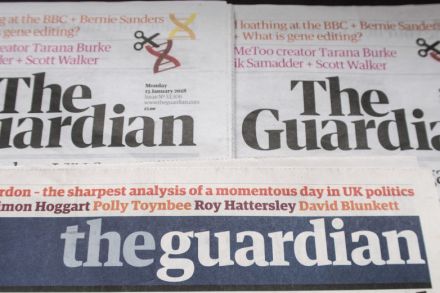
At times of great stress it is necessary to find your enjoyments where you can. And as I mentioned in the magazine last week there are few joys in the world comparable with that which comes from watching the left eating itself. Which brings me to a small but diverting set of events which are rolling on at the Guardian. Readers will remember that earlier this month that paper started to devour itself after the admirable columnist Suzanne Moore had the temerity to write a column about trans issues that did not exactly toe today’s leftist line on the issue. Hundreds of Moore’s colleagues signed a letter to the editor condemning Moore. Indeed the signatories comprised around a fifth of the total Guardian workforce.

Will the NHS drop its trans obsession when peak coronavirus hits?

From our UK edition

As coronavirus sweeps across the country, I am sure people will be reassured to know that the NHS is doing everything it can to address the pandemic, at such times when a health service’s resources are likely to be overstretched. So it must come as exactly no comfort to see what one section of the NHS was highlighting this Friday: Ensuring pregnant trans men get equal quality care. There may be some lucky people who had to read that twice. Or read it more than once and are still labouring under the impression that the headline includes a glaring misprint. Others, alive to the absurdities of the age, will know that the NHS is doing exactly what one would expect.

Don’t tell me what I can read

From our UK edition

At least none of us will have to pretend that we read Woody Allen’s memoirs. This week the publishers Hachette took that little responsibility away from us. After a staged walkout by staff in New York and Boston it was announced that the book (titled Apropos of Nothing) would be pulped rather than published next month. Allen has been accused of historic sexual abuse and the subject of allegations from his daughter and glassy-eyed son Ronan Farrow. No charges have ever been brought. Hachette’s announcement followed a number of other choices that have similarly been taken from us. The UK public did not get to choose whether to see Roman Polanski’s latest movie.

How Sinn Fein got away with murder

From our UK edition

The online world should be credited when it gets something right. And on Twitter an account titled ‘On This Day the IRA’ gets something very right. Granted, it’s not your usual internet fare. It includes no videos of cute animals sneezing. It is simply an archive-rich account which records what the IRA did on that day in history. Naturally, each day brings more than one thing to commemorate. On the day I’m writing, the account records James Keenan and Martin McGuigan, two Catholic 16-year-olds blown up by the IRA in 1979 while they were on their way to a Saturday night dance. There are also anniversaries from 1977 and 1988, and Reginald Williamson, a 46-year-old father of two who was killed in 1993.

How low can the BBC go?

From our UK edition

Last weekend’s papers claimed that the government desires a ‘massively pruned back’ BBC. Former Conservative cabinet minister Damian Green and someone called Huw Merriman spoke out against this, which allowed the BBC to put the headline ‘BBC licence fee: Tory MPs warn No. 10 against fight’ atop its characteristically impartial coverage. I suppose there are various reactions one can have to this, ranging from outrage at supposed ‘cultural vandalism’, via a vague shrug, all the way through to the full Charles Moore. In recent years I have moved through all these stages. The discovery that mattered most was the realisation that the less BBC I had in my life, the better.

I’ve seen wars more amusing than BBC comedy

From our UK edition

Last weekend’s papers claimed that the government desires a ‘massively pruned back’ BBC. Former Conservative cabinet minister Damian Green and someone called Huw Merriman spoke out against this, which allowed the BBC to put the headline ‘BBC licence fee: Tory MPs warn No. 10 against fight’ atop its characteristically impartial coverage. I suppose there are various reactions one can have to this, ranging from outrage at supposed ‘cultural vandalism’, via a vague shrug, all the way through to the full Charles Moore. In recent years I have moved through all these stages. The discovery that mattered most was the realisation that the less BBC I had in my life, the better.

Here comes Bloomberg

From our UK edition

39 min listen

This week, has Mike Bloomberg blown his presidential hopes with a disastrous TV debate (00:50)? Plus, has the BBC really gone downhill (12:05)? And last, Toby Young reveals all about his first stand up comedy gig (26:30).

Why I’ll never become an MP

From our UK edition

Every now and then someone asks me if I have ever thought of becoming an MP. My response tends to be a laugh so deranged that the question answers itself. When I manage to verbalise the answer it usually goes something like this: ‘No, because I enjoy saying what I think is true.’ Occasionally my conversationalist will persist: ‘But MPs have a huge variety of opinions. Parliament is not filled with silent types.’ Throughout such interactions various names and images flash through my head. I think of Sarah Champion, for instance — the Labour MP for Rotherham. Ms Champion got her seat in 2012 and among the problems she inherited was the fact that her constituency had recently been one of the largest crime scenes in modern British history.

Four defences of free speech that everyone should read

From our UK edition

Every generation, and individual, has to rediscover the arguments for free speech for themselves. Some people learn from major incidents. Some when the censors come for someone close to them, or an opinion that they hold. Others come to believe in free speech because they realise that while being offended on occasion might be terrible, it is nowhere near as terrible as any system designed to make being offended impossible. Fortunately there are short-cuts to finding the best defences of free speech. The English language provides an especially rich tradition on which to draw. From many centuries of literature allow me to list just four works: two classic, two modern.

Why I’m standing by my old enemy Selina Todd

From our UK edition

Most people won’t have heard of Selina Todd. The only reason I had was because some years ago the BBC invited me to appear alongside her on one of those slots that used to be for intellectual discussion. ‘Would you be interested in coming on Radio 3 at about 10.30 p.m. to discuss class?’ I was asked. ‘Absolutely not,’ I replied, the subject being the only national obsession I would leave the country to escape. ‘That’s precisely why we want you,’ began the producer. And so eventually I ruined a perfectly good dinner and headed to the BBC where I met the aforementioned Todd. She turned out to be an Oxford professor whose area of study is the working class and whose specialism is resentment.

In defence of Alastair Stewart

From our UK edition

Here is a good test case going on before our eyes. The broadcaster Alastair Stewart has left his job of decades after sending a quotation of Shakespeare to a member of the public. The quotation (because it refers to an ape and the recipient happens to be black) is being interpreted as a sign of racism. A sign so grave that a long and illustrious career is over. So here is a test. Does ITV actually think that Alastair Stewart is a secret racist, really hates black people and has spent his life hating black people? Does it think that he has managed to hide this throughout the course of a long and illustrious career, in which I imagine that he worked with people of every imaginable race and background? Does it think that his deep, terrible racism has only come to the surface once?

How to fight back against ‘cancel culture’

From our UK edition

‘Cancel culture’ is a horrible term because outside of a dictatorship nobody can actually be ‘canceled’ or otherwise ‘disappeared’. All that can happen is that people can be found to have trodden across one of the orthodoxies of the age. A small number of bullies then come for them. And a larger number of otherwise decent people then fail to stand up for them. It is this last part of the matter that is worth focusing on. It is the only part that is fixable. All ages have their orthodoxies. And if writers, artists, thinkers and comedians do not occasionally tread on them, then they are not doing their jobs. Meanwhile human nature remains what it is.

The terrifying parable of Laurence Fox’s Question Time appearance

From our UK edition

In what turned out to be the last year of his life, Roger Scruton often mulled on the nature and techniques of twenty-first century denunciation. For Roger, like others who had seen totalitarian societies up close, knew what intimidation and officially-imposed forms of thinking were actually like. Which is not to say, of course, that modern Britain or America are totalitarian societies. Only that we have people among us who act with precisely the same techniques as those did in totalitarian societies. In modern Britain, as in communist Czechoslovakia and elsewhere, the habits are the same. A member of a profession comes into their workplace in the morning to find a letter of denunciation signed by all their colleagues.

Roger Scruton: A man who seemed bigger than the age

From our UK edition

Sir Roger Scruton has died. Diagnosed with cancer last summer, he passed away peacefully on Sunday surrounded by his family. There will be a lot of things written and said in the coming days. But perhaps I could say a few things here. The first is to reiterate something that the Scruton family have said in their announcement of his death. There they refer to how proud they are of Roger and of all his achievements. I think I can say that all Roger’s friends share that feeling. His achievements were remarkable. He was a man who appeared to know about absolutely everything, producing books on architecture, philosophy, beauty, music, religion and much more. In many ways – as his former student Rabbi Sacks once said to me – he seemed bigger than the age.

Coffee House Top 10: The Scruton tapes: an anatomy of a modern hit job

From our UK edition

We’re closing 2019 by republishing our ten most-read articles of the year. Here’s No. 3: Douglas Murray on the shameful hounding of a distinguished philosopher: Sometimes a scandal is not just a scandal, but a biopsy of a society. So it is with the assault on Sir Roger Scruton, who in recent weeks has been smeared in the media, fired by the government and had his life’s work assailed. Scruton is the latest, though far from the first victim of the modern outrage mob. It is now four years since the Nobel prize-winning scientist Tim Hunt was fired by University College London (among other institutions who were lucky to have him).

‘I aspire to write for posterity’: An interview with Tom Stoppard

From our UK edition

Sir Tom Stoppard is Britain’s — perhaps the world’s — leading playwright. Born Tomas Straussler in Zlin, Czechoslovakia, in 1937, his family left as the German army moved in. The Strausslers were Jewish. In adulthood he learned that all four of his grandparents were killed by the Nazis. His father was killed by the Japanese on a boat out of Singapore as he tried to rejoin his wife and two sons. In India his mother married again, to an English Army man who gave his stepchildren his surname. Stoppard has lifted the lid on his early life only once before, in a piece for Talk magazine in 1999.

Labour’s anti-Semitism shame must never be forgiven

From our UK edition

Sometime around the start of this decade, before anti-Semitism was as cool as it has become, I was standing on a stage in London with a couple of rabbis and a Muslim. And if that sounds like the start of a joke then what followed wasn’t. We were there at the request of a new Jewish group to speak out against the anti-Semitism that we already saw on the rise in the UK. I’m not much given to protests myself as long-time readers will know. But the day showed some solidarity with British Jews and we all went home at least partly feeling like some good had been done. But one thing about the day stayed in my mind. During her remarks, one of the rabbis summoned up the famous phrase of anti-fascists in the 1930s. 'They shall not pass’. Or ‘No Pasaran!

The failed lessons of the London Bridge attack

From our UK edition

Some readers have been asking me to comment on the latest London Bridge terrorism incident. And if I have some reluctance it is only because although ennui comes from writing the same article over and over again, that’s nothing like the feeling you get from writing the same article so often that you don’t even need to change the name of the location of the attack each time now. London Bridge 2 has been pored over enough in recent days. The heroism of certain members of the public has rightly been noted. Politicians of all the main parties have tried to pin the blame for the attacker’s early release on their political opponents. And everything goes on as usual. But there are a couple of remaining things still worth noting about all this.

Clive James: a tribute

From our UK edition

Clive James died last weekend at his home, surrounded by his family, after a long illness. The poet, writer, critic and television star was one of the most remarkable, talented and insightful members of his generation. Loved by millions, he was an incomparable presence in the lives of his friends and readers right up until the end. In 2014, when he seemed very near that end, I went to see him at his home in Cambridge to talk about life, love, poetry and the proximity of death. I feared that it would be our last conversation. Thank medicine it wasn’t. But before I’d even got home, Clive had written again to say that he wanted to re-emphasise to me the ‘gratitude’ he felt about his life. It was a very Clive sentiment that. There is much to say.